
Editorial
First they come for criminals …


Monday 24th February, 2025
Sri Lanka’s focus has been shifted from Budget 2025 and the economy to the netherworld of crime and narcotics for all intents and purposes. Since President Anura Kumara Dissanayake presented the NPP government’s maiden budget on 17 Feb., a spree of underworld attacks has sparked a kind of national discourse on crime and criminals.
Close on the heels of Wednesday’s courtroom killing, which shook the country, two suspects arrested for gunning down a person in Kotahena, Colombo, were fatally shot allegedly in a scuffle with the police during ‘a search for weapons’ at Crow Island. A policeman also suffered injury in the clash, we are told. Those killings have provided grist to the Opposition’s mill, and left the NPP government on a sticky wicket.
Friday’s custodial deaths are viewed in some quarters as a sign of the culture of extrajudicial executions returning. This is something a government needs like a hole in the head, especially ahead of an important election. So, it is only natural that the NPP administration had the Acting IGP and the Secretaries to the Ministry of Defence and the Ministry of Public Security give a press conference as a damage control measure, on Saturday. Theirs was an attempt to mitigate the political impact of the surge in crime, the courtroom murder and the custodial deaths on the government.
Secretary to the Ministry of Public Security, former SDIG Ravi Seneviratne, addressing the media, went so far as to attribute the increase in criminal activity to a conspiracy. Giving what may be considered a political twist to the issue, he claimed that there was an attempt to derail investigations into the past emblematic crimes including the Easter Sunday carnage and destabilise the country. He said he had received intelligence reports to that effect; those behind that sinister move had been identified and legal action would be taken against them. Going by his claim, there is a threat to national security. But President Anura Kumara Dissanayake, who is also the Minister of Defence, has categorically stated, in Kandy, that there is no threat to national security. Hasn’t the President taken Seneviratne’s claim seriously, or doesn’t think a move to destabilise the country serious enough to be considered a threat to national security?
Interestingly, in the aftermath of the Easter Sunday tragedy (2019), the then President Maithripala Sirisena claimed that the terror attacks had been intended to scuttle his war on the underworld, especially the drug Mafia. Now, Seneviratne, who was the SDIG in charge of the CID at the time, tells us that the ongoing underworld attacks are aimed at derailing the Easter Sunday carnage probe among other things!
As for conspiracies, we are reminded of what ex-SDIG Seneviratne stated in his testimony before the Presidential Commission of Inquiry (PCoI) that probed the Easter Sunday terror attacks. He and 10 other witnesses insisted that there had been an external hand behind the Easter Sunday carnage. Among others were Archbishop of Colombo Cardinal Malcolm Ranjith and former SSP Shanie Abeysekera.
The police are duty-bound to ensure the safety of all suspects in custody. Friday’s custodial deaths have left another blackmark on the police. A thorough investigation is called for. The police narrative about the killing of the aforesaid crime suspects reminds us of actor/director-turned NPP MP Jagath Manuwarne’s popular teledrama, ‘Kodi Gaha Yata’, wherein a suspect is killed and a policeman suffers injury to a leg under similar circumstances.
The prevailing culture of custodial deaths has rendered everyone vulnerable. First, they come for criminals, and whom they will come for next is anybody’s guess. More importantly, the Sri Lanka police have earned notoriety for wrongful arrests, which are legion. The way they acted following the murder of Seya Sewwandi, a four-year-old girl, in Kotadeniyawa, in 2015, is a case in point. Three suspects including a schoolboy were taken into custody on suspicion and vilified before the real murderer was arrested. Thankfully, the police did not take any of those suspects out as part of ‘an operation to trace illegal firearms’!
Worryingly, the focus of the ongoing public discussion is on the criminals and their rights rather than the victims of crime. Much is being spoken about the serious security lapses that led to the killing of Ganemulle Sanjeewa in the dock, but his victims numbering dozens, and the predicament of their families crying out for justice have not received much attention. The deaths of two suspects in a police shooting are being discussed in Parliament and on political platforms, but the person who perished at their hands in Kotahena has been forgotten.



Thursday 26th March, 2026
Coal is not an agricultural output, as is public knowledge, and therefore how on earth it can bring tears to farmers’ eyes, one may ask. But in Sri Lanka dirty coal has not only worsened air pollution in areas surrounding the Norochcholai power plant but also caused untold hardships to farmers across the country, especially in rice-growing areas, besides causing huge losses to the state coffers.
The government has managed to break the back of the fuel-queue problem for all intents and purposes, with the help of the QR-regulated quota system coupled with odd-even rationing. Long queues are seen only in the areas where filling stations have run out of stocks. However, paddy farmers have been left high and dry, without diesel for harvesting; they complain that filling stations in their areas have not received diesel supplies for several days, and they have to pay as much as Rs. 20,000 for harvesting an acre of paddy because diesel is available only on the black market. This situation has come about mainly because huge amounts of diesel are being diverted to the oil-fired power plants to meet a shortfall in electricity generation at the coal-fired Norochcholai power plant due to the use of substandard coal.
The Opposition has claimed that about 800,000 barrels of diesel are supplied to oil-fired power plants to meet the Norochcholai generation shortfall caused by substandard coal daily. This abnormal increase in thermal power generation, due to corruption in the government ranks, has resulted in tremendous pressure on the country’s diesel supplies that could otherwise have been used for transport and agricultural purposes. If the government had cancelled the current coal tender immediately after the first shipment of coal was found to be substandard, and the engineers of the Norochcholai power plant began to complain of a sharp drop in power generation due to the low-quality of coal, it would have been able to save about Rs 8 billion straightaway and prevented further losses due to an increase in the amount of diesel used for power generation. Instead, it chose to retain the current coal supplier under a cloud at the expense of the public, the state coffers and the country’s diesel reserves.
Now, the paddy farmers are unable to gather their harvest and prepare their fields for the next cultivation season, and the Ceylon Electricity Board is seeking a massive power tariff hike to recover losses due to burning diesel to cover the Norochcholai supply gap. The Opposition has repeatedly pointed out in Parliament that the electricity supply shortfall due to dirty coal imports often increases up to 176 MW. Power and energy experts have warned of possible power cuts due to a diesel shortage.
The government has jacked up fuel prices in such a way that one wonders whether it is trying to cover the losses caused by its coal racket and increases in electricity generation costs due to its overreliance on diesel power plants. Cabinet Spokesman Dr. Nalinda Jayatissa claimed at Tuesday’s media briefing that the fuel pricing formula had not been used to work out the current petroleum price increases. He went so far as to claim that the world oil prices had not increased according to any formula. However, Ceylon Petroleum Corporation Managing Director Dr. Mayura Nettikumarage told the media later in the day that fuel pricing formula had been used to determine the fuel price hikes. The pricing formula was introduced to ensure that fuel prices would be cost reflective. So, going by Minister Jayatissa’s claim, the question is why the government has not used the pricing formula to calculate fuel prices. Has it resorted to price gouging?
The JVP-NPP government has sought to use the global energy crisis as an excuse to cover up its coal racket, which has caused a power crisis, but the resentful public will not buy into its false claims and keep quiet. True, the Middle East conflict has caused a global energy crisis, and taken its toll on Sri Lanka’s petroleum reserves and fuel prices. However, we would have faced the current power crisis even if Trump and Netanyahu had behaved, without attacking Iran and plunging the world into chaos.
The previous government blundered by cutting corrupt deals, enabling its leaders and cronies to enrich themselves, mismanaging the economy, causing scarcities, and testing the people’s patience. Its leaders had to outrun angry mobs baying for their blood. When the wolf is at the door, popular support for governments drops to the floor, and people take to the streets. Unless the JVP-NPP government makes an immediate course correction, without defending the corrupt and aggravating the woes of the public, the day may not be far off when its leaders, too, have to showcase their athleticism, if any, and show their pursuers a clean pair of heels each—perish the thought! One may recall that it was irate paddy farmers who fired the first volley at the previous government. They are again on the warpath, demanding diesel and fertiliser.
Wednesday 25th March, 2026
The JVP-NPP government is slow on the draw whenever it responds to emergencies. Its long response time stood in the way of disaster mitigation in the immediate aftermath of the landfall of Cyclone Ditwah, which triggered a series of adverse weather events, claiming 638 lives and destroying more than 6,100 houses. Its delayed response also prevented the country from adopting emergency measures to manage its meagre fuel reserves immediately after the eruption of the latest Middle East conflict. Instead of reintroducing the QR-based fuel quota system at the first sign of trouble to prevent panic buying and stockpiling, it kept on issuing fuel to the market while hoarders were having a field day. Worse, it has taken three long weeks to issue energy saving guidelines to the state sector, which is bursting at the seams, with one public official for every 15 citizens. Curtailing waste in the state sector is half the battle in reducing national power and energy consumption substantially.
The Commissioner General of Essential Services has directed all state institutions to adopt the following measures to save energy: reducing fuel used for official travel, limiting physical meetings and using online platforms for that purpose, minimising paper and physical document transfers, reducing the use of air-conditioning, limiting elevator use, expanding online services, keeping offices closed outside working hours and monitoring energy saving. Essential as these measures may be, they cannot be considered a silver bullet. Much more needs to be done.
It has been estimated that if every vehicle in the state owned fleet saves one litre of fuel per day, Sri Lanka could reduce fuel use by about 92,000 litres daily. However, it is doubtful whether state employees will cooperate to reduce fuel consumption. The only way to ensure that they will use less fuel, in our view, is to reduce fuel allocation for the public sector. Many developing countries, such as Pakistan, have taken action to curtail energy demand. They have opted for nationwide austerity measures while Sri Lanka has focused more on conservation guidelines to the public sector and reducing commuting fuel use.
There is a pressing need for Sri Lanka to adopt drastic austerity measures to survive the worsening energy crisis. It ought to emulate Pakistan, which has halved fuel allocations for the state sector for two months, taken 60 percent of government vehicles off the road, suspended fuel allowances for ministers, reduced fuel allocations for state officials by 50 percent, and limited official protocol convoys to only one security vehicle.
The JVP/NPP politicians came to power, promising to use public transport. They ought to fulfil that pledge and set an example to others at this hour of crisis. Why can’t they travel in buses and trains at least until the current energy crisis is over? After all, the people’s representatives in some developed countries, such as the Netherlands, Denmark, Sweden, the United Kingdom, Germany and Finland, travel in buses and trains or cycle to work. Why can’t the self-proclaimed Marxist leaders in a country like Sri Lanka lead simple lifestyles like their capitalist counterparts in the Global North?
Most of all, while seeking public cooperation to save electricity and energy, the government must ensure that those who caused a sharp decrease in electricity generation at the Norochcholai power plant complex by procuring low-grade coal are brought to justice. The Opposition alleges a daily generation shortfall up to 170 MW due to the use of substandard coal at Norochcholai. This reduced efficiency has forced other power plants to burn diesel to cover the gap. Huge amounts of diesel are used by oil-fired power plants daily to meet the shortfall in electricity generation at Norochcholai, increasing pressure on the diesel supplies that could otherwise be used by the transport sector.
Unfortunately, the government politicians, including President Anura Kumara Dissanayake, have circled the wagons around Energy Minister Kumara Jayakody and his officials responsible for substandard coal imports, making one wonder whether the entire JVP has benefited from the coal racket.
Tuesday 24th March, 2026
The global energy crisis has taken a turn for the worse due to the Middle East conflict. International Energy Agency Executive Director Fatih Birol has issued a dire warning. If the Iran war persists, the world will face a mega energy crisis, whose economic impact will be far worse than those of the two oil crises in the 1970s, taken together, he has said, noting that today the world economy is losing about 11 million barrels of oil a day whereas it lost only five million barrels of oil each per day during the two crises in the 1970s. No country will be safe. However, the predicament of the developing nations, such as Sri Lanka, will be even worse, for their governments increase fuel prices in geometric progression when world oil prices rise in arithmetic progression, so to speak.
At this rate, a global recession may not be far off, economists have warned. Economies across the world are already screaming. But US President Donald Trump, who at the behest of Israeli Prime Minister Benjamin Netanyahu, started the current Middle East conflict, acts whimsically, and a credible endgame is conspicuous by its absence. It is doubtful whether he even has a well-thought-out military strategy. He orders airstrikes on Iran and keeps on pouring taxpayers’ money into an endless war, which may cost Americans more than a trillion dollars eventually, Prof. Linda Bilmes, a Harvard expert, has told The New York Times.
War is synonymous with destruction. In fact, it is hell, as American Civil War General W. T. Sherman famously said. Wars are said to have rules of engagement, but in reality, they are fought according to Rafferty’s rules. The US has used atomic bombs, napalm, Agent Orange, white phosphorus, etc., and carried out numerous massacres besides destroying critical infrastructure in other countries in a bid to win wars. Israel resorted to indiscriminate airstrikes and an equally devastating ground assault in Gaza in retaliation for the Hamas terror attacks. Therefore, the US and Israel should have anticipated fierce resistance and no-holds-barred retaliation from Iran when they carried out unprovoked attacks on that country. It was obvious from the beginning that Iran would shift the theatre of its military action to the economic front to pressure the US and Israel to stop attacks. It has done so with a devastating impact on the global economy. Not that it is totally blameless, but it is the US and Israel that conjured up a casus belli to start the current war and drove Iran to retaliate violently.
Those who started the Middle East war ought to stop it instead of asking Iran to declare a ceasefire, if the global economy is to be saved by reopening vital energy routes in that region. They will only aggravate the situation if they try to reopen the Hormuz Strait militarily. They have already made a series of military miscalculations. Israel and other US allies in the region have Iranian missiles and Kamikaze drones raining down on them. Iran is extending the range and capability of its missiles.
The US and Israel are obviously facing a situation they did not bargain for. They may have thought they would be able to bomb Iran into submission in a day or two and engineer a regime change. Their plan has gone awry. They expected the Iranian civilians to come out and overthrow the beleaguered government, but nothing of the sort has happened.
The best way to reopen the Hormuz Strait for international navigation and help overcome the global economic crisis is for the US and Israel to stop attacks immediately and let the neutral world powers negotiate with Iran, which has shown willingness to soften its stand. Now that Trump and Netanyahu have bragged that they wiped out Iranian nuclear facilities in the first few days of attacks, why they do not stop the war is the question.
It was reported at the time of going to press that President Trump had suspended planned strikes on the Iranian power grid for five days in view of “very good and productive conversations” with Tehran. One can only hope that this window for diplomacy will lead to de-escalation and an enduring ceasefire.

Heat Index likely to increase up to ‘Caution level’ at some places in the Western, Sabaragamuwa, Southern, North-western, Northern and North- central provinces and in Monaragala district

Israel says it has killed Iran’s navy chief overseeing Strait of Hormuz blockade

A strong Technical and Vocational Education and Training (TVET) system equips individuals with practical, relevant, and future-oriented skills helping to innovate responsibly towards a greener and sustainable future – PM

PM reviews progress of the committee appointed for the establishment of a National Nursing University

UN votes to recognise enslavement of Africans as ‘gravest crime against humanity’

Meta and YouTube found liable in landmark social media addiction trial

‘Dates have the highest sugar content to fight Coronavirus’

Sunday Island 27 December – Headlines

#SundayIsland 17th December – Headlines

Sunday Island – 28th March

Sunday Island Headlines – 21 March

Sunday Island – 21st February – Headlines
-

 News2 days ago
Senior citizens above 70 years to receive March allowances on Thursday (26)
-

 Features4 days ago
Trincomalee oil tank farm: An engineering marvel
-

 News7 days ago
CIABOC tells court Kapila gave Rs 60 mn to MR and Rs. 20 mn to Priyankara
-
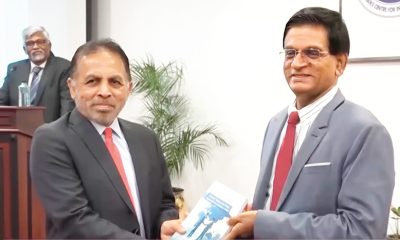
 Features7 days ago
Science and diplomacy in a changing world
-

 Features4 days ago
The scientist who was finally heard
-

 Business23 hours ago
Dialog Unveils Dialog Play Mini with Netflix and Apple TV
-
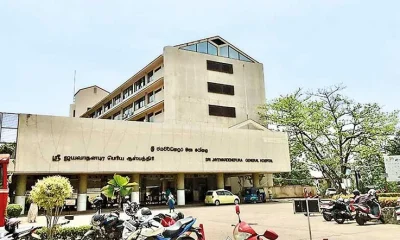
 News2 days ago
Japanese boost to Sri J’pura Hospital, an outright gift from Tokyo during JRJ rule
-
 News2 days ago
CEB Engineers warn public to be prepared for power cuts after New Year