
Business
FinanceAsia crowns ComBank as Best Bank in Sri Lanka for 12th year

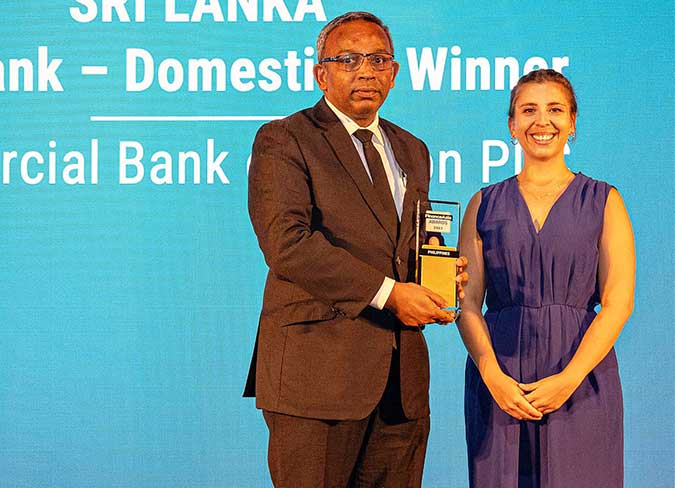
The Commercial Bank of Ceylon has been adjudged the Best Bank among Sri Lanka’s domestic banks by FinanceAsia, considered the world’s foremost information source on the Asian financial markets.This prestigious accolade was conferred on Commercial Bank at the 27th FinanceAsia Country Awards gala at the Ritz Carlton in Hong Kong on 28th June. Notably, Commercial Bank was the first Sri Lankan bank to be honoured at these awards and has won the Best Bank award 12 times.
Other Country Award winners ranked alongside Commercial Bank as the Best Banks in their respective countries at this year’s FinanceAsia awards were CICC (China), HSBC (Hong Kong and South Korea), CTBC (Taiwan), and Allied Bank (Pakistan).
Commenting on the Bank’s consistent success in the FinanceAsia Country Awards, Commercial Bank Managing Director /CEO Sanath Manatunge said: “Sector-leading financial performance is, of course, fundamental to the Best Bank award, but what makes this award particularly significant is that it looks beyond the figures to assess factors like strategy, customer service, business development, ESG compliance and customer centricity. Winners are therefore institutions that did not compromise on quality to improve financial performance.”
Assessments for the FinanceAsia Best Domestic Bank awards covered the performances of banks in 2022, a period the magazine said was impacted by supply chain woes, energy disruptions, geopolitical tensions, interest rate hikes and uncertainty.
“The FinanceAsia team invited banks, brokers and ratings agencies to showcase their capabilities to support their clients as they navigated these uncertain economic times. Our awards process celebrates those institutions that showed determination to deliver desirable outcomes, through display of commercial and technical acumen,” FinanceAsia said.
Among the factors that contributed to Commercial Bank’s victory was its achievement of the highest asset base, highest deposit base, largest lending portfolio, highest net profit, and highest gross income among private sector banks in Sri Lanka in the year assessed, as well as its recording the best CASA ratio among all banks in the country, and its position as the bank with the highest market capitalization on the Colombo Stock Exchange (CSE).
The Bank was also recognised for its market position in terms of having the highest market share of deposits, loans and total assets among private sector banks, the Bank’s sustainability initiatives in 2022, deployment of technological innovations for customer convenience, its support to small and medium enterprises (SMEs) via lending and knowledge base building, and its efforts to advance its vision and strategy.First published in 1996, FinanceAsia provides readers with the latest financial trends, interviews, features and investigative reports.



Advocata warns revival of vehicle permits threatens governance credibility, public trust and economic reform and strongly cautions against government consideration to allow vehicle imports for high-ranking government officials who received permits upon retirement.
According to statements in Parliament, 1,900 permits have already been issued under this concessional scheme for senior officials, with 563 permits issued in 2025 alone. Meanwhile, ordinary citizens endure an extended vehicle import ban and some of the highest effective taxes on personal transport vehicles in the world.
During the presentation of the 2026 Budget Proposal, President Anura Kumara Dissanayake declared: “There will be no permits. The permit culture must end in Sri Lanka!”
Advocata welcomed this commitment, recognising permit culture as a relic of a feudal system, not a feature of a modern economy. It is a system that has, for decades, rewarded privilege over performance, entrenched inequality, and undermined the credibility of the state. The President’s affirmation offered renewed hope that Sri Lanka was finally moving toward transparent and equitable reform.
To now entertain exemptions for a select group sends a dangerous signal about reform credibility. Even policies publicly acknowledged as corrosive have the potential to quietly return.
The Normalisation of State Sanctioned Privilege
Vehicle permits are not compensation. They are discretionary privileges, operating as hidden transfers of public wealth to a privileged few, while the broader population absorbs higher taxes and reduced services. Worse still, they place retirement benefits at the mercy of political discretion, turning professional civil servants into political dependents rather than accountable public servants.
Therefore, it is precisely the high-ranking officials that must lead by example.
In December 2010, Transparency International Sri Lanka revealed that the majority of 65 newly elected Parliamentarians, including 2 Cabinet Ministers, sold their duty free vehicle permits for as much as Rs. 17 million each, when adjusted for inflation using Department of Census and Statistics figures, that windfall is equivalent to which adjusted for inflation sits at approximately Rs. 48 million today.
In December 2012, in an event the Sunday Times classified as a “Christmas Bonanza for MPs,” the Government granted permission for MPs to openly sell their duty free permits. At the time, they sold for Rs. 20 million each, which adjusted for inflation sits at approximately Rs. 50 million today.
In October 2016, Nagananda Kodituwakku, an attorney-at-law and rights activist, wrote to the Commissioner General of Motor Traffic, naming 75 MPs who imported luxury vehicles, including BMWs, Mercedes-Benz, Land Cruisers and even a Hummer. The total tax waived per MP ranged from Rs.30 million to Rs. 44.7 million. In today’s terms, this range approximately translates to between a staggering Rs. 66 million and Rs. 98.5 million.
History demonstrates the scale of abuse enabled by this system.
Toward integrity in Governance
As Advocata has previously highlighted, Sri Lanka’s cascading tax structure drives effective import duties on most passenger vehicles into the 125–250 percent range. Every duty-free permit therefore represents a direct fiscal loss; revenue that must be recovered through higher taxes elsewhere or reduced public services for everyone else. Since 2020 alone, more than 25,000 duty-free permits have been issued to government employees, including during the height of the economic crisis.
Making exceptions now would set a dangerous precedent. It signals to every remaining permit holder that persistence will be rewarded, inevitably triggering lobbying pressure and further demands for carveouts. This is how temporary “concessions” become permanent entitlements. Once reopened, the system cannot be credibly contained.
From an economic and governance perspective, reintroducing selective exemptions would undermine public confidence in fiscal consolidation, weaken the credibility of reform commitments, and damage investor perceptions of Sri Lankan regulatory stability and policy consistency.
The appropriate solution lies in transparent, on-budget salary structures, subject to Parliamentary oversight. Crucially, they must compensate public servants fairly without undermining fiscal discipline or institutional integrity, avoiding the distortions created by discretionary privilege schemes.
Advocata calls on the government to take the following actions:
Abandon plans to allow vehicle imports under existing duty free permits.
Commit to permanently ending vehicle permit schemes, replacing them with clear and transparent salary frameworks subject to Parliamentary oversight.
Legislate a prohibition on duty-free vehicle permits for public sector officials, safeguarding against future reversals and ensuring consistent policy application.
Sri Lanka cannot rebuild trust while preserving elite carve-outs. Reform commitments retain credibility only when they are applied consistently — without selective exemptions. Advocata spokespersons are available for live and pre-recorded broadcast interviews via 0755477522
The vibrant island of Sri Lanka is set to welcome cycling enthusiasts from around the globe with the much-anticipated Trek4 Sri Lanka Cycle Ride, an event that promises adventure, breathtaking views, and a celebration of local culture.
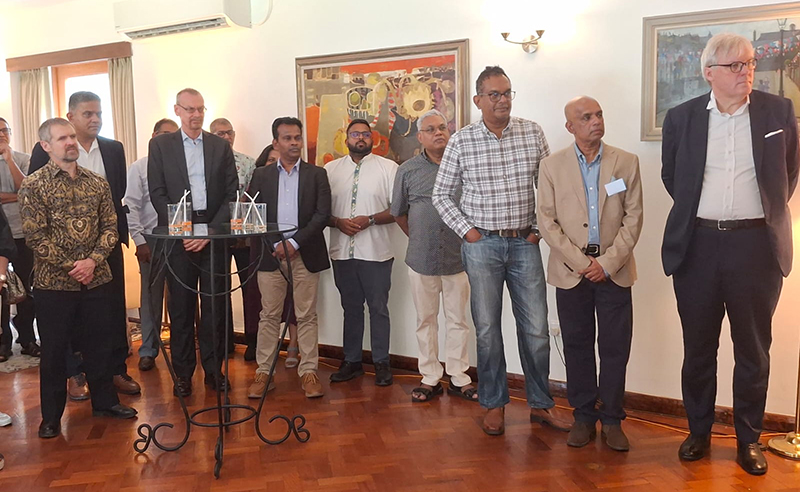
Trek4 Ceylon officially announced its annual tour of Sri Lanka at a press conference held at Cinnamon Grand Colombo, unveiling the 2026 five day charity ride dedicated to restoring St. Luke’s Methodist Mission Hospital in Puttur. The trek began from Cinnamon Grand Colombo February 10th and will end in Jaffna on 14th February covering over 560 kilometers across Sri Lanka. The ride will cover some of the most picturesque routes across the island, from the stunning beaches up to Jaffna. Over 50 riders from 11 countries take part in the trek including United Kingdom, Australia and United States of America.
Andrew Patrick, British High Commissioner to Sri Lanka expressed strong support for the Trek4 initiative. He stated, “This cycle trek not only promotes cycling and sustainable tourism but also emphasizes our mission to help local communities thrive. By participating in this event, cyclists will contribute directly to the local economy and foster community development. It’s a fantastic opportunity to explore the beauty of Sri Lanka while making a positive impact.”
Speaking at the gathering Australian High Commissioner Matthew Duckworth said “Cycling in Australia is a deeply ingrained cultural phenomenon, with Australians being world-renowned for their participation in both competitive road cycling and extensive off-road trekking. It was an honor to attend the send-off gathering for the Trek4 cycle ride in Sri Lanka at Westminster House. This initiative not only promotes fitness and camaraderie but also strengthens the bonds between our nations. I am excited to see the positive impact it will have on both participants and the communities they engage with along the way. “
By Claude Gunasekera

Both CSE indices showed high performance yesterday because most stock investors anticipate an upwards trend in the banking and financial sector in the coming months, market analysts said.Amid those developments both indices moved upwards with a high turnover level. The All Share Price Index went up by 37.33 points, while the S and P SL20 rose by 24.17 points.
Turnover stood at Rs 8.5 billion with 17 crossings. Top seven crossings were as follows: Tokyo Cement 11.5 million shares crossed to the tune of Rs 1.19 billion; its shares traded at Rs 104, TJ Lanka 18 million shares crossed for Rs 671 million; its shares traded at Rs 37.50, Sampath Bank 2.35 million shares crossed for Rs 366 million; its shares sold at Rs 156, Tokyo Cement 1.95 million shares crossed for Rs 168 million; its shares sold at Rs 86.20, Colombo Dockyards 1 million shares crossed for Rs 156 million; its shares traded at Rs 156 and HNB 313,000 shares crossed for Rs 136.8 million; its shares sold at Rs 437 and Digital Mobility Solutions 500,000 shares crossed for Rs 79.5 million; its shares traded at Rs 159.
In the retail market, top seven companies that mainly contributed to the turnover were; Tokyo Cement Rs 866 million (8.3 million shares traded), Tokyo Cement (Non-Voting) Rs 746 million (8.6 million shares traded), Colombo Dockyard Rs 410 million (2.6 million shares traded), TJ Lanka Rs Rs 331 million (8.9 million shares traded), Softlogic Capital Rs 305 million (40 million shares traded), Janashakthi Insurance Rs 227 million (1.5 million shares traded) and HNB Rs 152 million (350,000 shares traded). During the day 57.32 million shares volumes changed hands in 36500 transactions.
It is said that construction related companies, especially Tokyo Cement, performed well while the banking and financial sector performed well too, especially Sampath Bank and HNB.
Yesterday the rupee was quoted at Rs 309.20/23 to the US dollar in the spot market, from Rs 309.30/37 the previous day, dealers said, while bond yields were broadly steady.
By Hiran H Senewiratne

Russia killed opposition leader Alexei Navalny using dart frog toxin, UK says

Tom Banton 63* sets up nervy win for England

Landslide Early Warnings issued to the districts of Kandy and Nuwara Eliya extended

Advisory for Severe Lightning issued to the Western, Sabaragamuwa and Southern provinces and Badulla and Nuwara-Eliya districts

Tucker 94* headlines Ireland’s thrashing of Oman

High risk of rain in marquee India vs Pakistan T20 World Cup game in Colombo

‘Dates have the highest sugar content to fight Coronavirus’

Sunday Island 27 December – Headlines

#SundayIsland 17th December – Headlines

Sunday Island – 28th March

Sunday Island Headlines – 21 March

Sunday Island – 21st February – Headlines
-

 Features7 days ago
My experience in turning around the Merchant Bank of Sri Lanka (MBSL) – Episode 3
-
 Business7 days ago
Remotely conducted Business Forum in Paris attracts reputed French companies
-

 Business7 days ago
Four runs, a thousand dreams: How a small-town school bowled its way into the record books
-
 Business7 days ago
ComBank and Hayleys Mobility redefine sustainable mobility with flexible leasing solutions
-

 Business4 days ago
Autodoc 360 relocates to reinforce commitment to premium auto care
-

 Midweek Review4 days ago
A question of national pride
-
 Opinion3 days ago
Will computers ever be intelligent?
-
 Midweek Review4 days ago
Theatre and Anthropocentrism in the age of Climate Emergency