
News
Certification Scheme for 100 SMEs in Sri Lanka’s Tourism Sector


Over 100 Small and Medium Enterprises (SMEs) in the tourism sector were awarded the National Sustainable Tourism Certification Scheme (NSTCS), which is a process that recognizes and promotes destinations that are committed to environmental, social and economic sustainability in Sri Lanka.
In line with the overall strategy of the Sri Lanka Tourism Development Authority (SLTDA) and in partnership with the United Nations Development Programme (UNDP) in Sri Lanka the certification scheme was established in 2018 in line with the Global Sustainable Tourism Council guidelines.
The certifications were awarded on Wednesday (May 29) in the presence of Tourism Minister Harin Fernando; Secretary to the Tourism Minister H.M.B.P. Herath, UNDP Resident Representative in Sri Lanka Azusa Kubota, Chairperson – SLTDA Priantha Fernando, Director General – SLTDA R. Sariffodeen, and other high-level dignitaries from the tourism and development sector.
The certification scheme aims to involve all tourism stakeholders- government agencies and the private sector, working in partnership to move towards a more sustainable tourism sector in Sri Lanka in line with national priorities. Following the successful completion of the pilot phase in 2019 for the accommodation sector, in 2023 a call for applications was opened for Small and Medium Enterprises (SMEs) in the sector.
According to the ADB, Small and medium enterprises play a vital role in the country’s economy, contributing more than 50% of the GDP in Sri Lanka. Around 75% of these enterprises belong to the tourism sector. These include hotels and homestays (33%), spas and ayurveda (18%). Souvenirs, handicrafts, cafes, food and beverages make up most of the remaining enterprises.
While tourism growth brings positive outcomes for countries, there could also be negative impacts, with unplanned tourism creating specific challenges. Against this background, the Government of Sri Lanka with its ambitious growth targets of tourist arrivals, is working towards to continue in offering positive tourism experiences ensuring long-term sustainability for the country.
Commenting on the certification scheme, Priantha Fernando, Chairperson of SLTDA stated, “Our commitment to sustainability is not just about meeting the demands of today’s consumers; it is about securing a better future for our nation and the generations to come. What is good for our nation, our future, and our customers is intrinsically linked thus, let us continue to build a sustainable, prosperous, and vibrant tourism industry in Sri Lanka.”
This programme involves a series of steps to assess and validate a destination’s efforts in various sustainability aspects with a special focus on sustainable use of biodiversity including reducing threats to the environment and promoting environmentally friendly practices.
The Biodiversity Finance Initiative (BIOFIN) is a UNDP-managed global collaboration to develop and implement an evidence-based methodology that improves biodiversity outcomes using finance and economics. In Sri Lanka, working together with the Government of Sri Lanka, BIOFIN works on implementing three (3) finance solutions for the sustainable use and management of biodiversity; the development of a Green Lending framework, a sustainable certification for the tourism industry following the establishment of the Sustainable Tourism Unit (STU), and payment for ecosystem services in the mini-hydro power generation sector.
Highlighting UNDP’s role, Azusa Kubota, Resident Representative, UNDP in Sri Lanka noted, “Biodiversity must be at the heart of Sri Lanka’s recovery trajectory, from nature-based solutions with investments to let biodiversity flourish, creating jobs and opportunities for communities to secure a sustainable future. Through the success of such certification schemes in the tourism sector, UNDP reaffirms its commitment to working together with all stakeholders in the sector to demonstrate how nature-positive economies can work for people and the planet.”
The national certification scheme will mitigate the negative impacts of tourism but also incentivize tourism businesses to transition toward environmentally and socially responsible business practices. Importantly, generating income, providing skilled employment opportunities, preserving local ecosystems and cultures, and creating positive experiences for local people, tourism companies, and tourists themselves.



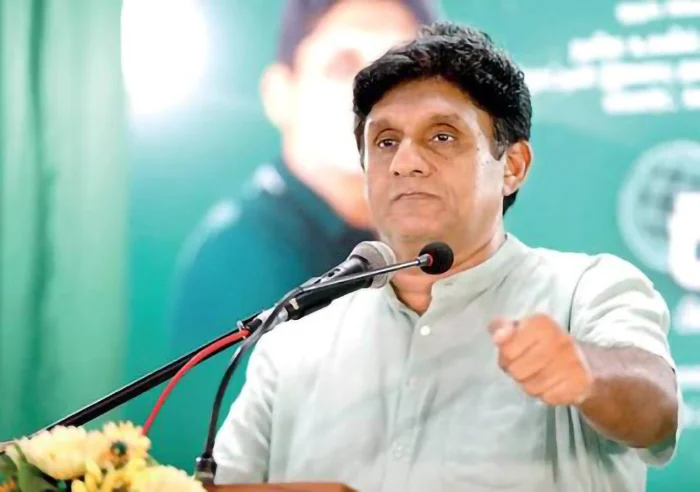
Opposition Leader Sajith Premadasa has said the government is attempting to paint a falsely beautiful picture of the country’s situation through the Socio-Economic Data report issued together with the Census and Statistics and the Central Bank. “They have selectively included certain information while intentionally omitting other vital facts,” Premadasa has said in a media statement. When presenting data, there must be chronological consistency and integrity. The Central Bank and the Department of Census and Statistics have no right to present outdated data to formulate a conclusion, thereby marginalising an entire segment of the population, Premadasa has argued, pointing out that their primary duty is to report accurate information to the public.
Premadasa says that up to page 18 of the report, recent data from 2023 to 2025 have been used. For main economic indicators, macroeconomic indicators, demographic data, and life expectancy, 2024 data have been used. Indicators such as external trade finance, consumer price indices, Real GDP, imports and exports, prosperity indices, and human development indices have also been compared with Asian and SAARC countries using recent data. However, for the section detailing socio-economic conditions from page 19 to page 34, the data used are exclusively from the outdated 2016–2019 period.
When discussing socio-economic conditions, the data used for household income and expenditure surveys, provincial-level conditions, housing facilities, energy consumption, cooking, and population distribution are entirely from 2016 to 2019, the Opposition Leader has said. Specifically, the data on poverty mentioned on page 33, and even the data on per capita daily food consumption capacity on page 34, belong to this old 2016–2019 timeframe. Formulating a report for the year 2026 using such outdated data is a deliberate attempt to mislead the country and its people.
Premadasa says that from page 35 onwards, fresh 2025 data have been used for sections on prosperity, demographics, the labour force, and employment. Recent data based on current market conditions have also been provided for Gross National Income (GNI) by industrial sources, food prices, imports and exports, tourism, government revenue, state debt, and interest rates.
“If the authorities can present recent data (for 2023, 2024, and 2025) for foreign debt, financial activities, financial sector trends, and money supply, why are they using 2016 and 2019 data for poverty to mislead the country?” the Opposition Leader has asked, pointing out that the main report and its summary prove that while the government uses updated data for macroeconomic aspects, it uses obsolete data regarding poverty, inequality, income distribution, and living standards. The Opposition Leader has called this a historic deception regarding the country’s poverty, asking whether the 12.11.2026 Budget will be on these false data?
Premadasa has said that the government claims that a person can survive for 30 days on Rs. 17,315, which is an absolute lie and a deception. “This Government lacks updated data or definitions for poverty. Since the country went bankrupt, a proper household income and expenditure survey has not been conducted, nor has the poverty line been accurately identified.” He questioned whether the upcoming budget, scheduled for 12.11.2026, will be based on these false and flawed data.
By S.K. Samaranayake
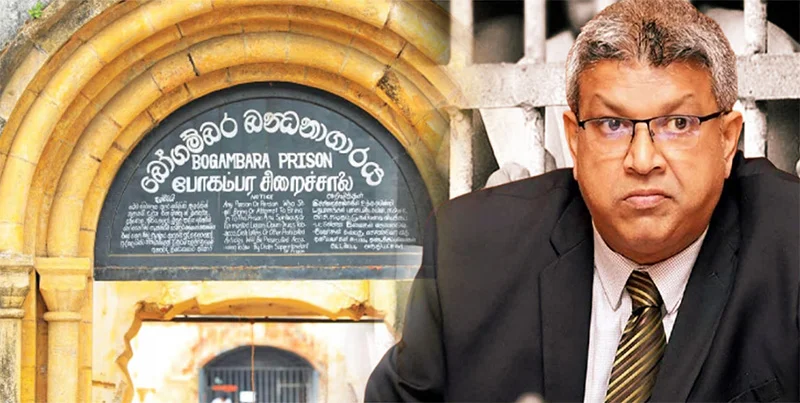
Following a gazette notification issued by Minister of Justice and National Integration Harshana Nanayakkara re-establishing the old Bogambara Prison as a correctional facility, 75 inmates were sent to the renovated prison recently. These inmates were transferred from the Colombo Remand Prison and the Magazine Prison. Meals for them are provided by the Dumbara-Pallekele Prison.
This prison was originally established in the year 1876. Under the Kandy Development Project, the Prisons Department took steps to establish the Dumbara-Pallekele Prison and transfer the Bogambara inmates there in 2014. Several plans have been drawn up to develop this site under the Ministry of Urban Development.
The government’s attention was drawn to re-converting the old Bogambara Prison into a prison facility once again, taking into consideration the space constraints encountered when transferring inmates to other prisons following the incident at the Negombo Prison. Currently, 94 rooms of this prison have been renovated, and its inmate capacity stands at is.
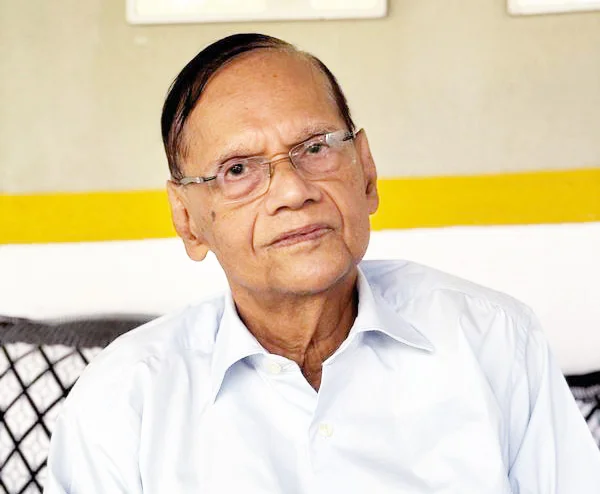
Convenor of the Joint Opposition Prof. G. L. Peiris yesterday (29) said that though the 22nd Amendment to the Constitution had been enacted, it wouldn’t be the end of that story.
Addressing the media at the Flower Road Office of former President Ranil Wickremesinghe, Prof. Pieris emphasised that a future Parliament could deal with the new amendment. The former Minister explained the pivotal importance of seeking approval at a referendum, depending on the amendments. Prof. Pieris said that the next Parliament would be elected in three years could take remedial measures in case it felt that the people were deprived of their right by the absence of referendum.
The ex-Minister said that it would be the responsibility of the next Parliament to give the public that right to decide on the 22nd Amendment, adopted under highly questionable circumstances.

Sajith accuses govt. of using data selectively in crucial report

75 new inmates sent to Bogambara re-establishing it as a correctional facility

Rs 160 million + diesel discrepancy at Lakvijaya power plant prompts probe

Next Parliament can reverse 22A – GL

Dappula’s Easter Sunday ‘grand conspiracy’ claim demolished

When crime bosses rise above law and shrines

‘Dates have the highest sugar content to fight Coronavirus’

Sunday Island 27 December – Headlines

#SundayIsland 17th December – Headlines

Sunday Island – 28th March

Sunday Island Headlines – 21 March

Sunday Island – 21st February – Headlines
-

 News7 days ago
Mastermind Naufer Moulavi among 15 found guilty
-

 Latest News6 days ago
Showers above 100 mm are likely at some places in the Western, Sabaragamuwa, Central and North-western provinces and in Galle and Matara Districts
-
 Editorial6 days ago
Crimes punished and unpunished
-

 Features5 days ago
Beyond traditional jobs: Why Sri Lanka needs to facilitate the gig economy
-

 Editorial4 days ago
Birth of a bad law
-

 Latest News5 days ago
Kusal, Wellalage star as Sri Lanka defend 322 in Headingley thriller
-
 Latest News7 days ago
Ms. P. M. Jayadeera (Engineer) appointed Director General of Irrigation
-

 News2 days ago
Police remove Thileepan statue in Jaffna