
Business
Finance minister urged to give fresh impetus to doing business conditions in Sri Lanka

‘Venora Group lost export orders worth US$ 300,000-400,000 due to foreign exchange issue’
‘Many companies do value addition below 10%, but government is allowing that to happen’
By Sanath Nanayakkare
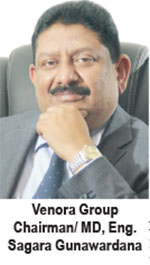
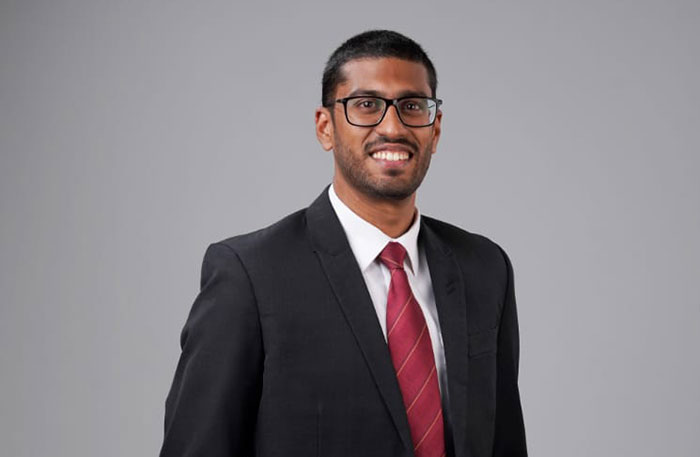
Venora Group of Companies Chairman and MD – who is also the Chairman of Mechanical-Electrical-Plumbing (MEP) Industry Forum Sri Lanka told The Island Financial Review recently that he was confident the new finance minister Basil Rajapaksa could give visionary leadership to transform Sri Lanka’s ease of doing business ranking to be among the first 50-60 or so in the world.
Venora Group Chief – Engineer Sagara Gunawardana who is wearing two industrial caps said, “New Finance Minister Basil Rajapaksa has a huge task before him in the current challenging context. I am confident that he can rise to the challenges the country is faced with because when he was the minister of economic development from 2010-2015, he did a remarkable job at that time. He was able to attract foreign investors to come here by creating an environment conducive to trade and investment. He is very knowledgeable on what needs to be done to foster strategic relationships with all actors of the economy; namely manufacturers, suppliers, exporters, importers and state institutions related to trade.”
 Talking about his group he said,” We are working on six or seven apartment projects in Colombo City limits. They consist of 20 to 30 floors up to 50 floors. In addition, we have undertaken installations at medium and large-scale hotel projects in the South. Although tourism has been hit hard by the pandemic, some investors are still keen on investing in Tourism related businesses. The single digit interest rates introduced by the government could be a main driver for this development. Investors used to borrow at 17%-18% a few years ago and the decision made by the government to get the banks to lend at current rates has encouraged investment, leading to a faster recovery of the economy. Another key reason that has strengthened the confidence of the business community is the government’s accelerated vaccination drive in all parts of the country. It is encouraging to see how the vaccination numbers have increased in the country and I urge everyone to get vaccinated because that is our best hope while other prevention measures must also continue.”
“Venora has been awarded the manufacturing and installation contract of power panels at the new dairy farm project in Ambewela, Pattipola owned by United Dairy Lanka (Pvt.)Ltd., Further, we have undertaken contracts of this nature for a few high-rises coming up in Union Place, Colombo including the iconic TRI-ZEN by John Keells Properties, 447 Luna Tower which is a Japanese investment and we are also working with the new Peoples’ Bank Head office and Akuregoda Ministry of Defence complex.”
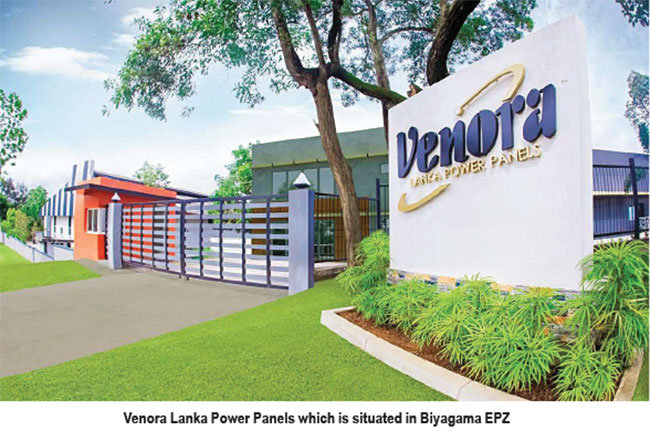
“Mainly we are manufacturers of power panels and we export our products under a BOI entity named Venora Lanka Power Panels situated in Free Trade Zone at Biyagama. The COVID-19 pandemic situation opened the doors for us to export power panels to a few projects in Singapore,Bangladesh,Ethiopia and Kenya as the supply chains there were badly disrupted during the time, therefore, I urge Sri Lankan manufacturers to stay resilient and drive ahead their plants and the workforce to export finished goods because that’s where our future is.”
“According to the World Bank, Sri Lanka is ranked 99 among 190 economies in the ease of doing business. The rank of Sri Lanka improved to 99 in 2019 from 100 in 2018. This means foreign investors have almost 100 investment destinations on their radar, when we invite them to invest in Sri Lanka. This is a hard fact and we have to come up with solutions for it.”
“Authorities need to understand why foreign investors would want to come to Sri Lanka and create those conditions to attract them to the country.”
“Chinese investments in Sri Lanka are a lot. But what we need to be mindful about is whether they do enough value addition in Sri Lanka.. I know many companies that do value addition below 10% and the government is allowing that to happen. We should take a cue from late legendary businessman Upali Wijewardena, the founder and chairman of Upali Group which diversified from confectionery to electronics and automobile assembly with greater value addition on the Sri Lankan soil.”
“Today Micro Cars in Peliyagoda and Mahindra -Ideal Lanka facility in Welipenna assemble vehicles and they source some of their components locally. That’s the kind of investment we need to bring into Sri Lanka because the name of the game is ‘greater value addition’ within the country instead of just attracting FDI to the country.”
“We should invite Toyota, BMW and other reputed brands to assemble their cars here. Today a lot of our trained technicians especially those who pass out from the German Training School go to countries like Australia for employment. If we have the right companies here, we can retain this human resource in the country and allow them the opportunity to boost our production economy, taking a holistic approach to growth.”
“In recent past we could see that professional engineers and other skilled workers migrating to foreign countries because there is a high demand for them in those countries.”
“Everyone is aware that we have a US dollar shortage in the country. Due to this, we encounter difficulties in opening letters of credit (LCs) to import intermediary goods for our export orders. This has badly affected our export orders. Our local customers know about the restrictions and difficulties and they remain patient, but that’s not the case with our foreign customers. Sometimes banks take as long as a month to open an LC which leads to long lags in purchase order lead times. And this makes it impossible for us to deliver the orders on time, so we don’t accept such time-bound orders. In the past few months due to this issue. Venora Group lost export orders worth about US$ 300,000-400,000.”
“A key strategy to have our foreign reserves improved is to have foreign direct investments (FDIs) that earn foreign exchange for us. I know that between 2010 and 2015, the BOI invited a lot of investors from Japan and other countries. In fact, they came here, but now with the current situation of issues with LC opening and labour issues, some of them relocated their operations in Vietnam, Bangladesh and other countries. Investment authorities in Bangladesh and Ethiopia offer a one-stop-shop for investors. In Sri Lanka, the procedure is still cumbersome.”
“The Greater Colombo Economic Commission (GCEC) in the 1980s helped set up various industries in the country by offering favourable investment conditions for reputed investors with free-hold land, tax holidays etc. Today Sri Lanka offers little for such investors. And on the top of it, there is no consistent and cohesive investment policy in the country.”
“Policies on investment tend to change when governments change. From the standpoint of investors, this affects the predictability of their investments in important respects. What we need to put in place are ‘openings’ in the investment promotion process, not ‘barriers’.
“Foreign investors have almost 100 investment destinations on their radar when we invite them to come and invest in Sri Lanka. These are the cold hard facts that we need to address as we try to promote Sri Lanka as an investment destination.”
“Minister Basil Rajapaksa has the ability to streamline the affairs effectively to boost our exports and increase our foreign exchange earnings. I am confident that he will come up with a strategy for this and implement it. I am also confident that he can make reforms to upgrade Sri Lanka’s ease of doing business ranking to be among the first 50-60 or so in the world. Such an improved assessment of business conditions in Sri Lanka will be well-received by investors and private corporations across the world,” he said.

Business
SEC, CSE and CA Sri Lanka sign MOU to advance XBRL-based digital reporting for listed companies

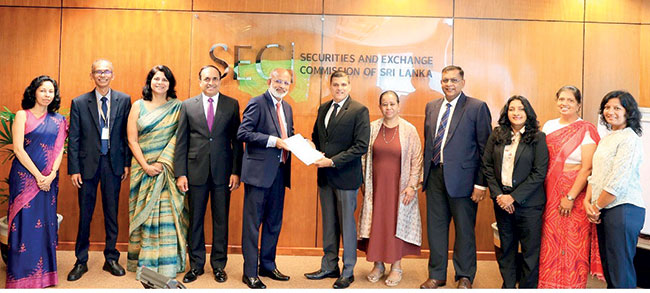
The Securities and Exchange Commission of Sri Lanka (SEC), Colombo Stock Exchange (CSE), and the Institute of Chartered Accountants of Sri Lanka (CA Sri Lanka) signed a Memorandum of Understanding (MoU) to collaborate on the implementation of eXtensible Business Reporting Language (XBRL) based reporting for companies listed on the CSE.
The agreement marks a significant milestone in Sri Lanka’s efforts to modernise corporate reporting and strengthen the digital infrastructure of the capital market. The initiative aims to streamline the submission of both financial and non-financial information by listed entities, enhancing transparency, accessibility and investor confidence.
The MoU formalises the partnership, following the establishment of a joint SEC-CSE committee tasked with driving the initiative. With the in-principle approval of the SEC, the committee has been working closely with CA Sri Lanka to develop the framework required for the successful rollout.
XBRL is the internationally recognised standard for digital business reporting, developed and maintained by XBRL International, a global non-profit consortium. The standard enables financial and business information to be reported in a structured, machine-readable format, facilitating more efficient analysis, comparison and interpretation of corporate disclosures by regulators, investors, analysts and other stakeholders.
The introduction of XBRL reporting is expected to deliver several key benefits for both listed companies and users of financial information. These include reducing reliance on manual data processing, improving the accuracy and consistency of reported information, supporting more advanced data analysis, and lowering long-term reporting costs. The flexibility of the XBRL framework also allows organisations to tailor taxonomies to meet specific reporting requirements. In addition, XBRL adoption will enhance market transparency and efficiency by enabling quicker access to comparable corporate information. It will also align Sri Lanka’s reporting framework with global standards, making the country’s capital market more accessible and attractive to international investors familiar with XBRL-based financial reporting.
Business
LOLC Insurance and Seylan Bank celebrate Bancassurance Excellence through “League of Greatness” 2025
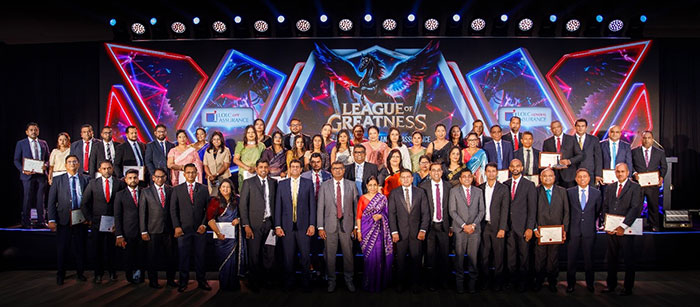
LOLC Insurance recently hosted the “LOLC Insurance – Seylan Bancassurance Felicitation Night 2025” under the theme “League of Greatness,” celebrating the success of its longstanding bancassurance partnership with Seylan Bank. The event marked another milestone in a strategic collaboration that has continued to grow since 2013.
The felicitation ceremony brought together senior management, sales leadership, branch representatives, and top-performing teams from both organisations to recognise excellence, appreciate contributions, and reaffirm the enduring partnership between LOLC Insurance and Seylan Bank. The collaboration currently spans 104 Seylan Bank branches across Sri Lanka, delivering accessible life and general insurance solutions islandwide.
Speaking at the event, Ramesh Jayasekara, Director/Chief Executive Officer, Seylan Bank PLC, stated, “Our partnership with LOLC Insurance continues to create meaningful value for customers while further strengthening the bancassurance proposition within the banking sector. The dedication and collaborative spirit demonstrated by both teams have been instrumental in achieving these milestones and sustaining the growth of this partnership. We look forward to enhancing our collaboration and delivering greater value to customers in the years ahead.”
Sharing insights during the event, Eugene Seneviratne, Deputy General Manager – Retail Banking, Seylan Bank, added, “The professionalism and operational efficiency demonstrated by the bancassurance teams have been instrumental in consolidating this partnership. Our branch teams continue to seamlessly manage day-to-day bancassurance functions with minimal operational escalations, reflecting the strength of a well-structured and highly efficient framework. This has contributed to a smooth and mutually beneficial working relationship, enabling the partnership to enhance coordination, execution, and overall performance.”
Addressing the gathering, Kithsiri Gunawardena, Chairman/Principal Officer of LOLC General Insurance and Director of LOLC Life Assurance, stated, “Successful partnerships are built on trust, shared values, and a common vision. The strength and longevity of this collaboration reflect the commitment of both organisations to delivering meaningful impact to customers while advancing the country’s bancassurance sector. The positive feedback and appreciation consistently received from Seylan Bank regarding the quality of service delivered and the steadfast support extended by the teams stand as a testament to the professionalism and service excellence upheld throughout the partnership.”
Most people, when they think about retirement, think about income. Will there be enough to cover food, utilities, and the basics of daily life? That question is important. But there is a second question that sits right behind it, quieter and far more expensive, and most people do not ask it until it is already upon them. What happens when you get sick?
Healthcare in retirement is not an occasional inconvenience. For most Sri Lankans, it becomes one of the largest and most unpredictable expenses of the post-work years. It arrives gradually at first, and then all at once. A routine check-up becomes a specialist referral. A specialist referral leads to investigations. Investigations lead to a diagnosis. A diagnosis leads to medication that never stops. And running alongside all of it, quietly compounding, is an inflation rate for healthcare that outpaces most other costs a retiree faces.
This is the retirement expense that most financial plans either underestimate or ignore entirely. It is a gap that Ceylinco Life, Sri Lanka’s life insurance market leader for 22 consecutive years, has observed widen steadily across the communities it serves and the thousands of policyholders whose retirement journeys it has accompanied over three decades.
“Healthcare is the cost that most people acknowledge in the abstract but do not plan for in practice. We have seen, over many years and across many thousands of policyholders, that the single biggest financial shock in retirement is rarely a collapse in savings. It is an illness, or a prolonged condition, that was never budgeted for. Sri Lanka’s public health system has served this country well, but it was not built for an ageing population managing multiple chronic conditions over decades. The responsibility to bridge that gap sits with each individual, and the earlier that planning begins, the more manageable that gap becomes,” says Dhiranjan Canagasabey, Senior Assistant General Manager/Head of Marketing, Ceylinco Life.
A country that is ageing faster than its health system is preparing for
Sri Lanka is in the middle of a demographic shift that has no historical precedent in this country. By 2042, one in four Sri Lankans will be above the age of 60. Life expectancy, according to United Nations World Population Prospects 2024, now stands at approximately 77.67 years nationally. That means the average retiree is looking at roughly 17 years of post-work life, with health needs that become more intensive, and more expensive, with every passing year.
Non-communicable diseases are at the centre of that picture. According to research published in 2025 in the Journal of Clinical Medicine, NCD deaths in Sri Lanka have risen substantially over two decades, with total deaths due to diabetes alone rising by 169% between 2004 and 2020. Cardiovascular disease, hypertension, chronic kidney disease, and cancer all carry long-term treatment costs that can run for years or decades before they become fatal. These are not short-term medical events. They are sustained financial obligations.
Sri Lanka allocates approximately 4.4% of GDP to total health expenditure, well below the global average of 6.74%, according to World Bank data updated in December 2025. Government public health spending accounts for only around 8 to 9% of general government expenditure. The gap between what the public system offers and what the ageing population will need is already visible. It is going to widen considerably.
What free healthcare actually means for a retiree
Sri Lanka has long been proud of its free public healthcare system, and rightly so. It has delivered health outcomes well above what the country’s income level would typically produce. But pride in the system should not obscure what it cannot do, and increasingly, what it is struggling to do consistently.
According to the Institute of Policy Studies, access to primary healthcare fell from 95% of the population in 2019 to 82% in 2022 and 2023, with rural areas bearing the steepest decline. Household healthcare costs, in the same period, rose by 48% in a single year between 2020 and 2021. Medicine shortages, long queues, and limited specialist services in provincial hospitals are not new complaints. But for an elderly person managing a chronic condition, they translate directly into out-of-pocket spending that was never planned for.
On average, more than 60% of Sri Lankan households already incur private healthcare costs, according to a study published in the journal Health Policy. For households that include elderly members with chronic conditions, that proportion is higher, and the burden is heavier. The combination of a free system under strain and rising private costs is not a future risk. It is already the daily reality for many retirees.
The quiet toll of chronic illness
A 65-year-old managing type 2 diabetes, which is increasingly common in Sri Lanka, does not face a single large medical expense. They face a continuous one. Monthly medication. Quarterly blood tests. Periodic specialist consultations at a private facility, because the waiting list at the government hospital is too long or the specialist they need is unavailable locally. Annual check-ups. Occasional hospitalisation when blood sugar levels become difficult to control. Each item is manageable on its own. Together, across a fifteen-year retirement, they represent a substantial sum.

Will new UGC Circular 06/2026 strengthen or weaken open and distance learning in Sri Lanka?

SEC, CSE and CA Sri Lanka sign MOU to advance XBRL-based digital reporting for listed companies

Underworld threats to holy shrine

Ukraine’s power struggle spills on to the streets

Loneliness of young men: A crisis that demands compassion

Appleby Plays Chicken

‘Dates have the highest sugar content to fight Coronavirus’

Sunday Island 27 December – Headlines

#SundayIsland 17th December – Headlines

Sunday Island – 28th March

Sunday Island Headlines – 21 March

Sunday Island – 21st February – Headlines
-
 Features5 days ago
Two memorable excerpts from a former SLAF commander’s memoir
-
 Business5 days ago
‘Giving up was never an option’: The fisherman who fought back after losing millions in SL
-
 Latest News6 days ago
Davis cup Asia/Oceania Group IV 2026 to be held in Colombo from 20th to 25th July
-

 Features5 days ago
Erdoğan’s New Republic
-
 Life style5 days ago
Taste of the Swiss Alps comes to Colombo
-
 News6 days ago
Evidence recorded in money laundering case against Yoshitha Rajapaksa
-
 Midweek Review2 days ago
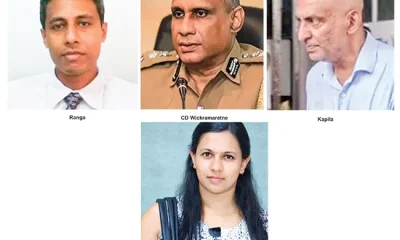
Three high-profile alleged suicides shaping key investigations
-
 News6 days ago
Dengue outbreak gallops ahead: Infections surpasses 73,455, leaving 50 dead