
Features
Festival of life and human fraternity

By Rev. Fr. Leopold Ratnasekera OMI
OMI Seminary, Ampitiya, Kandy
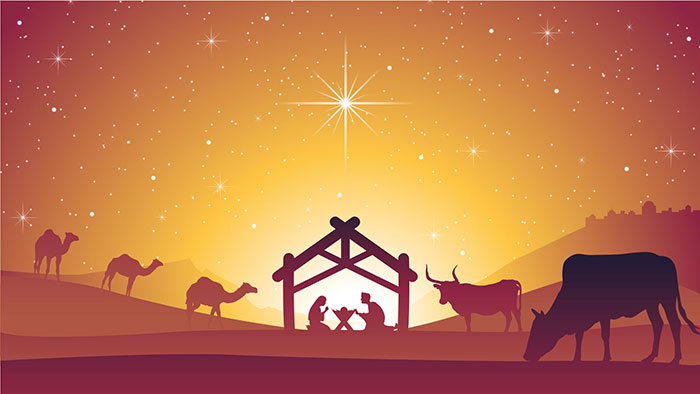
 Christmas is the story about a newborn baby, the unique Jewish child of Bethlehem who saw the light of day during a night lit by a star of wonder that hovered over the city of King David in modern day Palestine. Birthdays are celebrated in appreciation of the gift and blessing of life as well as in thanksgiving to the creator who makes all prospective mothers become sanctuaries of new throbbing life. Each newborn infant is a miracle of nature and a wonder to behold, a cosmic symbol, a masterpiece in the hands of the divine potter, a bearer of God’s very image and likeness, a fruit of love, a bundle of joy, the pride of parents, a bond in the family, a future man and a human called to be a saint. Every newborn introduces us to the august mystery of life, an echo of human dignity and a witness to the God of Life and Love who invites all people to a global human fraternity, celebrating life as well as sharing its blessings in abundance.
There is nothing more precious and of infinite value in this world of space and time, than a life of a human being: Infant, child, youth, adult, man, woman or the elderly and even the terminally ill and infirm. All world’s resources should be at the service of life including the latest and most sophisticated technology and social media. A world culture that depreciates life and considers it only as a commodity sadly falls short of a justified rational vision of humanity. For human beings, the greatest blessing to be accrued is fraternity, brotherhood and solidarity, without which humanity would plunge into utter disarray and be subject to feuds, conflicts, enmities and mistrust. These unfortunate phenomena are brazenly at work even at this moment, in our world. Destructive competitiveness in commerce, business and trade is rampant in the international economic scenario. Many countries vie for economic superiority.
The abuse of religion in all its fundamentalist forms, for political purposes, at times flares up in the form of open terrorist activities and violence which, in principle, no religion can justify or condone. Islamic fundamentalism falls into this category, whereby people are branded apostates and killed summarily for blasphemy just because they are of a different religious faith or tradition. In a civilised society, this is utterly unacceptable and to be condemned as a travesty of religion and a crime against humanity. It is imperative that those in leadership, in various religions, strive to raise awareness about authentic religion, to help avoid misrepresentation by extremist elements.
Another dangerous trend is the arms race. Nuclear proliferation may even lead to the militarization of free space and distant planets, which definitely spells disaster as it fosters distrust among nations. The continued debates at the UN on this crucial issue and the UN’s failure to get nations to agree to abandon such dangerous projects sadly threatens world peace and fraternity among nations and peoples. Lastly, poverty hangs over humanity like a brooding dark cloud, due to multinational companies that monopolise world trade, stunting the growth of local economies through unjust intrusion. As a result of third world poverty in the southern hemisphere, more than two thirds of the world’s population still live below the poverty line. It manifests in the form of unemployment, depreciation of local currencies, inadequate health facilities, inflation in economies, local conflicts and tensions that discourage foreign investments. Abuse of political power and national resources for personal aggrandisement further exacerbates the situation.
In such a scenario, human fraternity shatters as does democracy. Critics who blame relentless militarism claim that with the money spent on armaments, their manufacture, sale and deployment, the hungry millions can easily be fed, while also providing aid for sectors such as education and healthcare and developing other basic infrastructure facilities like serviceable roads and decent housing for the rural poor. The migration of rural folks into crowded urban enclosures also causes psychological and emotional issues. Although the incredible feats of electronic and social media are admirable, the moral havoc unleashed is beyond compare and has led to the deplorable violation of human dignity, individual rights and privacy and the general deterioration of moral values and ethical standards, continuously dehumanising society.
Science, technology and communication must be at the service of mankind which would ameliorate quality of life and living conditions the world over. The world must be transformed into a more humane, just and rich civilization and a safe haven for those in overcrowded cities, farmers, small-business owners, millions who migrate or are marooned on the high seas, endangering their very lives, and smaller countries threatened with insecurity by world powers. The culturally and militarily conditioned clash of civilizations has to be prevented for a more peaceful world to evolve where nations understand, sympathise with and help one another. Dialogue will foster mutual understanding among peoples in the kind of global village that has emerged.
Christmas, good news about life, can easily be termed the gospel of life. It is also the gospel of infants, the voice of children, challenging the adult world as powerful agents echoing the dignity of life. Consequently, Christmas is a child-centred festival and celebration whereby the adult world is made to appreciate the wonder and beauty of life. All forces threatening it have to be squarely challenged, such as abortion, assisted suicide, euthanasia and all forms of violence, whether domestic, social or political, which deserve a right-thinking man’s just condemnation. Christmas always gathers people in families, circles of friends and well-wishers in celebration. Our shopping and gifting are part and parcel of celebrating this festival which highlights the spirit of Christmas, wherein in the infant babe of Bethlehem, born on the first Christmas night, God gave himself in love and kindness to mankind naming himself ‘Emmanuel’, which means God-with-us. The world and its history, as well as humanity and its civilization have never been the same since the birth of Jesus Christ. He was a humble carpenter’s son from Galilee of Palestine, who was destined to change the course of humanity forever.
His teaching about the need to love the One True God despising all other idolatrous worship, be it of gods or mammon, coupled with its connatural demand of love and respect for the neighbour that makes one cross all racial, language, ethnic, social and national borders, if only heeded by modern man and his institutions, would surely bring about a new world of human fraternity and healthy social relationships. In this global village, we need a global ethic and this can be propagated only via religious values brought in to focus through dialogue between world religions. It is opportune to commit oneself to this herculean task while the whole world celebrates Christmas.
The celebration of Christmas entails the challenge of promulgating its spirit beyond Christmastide throughout the year and beyond. Though it is a celebration focused on a newborn child, we who celebrate are invited into his world of peace and humanity, which becomes everyone’s dream and solemn responsibility.
The beauty and mystery of a child cannot be justly understood without its concomitants of parenting, family and the converse duty of providing it with everything – intellectual, cultural, civic and social – needed for growth, maturity and development. The family with its domestic background, the school with its formative atmosphere and religious institutions with their spiritual resources contribute, all in their due and specific measure, to social progress. We live in a world where individuals are bound to nature as well as to others in society, where no man is an island.
Jesus Christ welcomed all people with open arms, as when praising the Samaritan leper returning to thank him for the cure, the proverbial good Samaritan who went to the succour of the Jew, attacked by the brigands, the many other gentile women for whom he worked miracles or the Roman centurion’s servant he healed. The three kings reputed to be wise men journeying to Bethlehem were gentiles from the East: A good harbinger of things to come. Christ taught high ideals like walking the extra mile, forgiving wrong-doers seventy times seven, loving enemies and doing good to those who hate. These were extraordinary messages for the Palestinian society of his day.
The Babe of Bethlehem registers the humble beginnings of the greatest life ever lived, embodies the greatest story ever told and the most extraordinary event ever recorded in the annals of human history. Jesus Christ, whose birth is today globally celebrated, is a universal and cross cultural treasure. At every Christmas, the call for human dignity and global fraternity must be heard loud and clear.



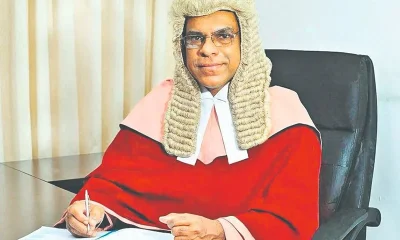


The appointment of former minister Eran Wickremaratne to chair the Sri Lanka Cricket Transformation Committee is significant for more than the future of cricket. It signals a possible shift in the culture of governance even as it offers Sri Lankan cricket a fighting possibility to get out of the doldrums of failure. There have been glorious patches for the national cricket team since the epochal 1996 World Cup triumph. But these patches of brightness have been few and far between and virtually non-existent over the past decade. At the centre of this disaster has been the failures of governance within Sri Lanka Cricket which are not unlike the larger failures of governance within the country itself. The appointment of a new reform oriented committee therefore carries significance beyond cricket. It reflects the wider challenge facing the country which is to restore trust in public institutions for better management.
The appointment of Eran Wickremaratne brings a professional administrator with a proven track record into the cricket arena. He has several strengths that many of his immediate predecessors lacked. Before the ascent of the present government leadership to positions of power, Eran Wickremaratne was among the handful of government ministers who did not have allegations of corruption attached to their names. His reputation for financial professionalism and integrity has remained intact over many years in public life. With him in the Cricket Transformation Committee are also respected former cricketers Kumar Sangakkara, Roshan Mahanama and Sidath Wettimuny together with professionals from legal and business backgrounds. They have been tasked with introducing structural reforms and improving transparency and accountability within cricket administration.
A second reason for this appointment to be significant is that this is possibly the first occasion on which the NPP government has reached out to someone associated with the opposition to obtain assistance in an area of national importance. The commitment to bipartisanship has been a constant demand from politically non-partisan civic groups and political analysts. They have voiced the opinion that the government needs to be more inclusive in its choice of appointments to decision making authorities. The NPP government’s practice so far has largely been to limit appointments to those within the ruling party or those considered loyalists even at the cost of proven expertise. The government’s decision in this case therefore marks a potentially important departure.
National Interest
There are areas of public life where national interest should transcend party divisions and cricket, beloved of the people, is one of them. Sri Lanka cannot afford to continue treating every institution as an arena for political competition when institutions themselves are in crisis and public confidence has become fragile. It is therefore unfortunate that when the government has moved positively in the direction of drawing on expertise from outside its own ranks there should be a negative response from sections of the opposition. This is indicative of the absence of a culture of bipartisanship even on issues that concern the national interest. The SJB, of which the newly appointed cricket committee chairman was a member objected on the grounds that politicians should not hold positions in sports administration and asked him to resign from the party. There is a need to recognise the distinction between partisan political control and the temporary use of experienced administrators to carry out reform and institutional restructuring. In other countries those in politics often join academia and civil society on a temporary basis and vice versa.
More disturbing has been the insidious campaign carried out against the new cricket committee and its chairman on the grounds of religious affiliation. This is an unacceptable denial of the reality that Sri Lanka is a plural, multi ethnic and multi religious society. The interim committee reflects this diversity to a reasonable extent. The country’s long history of ethnic conflict should have taught all political actors the dangers of mobilising communal prejudice for short term political gain. Sri Lanka paid a very heavy price for decades of mistrust and division. It would be tragic if even cricket administration became another arena for communal suspicion and hostility. The present government represents an important departure from the sectarian rhetoric that was employed by previous governments. They have repeatedly pledged to protect the equal rights of all citizens and not permit discrimination or extremism in any form.
The recent international peace march in Sri Lanka led by the Venerable Bhikkhu Thich Paññākāra from Vietnam with its message of loving kindness and mindfulness to all resonated strongly with the masses of people as seen by the crowds who thronged the roadsides to obtain blessings and show respect. This message stands in contrast to the sectarian resentment manifested by those who seek to use the cricket appointments as a weapon to attack the government at the present time. The challenges before the Sri Lanka Cricket Transformation Committee parallel the larger challenges before the government in developing the national economy and respecting ethnic and religious diversity. Plugging the leaks and restoring systems will take time and effort. It cannot be done overnight and it cannot succeed without public patience and support.
New Recognition
There is also a need for realism. The appointment of Eran Wickremaratne and the new committee does not guarantee success. Reforming deeply flawed institutions is always difficult. Besides, Sri Lanka is a small country with a relatively small population compared to many other cricket playing nations. It is also a country still recovering from the economic breakdown of 2022 which pushed the majority of people into hardship and severely weakened public institutions. The country continues to face unprecedented challenges including the damage caused by Cyclone Ditwah and the wider global economic uncertainties linked to conflict in the Middle East. Under these difficult circumstances Sri Lanka has fewer resources than many larger countries to devote to both cricket and economic development.
When resources are scarce they cannot be wasted through corruption or incompetence. Drawing upon the strengths of all those who are competent for the tasks at hand regardless of party affiliation or ethnic or religious identity is necessary if improvement is to come sooner rather than later. The burden of rebuilding the country cannot rest only on the government. The crisis facing the country is too deep for any single party or government to solve alone. National recovery requires capable individuals from across society and from different sectors such as business and civil society to work together in areas where the national interest transcends party politics. There is also a responsibility on opposition political parties to support initiatives that are politically neutral and genuinely in the national interest. Not every issue needs to become a partisan battle.
Sri Lanka cricket occupies a special place in the national consciousness. At its best it once united the country and gave Sri Lankans a sense of pride and international recognition. Restoring integrity and professionalism to cricket administration can therefore become part of the larger task of national renewal. The appointment of Eran Wickremaratne and the new committee, while it does not guarantee success, is a sign that the political leadership and people of the country may be beginning to mature in their approach to governance. In recognising the need for competence, integrity and bipartisan cooperation and extending it beyond cricket into other areas of national life, Sri Lanka may find the way towards more stable and successful governance..
by Jehan Perera

Court vacation this year came with an unexpected lesson, not from a courtroom but from the streets of Dhaka — a city that moves, quite literally, on three wheels.
Above the traffic, a modern metro line glides past concrete pillars and crowded rooftops. It is efficient, clean and frequently cited as a symbol of progress in Bangladesh. For a visitor from Sri Lanka, it inevitably brings to mind our own abandoned light rail plans — a project debated, politicised and ultimately set aside.
But Dhaka’s real story is not in the air. It is on the ground.
Beneath the elevated tracks, the streets belong to three-wheelers. Known locally as CNGs, they cluster at junctions, line the edges of markets and pour into narrow roads that larger vehicles avoid. Even with a functioning rail system, these three-wheelers remain the city’s most dependable form of everyday transport.
Within hours of arriving, their importance becomes obvious. The train may take you across the city, but the journey does not end there. The last mile — often the most complicated part — belongs entirely to the three-wheeler. It is the vehicle that gets you home, to a meeting or simply through streets that no bus route properly serves.
There is a rhythm to using them. A destination is mentioned, a price is suggested and a brief negotiation follows. Then the ride begins, edging into traffic that feels permanently compressed. Drivers move with instinct, adjusting routes and squeezing through gaps with a confidence built over years.
It is not polished. But it works.
And that is where the comparison with Sri Lanka becomes less about what we lack and more about what we already have.
Back home, the three-wheeler has long been part of daily life — so familiar that it is often discussed only in terms of its problems. There are frequent complaints about fares, refusals or the absence of meters. More recently, the industry itself has become entangled in politics — from fuel subsidies to regulatory debates, from election-time promises to periodic crackdowns.
In that process, the conversation has shifted. The three-wheeler is often treated as a problem to be managed, rather than a service to be strengthened.
Yet, seen through the experience of Dhaka, Sri Lanka’s system begins to look far more settled — and, in many ways, ahead.
There is a growing structure in place. Meters, while not perfect, are widely recognised. Ride-hailing apps have added transparency and reduced uncertainty for passengers. There are clearer expectations on both sides — driver and commuter alike. Even small details, such as designated parking areas in parts of Colombo or the increasing standard of vehicles, point to an industry slowly moving towards professionalism.
Just as importantly, there is a human element that remains intact.
In Sri Lanka, a three-wheeler ride is rarely just a transaction. Drivers talk. They offer directions, comment on the day’s news, or share local knowledge. The ride becomes part of the social fabric, not just a means of getting from one point to another.
In Dhaka, the scale of the city leaves less room for that. The interaction is quicker, more direct, shaped by urgency. The service is essential, but it is under constant pressure.
What stands out, across both countries, is that the three-wheeler is not a temporary or outdated mode of transport. It is a necessity in dense, fast-growing Asian cities — one that fills gaps no rail or bus system can fully address.
Large infrastructure projects, like light rail, are important. They bring efficiency and long-term capacity. But they cannot replace the flexibility of a three-wheeler. They cannot reach into narrow streets, respond instantly to demand or provide that crucial last-mile connection.
That is why, even in a city that has invested heavily in modern rail, Dhaka still runs on three wheels.
For Sri Lanka, the lesson is not simply about what could have been built, but about what should be better managed and valued.
The three-wheeler industry does not need to be politicised at every turn. It needs steady regulation — clear fare systems, proper licensing, safety standards — alongside encouragement and recognition. It needs to be seen as part of the solution to urban transport, not as a side issue.
Because for thousands of drivers, it is a livelihood. And for millions of passengers, it is the most immediate and reliable form of mobility.
The tuk-tuk may not feature in grand policy speeches or infrastructure blueprints. It does not run on elevated tracks or attract international attention. But on the ground, where daily life unfolds, it continues to do what larger systems often struggle to do — show up, adapt and keep moving.
And after watching Dhaka’s streets — crowded, relentless, yet functioning — that small, three-wheeled vehicle feels less like something to argue over and more like something to get right.
(The writer is an Attorney-at-Law with over a decade of experience specialising in civil law, a former Board Member of the Office of Missing Persons and a former Legal Director of the Central Cultural Fund. He holds an LLM in International Business Law)
by Sampath Perera recently in Dhaka, Bangladesh

 According to reports coming my way, the entertainment scene, in Dubai, is very much opening up, and buzzing again!
After a quieter few months, May is packed with entertainment and the whole scene, they say, is shifting back into full swing.
The Seven Notes band, made up of Sri Lankans, based in Dubai, are back in the spotlight, after a short hiatus, due to the ongoing Middle East problems.
On 18th April they did Legends Night at Mercure Hotel Dubai Barsha Heights; on Thursday, 9th May, they will be at the Sports Bar of the Mercure Hotel for 70s/80s Retro Night; on 6th June, they will be at Al Jadaf Dubai to provide the music for Sandun Perera live in concert … and with more dates to follow.
These events are expected to showcase the band’s evolving sound, tighter stage coordination, and stronger audience engagement.
With each performance, the band aims to refine its identity and build a loyal following within Dubai’s vibrant nightlife and event scene.

Pasindu Umayanga: The group’s new vocalist
What makes Seven Notes standout is their versatility which has made the band a dynamic and promising act.
With a growing performance calendar, new talent integration, and international ambitions, the band is definitely entering a defining phase of its journey.
Dubai’s music industry, I’m told, thrives on diversity, energy, and audience connection, with live bands playing a crucial role in elevating events—from corporate shows to private concerts. Against this backdrop, Seven Notes is positioning itself not just as another band, but as a performance-driven musical unit focused on consistency and growth.
Adding fresh momentum to the group is Pasindu Umayanga who joins Seven Notes as their new vocalist. This move signals a strategic upgrade—not just filling a role, but strengthening the band’s front-line presence.
Looking beyond local stages, Seven Notes is preparing for an international tour, to Korea, in July.

Bassist Niluk Uswaththa: Spokesperson for Seven Notes
According to bassist Niluk Uswaththa, taking a band abroad means: Your sound must hold up against unfamiliar audiences, your performance must translate beyond language, and your discipline must be at a professional level.
“If executed well, this tour could redefine Seven Notes from a local band into an emerging international act,” added Niluk.
He went on to say that Dubai is not an easy market. It’s saturated with highly experienced, multi-genre bands that can adapt instantly to any crowd.
“To stand out consistently you need to have tight rehearsal discipline, unique sound identity (not just covers), strong stage chemistry, audience retention – not just applause.”
No doubt, Seven Notes is entering a critical growth phase—new member, multiple shows, and an international tour on the horizon. The opportunity is real, but so is the pressure.
However, there is talk that Seven Notes will soon be a recognised name in the regional music scene.

Members of Sri Lanka Cricket Transformation Committee Officially Appointed

Three prison guards arrested following the death of an inmate

Showers or thundershowers will occur at most places of the island after 1.00 pm.

CJ urged to inquire into AKD’s remarks on May 25 court verdict

ITAK MPs representing East take their woes to Canadian HC

People demand release of Keppapilavu land

‘Dates have the highest sugar content to fight Coronavirus’

Sunday Island 27 December – Headlines

#SundayIsland 17th December – Headlines

Sunday Island – 28th March

Sunday Island Headlines – 21 March

Sunday Island – 21st February – Headlines
-
 News6 days ago
Treasury chief’s citizenship details sought from Australia
-

 News5 days ago
Rooftop Solar at Crossroads as Sri Lanka Shifts to Distributed Energy Future
-
 News4 days ago
“Three-in-one blood pressure pill can significantly reduce risk of recurrent strokes”
-

 News6 days ago
Central Province one before last in AL results
-

 Sports6 days ago
Well done AKD!
-

 News4 days ago
Alarm raised over plan to share Lanka’s biometric data with blacklisted Indian firm
-

 News1 day ago
USD 3.7 bn H’tota refinery: China won’t launch project without bigger local market share
-
 News2 days ago
Easter Sunday Case: Ex-SIS Chief concealed intel, former Defence Secy tells court