
Latest News
Fears of global instability drive Singapore voters into ruling party’s arms


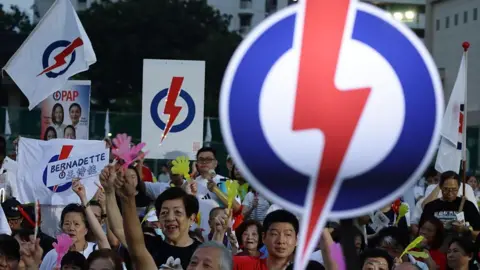
Singapore’s ruling People’s Action Party (PAP) has won by a landslide in an election dominated by concerns over the cost of living and the country’s future economic stability.
Led by Prime Minister Lawrence Wong in his first election since he became party leader last year, the PAP clinched 65.6% of the vote and an overwhelming majority of the 97 seats in parliament.
Singaporeans went to the polls on Saturday worrying about inflation, wage stagnation and job prospects.
The result will be widely seen as a flight to safety to the PAP amid fears of global turbulence.
“Singapore feels particularly vulnerable given its economy’s size and exposure to international forces… Also we are notoriously risk-averse voters,” said Ian Chong, an associate professor in political science at the National University of Singapore (NUS).
The main opposition, the centre-left Workers’ Party (WP), failed to capture more seats but continued to hold on to its 10 seats in parliament.
The centre-right PAP has governed Singapore continuously since 1959, making it one of the longest-ruling political parties in the world.
It has enjoyed strong support from Singaporeans, particularly from older generations that have seen the country flourish under PAP rule.
But while elections have been free from fraud and irregularities, critics also say the party maintains an unfair advantage through gerrymandering and a tightly controlled media.
In the last three polls prior to Saturday’s result, the PAP saw two of its lowest-ever vote shares, while the WP made increasing inroads in parliament.
The PAP won a reduced majority in the 2020 election, in what was seen as a referendum on their handling of the Covid outbreak.
But Saturday’s result saw the PAP return to form, as voters gave Wong a strong mandate.
In a televised address early on Sunday, he thanked voters and said the results “will put Singapore in a better position to face this turbulent world”.
“Many are watching the election closely, whether it’s international media, investors or foreign governments, they would have taken note of tonight’s results,” he said.
“It’s a clear signal of trust, stability and confidence in your government. Singaporeans, too, can draw strength from this and look ahead to our future.”
While its open and globalised economy remains fairly buoyant, Singapore saw inflation surge in the last few years.
The government has attributed this to external factors such as the Ukraine and Gaza wars and supply chain disruptions. Critics however say a controversial goods and services tax hike exacerbated it.
With the US-China trade war under way and a 10% US tariff looming, authorities and experts have warned of shocks to the economy and possibly a technical recession.
Against this backdrop, the PAP campaigned on a message of stability.
Wong repeatedly promised that his team would “steer Singapore through the storm”, while warning that if more opposition MPs were elected, he would lose capable ministers at a time when good governance was most needed.
It was a message that resounded with many voters. One PAP supporter, a start-up owner who only wanted to be known as Amanda, told the BBC that her business has been affected with clients pausing some projects due to the economic climate. “The headwinds are not great, there’s a lot of uncertainty… I want a party with experience running the government,” she said.
Though the PAP saw a series of scandals in recent years, including one involving a cabinet minister. this was hardly a talking point during the election period. Analysts said it was further from people’s minds given more immediate concerns about the economy.

Some see the result as a sign of confidence in Wong, who led Singapore’s Covid taskforce and became a familiar face as he regularly addressed the public during the pandemic.
“He’s shown that he is capable, with the Covid taskforce giving him credence. He was the guiding hand on that rudder… and he projects that stability for future global financial uncertainties,” said Rebecca Tan, a political science lecturer with NUS.
Wong is the first PAP prime minister to have improved the party’s vote share in his first election. Previous PMs saw dips in the polls in what analysts used to call the “new PM” effect”, or a reflection of voters’ uncertainty in a new leader.
The PAP’s strong result was also partly due to a fragmented opposition, with 10 parties going up against them. With few exceptions, most performed poorly.
Teo Kay Key, a research fellow at the think tank Institute of Policy Studies, said that despite recent elections showing there was a desire for political diversity, the latest result “shows that people are happy with the number of opposition MPs” for now.
But, she added, Singaporeans also “seem to be more selective” now when it comes to casting votes for the opposition, pointing to the WP’s performance.
The WP had campaigned on a platform of lowering the cost of living and strengthening the safety net.
While it failed to win more seats, it also saw increased vote shares in the constituencies it retained and close fights with the PAP in others, cementing its status as the country’s strongest opposition party.
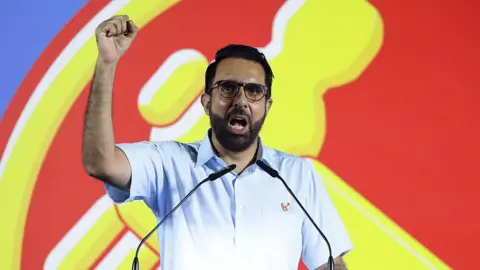
It turned in a robust performance despite recent controversial cases involving a former Workers’ Party MP and WP leader Pritam Singh, who were both found guilty of lying to parliament. Many in the WP’s support base believe the case, against Singh especially, was politically motivated.
Addressing supporters shortly after the results for his constituency were declared, Singh acknowledged that “it was always going to be a difficult election”.
But he added: “The slate is wiped clean, we start work again tomorrow, and we go again.”
[BBC]

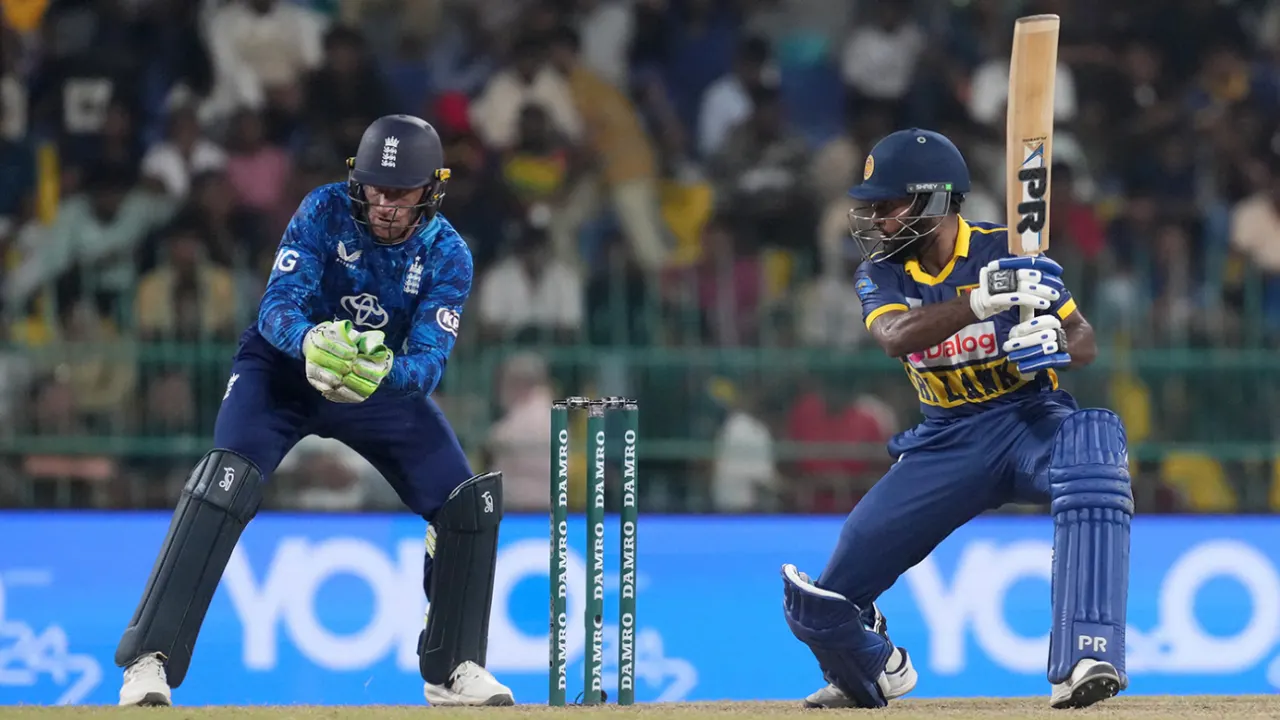
Pavan Rathnayake has re-entered Sri Lanka’s T20I squad following his 121 off 115 balls in the third ODI against England. Omitted from the squad to play England in three T20Is, however, are fast bowler Nuwan Thushara and batting allrounder Kamindu Mendis. Legspinner Dushan Hemantha has also been left out.
Left-arm-spinning allrounder Dunith Wellalage retains his place in the T20I squad, though he hasn’t played a T20I since September. Maheesh Theekshana and Wanindu Hasaranga are the two other frontline spinners. Dhananjaya de Silva and Charith Asalanka – who both bowl fingerspin – are in the squad too.
On the seam-bowling front, Eshan Malinga and Pramod Madushan are in the squad, in addition to Dushmantha Chameera and Matheesha Pathirana. Thushara had been a consistent presence in Sri Lanka’s T20I squads over the past two years, but his omission comes after several modest performances since September.
Aside from Rathnayake’s inclusion, the batting is largely as expected, with Kusal Perera coming back in the only format he now plays.
Sri Lanka are yet to announce their squad for the T20 World Cup, which will start on February 7. Teams have time till January 31 to make changes to squads, following which they will have to get the approvals from the ICC to make changes.
Sri Lanka squad for England T20Is:
Dasun Shanaka (capt.), Pathum Nissanka, Kamil Mishara, Kusal Mendis, Kusal Perera, Dhananjaya de Silva, Charith Asalanka, Janith Liyanage, Pavan Rathnayake, Dunith Wellalage, Wanindu Hasaranga, Maheesh Theekshana, Dushmantha Chameera, Pramod Madushan, Matheesha Pathirana, Eshan Malinga
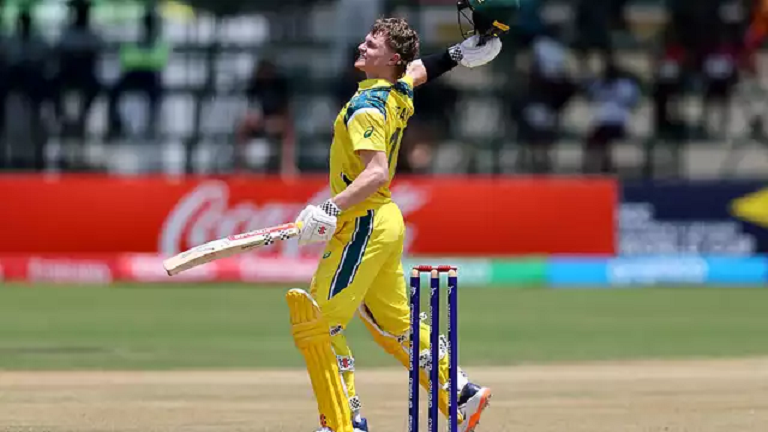
Australia Under 19s 314/7 in 50 overs (Oliver Peake 109, Nitesh Samuel 56; Jakeem Pollard 2-37, R’Jai Gittens 2-45) beat West Indies Under 19s 292/9 in 50 overs (Zachary Carter 64, Joshua Dorne 62; Charles Lachmund 4-66, Aryan Sharma 2-47) by 22 runs
Latest News
The National Strategic Action Plan to monitor and combat human trafficking (2026-2030) officially launched

The Prime Minister Dr. Harini Amarasuriya participated in the official launch of the National Strategic Action Plan to monitor and combat human trafficking (2026-2030) held on 28th of January at the Cinnamon Life Hotel, Colombo. The event was jointly organized by the Ministry of Defence, National Anti Human Trafficking Task Force ( NAHTTF), International Organization for Migration (IOM).
This five-year Action Plan was unveiled under the leadership of the Ministry of Defence, in its capacity as Chair of the NAHTTF and with the technical support from the International Organization for Migration (IOM). The National Strategic Action Plan 2026-2030 establishes a unified national framework to prevent human trafficking, protect and assist victims, strengthen law enforcement responses, and enhance accountability.
Addressing the event, the Prime Minister reaffirmed the Government’s commitment to strengthening national efforts to prevent and address human trafficking and stated that the Action Plan must transcend its symbolic launch into concrete, coordinated, and sustained implementation.
The Prime Minister also noted that the launch of the National Strategic Action Plan is timely, as it operationalizes the four internationally recognized pillars of the anti-trafficking framework namely prevention, protection, prosecution, and partnership.
The Prime Minister further stated,
“Caring for trafficking survivors in Sri Lanka requires a holistic, gender-sensitive, and survivor-centered approach that addresses both immediate protection and long-term recovery. This includes safe shelter, medical care, and trauma-informed psychological support, with particular attention to women and girls who experience more severe and gendered forms of violence, alongside legal assistance, economic empowerment, and skills development to prevent re-trafficking.
Human trafficking is a structural and social challenge that requires sustained, multi-sectoral action. Ministries and government agencies must embed anti-trafficking priorities into their core strategies and day-to-day operations, ensuring institutional integration and professional accountability”.
The event was attended by Parinda Ranasinghe Jnr, PC, Attorney General of the Democratic Socialist Republic of Sri Lanka, the Secretary to the Ministry of Defence and Chair of the NAHTTF, Air Vice Marshal Sampath Thuyacontha; and Kristin Parco, IOM Chief of Mission in Sri Lanka and Maldives. Members of the NAHTTF representing 23 key government entities, along with representatives of the diplomatic community, United Nations entities and Civil Society Organizations (CSOs).
(Prime Minister’s Media Division)

Rathnayake in Sri Lanka squad for England T20Is; Thushara, Kamindu left out

U19 World Cup: Peake ton fires Australia into the semis

The National Strategic Action Plan to monitor and combat human trafficking (2026-2030) officially launched

Seifert, Santner headline New Zealand’s massive win despite Dube’s 15-ball fifty

Dry weather will prevail inmost parts of the island.

No changes to IMF agreement despite Cyclone Ditwah impact

‘Dates have the highest sugar content to fight Coronavirus’

Sunday Island 27 December – Headlines

#SundayIsland 17th December – Headlines

Sunday Island – 28th March

Sunday Island Headlines – 21 March

Sunday Island – 21st February – Headlines
-
 Business3 days ago
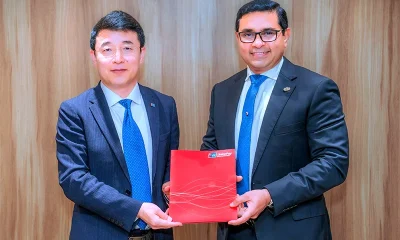
ComBank, UnionPay launch SplendorPlus Card for travelers to China
-
 Business4 days ago
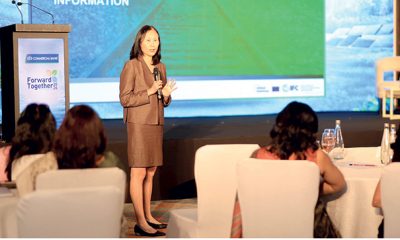
ComBank advances ForwardTogether agenda with event on sustainable business transformation
-
 Opinion4 days ago
Conference “Microfinance and Credit Regulatory Authority Bill: Neither Here, Nor There”
-

 Opinion6 days ago
A puppet show?
-

 Opinion3 days ago
Luck knocks at your door every day
-
 Business5 days ago
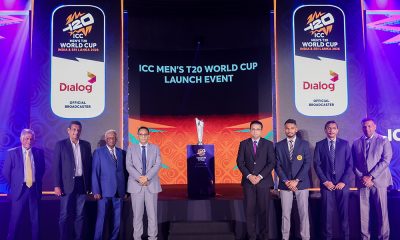
Dialog Brings the ICC Men’s T20 Cricket World Cup 2026 Closer to Sri Lankans
-
 Features6 days ago
‘Building Blocks’ of early childhood education: Some reflections
-
 News4 days ago
Rising climate risks and poverty in focus at CEPA policy panel tomorrow at Open University