
Latest News
Seifert, Santner headline New Zealand’s massive win despite Dube’s 15-ball fifty

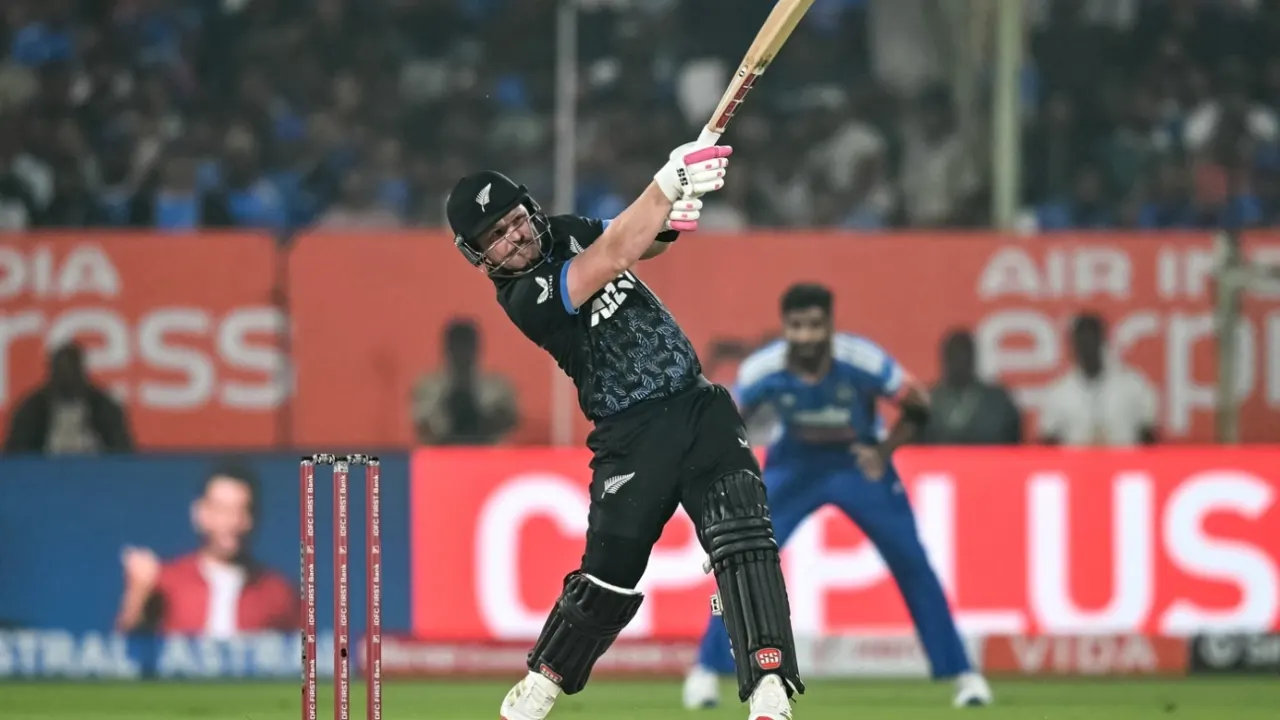
Shiyam Dube hammered the third-fastest fifty by an Indian batter in T20Is, finishing with 65 off 23 balls, but it wasn’t enough as the New Zealand bowlers continued to chip away to register a 50-run win in the fourth T20I in Visakhapatnam.
New Zealand were lifted to a total of 215 with a power-packed fifty from Tim Seifert and a useful cameo in the death by Daryl Mitchell. It was an innings of three parts for New Zealand. They amassed 100 runs in the first 8.1 overs, lost 6 for 63 in the next eight and then smoked 47 in the last three to post their second-highest score in a T20I against India.
India then completely lost their way in the chase. Abhishek Sharma bagged a first-ball duck by slicing a high catch to Devon Conway at deep third. By the time 11 overs were done, India had slipped to 87 for 5, with the required rate rocketing to 14.33.
It was around this time that Dube took charge, with a 29-run over off Ish Sodhi before depositing Jacob Duffy for two more sixes to bring up a fifty in 15 balls. He was threatening to take the game away but was run out at the non-striker’s end off the bowler’s deflection, and India’s challenge ended as they were bowled out for 165 in 18.4 overs.
Mitchell Santner was the pick of the New Zealand bowlers, returning 3 for 26, while Jacob Duffy and Ish Sodhi picked up two wickets apiece. The series is now placed at 3-1 with a game to go.
Seifert was at his adventurous best in the powerplay as he came out swinging for the hills. Out of the first 12 balls of the innings, he faced 11 and thrashed them for 25. That included two leading edges over short third, and two boundaries in front of the wicket against Arshdeep Singh and Harshit Rana, respectively. While Conway was initially subdued, managing 8 off 9 against the fast bowlers, he took down Ravi Bishnoi in the last over of the powerplay for two fours and a six. New Zealand racked up 71 in first six overs, their best powerplay against India in T20Is.
Once the field spread out and the spinners started operating, Seifert found it tougher to breach the gaps regularly. He had ransacked 46 runs in 21 balls in the powerplay, but managed just 16 of his next 15 balls. Conway, however, ensured the slowdown wasn’t apparent as he took on the spinners with authority. He slog-swept Kuldeep twice over deep midwicket before driving Bishnoi over the covers for four.
But once Conway fell carving Kuldeep to deep extra cover, New Zealand started to slip. Bumrah returned to nab Rachin Ravindra with a hard-length delivery for a simple return catch, while Arshdeep’s offcutter to Seifert couldn’t clear long-off. Glenn Phillips found the middle of the bat a few times but his innings was cut short when he chipped Kuldeep to long-on where Rinku Singh took the third of his four catches. While New Zealand were still maintaining an excellent scoring rate, they lost wickets regularly and when Mark Chapman fell at the start of the 16th over, it seemed like they would not get to 200.
Time and again, Mitchell has dragged New Zealand out of a hole and he was at it again. With the visitors 168 for 6 after 17, they needed a big finish. Zak Foulkes helped by sending Arshdeep for a four and six in the 18th over. Mitchell then took on Bumrah, thumping him for a four and six before Henry ended the over with a fortunate edge. Bumrah leaked 19 runs off the 19th, his second-costliest over in his T20I career. Rana then conceded 14 runs in the final over and New Zealand ended the innings on a high.
It’s been a feast or famine kind of a series for Abhishek and it was the latter this time with the opener falling for a golden duck. Suryakumar Kumar was squared up first ball and was nearly caught and bowled by Henry soon after, but didn’t last long. The lanky Duffy bent low in his follow-through to take a stunning catch as India slipped to 9 for 2 in two overs.
This was Sanju Samson’s chance to prove his worth but he fell short again. It was a weird start for him, where he was staying back to a lot of the full balls, almost pre-meditating the short delivery, with his feet stuck in the crease. He laced Sodhi through the covers and then whipped Duffy over deep midwicket in typical Samson style but was undone by Santner. He went back to a length ball that he should have ideally been forward for. The ball skidded through after pitching, and he almost played down the wrong line to be bowled for 24 off 15.
Hardik Pandya came and went and when Rinku fell after a sprightly 39, it seemed curtains for India’s chase.
Sodhi picked up Rana and Arshdeep in an over, before a mean Duffy bouncer had Kuldeep fending to Seifert as India were bowled out with eight balls left.
Brief scores:
New Zealand 215 for 7 in 20 overs (Tim Seifert 62, Devon Conway 44, Glenn Phillips 24, Daryl Mitchell 39*, Mitchell Santner 11, Zak Foulkes 13; Arshdeep Singh 2-33, Jaspreet Bumrah 1-38, Ravu Bishnoi 1-49, Kuldeep Yadav 2-39) beat India 165 in 18.4 overs (Sanju Samson 24, Shivam Dube 65, Rinku Singh 39, Ravi Bishnoi 10*; Matt Henry 1-24, Mitchell Santner 3-26, Jacob Duffy 2-33, Zak Foulkes 1-29, Ish Sodhi 2-46) by 50 runs
[Cricinfo]


Former first lady Shiranthi Rajapaksa, wife of former President Mahinda Rajapaksa was produced before the Hulftsdorp court, after being arrested by officers of the Commission to Investigate Allegations of Bribery or Corruption (CIABOC) and produce
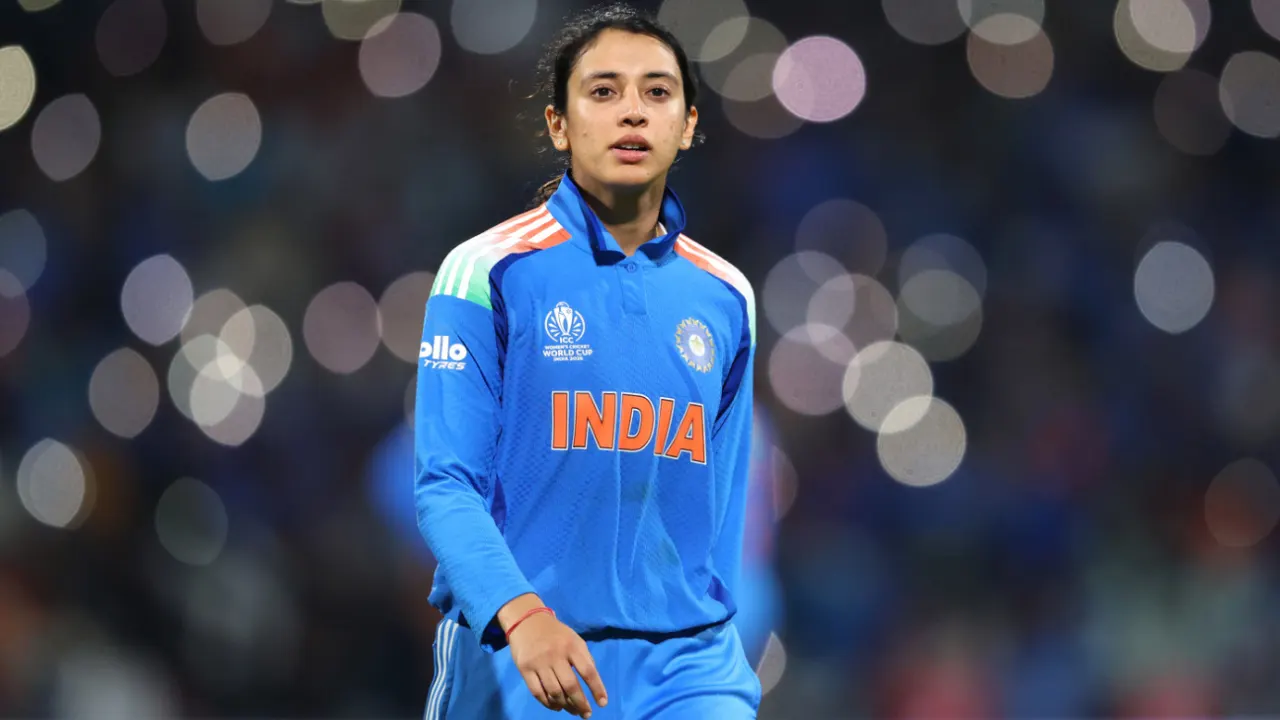
Smriti Mandhana has been named India’s all-format women’s captain on the same day Harmanpreet Kaur stepped down from the role after nearly a decade since she first took over.
Mandhana – vice-captain to Harmanpreet for much of this period – has previously led India in four ODIs and 18 T20Is, apart from captaining Maharashtra in domestic cricket and Royal Challengers Bengaluru in the Women’s Premier League.
Mandhana’s first assignment will be the limited-overs series against Zimbabwe beginning with the three T20Is in Raipur from October 16. On Tuesday, Mandhana was part of the selection meeting chaired by Amita Sharma to pick the squad for the tour.
Terming the appointment a “special honour”, Mandhana also acknowledged the contributions of her predecessor in her welcome note.
“I would also like to acknowledge Harmanpreet and the contribution she has made as captain over the years,” she was quoted as saying by the BCCI. “She has led the team with great commitment and has been an important part of our journey.
“I understand the responsibility that comes with this role and look forward to working with the team, learning along the way and giving my best to take Indian cricket forward.”
Mandhana’s appointment comes on the back of a review meeting held on Monday in Guwahati. Chaired by secretary Devajit Saikia, the meeting was also attended by Mandhana, Harmanpreet and head coach Amol Muzumdar to chart a roadmap forward, with an eye on next year’s inaugural Women’s Champions Trophy in February as well as the T20 World Cup and Los Angeles Olympics in 2028.
Mandhana, India’s best all-format batter, has been knocking on the doors for a while. Earlier this year, she led RCB to their second WPL title, in which she also top-scored in the final.
In September, she overtook Mithali Raj to become the leading run-scorer in women’s international across formats. Her 18 international hundreds are also the most in women’s cricket. She is also the first Indian woman to score centuries in all formats.
[Cricinfo]
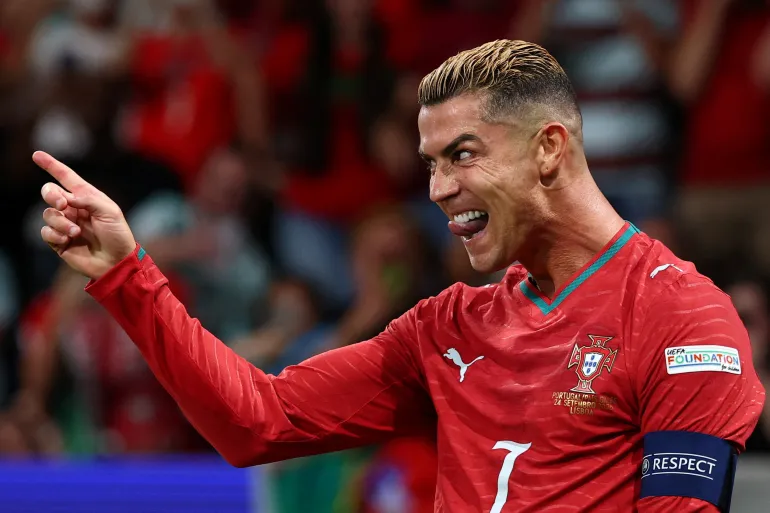
Cristiano Ronaldo has accused Portugal coach Jorge Jesus of twice breaking his word, saying a failed agreement to publicly explain his omission against Norway drove him out of the camp, but insisting he remained available after any punishment.
In a lengthy statement, the 41-year-old gave his account of the dispute that prompted his departure from Copenhagen before Portugal’s Nations League match versus Denmark last week.
Ronaldo said Jesus had agreed a plan under which the forward would miss the Norway and Denmark matches to manage his fitness. However, on the day of the Norway game, the coach told him he would play for 30 minutes.
“Everyone knows the rest. I warmed up from halftime onwards, watched the minutes tick by and wasn’t called on,” Ronaldo said.
“The manager had broken his word to me.”
Portugal’s captain and all-time leading scorer said a subsequent meeting with Jesus, attended by his club side Al Nassr’s sporting director Simao Coutinho, produced an agreement for the coach to clarify events at his next news conference.
According to Ronaldo, an eight-point document was prepared saying he had never demanded playing time, had respected Jesus’s decisions and that the coach asking him to warm up without bringing him on had been a mistake.
Ronaldo said the agreed notes did not require Jesus to apologise to him but said the coach’s public remarks bore no resemblance to their private discussion.
“It was the second time he had broken his word to me,” Ronaldo said. “I decided to leave the training camp without waiting for any further broken promises.”
The statement provided Ronaldo’s account, but on Sunday, after Portugal’s win over Norway, Jesus denied he had made any agreement with the player, nevertheless leaving the door open for his return.
The Portuguese Football Federation (FPF) did not immediately respond to a request for comment about Ronaldo’s statement.
Ronaldo apologised for failing to greet supporters after the Norway match and for leaving his teammates, accepting that his captaincy made his conduct more serious.
“The consequences of my actions must be assessed and punished by the Portuguese Football Federation,” he said.
Despite the rupture, Ronaldo said he was not limiting his international ambitions to a farewell appearance.
“If I’m physically fit, playing for my club – scoring goals, I hope – after serving whatever suspension is imposed on me, I’ll be available, as I’ve always been until now, to compete and win for our national team,” he added.
(Aljazeera)

Remembering Juvenal, Coke, Acton and Machiavelli

West Asian conflict undergoing manifold complications

Nissanka absence opens door for Sri Lanka’s young guns

The prelate who walked the talk

Needs of populace hit by Cyclone Ditwah seen as waiting to be addressed

Future of Sri Lanka’s state university system: Should it be shut down and reopened?

‘Dates have the highest sugar content to fight Coronavirus’

Sunday Island 27 December – Headlines

#SundayIsland 17th December – Headlines

Sunday Island – 28th March

Sunday Island Headlines – 21 March

Sunday Island – 21st February – Headlines
-

 Editorial6 days ago
Colombo Port drug bust: The plot thickens
-

 Features4 days ago
The first woman in the foreign service or Ceylon Overseas Service it was then called
-

 Editorial5 days ago
Fuelling discontent and protest
-

 News3 days ago
Geneva takes up Sallay’s case and govt. ignores opportunity to answer accusations
-
 Latest News5 days ago
Tharindu Rathnayake, bowlers secure Asian Games Bronze for Sri Lanka
-
 Features3 days ago
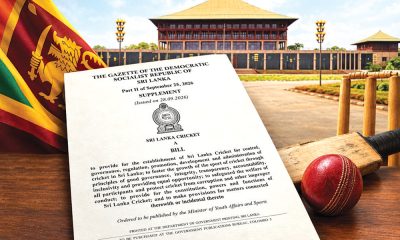
Sri Lanka Cricket Bill: Governance reform is not yet a cricket strategy
-

 Foreign News5 days ago
Ten injured after car crashes into rugby supporters in Australia
-

 News4 days ago
Nearly 20 Iranian tankers stranded off Lanka amid US sanctions