
News
Extremist ideology posed serious challenge-PM Rajapaksa tells Inter-faith forum

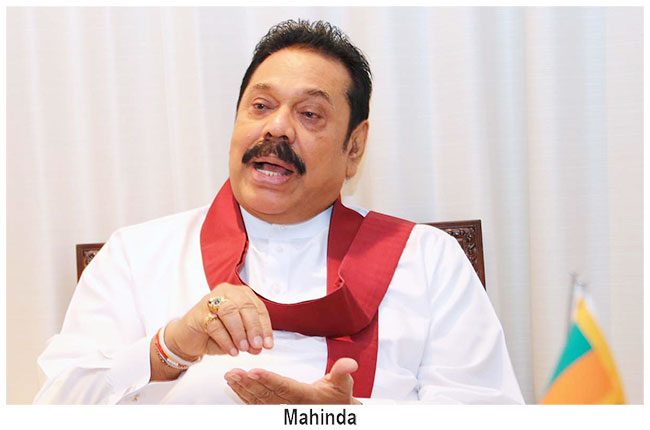
Calls for eternal vigilance against all forms of terrorist action
Prime Minister Mahinda Rajapaksa yesterday (12) said that extremist ideology, and violence associated with it, represented one of the most serious challenges of our time.
Addressing the G 20 Interfaith Forum in Bologna, Italy, PM Rajapaksa said: “It is appropriate to recall the tragic events of 09/11, exactly 20 years ago, and to share our deep sense of grief with the families of victims of this outrage and, indeed, with all humankind. This is a reminder of the need for eternal vigilance against all forms of terrorist action, whoever be the offenders and whatever be their professed aims and purposes.”
The following is the text of PM Rajapaksa’s speech: “A prominent feature of our region is ethnic, religious and cultureral diversity. Our countries are home to people from diverse ethnic backgrounds, professing different religions and nurtured by an array of cultures. And yet, rising above these differences, we have responded to the challenge of building a sense of mature nationhood, uniting all the different communities. Our future as one nation depends very much on this idea of unity and solidarity which is absolutely essential to achieve our economic, political and social goals.
It is especially fitting that this prestigious event should take place in Bologna, a city which has rightly established its reputation as a world leader in culture, in the arts and in all fields of intellectual activity. This enchanting city enshrines for all time the spirit of the Italian Renaissance, and its remarkable contributions to the growth of civilization. The world has certainly been enriched by the genius and creativity of the great Italian masters of that period in history.
I observe from the conference documents, prepared with great clarity, that you have placed a sharp focus on the areas in which peace and harmony among cultures play a vital role in our time. I have no hesitation in identifying education as the most important of these areas. Young minds are impressionable, and it is during the childhood years that there is the greatest chance to develop the right attitudes and values. While there are, clearly, differences embedded in the substance of different religions; there is also a core of beliefs and convictions that are common to all religions.
It is the duty of policy makers and educationists, through the curriculum and methods of teaching in our schools and universities, to emphasize what all religions share in common, the areas of consensus rather than the points reflecting differences. Youth in our educational institutions have the unique opportunity to build bridges rather than walls and to forge friendships which last through life. The government in my own country is giving priority right now to reform the content of education to bring it in line with modern requirements and to equip our youth to secure satisfying livelihoods which will sustain them in life.
The grave heath crisis which the world is experiencing at this time, serves to underline the bonds which unite us all: COVID-19 makes no distinction among religions, nationalities and civilizations. It strikes a deadly blow at all humanity. In order to survive the pandemic and resume our lives once more, international cooperation needs to be strengthened. Vaccines and other protection, made possible by modern medicine, must be available across the globe, with firm arrangements in place for less affluent nations to be assisted by international organizations and by countries with stronger economies. It is a battle that has to be won, not by some, but by all. While it may be legitimate for countries to close their borders temporarily to contain the virus, isolation is not the answer. One of the realities of the world, in which we live, is the free movement of goods, services and people across national frontiers. Migration in search of a better life is challenged by conditions prevailing today, but employment opportunities on an equitable basis must continue to be available freely.
This is a field in which gender equality and dignity is of special importance. Gautama the Buddha, in his final sermon, The Maha Parinibbana Sutra, declared that the moral quality of a society is to be assessed by the kindness and compassion shown to its more vulnerable members.
Our government is very much preoccupied with the protection of women and children against exploitation and all forms of discrimination at home, in places of employment and in society at large. Outdated laws relating to marriage, custody and inheritance are being currently updated by the Parliament of Sri Lanka. Our attitude is one of zero tolerance of human trafficking.
Climate change and other environmental issues are in the forefront of our minds. Sri Lanka is trying its best to adopt a balanced approach to human development. While progress on economic issues is necessary to support rapidly growing populations, this cannot be done at the expense of the environment.
Arahat Mahinda, the son of Emperor Dharmasoka of India, who brought the cherished gift of Buddhism to our shores, addressing King Devanampiyatissa of our country, said, “O, King, you are not the absolute owner but only the temporary trustee of our mountains and forests, our rivers and streams, the fauna and flora of our land: you are duty bound to hand over these assets to future generations in the condition in which you inherited them from your forefathers”. These words, an integral part of our culture, continue to define our policy towards the environment.
Reconciliation is a critical need of our time. Conflicts and escalating tensions are all too evident around us. Peace and stability come from healthy relationships with all who live in our countries, including those with whom we have deep disagreements. Here, again, our religion teaches us that hatred is not conquered by hatred but by love alone. Rather than dwell on grievances derived from the past, we must focus on the present, the need for harmony with points of view different from our own, and the inspiring new frontier which awaits us all if we forge the urgently needed links of brotherhood and understanding.”



The Sri Lanka Navy successfully recovered its Fast Attack Craft P 4447 following a successful salvage operation, bringing a multi-stage emergency response to a close.
The craft, which ran into distress during a routine patrol on 15th August 2026 off Angulana, was brought to the surface on 11th September, from a depth of approximately 80 feet. It was
subsequently towed to the Colombo Dockyard premises.
The initial phase of the operation immediately following the incident focused on search and rescue. A joint effort involving the Navy, Air Force, Police, and local fishermen from Angulana
resulted in the rescue of 11 crew members. The search and rescue phase drew to a close with the recovery of the remains of the Second in Command of the craft, on 4th September.
Following the search and rescue phase, specialized Navy diving and salvage teams launched a dedicated recovery phase against rough sea conditions and underwater challenges, adhering to
strict safety protocols. The Navy’s marine, hull, electrical, and electronic engineering teams utilized specialized technical know-how and equipment to raise the vessel in stages.
Thus, the salvage operation marked an outstanding achievement attained through the professionalism, technical expertise of Navy divers, and coordinated contribution of all
engineering and technical branches of the Sri Lanka Navy. Technical support and specialized expertise were also extended by the Sri Lanka Ports Authority and Colombo Dockyard PLC.


By Shamindra Ferdinando
The Opposition should intensity its focus on the forthcoming selection of a member of the Commission to Investigate Allegations of Bribery or Corruption (CIABOC) and remain vigilant as Speaker Dr. Jagath Wickremaratne, MP, the head of the Constitutional Council (CC) tasked with making the relevant recommendation, is under investigation by the CIABOC, sources familiar with the ongoing inquiry told The Island.
Chethiya Goonasekara, PC, is expected to complete his three-year term on Dec 31, 2026. Sources pointed out that CIABOC Commissioners are appointed by the President on the recommendation made by the 10-member Constitutional Council.
The CIABOC initiated the investigation following a complaint lodged by suspended Chief of Staff and Deputy Secretary General of Parliament Chaminda Kularatne in early February this year. Sources said that as Goonasekera is scheduled to complete his term toward the end of 2026, the CC would have to call applications soon to choose the successor.
Goonasekara received his appointment from President Ranil Wickremesinghe in January 2024. A Justice W. M. N. P. Iddawala was appointed Chairman of the CIABOC. The other commissioner is K. Bernard Rajapakse.
Asked whether Iddawala and Rajapakse, too, would complete their terms soon, sources said that in terms of the Anti-Corruption Act No 09 of 2023, the Chairman of CIABOC would hold office for a period of five years, second commissioner (K. Bernard Rajapakse) for four years and the third commissioner (Chethiya Goonasekara) for a period of three years.
Sources said that the Opposition as well as civil society representatives in the CC should take up the issue of Speaker facing an investigation by the CIABOC taking part in the forthcoming selection process. Responding to queries, sources emphasized that the issue was whether in terms of Section 107 of the Anti-Corruption Act the participation of the Speaker in the selection process amounted to a violation of the Act itself.
The current members of the CC are Dr Jagath Wickramaratne, Speaker and Chairman of the Constitutional Council, Dr. Harini Amarasuriya, Prime Minister, Sajith Premadasa, Leader of the Opposition, Bimal Rathnayake, MP, Aboobucker Athambawa, MP, Ajith P. Perera, MP, Sivagnanam Shritharan, MP, Austin Fernando, Civil society representative, Prof. Wasantha Seneviratne, Civil society representative and Ranjith Ariyaratne, Civil society representative.
Sources pointed out that in spite of the sensitivity of the case, the CIABOC recorded Kularatne’s statement in the second week of August, six months after he lodged the complaint.
The CIABOC on 3, 8 and 10 Sept recorded the statements from the Transport Officer, Deputy Director, Administration and Assistant Director, Finance regarding the use of facilities by the Speaker, those assigned to his staff and other relevant matters.
The NPP named Dr. Wickramaratne as the Speaker after Asoka Ranwala resigned over controversy regarding his higher education qualifications.
SJB lawmaker Dayasiri Jayaskera has repeatedly raised the issues concerning the Speaker with the focus also on the Speaker using two government-managed residences, relevant staff in addition to expenditure on food, transport and fuel provided to the Speaker’s private secretary.
Political sources said that trouble erupted after the Parliamentary Staff Advisory Council in late January sacked Kularatne accusing him of providing false information to secure his appointment. Before being appointed as the Deputy Secretary-General of Parliament in 2023, Kularatne held several high-ranking positions, including Secretary to the Chief Government Whip, Additional Secretary to the President, Additional Secretary to the Prime Minister, and Additional Secretary to the Leader of the Opposition.
The SJB declared in Parliament that Ranwala should be brought back as the Speaker as they have no faith in Wickramaratne. MP Mujibur Rahuman jokingly told parliament that the Opposition wouldn’t raise Ranwala’s educational qualifications.

The Government Medical Officers’ Association (GMOA) has stressed the need to conduct a comprehensive countrywide cadre revision urgently.
GMOA spokesman Dr. Lasitha Dhammika told The Island that the failure on the part of successive governments to conduct cadre revision caused the deterioration of the public sector health services. Due to the absence of required statistics, they hadn’t been able to fully comprehend the situation on the ground and to ascertain the requirements of the public.
Dr. Dhammika pointed out the expansion of the services without supporting statistics and the need to initiate an immediate cadre revision. According to him, the GMOA had raised this issue with successive governments without success. The GMOA spokesman said that they also sought relevant information from the Health Ministry in terms of the Right to Information (RTI) Act two weeks ago but was yet to receive response.
(SF)

Fast Attack Craft P 4447 recovered in successful salvage operation

Showers above 100 mm are likely at some places in the Western, Central, Sabaragamuwa, Southern, North-central and North-western provinces

Shafali, Mandhana power India to eighth Asia Cup title

Tharanga wins Ultimate Javelin title

CIABOC member’s appointment: Controversy over Speaker under probe heading selection process

GMOA: Countrywide cadre revision not done since 2015

‘Dates have the highest sugar content to fight Coronavirus’

Sunday Island 27 December – Headlines

#SundayIsland 17th December – Headlines

Sunday Island – 28th March

Sunday Island Headlines – 21 March

Sunday Island – 21st February – Headlines
-

 Sports4 days ago
DDS set to lose Test captaincy
-

 News7 days ago
Thailand shuts door on undesirables from Sri Lanka
-

 News4 days ago
Sri Lanka faces new grid challenge as rooftop solar surges: former CEB GM
-

 Latest News4 days ago
Shafali, Deepti power India into sixth T20 Asia Cup final
-
 Business7 days ago
CEB successor company breaks into top three in competitive BESS tender
-

 Opinion6 days ago
Navigating Sri Lanka’s Israeli Dilemma
-

 Latest News3 days ago
Sri Lanka thwart Fatima Sana challenge to secure Asia Cup final spot
-

 Features5 days ago
Lost for 90 years: Rare Goby resurfaces in Jaffna