
Features
Experiences in France as SL Ambassador

Excerpted from the memoirs of Chandra Wickramasinghe, Retd. Addl. Secy. to the President
I was a member of the Public Service Commission when President Chandirka Kumaratunga appointed me as Sri Lanka’s Ambassador to France in 2001. I was fortunate to have had as my predecessor Danesan Casie Chetty, a very senior career diplomat, who had organized the work in the Embassy meticulously, making things so much easier for me to step in and take over. He and his wife Shanti had refurbished and decorated the fine apartment which was in a prime residential area in Paris (which had been purchased by the Govt. of SL), most tastefully and elegantly.
Within months of my appointment, the Govt. entered into a Ceasefire Agreement with the LTTE, brokered by the Norwegians. My major concern while serving as Ambassador was to work towards increasing the volume of our exports which were primarily tea, spices and garments; to promote tourism to SL and to do my utmost to counter the sustained propaganda blitz directed against us by the Tamil Diaspora in France. When I met President Chirac for the presentation of my credentials, I expressly told him of my plans to try and increase the volume of our major export items to France adding I would also endeavor to popularize Sri Lanka as a prime destination for French tourists.
He interjected to say that Sri Lanka being a beautiful country, it should not be difficult to make it an attractive destination for French tourists. Referring to the terrorist problem that was plaguing SL, I told him that the LTTE was actively supported by the Tamil Diaspora in Paris who collected and remitted substantial funding to the terrorists in SL to pursue their destructive activities and that if the French Intelligence Services could curb these illegal activities of LTTE sympathizers in Paris, it would help SL to combat the terrorist scourge .(President Chirac gave some instructions to one of his aides on this issue). He graciously agreed to do whatever possible to assist SL in the matters raised by me.
Arrangements were made thereafter by Nimal Karunatilleke, the Trade Attache of the Embassy, to liaise with the exporters of the major SL export products to France and facilitate their participation in a number of International Exhibitions and Trade Fairs that were held in Paris. On my visits to these Exhibitions and Trade Fairs subsequently, I found a good many SL exporters busily contracting trade deals with the French importers of our export items.
I also attended an International Tea Exhibition in Bordeaux called ‘The Road to Tea’, where I was able to interact closely with French tea importers. I was invited to tea by the Mayor of Bordeaux at his residence where to my surprise, I was served ‘Dimbula’ tea and was pleasantly surprised to learn that the Mayor was himself a lover of ‘Dimbula’ tea. I must record here, the unstinted support I received from Nimal Karunatilleke of our Embassy in all matters pertaining to Trade between France and Sri Lanka and make mention the enthusiastic support I received from Manisha Gunasekera and Saroja Sirisena who were two senior career diplomats at the Embassy during my entire period there. Saroja Sirisena in particular, with her charm and winning ways, proved a veritable asset to me during election time to various international bodies. Come election time, she used to give Ambassadors a dainty peck on their cheek and they would come in droves and vote for SL! When the former Foreign Minister Lakshman Kadirgamar asked me how SL managed to win certain crucial elections, I related Saroja’s technique (he knew Saroja well) and he laughed loud and long!
Soon after I assumed office, I discovered that the French Tea importers had formed themselves into a cartel comprising four major tea importers, of whom I was able to cultivate two of the more influential to help me to promote SL tea. This I did by inviting them for meetings and by hosting them to dinner at my residence etc. One of them, a lady told me that although Ceylon tea was by far the best in the world, our marketing was poor. She said we should promote our tea the way the French promoted their vintage wines with attractive labels giving information of the origins on the tea, its vintage, subtleties of it’s bouquet et al. She further said that Ceylon tea deserves to be similarly advertised in attractively designed packs stating that it is grown in the central highlands at an elevation of over 4,000 feet, with plucking done with the onset of the first flush of leaf. Having taken the cue from her, I emailed the Chairman/Tea Board at the time, Ronnie Weerakoon, conveying the information I had gathered from the French lady on how Ceylon tea could be attractively packaged and marketed.
Within days, Ronnie who had latched onto the concept, sent out circular instructions to all the tea exporters advising them on the above lines. I have no doubt that the tea producers who followed his instructions would have received a substantial boost to their tea exports in good time.
I also found that although the French are inveterate coffee drinkers, the upper classes were, strangely enough, aficionados of high grown good Ceylon tea. I used to occasionally entertain Members of the French Parliament to high tea in a room in the Parliament premises with the permission of the Speaker who I knew. The French MPs, curiously enough, had a partiality for our mutton cutlets , rolls and fish patties and in between sessions used to come in large numbers to partake of these snacks with the high point being fine Ceylon tea – Dimbula tea to be specific, served at the end.
Once I decided to have a little Kandyan dancing session performed by a Sinhalese boy and a girl living in Paris with drum accompaniment thrown in. The little drummer boy got a bit carried away and with the din reaching the Parliament Chamber where there was I think, a debate in progress on Corsica, the Sergeant at Arms sent a message to keep the noise levels low. I remember at one of these informal gatherings I addressed the French Members of Parliament who were present saying that although the French were traditionally coffee drinkers, it should not be forgotten that pristine Ceylon tea is like their wine, red in colour and that they were both healthy drinks. They had a good laugh while sipping our good high grown tea!
The French Perfumery Association
Our spices are much valued in France, with cinnamon occupying pride of place. SL cinnamon and lemon grass oil are in high demand by the French perfumery industry for their unique and distinctive quality and aroma. The French Perfumery Association is a powerful guild in France that is extremely quality conscious laying down and rigidly enforcing the highest quality standards in the manufacture of their world famous brands like Chanel etc. With their long and distinguished tradition of manufacturing quality perfumes, they were wont to pick the best spices, flowers and oils used in the perfume industry from across the globe with scrupulous care.
My relationship with the French Perfumery Association became so close that they made me a Life Member of the Association. I was able to open lines of communication with the Association and some of the leading cinnamon and lemon grass exporters of SL, some of whom even visited Paris and had fruitful discussions. In fact, my association with the FPA became so close, that they even created a special perfume called the ‘Spirit of Lanka’ and presented it to my wife at a formal ceremony arranged by them. This newly created perfume made of spices, oils and the essence of flowers exclusively from SL was a special, limited issue of 100 bottles which were distributed among the Ambassadors and other VIPs present at the ceremony. They even let me into what they said was a closely guarded secret – one of the perfume extracts that went into the manufacture of their world famous ‘Chanel’ brand came from the ‘Araliya’ flower which grew in SL. This SL Araliya flower they said, had a distinct and unique scent , not found in this genre of flower, anywhere else in the world.
I must record here, my appreciation of a friendly couple who were resident in France –Pierre and Ionie Silliere for making arrangements for me to visit cities and townships in Normandy to deliver talks on Sri Lanka with video presentations showing the scenic beauty and historical sights of Sri Lanka. Many people who attended these talks had only heard of Ceylon and it’s tea and were astounded by the breathtaking beauty of the island and the many places of historical and archaeological interest visitors could see. They just could not believe that we had enormous monuments (dagobas), the tallest being just five feet shorter than the tallest Egyptian Pyramid- Cheops. The Silliers told me later that many who had been present at the lecture /slide presentations were planning to visit Sri Lanka with their friends.
Despite the Ceasefire, the LTTE were still active in Paris
Despite the Ceasefire between the SL Govt. and the LTTE bringing about an uneasy calm and a tenuous cessation of hostilities, as the terms and conditions were heavily weighted in favour of the LTTE and decidedly unfavourable to the Govt. of SL , the LTTE in Paris had not let up on their propaganda activities. There was a particular area in Paris called Le Chappel which had virtually been commandeered by the Tamil Diaspora. Once I visited the area incognito on the pretext of purchasing Sri Lanka curry stuffs etc., which were available in the shops there with my driver shadowing me at a discreet distance. But despite all these precautions, one or two of the hard core LTTE sympathizers got suspicious, which I could see from their reactions in reaching for their cell phones and talking animatedly to whoever at the other end. This was enough of a warning for me to beat a hasty retreat.
Interacting with Ambassadors and important personages
It was also my view that an Ambassador representing a country should interact not only with other Ambassadors, but should also make the acquaintance of prominent personages in the host country while also mixing with the ordinary people to the extent possible. The French, with their long and illustrious tradition of suave and elegant diplomacy, are a people who treat Ambassadors with a lot of deference and respect. This is made abundantly clear when you are introduced to them as an Ambassador. Following tradition, French Ambassadors have remained a cultured and elegant lot. They are knowledgeable and conduct themselves with appropriate diplomatic finesse wherever they go. They would naturally expect the same standards of decorum and conduct from their foreign counterparts.
This does not mean that one should assume an unprepossessing hauteur, which would immediately be taken note of and often find reflection in certain cynical reactions. Being knowledgeable and convivial, at receptions and social gatherings is crucially important and would unfailingly elicit the correct responses from them. These were my perceptions which I am sure will be shared by many senior diplomats who have served particularly in Missions in the West.
I must say that I successfully made the acquaintance of academics, prominent public figures, former Ambassadors, leading businessmen dealing with our principal export products etc. by entertaining them at my residence at the many receptions my wife and I hosted. In my discussions with them, I was able to disabuse them of the misconceptions they may have had about SL, exposed as they were, to the relentless barrage of LTTE propaganda. Of course the former Foreign Minister par excellence, Mr. Lakshman Kadirgamar had already done a lot of damage control by the brilliant speeches made by him at numerous international fora by convincingly assuaging the fears and suspicions of many countries in the West to the point of veering them round and making them go to the extent of banning the LTTE in those countries. He was ably assisted in this stupendous task by Rohan Perera who was the Legal Advisor in the Ministry of Foreign Affairs at the time.
Among the people with whom I struck up firm friendships, I can name Prof. Meyer of Sorbonne University and Bernard de Gaulle, nephew of the late President and President of the de Gaulle Foundation. They were particularly sympathetic towards SL and the unfortunate predicament the country was in. I was quite touched when Bernard de Gaulle presented me with the ‘de Gaulle Medal’, when I was about to relinquish duties as Ambassador. He said it was in appreciation of my efforts to strengthen Sri Lanka –France cordiality and friendship.
I feel I must further state here, that I was able to interact in this amicable and informal manner with French academics and other Frenchmen of stature, due to the broad education I had received in Sri Lanka in the English medium. English was indeed a pass word to knowledge to all those who were fortunate enough to study in that medium. It opened up to us the best in English literature as well as access to the better known books in Russian, French, Italian, German literature et al, in translation. In fact, other Ambassadors used to often express their surprise when I quoted extensively from
Shakespeare, Satre, Balzac, Goethe, Plato, Aristotle, Omar Kayyaam and the lot. This certainly was not an advantage that was peculiar to me, but was a distinct advantage enjoyed by the great many who had studied in the English medium and who thereby acquired the knowledge and the breadth of vision that came with wide reading.
These are by no means self-congratulatory statements by me, but are hard facts which powers that be, should take cognizance of in making appointments at the level of Heads of Missions to important countries in the larger interests of our country. I must re-iterate that these candid observations are being made having the best interests of Sri Lanka at heart. One cannot, of course, blame the younger generations who followed in our wake, for their lack of proficiency in the English language. They were the unfortunate victims of the woeful chicanery of self-serving politicians who deluded the masses with their hugely populist measures, sacrificing long term national interests for short term political expediency.
I daresay there are still certain areas where persons proficient only in Sinhala and Tamil languages in Sri Lanka, could work admirably in discharging the duties expected of them. But with the rapid advances made in Information and Communication Technology, people are increasingly realizing the value of English as a necessary tool for knowledge enhancement and for gaining access to certain fields of study which would be denied to those possessing proficiency exclusively in Sinhala and Tamil languages.
The four Presidents whom I served, I must say, tried their best to take certain remedial measures in this regard, but the magnitude of the problem was much too overwhelming for such corrective measures attempted by them to register any lasting impact. The present Govt. too is acutely aware of the enervating effects of the problem, reflected in the lowering of knowledge and competence levels across the board, and is doing its utmost to remedy the situation by having a Special English Unit under a competent Advisor in the Presidential Secretariat dedicated to the training of English teachers. But it is proving to be an uphill task even for this Special Unit, due to the paucity of competent teachers of English.
It is therefore necessary that the problem be addressed frontally with due resolve if the situation is to be prevented from deteriorating further. It is suggested that the authorities try selecting newly passed out graduates and putting them through a six months ‘total immersion’ course in the English language. These young graduates are intelligent and already equipped with learning skills which should enable them to acquire the required proficiency in the English language with ease within the stipulated six month intensive training period. This should, whilst providing gainful employment to the increasing numbers of graduates passing out annually from Universities, also enable the authorities to tackle the problem of improving English proficiency island wide in a pragmatic manner.
Accreditation to UNESCO as Ambassador
In addition to my duties as Ambassador to France, I also represented SL at UNESCO in Paris. I had to devote considerable time to UNESCO discussions where I was elected to Chair certain Committees. UNESCO has always been at the forefront of the UN Agencies in SL assisting the country substantially in the areas of Education development and in the cultural field. UNESCO is currently primarily concerned with encouraging developing countries who are its members, in the rather daunting task of meeting the Millennium Development Goals that have been laid down by the United Nations. During this time, Dr. Sarath Amunugama and Prof. Carlo Fonseka visited Paris in a delegation to attend a UNESCO conference on the theme -‘Towards achieving the Millennium Development targets’. I remember Dr. Amunugama, (who was a familiar figure in UNESCO circles) making a stirring speech on the subject which was rapturously received by the representative audience.
On the 50th Anniversary of the Coronation of Queen Elizabeth the Second, my wife and I received an invitation from Sir John Holmes, the British Ambassador, to attend the Commemoration Ceremony which was to be held at Notre Dame Cathedral. We were conducted to the seats reserved for Commonwealth Ambassadors in the front row, from where we were able to get an unobstructed view of the entire ceremony. The event was indeed a memorable one as the wondrous ‘ambience’ of Notre Dame Cathedral, lent a special grandeur and solemnity to the occasion.
Addressing the UN General Assembly on the subject of Ageing
I consider it a singular privilege and honour to have addressed the United Nations Second World Assembly on Ageing, held in Madrid Spain in April 2011. My address was on “Perspectives of the Ageing population in Sri Lanka”.
On my return to the island I was appointed Senior Advisor to the President. It was during this period that I worked in collaboration with my colleague SMSB Niyangoda, on nine Presidential Committees to study and make recommendations on numerous problems relating primarily to land matters. These recommendations made by the two of us received the approval of the President as well as the Cabinet of Ministers. I was also a member of the Presidential Commission on ‘Law and Order’,with Nihal Wadugodapitya former Justice of the Supreme Court who was Chairman and Frank de Silva former IGP. The Commission submitted a comprehensive report to the then President recommending sweeping changes to the entire Criminal Justice system which unfortunately did not find favour with the gentlemen occupying the highest echelons of the Judiciary at the time for reasons best known to them.
(Concluded)

 It was a few years back that a former President of Sri Lanka took it on himself to pronounce SAARC ‘dead’. Since then there have been other sections of Sri Lankan opinion that have joined the critics of SAARC and taken the solemn stance that SAARC has indeed died what may be called a natural death.
Their fatalism is understandable. SAARC has failed to meet at heads of government or state level for the past several years to take the SAARC process notably forward. Regional cooperation has more or less been only an appealing idea. No substantive concrete projects have taken off to make the idea a hard reality. ‘Inner paralysis’ seems to be SAARC’s lot. Hence the fatalism in these circles.
However, being one of the worst cash-strapped regions of the world and a teemingly populated one with people virtually left to their devices, what choices do the ‘SAARC Eight’ have other than to try their best to band together and continue with their cooperation efforts, however small they may be?
There is no escaping the mounting debt trap for many of these countries and bankrupt Sri Lanka is a glaring example, but ‘throwing in the towel’ and abandoning themselves entirely to the diktats of the strongest economies and their agencies will prove a ‘living death’ for many countries in the SAARC fold.
The gains may be meagre but giving-up on SAARC cooperation in full would prove self-defeating for the organization and South Asia. Right now, the collective intention ought to be to salvage what the region could from the tenuous cooperative efforts. Moreover, such initiatives could go some distance to generate a degree of goodwill among the Eight and help in sustaining a dialogue process.
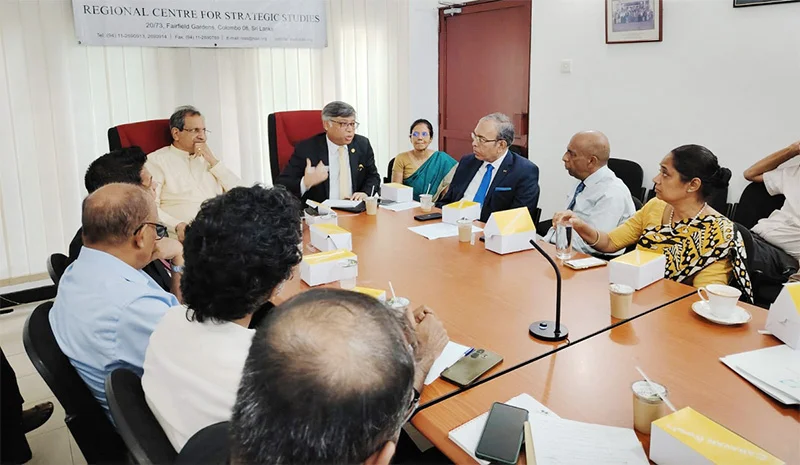
Given this backdrop it proved ‘a stich in time’ for the Regional Centre for Strategic Studies (RCSS), Colombo, to recently host the SAARC Secretary General Ambassador Md. Golam Sarwar to a round table discussion on the unifying potential of SAARC and its future possibilities, besides other related issue areas.
Held on June 24th and moderated by RCSS Executive Director and former ambassador Ravinatha Aryasinha, the forum brought together a vibrant, wide ranging audience comprising academicians, diplomats, senior public servants, civil society activists and many others. Following the presentation by Ambassador Golam Sarwar titled, ‘Reigniting SAARC: Achievements, Challenges and the Way Ahead’, a lively Q&A followed.
The above forum could be described as an act of lighting the proverbial ‘candle’ rather than ‘cursing the darkness.’ It surely is a ‘darkness’ that could be seen as daunting considering that the region’s pivotal powers, India and Pakistan, are failing to act in a spirit of accord but are engaged in bitter finger-pointing on a number of questions of vital importance to SAARC.
On the other hand, what is the rest of the region doing to bring the above sides together? It is disappointing that to date the rest of SAARC has failed to launch a major diplomatic drive to bring peace between the feuding regional heavyweights. It needs to act without delay and establish its earnestness and this effort would need to prove SAARC’s staying power in the unfolding months and even years.
In assessing SAARC’s seeming failure local opinion in particular has failed to factor in what could be described as weak leadership. Since Sheikh Mujibur Rahman of Bangladesh, the founding father of SAARC, the region has failed to produce a visionary leader who could advance the SAARC cause with charisma and drive.
Among other reasons, weak leadership accounts considerably for the faltering and stuttering status, as it were, of SAARC. Badly needed are leaders who could go the extra mile, think less of narrow national interests and work diligently towards the collective well being of the region but SAARC’s millions of ordinary people have been made to wait in vain for leaders of such stature. Instead, they have been burdened with politicians who seem to be relishing the apparently moribund state of SAARC.
Looking back, it could be said that it was the dynamic leadership factor that led to the launching of the Non-Aligned Movement and for its sustenance for a few decades. True, it could be seen in some quarters that NAM is no more, but as in the case of SAARC, the former too has been unfortunate to be burdened over the years with politicians who lack the vision and drive to unflaggingly advance the fortunes of the South. NAM and SAARC lack the dynamism and vision of leaders of the stature of Jawaharlal Nehru, for example, to give them the required guidance and intellectual depth.
The reasons are complex for there not being among us currently political leaders with the vision and the steadfast commitment to advance the legitimate interests of the South. However, it could be stated with conviction that the majority of Southern leaders have too easily caved in to the demands of the global North and its financial agencies.
These leaders have failed to see, for instance, that the largely market economy oriented Northern governments would not view with favour a centrist economic model that attaches priority to the interests of the dis-empowered publics of the South. This realization ought to have dawned on the current government in Sri Lanka, for instance, some while ago but it has no choice but to abide by IMF dictates since economic survival at present is unthinkable without the latter’s succour.
Accordingly for SAARC this should be the time for some soul-searching. Priority needs to be attached to ending the feuding between India and Pakistan since at present the material fortunes of the region hinge largely on these regional giants giving peaceful relations among them a try. This is no easy challenge to meet but some daring, visionary diplomacy needs to take hold among the rest of SAARC.
There is some sense in SAARC bringing the peoples of the region together through programs that address their best collective interests. A meeting of minds among SAARC nations could enable SAARC and its agencies to build a region-wide people’s movement for progressive political and economic change that could in turn lead to the region’s political leaders sensitizing themselves more to the neglected needs of their publics.
However, the time is ‘now’ for the initiation of these progressive changes and the voice of SAARC well wishers would need to drown out those of their critics.
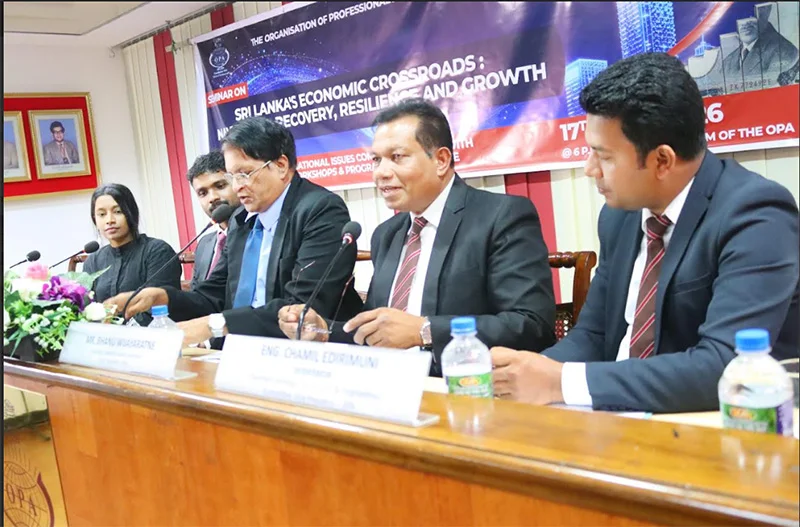
A seminar, “Sri Lanka’s Economic Crossroads: Navigating Recovery, Resilience and Growth” was recently held by the Organisation of Professional Associations of Sri Lanka (OPA) at the OPA Auditorium, bringing together economists, OPA members, and professionals from diverse fields for an insightful discussion on Sri Lanka’s economic recovery and future growth prospects.
The event was held under the patronage of Jayantha Gallehewa, President of the OPA, and was jointly organised by the National Issues Committee (NIC) and the Seminars, Workshops and Programmes Committee of the OPA. The event reaffirmed the organisation’s commitment to advancing professional excellence, fostering insightful intellectual engagement, facilitating interdisciplinary knowledge exchange and creating a constructive platform for informed dialogue on issues of national importance.
The panel of speakers comprised Dr. Harsha Aturupane, Lead Economist and Programme Leader for Human Development at the World Bank for Sri Lanka and the Maldives; Dr. Achinthya Koswatta, Senior Lecturer in Economics at the Open University of Sri Lanka, and Anushan Kapilan, Lead Economist at Verité Research.
In his welcome address, the President of the OPA emphasised that Sri Lanka was at a critical juncture in its economic recovery journey where sustained reforms, effective implementation, and collective national commitment are essential to achieving long-term stability, resilience and inclusive growth. He noted that the country had experienced one of the most severe economic crises in its history with the economy contracting by 7.8 percent in 2022 and a further 11.5 percent in 2023, resulting in significant economic and social challenges.
Delivering his introductory remarks Bhanu Wijeyaratne, Vice President of the OPA and Chairman of the National Issues Committee, underscored the need to move beyond short-term economic stabilisation towards a comprehensive agenda of structural transformation. He observed that the economic crisis had revealed deep-rooted weaknesses within the economy, including persistent fiscal pressures, rising public debt, foreign exchange limitations, and insufficient diversification of the export base. He stressed that addressing these challenges through strategic reforms, institutional strengthening and long-term economic planning would be essential to establishing a more resilient and competitive economy.
While acknowledging recent positive developments, including improved inflation management, tourism recovery and signs of economic stabilisation, Wijeyaratne stressed the need to advance reforms aimed at strengthening fiscal discipline, enhancing productivity, improving competitiveness, developing human capital and reinforcing governance and institutional effectiveness.
He further highlighted the important role of professionals, businesses, academia and other stakeholders in contributing to evidence-based dialogue and supporting Sri Lanka’s journey towards a resilient, inclusive and sustainable economic future.
Delivering the keynote presentation, Dr. Harsha Aturupane provided a comprehensive assessment of Sri Lanka’s economic prospects within the broader context of global economic transformation. He argued that Sri Lanka functioned as a small open economy whose performance is significantly influenced by developments in the global marketplace. External factors could not be controlled, and the country must strengthen its domestic capacity and resilience to respond effectively to international economic shifts, he noted.
Tracing the evolution of global economic systems, Dr. Aturupane highlighted the transition from ideological divisions between state-controlled and market-oriented economies towards increasingly pragmatic approaches focused on growth, competitiveness and development. He noted that Sri Lanka’s own economic journey reflects a similar evolution, with contemporary policy debates now centred on practical solutions for sustainable economic progress.
The presentation also examined the transformative impact of globalisation. Dr. Aturupane observed that global economic integration had enabled several East Asian economies, including South Korea, Singapore, Taiwan and Hong Kong, to achieve remarkable economic advancement through export-led growth strategies. Sri Lanka similarly benefited from this process through the expansion of its apparel industry and increased integration into global value chains.
Turning to Sri Lanka’s recovery programme, Dr. Aturupane emphasised that the ongoing stabilisation process should be viewed as a national programme supported by the International Monetary Fund rather than solely as an IMF initiative. He observed that strong worker remittances, improved tourism earnings, enhanced government revenue mobilisation and prudent import management have contributed significantly to economic stabilisation.
Despite this progress, he cautioned that rebuilding foreign exchange reserves and meeting future debt obligations remain major challenges. He underscored the need to strengthen export performance, attract investment and generate sustainable foreign exchange earnings to ensure long-term economic resilience.
The discussion also focused on monetary stability, inflation management and exchange-rate policy. Dr. Aturupane stressed that maintaining price stability was fundamental to sustainable growth and household welfare, while sound monetary policy remains essential for preserving economic confidence.
Looking beyond stabilisation, he argued that Sri Lanka must transition towards a broader economic transformation agenda. Sustainable growth, he noted, will depend on expanding productive capacity through investment, technological advancement, innovation, skills development and structural reforms.
Among the key constraints identified was the high cost of energy, which continues to affect competitiveness and investment attractiveness. Dr. Aturupane emphasised the importance of improving efficiency and affordability within the energy sector to enhance Sri Lanka’s business environment.
He further highlighted the social dimensions of the crisis, noting the rise in poverty and economic vulnerability among households. Strengthening social protection systems and ensuring inclusive growth, he argued, must remain central components of the national development agenda.
Another critical challenge identified was Sri Lanka’s demographic transition. With an ageing population, outward migration and evolving labour market dynamics, the country is increasingly confronting labour shortages in several sectors. Dr. Aturupane suggested that greater automation, increased labour-force participation and strategic workforce planning would be necessary to address these emerging realities.
Concluding his presentation, he emphasised the need to improve governance, strengthen institutions, enhance competitiveness and create an enabling environment for private sector investment. Sri Lanka’s future success, he noted, will depend on its ability to move decisively beyond crisis management towards a development model founded on resilience, innovation, productivity and inclusive growth.
Dr. Achinthya Koswatta reiterated the importance of policy consistency and predictability in fostering investment and industrial development. She observed that frequent policy changes create uncertainty and discourage long-term investment decisions, whereas stable and coherent policy frameworks build confidence and support sustainable economic transformation.
Meanwhile, Anushan Kapilan highlighted the substantial progress achieved in restoring macroeconomic stability following the recent crisis. He noted significant improvements in fiscal performance, including increased government revenue, reduced reliance on debt financing and a historically low fiscal deficit.
He further observed that public debt levels are declining faster than anticipated, economic growth has exceeded expectations and inflation has been brought under control more rapidly than forecast. Nevertheless, he cautioned that the recovery remains uneven, particularly within the industrial sector and that many households have yet to experience a meaningful improvement in living standards.
The seminar was expertly coordinated by Eng. Chamil Edirimuni, Vice President of the OPA and Chairman of the Seminars, Workshops and Programmes Committee, while the technical moderation and interactive discussion session were facilitated by Bhanu Wijeyaratne, Vice President of the OPA and Chairman of the National Issues Committee.
The event was attended by Tisara De Silva, President-Elect of the OPA, Eng. Ravi Rupasinghe, General Secretary, Past Presidents, members of the Executive Council, representatives of the General Forum and professionals representing a wide range of disciplines.
The seminar concluded with a vibrant exchange of ideas and perspectives, reaffirming the importance of evidence-based policy dialogue, institutional collaboration and collective national commitment in advancing Sri Lanka’s economic recovery, resilience and sustainable growth.

 Yes, for UK-based presenter and artiste Samantha Kay, home is where the heart – and the roots – are. And her roots run deep in Sri Lanka.
In an exclusive interview with The Island, Samantha says “I’m proud to be Sri Lankan. My mum is from Kandy and my dad is from Colombo, so Sri Lanka has always held a very special place in my heart.
“Whenever I visit Sri Lanka, I love spending time on the beautiful south coast, especially Hikkaduwa and Mirissa. It’s somewhere I always feel connected to my roots and completely at peace.”
Now living in Bournemouth, on the south coast of England, where, she says, she is lucky to be close to some of the UK’s most beautiful beaches, including the iconic Sandbanks, Samantha has built a career that refuses to fit into one box.
She is a radio presenter, podcast host, singer-songwriter, personal trainer and life coach.
“I genuinely love the variety because every role allows me to connect with people and, hopefully, make a positive difference in someone’s day.”
Of course, music has taken her far.
One of her proudest achievements, she says, was releasing a song with 90s music icon Angie Brown, which reached No. 9 in the UK Club Charts.
She also reached the final stages of The X Factor and performed at Wembley Stadium in front of thousands.
Beyond music, Samantha competed in bikini bodybuilding across the UK, winning several titles. “It taught me discipline, resilience and self-belief,” she recalls.
Today, her focus is on radio, podcasting and coaching women. Her podcast encourages people to live life on their own terms rather than feeling pressured to follow society’s expectations.
Says Samantha: “Whether someone is single, changing careers, travelling solo or simply trying to find their purpose, I want them to know that it’s never too late to create a life that feels authentic. If you’ve ever felt like you don’t fit into the box, maybe you were never meant to.”
Samantha Kay also spent a year in Dubai, performing at five-star hotels, including FIVE, and coaching at the iconic outdoor gym on Palm Jumeirah.
“I taught strength and conditioning classes, and hosted wellness retreats, combining my passion for music, health and inspiring others.”
However, with family matters calling her back to the UK, she made the choice to return. “Family comes first,” she says.
Looking ahead, Samantha plans to grow her radio and podcast work, release more music, and expand her wellness retreats.
“My biggest passion is helping people, especially women, build confidence and believe in themselves,” she says.
“Wherever my career takes me, I hope to continue inspiring others to live with courage, kindness and authenticity, while never forgetting my Sri Lankan roots.”

President chairs discussion on 2027 Budget Proposals for the Ministry of Industry and Entrepreneurship Development

Prime Minister meets the Amir of the State of Qatar and conveys condolences on the passing of the Father Emir

Current El Niño Status in Sri Lanka

A few showers may occur in the Western, Sabaragamuwa and North-western provinces and in Kandy, Nuwara-Eliya, Galle and Matara districts.

Argentina face fine for Falklands banner in semi-final win

US launches fresh strikes on Iran as Trump warns Tehran it ‘better behave’

‘Dates have the highest sugar content to fight Coronavirus’

Sunday Island 27 December – Headlines

#SundayIsland 17th December – Headlines

Sunday Island – 28th March

Sunday Island Headlines – 21 March

Sunday Island – 21st February – Headlines
-
 News7 days ago
Herath warns prospective migrant workers not to get fleeced by racketeers
-
 Features5 days ago
Prison riots and politics: NPP’s biggest challenge and Sri Lanka’s biggest opportunity
-

 Editorial6 days ago
What’s the world coming to?
-
 Foreign News7 days ago
Tensions erupt in Indian state after 11-year-old raped and murdered
-
 Features7 days ago
Devanesan Annan – in Memoriam
-
Editorial7 days ago
Punishment in hellholes
-
 Features2 days ago
Dirty Money
-

 Editorial5 days ago
Much ado about crime: Fish or cut bait