
Business
Eravur Fabric Park could transform sustainable textile manufacture in Sri Lanka

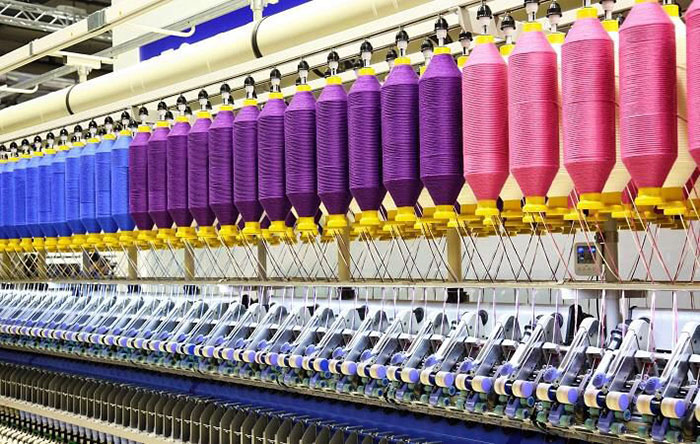
Since the first announcement in June 2020, expectations have been high on the potential of the Eravur Fabric Processing Park to catalyze a new era for Sri Lankan textile and apparel manufacture.
Supported through the Ministry of Industry and Commerce and the Board of Investment (BOI) of Sri Lanka, working in close collaboration with the Joint Apparel Association Forum (JAAF), the apex body of the apparel industry in Sri Lanka, the vision for Eravur is beginning to take shape.
Of the allocated approx 300 acres of land, fifty have been allocated for the Park’s maiden investment of US$ 35 million to establish a state-of-the-art fabric mill. Negotiations are also underway with two international companies to infuse mega investments for the remainder. The Park is estimated to attract a cumulative investment of US$ 300 million. The zone is also seeking further investments towards Dyeing, Washing, Knitting, Weaving, and other associated and ancillary activities.
Cabinet approval for the Zone’s classification under the Strategic Development Projects Act was also secured, enabling the extension of tax and other relief and incentives to investors.
Rapid progress towards vertical integration
“We would like to see the first company commence commercial operations in the next 6 months to 1 year,” stated BOI Chairman Sanjaya Mohottala. “We have been very aggressive on timelines because of the clear consensus on the nationally significant value that the Park can generate. At present, all land has been demarcated, and water and electricity supply are being finalized. In excess of half the commercial land has been allocated or reserved, and we are seeing great demand. There is clear recognition locally and internationally as to the immediate potential. If necessary, we are able to expand the zone even further.”
Leveraged in support of Sri Lanka’s highly developed apparel manufacturing sector, which has steadily benchmarked itself on global standards for ethical, sustainable production and high levels of technical and technological expertise, Eravur’s promoters also see the project as an opportunity for Sri Lankan-made apparel to take global leadership on sustainability in its most holistic sense.
 Mohottala explained further that the most immediate benefit from the Park’s establishment will be in the cost advantages and enhanced economies of scale gained through capacity expansion and vertical integration of domestic supply chains.
Currently, Sri Lanka has approximately 300 apparel manufacturing facilities across the country. By contrast, it has only 7 textile and raw material factories capable of producing fabric for export, and for conversion into garments for export. At its peak, Sri Lanka imported over 250,000 MT of fabric both for export-oriented apparel manufacturing and for local consumption in 2019, at a cost of US $ 2.2 billion.
In the context of unprecedented disruptions across global supply chains in particular and persistent commodity and currency volatility, increased availability of high quality raw materials will enable an immediate and drastic reduction in raw material costs, while also conserving foreign currency.
Increased domestic production of textiles also translates to a higher percentage of domestic value. If that threshold increases from its current 52% to 65%, it qualifies for a larger proportion of Sri Lankan exports for zero-duty benefits under GSP Plus1.
The culmination of a pioneering national journey in sustainability
The economic argument in favour of investing in Eravur is bolstered by its potential to also be the most sustainable venture of its kind in the entire Asian region, with local stakeholders having already committed to establishing extensive renewable energy facilities, water recycling facilities, science-based targets, and circular business models.
At a macro-level, increased local production capacity will contribute significantly to all these targets by reducing the end-to-end length of Sri Lanka’s apparel supply chains. This in turn enables tighter backward integration and lower carbon emissions.
Taking a cue from the Sri Lankan textile and apparel’s industry’s outstanding achievements on environmental sustainability to date, the Zone is being designed from the ground-up to facilitate and incentivize sustainability in every facet of its operations. In terms of fabric processing, the main focus is on wastewater treatment.
Mohottala continues: “Sri Lanka’s environmental standards for industries are quite stringent, especially compared with regional competitors. A key feature of the Zone will be its central wastewater treatment facility with a sea outfall, which will require a high standard of treatment. Fortunately, we already have strong expertise available locally, with many of Sri Lanka’s textile producers having established facilities on par with global best practices on wastewater treatment. We have used this to our advantage by calling in the local industry’s technical experts and drawing on their pioneering experiences to optimize wastewater treatment protocols at Eravur.”
Adding that this will be one of many positive attributes all stakeholders downstream of the textiles produced at the Zone can lay claim to, Mohottala says, “With the greater localization of production, we also gain improved oversight and control over environmental standards within the Zone. This also enables greater transparency, traceability, and accountability across the supply chain, which in turn will confer preferable competitive advantages to Sri Lankan apparel exporters. In addition, this will empower brands and retailers to make clear and credible claims to genuine sustainable sourcing.”
An end-to-end opportunity
Another significant advantage for Eravur is that it is purpose-built with the most advanced environmentally friendly technology available. This will also promote efficiency in energy and water consumption, as well as additional infrastructure for recycling and recovery of water used in production, for which the BOI aims to provide investors with additional incentives.
Notably, Eravur also enjoys a high level of solar irradiance and consistent high-wind conditions, making any manufacturing facility established in the area, ideally suited for solar and potentially, wind turbine power generation.
“Augmentation of the Zone’s energy requirements with plentiful renewable energy will enable cost savings on the energy-intensive aspects of wastewater recycling. Given the consistent annual reduction in the cost of solar and wind energy, the conditions at Eravur are another unique attraction for investment into the Zone, and potentially enables the entire supply chain to utilize global incentivizes around responsible and sustainable production,” Mohottala said.
In addition to the wastewater treatment protocols, the Zone will also include a sludge treatment facility, with further trials already underway for responsible disposal. These include tests using micro-algae to breakdown sludge, as well as utilizing sludge to fuel furnaces and as bricks with a bio-mat mask.
The final and potentially most vital contribution which the Eravur Fabric Processing Zone is the empowering impact it will have on the lives of Sri Lankans in Batticaloa. At present, the district has an estimated population of 621,887, of which, an estimated 60,912 individuals are below the poverty line. As at 2019 – prior to the pandemic – unemployment in the region stood at 6.4%
“With the development of the Zone, we will be able to create thousands of stable, well-paying direct and in-direct jobs. This could prove to be one of the most transformative developments to take place in the Eastern Province in recent history,” Mohottala concluded.


In a move that highlights Sri Lanka’s accelerating push toward a more resilient and renewable-powered electricity system, the National System Operator Private Limited (NSO) has called for international bids to modernise the country’s core grid management infrastructure.
The tender—issued under the Power System Strengthening and Renewable Energy Integration Project (PSSREIP)—is backed by the Asian Development Bank (ADB), reflecting continued multilateral confidence in Sri Lanka’s energy reform trajectory despite recent economic headwinds.
At the heart of the project is the integration of a Renewable Energy Management System (REMS) with a fully upgraded SCADA/EMS platform at the National System Control Centre. While technical in appearance, energy experts say the implications are far-reaching: this is the digital backbone required for managing a grid increasingly dominated by intermittent renewable sources.
“This is not just another infrastructure upgrade—it’s a systems transformation,” a senior power sector analyst said. “Without this layer of intelligence, scaling up solar and wind becomes operationally risky.”
Sri Lanka has in recent years expanded its renewable energy footprint, particularly in solar and wind. But the lack of advanced real-time forecasting and dispatch capabilities has often limited how much of that energy can be safely absorbed into the grid. The proposed REMS integration directly addresses that bottleneck.
From a financial perspective, the project also highlights the continued role of concessional development financing in de-risking large-scale energy investments. The ADB’s involvement ensures not only funding support but also procurement discipline through its Open Competitive Bidding (OCB) framework—seen by analysts as a safeguard for transparency and technical quality.
The tender sets a relatively high bar for bidders, requiring prior experience in similar large-scale contracts exceeding USD 6 million and a minimum average annual turnover of USD 16 million. This suggests the project is likely to attract major international engineering and energy technology firms, potentially opening the door for advanced grid solutions and knowledge transfer.
Beyond its technical scope, the initiative comes at a critical time for Sri Lanka’s energy economy. Rising generation costs, fuel import pressures, and the need for tariff stability have intensified the urgency for efficiency gains within the system. A smarter grid—capable of optimising dispatch and reducing losses—could ease some of these structural pressures.
Moreover, the project aligns with Sri Lanka’s broader climate commitments and long-term goal of increasing renewable energy penetration. Analysts note that without investments in grid intelligence and flexibility, renewable targets risk remaining aspirational rather than achievable.
The deadline for bid submissions is May 14, 2026, with implementation expected to span approximately 18 months from contract award.
If executed effectively, the NSO-led initiative could mark a decisive shift—from a conventional grid struggling with variability to a digitally enabled system capable of managing the complexities of a modern energy mix.
For policymakers, investors, and consumers alike, the message is clear: the transition to clean energy is no longer just about adding megawatts—it is about building the intelligence to manage them.
By Ifham Nizam
We wish to provide an update on the actions being taken following the recently identified incident.
In line with the Corporate Disclosure made on 23rd April 2026 and as indicated in our 6th April 2026 Corporate Disclosure, an independent forensic review focused specifically on the fraudulent transactions has been initiated and will be conducted by Deloitte Touche Tohmatsu India LLP, a globally recognized firm with expertise in forensic investigations. This process is being carried out in consultation with, and in line with recommendations from, the Director of Bank Supervision of the Central Bank of Sri Lanka.
The forensic review will examine the circumstances surrounding the fraudulent transactions, including any lapses in controls, oversight, and governance during the relevant period. Its findings, including any interim updates and the final report, will be submitted directly to the Central Bank of Sri Lanka.
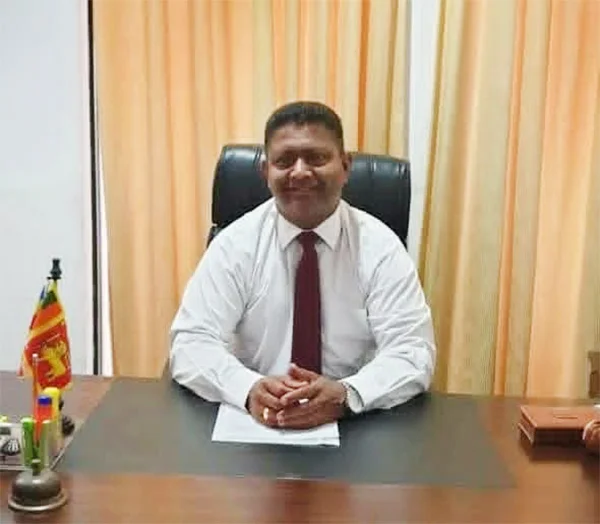
In a move aimed at reinforcing institutional stability and administrative efficiency, the Cabinet of Ministers has approved the permanent appointment of Iraj Chaminda Pathiraja as Controller General of Immigration and Emigration.
Pathiraja, a senior officer in the Special Grade of the Sri Lanka Administrative Service (SLAS), had been serving in the position in an acting capacity since May 2025. His confirmation to the top post signals continuity in leadership at a time when the country is seeking to strengthen border management and streamline migration processes.
The proposal for his appointment was submitted by Ananda Wijepala, Minister of Public Security and Parliamentary Affairs, and received Cabinet approval this week.
Government sources said the decision reflects confidence in Pathiraja’s administrative experience and his performance during his tenure as acting Controller General. His role is considered critical in overseeing Sri Lanka’s immigration framework, including visa issuance, border control operations, and emigration regulation.
The Department of Immigration and Emigration plays a key role in national security architecture, particularly amid evolving regional mobility trends and increasing demand for efficient public services. Officials noted that stable leadership is essential to ensure policy consistency and operational effectiveness.
Pathiraja’s appointment comes at a time when Sri Lanka is placing renewed emphasis on governance reforms within the public sector. Strengthening institutional capacity, improving service delivery, and enhancing transparency have been identified as key priorities.
Analysts say the confirmation of a permanent Controller General is expected to support ongoing efforts to modernize immigration systems, including digitalization initiatives and improved coordination with international counterparts.
The government has also underscored the importance of maintaining a balance between facilitating legitimate travel and safeguarding national interests, particularly in the context of global migration challenges.
By Ifham Nizam

Plane crashes near South Sudan’s Juba, killing all 14 on board

Gunmen kidnap 23 children from Nigerian orphanage

US press gala shooting suspect charged with attempting to kill Trump

Showers above 75 mm are likely at some places in the Western, Sabaragamuwa, Central, North-western, North-central and Southern provinces and in Mannar district

Hazlewood and Bhuvneshwar lead rout of Delhi Capitals

Govt. assures UN of readiness to introduce ‘vetting process’ for troops on overseas missions

‘Dates have the highest sugar content to fight Coronavirus’

Sunday Island 27 December – Headlines

#SundayIsland 17th December – Headlines

Sunday Island – 28th March

Sunday Island Headlines – 21 March

Sunday Island – 21st February – Headlines
-

 News5 days ago
Lanka faces crisis of conscience over fate of animals: Call for compassion, law reform, and ethical responsibility
-
 News4 days ago
Whistleblowers ask Treasury Chief to resign over theft of USD 2.5 mn
-

 News4 days ago
No cyber hack: Fintech expert exposes shocking legacy flaws that led to $2.5 million theft
-

 News1 day ago
BIA drug bust: 25 monks including three masterminds arrested
-

 Business2 days ago
Nestlé Lanka Announces Change in Leadership
-

 News1 day ago
Banks alert customers to phishing attacks
-

 News5 days ago
USD 2 mn bribe: CID ordered to arrest Shasheendra R, warrant issued against ex-SriLankan CEO’s wife
-

 News2 days ago
Hackers steal $3.2 Mn from Finance Ministry