
News
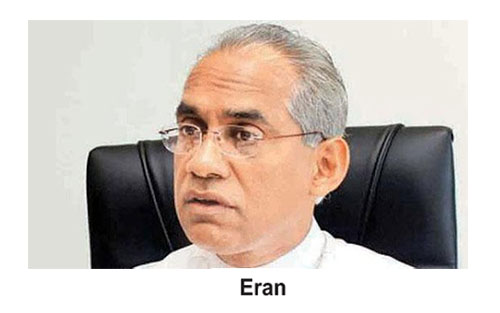
Eran takes govt. to task for errant policies

By Saman Indrajith
Samagi Jana Balavegaya MP Eran Wickramaratne warned in Parliament Thursday that Sri Lanka should prepare for its worst budget deficit in 35 years and the situation, which he said was due to the policy errors of the government.
“Expenditure increases during a health crisis but that is not what has happened. Capital expenditure came down during this period. The crisis has occurred due to the collapse in government revenue. This is the policy errors, which, he said, had to be rectified urgently. He was taking part in the debate on six notifications under the Ports and Airports Development Levy Act, three Orders under the Customs Ordinance and six Orders under the Revenue Protection Act presented to the House for approval by the government.
Wickramaratne said that under the previous government, Sri Lanka had achieved and improved fiscal position after several years with the budget deficit kept at 5.3 per cent of GDP during that period.
“This however began to deteriorate by the end of 2019 because of the government‘s irresponsible statement, in the run up to the election, on taxes and while the fiscal position has deteriorated, the situation has got progressively worse in 2020.
“Government revenue has declined by 28 per cent compared to 2019. Recurrent expenditure has increased by l0 per cent. The budget deficit has increased by 41 per cent. Development spending that is capital expenditure has decreased by -1.1 per cent. And the government debt has increased by Rs. 1.020 billion in just six months rising from 13,000 billion to over 14.000 billion from January to June in 2020.”
MP Wickramaratne said that the fiscal results would get worse as the year progressed with an additional cost of a 10 per cent increase in the government staff cadre.
The import ban would begin to hit government revenue in the second half. “Corporate taxes will be sharply down and Sri Lanka should prepare for its worse budget deficit in 35 years,” he said.
The SJB MP said that in spite of the reduction in tax relief to the public there had been no benefit felt by the people. “Prices of essentials have in fact increased despite the reduction and exemption in some taxes. Food price inflation reached 12.9 in July. The national consumer price index reached 6.1 per cent in July. These are not our statistics. These are statistics coming out of government departments,” he said.
MP Wickramaratne said the previous government had been able to rectify a regressive tax system. The direct “tax percentage was 25 per cent in 2019 and 75 per cent was indirect tax. When we took responsibility for the government, the direct taxes were only 12 per cent and we have been able to correct a regressive tax system taking away or lessening burden on the poor in this country.”
The external sector as a result of the poor fiscal management had also lost the opportunity in the global capital markets and the country was paying its external debt by running down the reserves. By the middle of 2019, the government reserves had been USD 859 billion, Wickremaratne said. But within one year in June 2020, the reserves were USD 6.7 billion. Therefore, there were major debt repayments. In 2020, 2021 and 2022, Sri Lanka would have to pay mainly on sovereign bonds. Sri Lanka had another USD 4 billion debt maturing in 2020 and 2024.
The country’s debt was about 87 per cent of GDP and of this 57 per cent of was foreign debt, non-concessional as opposed to only 2.5 per cent, 15 years ago, Wickramaratne said, adding that most of the non-concessional borrowings of 75 per cent equal to US Dollars 15.3 billion were international sovereign bonds. “China has now displaced Japan as the largest bilateral creditor to Sri Lanka amounting to 12.4 per cent of government debt. Out of $ 4.1 billion of Chinese lending to Sri Lanka, only $ 760 million are classified as official bilateral debt. The rest are considered as commercial.”
MP Wickramaratne said that external debt in Sri Lanka was predominantly by the public sector and very high in relation to current account receipts. The pressure would intensify in 2020, when current account receipts would fall sharply amidst the down turn in tourism, exports, remittances and capital markets financing costs as they go up.”
He added that the government had an issue with State-Owned Enterprises (SOEs) particularly as they had issued guarantees to the Ceylon Petroleum Corporation (CPC), the Road Development Authority (RDA), the National Water Supply and Drainage Board, Ceylon Electricity Board (CEB) and SriLankan Airlines. “SOEs like CEB CPC and SriLankan Airlines are problematic for every government and therefore, we need to restructure the debt. Giving government guarantees is only manhandling the data, making the government look good.” Eventually that risk is not a contingent liability.
Wickramaratne charged that the government had mishandled the fiscal part at the beginning and then turned to the Central Bank and wanted the CB to do something about the monetary space.
“Despite the fact you forced out two members of the Monetary Board, Dr. Dushni Weerakoon and Nihal Fonseka, and despite the threat to senior members in the CB, it is not a matter of people, it is a matter of policy that you need to correct. They have done their utmost. They have provided the liquidity, but the credit growth in May, June and July has been negative. It cannot be solved only on the monetary side because you have little space on the fiscal side.”




News
Sun directly overhead Galle, Angulugaha, Imaduwa, Telijjawila, Yatiyana and Tangalle about 12.08 noon today (07)


The sun is going to be directly over the latitudes of Sri Lanka from 28th of August to 07th of September due to its apparent southward relative motion.
The nearest places of Sri Lanka over which the sun is overhead today (07) are Galle, Angulugaha, Imaduwa, Telijjawila, Yatiyana and Tangalle about 12.08 noon.

By Norman Palihawadane
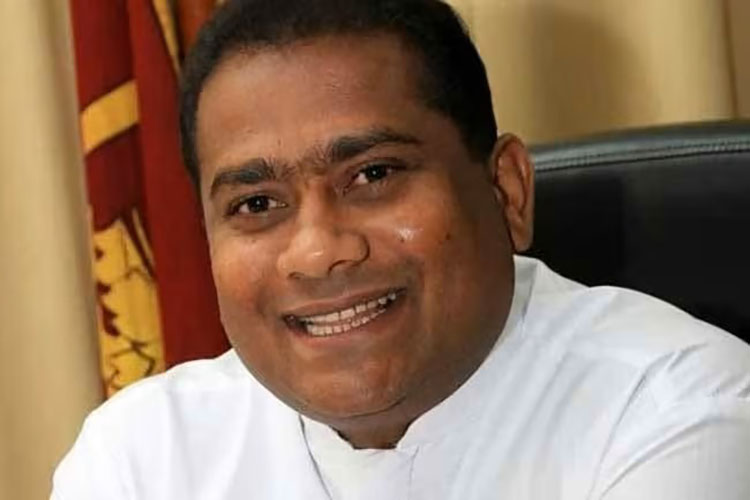
The CID recently found that former SLPP Deputy Minister Premalal Jayasekara, better known as ‘Choka Malli’, had left for Thailand when the Supreme Court imposed an overseas travel ban on him last Friday.
The CID discovered that Jayasekara had left Sri Lanka on August 31, while authorities were taking steps to enforce the travel restriction imposed by the Supreme Court. The Department has subsequently informed the Attorney General’s Department of the development.
The Supreme Court last Friday ordered Jayasekara, and two other men, to appear before court on October 21, and imposed a ban on their overseas travel.
The orders were made as the Supreme Court considered an appeal challenging the acquittal of the three men in connection with the 2015 murder of Shantha Dodangoda, also known as D.G. Sunil Perera.
The appeal was filed by Dodangoda’s wife against a decision of the Court of Appeal to acquit and release Jayasekara and the two other accused, who had previously been convicted and sentenced to death by the Ratnapura High Court.
Dodangoda was killed in a shooting in Kahawatta town, in the early hours of January 5, 2015, while a group of people were putting up decorations for an election rally in support of then common Opposition presidential candidate Maithripala Sirisena.
Two others, Karunadasa Weerasinghe and Mohamed Ilfan, were seriously injured in the shooting.
Following the incident, the Ratnapura High Court convicted Jayasekara, former Chairman of the Kahawatta Pradeshiya Sabha Wajira Darshana de Silva, and former Sabaragamuwa Provincial Council member Nilanta Jayakody, sentencing all three to death.
The Court of Appeal subsequently acquitted the three men and ordered their release.
The victim’s wife later challenged the acquittal before the Supreme Court.
The appeal was taken up before a Supreme Court bench, comprising Justice Preethi Padman Surasena and Justices Achala Wengappuli and Gihan Kulatunga.
During the proceedings, Deputy Solicitor General Janaka Bandara requested that the court impose overseas travel restrictions on Jayasekara and the other respondents.
The Supreme Court subsequently ordered all three to appear before the court on October 21 and imposed travel bans on them.
President’s Counsel Nalin Ladduwahetty, President’s Counsel U.R. de Silva and President’s Counsel Anuja Premaratne appeared for the respondents. President’s Counsel Saliya Peiris represented the aggrieved party.
Police sources said that the discovery that Jayasekara had already left for Thailand, on August 31, has raised concerns over the timing and enforcement of the travel ban.
Sources said that the CID had notified the Attorney General’s Department and was taking further action in relation to the development.
By Pradeep Prasanna Samarakoon
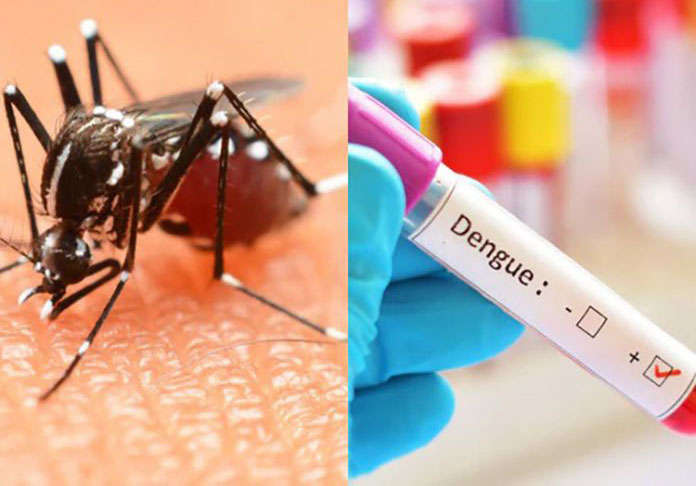
The number of deaths from dengue fever in Sri Lanka has risen to 73 this year, with 96,228 cases reported across the country so far, according to the Dengue Control Unit.
The latest figures indicate that dengue continues to pose a significant public health concern, with 737 new cases recorded during the first four days of September alone.
Dengue infections peaked in July, when 29,964 cases were reported, according to the latest data. June recorded the second-highest monthly total, with 21,533 cases, while 10,155 cases were reported in August.
Earlier in the year, 8,590 cases were recorded in May and 7,866 cases in January.The Western Province remains the worst-affected area, accounting for more than half of all dengue cases reported nationwide. A total of 50,851 cases have been recorded in the province, representing 52.84% of the country’s total.
The Southern Province has recorded 13,950 cases, followed by the Central Province with 8,818 cases and Sabaragamuwa Province with 7,925 cases.

Sun directly overhead Galle, Angulugaha, Imaduwa, Telijjawila, Yatiyana and Tangalle about 12.08 noon today (07)

Showers above 50 mm are likely at some places in the Uva and Eastern provinces.

Harshitha’s composed knock seals Sri Lanka’s semi-final berth

‘Choka Malli’ slips out of country before travel ban

Dengue death toll rises to 73

Ranil accuses govt. of undermining democracy

‘Dates have the highest sugar content to fight Coronavirus’

Sunday Island 27 December – Headlines

#SundayIsland 17th December – Headlines

Sunday Island – 28th March

Sunday Island Headlines – 21 March

Sunday Island – 21st February – Headlines
-

 News5 days ago
Denied of promotion to SC despite vacancies, justice Gurusinghe retires
-

 Latest News5 days ago
Grade 5 scholarship exam results released
-

 News5 days ago
22A: SC urged to suspend hearing, appoint full bench
-

 Midweek Review6 days ago
The local and global dynamics of Sri Lanka’s 22nd Amendment
-

 News3 days ago
Namal remanded until Sept. 18 over Airbus deal investigation
-

 News5 days ago
Govt. seeks NATO assistance
-

 Latest News2 days ago
Tharanga creates history with Diamond League crown in Brussels
-

 News6 days ago
40 professional organisations and TU oppose proposed 22A