
Latest News
Enforcing the law against bribery and corruption is not an act of political revenge but a profound human responsibility – President

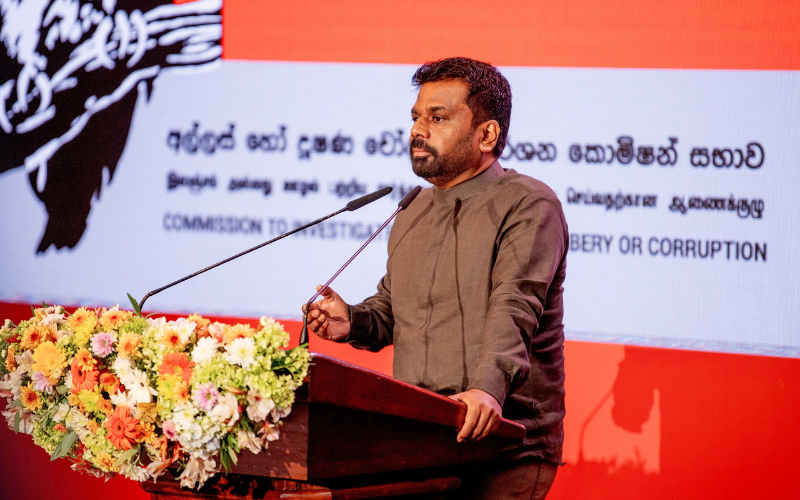
President Anura Kumara Disanayake emphasized that since assuming office, the current government has taken decisive steps to free the process of combating bribery and corruption from political interference. He reiterated that while the political mechanism has been liberated from engaging in such crimes, it is now the responsibility of the administrative machinery operating beneath that political structure to fall in line and correct its course without delay.
He explained that a grace period of six months has already been provided for the state officials to adjust to this new direction. The President firmly warned that if the public service mechanism fails to act appropriately within this period, the government will not hesitate to take firm legal action against those officials from May onwards.
President Disanayake expressed these views on Wednesday (09), participating in the launch of the National Anti-Corruption Action Plan 2025–2029, held at the Bandaranaike Memorial International Conference Hall (BMICH) in Colombo.
Bribery and corruption have proliferated, undermining the integrity and values of the country’s state institutions .He observed that over the past six months of the present government, no section of the public service has been allowed to collapse and that if officials continue to resist change, the government will proceed to remove and replace them after May.
The President pointed out that bribery and corruption have caused the nation to fall behind for decades in the eyes of the world. He reiterated that enforcing the law against these crimes is not an act of political revenge but a profound human responsibility.
The President stressed the need to build a society that respects the law and fears wrongdoing, adding that conducting lectures or workshops alone would not suffice in achieving this goal. He emphasised that people must practically witness that any person who commits a crime will be subjected to punishment under the law.
President Disanayake noted that corruption in Sri Lanka ranges from minor bribery, from the village level to bringing poor quality medicinal drugs. Bribery and corruption have escalated from minor instances to grave financial crimes, extending from local councils to looting the Central Bank.
The President further said that previous rulers safeguarded and protected those engaged in corrupt activities.
He also revealed the emergence of a network of thieves within several state administrative institutions and certain bodies responsible for enforcing the law, comprising underworld elements involved in bribery and corruption. He confirmed that these criminal networks have already been identified and assured that measures will be implemented in the future to dismantle and eliminate them.
President Disanayake solemnly pledged that the responsibility of eradicating bribery and corruption will not be passed on to the next generation but will be resolved within this generation itself, under the leadership of the present government.
Drawing a comparison with India, which gained independence a year before Sri Lanka, the President noted that through a consistent national policy framework, India has successfully achieved space exploration and built a massive workforce in the software industry. In stark contrast, he pointed out that Sri Lanka, due to poor decisions made by its political leadership, was declared a bankrupt state in 2022.
He further stated that the current government has taken on the responsibility of leading Sri Lanka towards the international stage through a national policy framework that ensures transparency and accountability for every rupee spent from public funds.
The President added that by implementing this framework, it is possible to build public trust in law enforcement and judicial institutions and that it must be made clear to the people that there will be no mechanism available for anyone to escape the law after committing a crime.
He stated that the purpose of the National Anti-Corruption Action Plan 2025-2029 is to guide the country towards becoming a nation of integrity. The government plans to establish Internal Affairs Unit within all state institutions including the Presidential Secretariat and implement a system for monitoring these units through digital technology to ensure accountability and transparency.
The Action Plan has been designed around four key strategic priority areas: prevention and public participation, institutional strengthening and the enforcement of law along with reforms in law and policy.
The President highlighted that eliminating bribery and corruption is one of the most decisive factors in a country’s development and progress. In Sri Lanka, the Commission to Investigate Allegations of Bribery or Corruption (CIABOC) has been identified as the leading state institution entrusted with strengthening this mechanism. Accordingly, it was recognised that a robust national anti-corruption policy that operates across all sectors is essential to creating a corruption-free society.
In preparing this Action Plan, CIABOC engaged all relevant stakeholders by conducting extensive programmes at both national and provincial levels. A broad public consultation process was carried out, including a comprehensive survey to assess public opinion on corruption through media announcements in all three languages and via social media networks.
This process gathered proposals from a diverse range of participants, including Members of Parliament, judges, state officials, the private sector, international organisations, civil society organisations, community-based organisations, religious groups, persons with special needs, media professionals, youth, children and the general public. Additionally, foreign state experiences and suggestions from various groups across all provinces were taken into consideration when formulating the Action Plan.
By implementing this National Anti-Corruption Action Plan, the government hopes to foster a committed citizenry determined to combat corruption, a political will fully supportive of this effort, a comprehensive legal framework and a disciplined, transparent public service across all sectors, with the shared vision of building a country of integrity for future generations.
Addressing the event, the Japanese Ambassador to Sri Lanka, Hideaki Mizukoshi, stated that Corruption remains a great challenge for many countries, including Sri Lanka as it undermines economic growth, weakens public trust in government institutions and discourages foreign investment. However, he noted that due to the reform initiatives of the present government, investors are once again showing increasing interest in Sri Lanka.
Ambassador Mizukoshi further stated that Japan has always believed that transparency and good governance are fundamental pillars for sustainable economic development and therefore, has supported anti-corruption initiatives globally for over a decade.
Meanwhile, the UNDP Resident Representative in Sri Lanka, Ms. Azusa Kubota, stated that according to Sri Lanka’s first-ever National Taxpayer Perception Survey conducted last year, 84% of respondents indicated that corruption directly affects their willingness to pay taxes.
She further noted that corruption deters investment, increases the cost of doing business, undermines sustainable development and human security, and causes an estimated annual loss of USD 1.3 trillion for developing countries.
Referring to the Budget Speech delivered by the President, Ms. Kubota emphasised that the State must be accountable for every cent of taxpayers’ money and stated that this Action Plan would serve as a roadmap for transforming Sri Lankan society.
The event was attended by the Chief Justice, Supreme Court Justice Murdu Nirupa Bidushinie Fernando; the Attorney General, Parinda Ranasinghe PC; the Secretary to the President, Dr. Nandika Sanath Kumanayake; the Chairman of CIABOC, former High Court Judge Neil Iddawela; the Director General of CIABOC, R.S.A. Dissanayake; the Commanders of the Tri-Forces; the Inspector General of Police; senior officials from the security forces and a large number of state officials.






Latest News
Steps will be taken to implement a new National Youth Policy in Sri Lanka in the first quarter of 2027 – PM
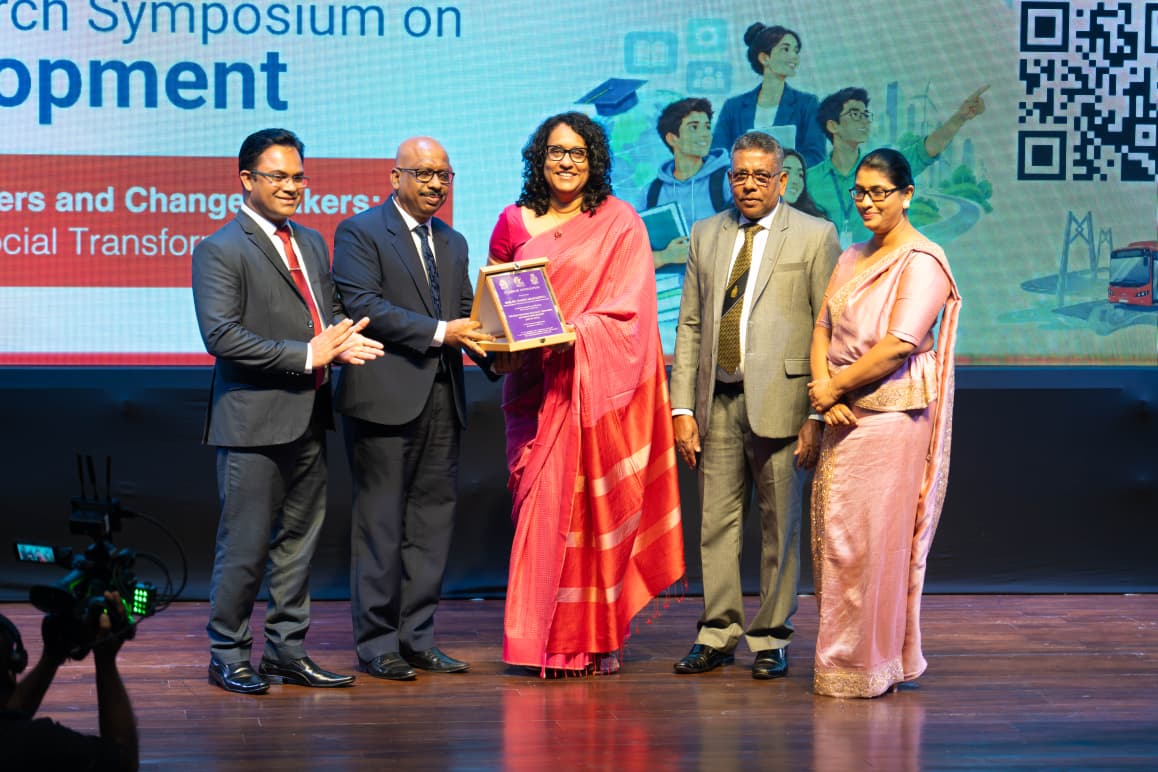
Prime Minister Dr. Harini Amarasuriya stated that the new National Youth Policy, being formulated to address the current challenges faced by Sri Lanka’s youth and fulfill their aspirations for the future, is scheduled to be finalised and implemented by the first quarter of 2027.
The Prime Minister made these remarks on Wednesday [September 16], while addressing the 1st National Research Symposium on Youth Development – NRSYD 2026, jointly organised by the Open University of Sri Lanka (OUSL) and the Ministry of Youth Affairs and Sports, held at the Water Supply and Drainage Board Auditorium in Ratmalana.
The symposium was held under the theme, “Young People as Right Holders and Change-Makers: Asset-based Pathways for Social Transformation.” Research papers are being presented under nine key thematic areas.
These areas include youth empowerment and leadership; education, vocational training and skills development; health, mental well-being and nutrition; youth entrepreneurship and economic participation; technology, digitalisation and innovation; climate change and sustainable development; minorities, social integration and the rule of law; youth migration and international relations; and arts, culture and creative expression.
The official publication of the symposium was presented to Prime Minister Dr. Harini Amarasuriya and other distinguished guests by Deputy Minister of Youth Affairs and Sports Dinindu Saman Hennayake and Secretary to the Ministry A.M.H.U. Aruna Bandara.
Speaking at the event, Prime Minister Dr. Harini Amarasuriya sated:
“Although a draft National Youth Policy was prepared in 2014, it was not implemented. Therefore, a new policy is currently being formulated with the participation of all stakeholders, taking into consideration the current changes in technology, the economy and the employment market.
Under the Government’s Public Investment Programme, Rs. 145 million has been allocated for research and development activities in the youth and sports sectors. Rs. 5 million has been allocated for this symposium. This allocation is a good beginning. It clearly demonstrates the seriousness with which we view evidence-based policymaking.
In the face of technological advancement and digitalisation, providing young people with academic knowledge alone is not sufficient. It is essential to equip them with practical, technical and vocational skills alongside knowledge. For this purpose, curricula within the existing education system must be updated in line with new technologies and global demand.
As for the Government, youth development is a cross-cutting issue that concerns all sectors. Our intention is to establish a unified policy framework that can provide guidelines and recommendations to address the challenges faced by young people in a scientific and sustainable manner.
Formulating a policy is only the beginning. The success of the National Youth Policy will depend on its implementation, monitoring and evaluation. Our objective should be to develop young people who are resilient and capable of facing changes, while also enabling them to become a generation that leads positive changes taking place in the world”.
The Prime Minister further stated that there is a proposal to hold the research symposium as an international conference next year, which would provide Sri Lankan researchers with significant opportunities to establish connections at regional and international levels.
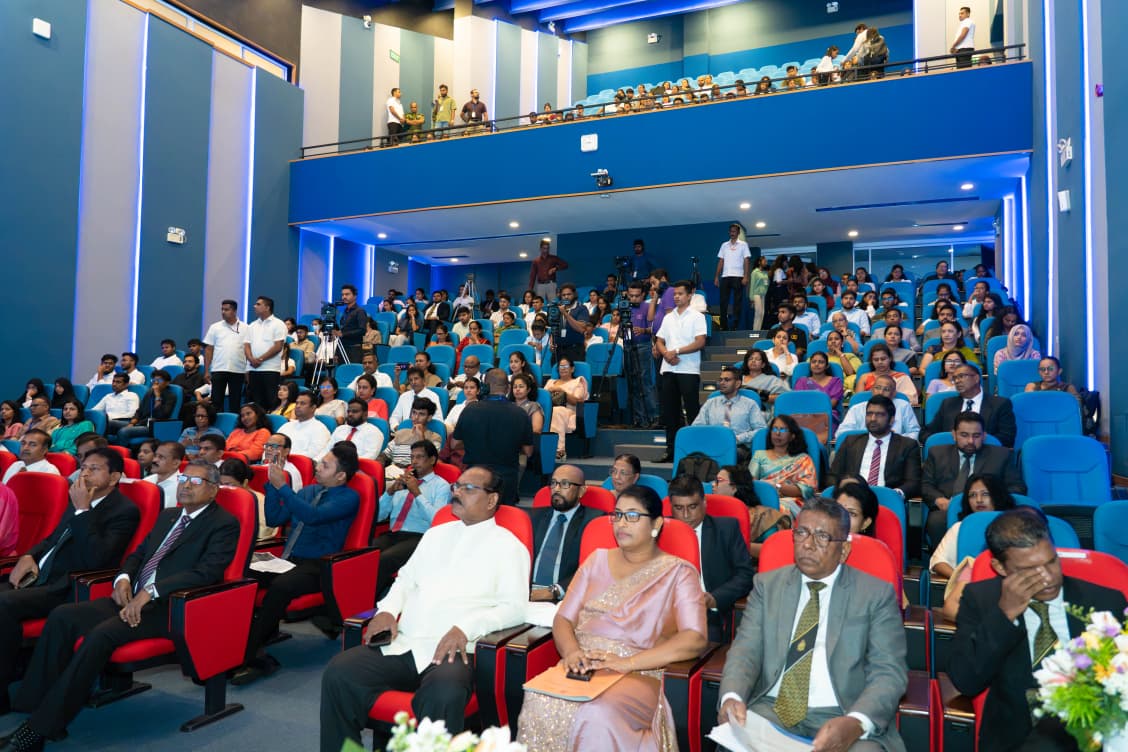
The occasion was attended by the Minister of Youth Affairs and Sports Sunil Kumara Gamage, Vice Chancellor of the Open University of Sri Lanka Senior Professor P.M.C. Thilakarathne, along with a large number of researchers, academics and young people.
[Prime Minister’s Media Division]

Two-time gold medalists Pakistan survived a mighty scare from Thailand in a rain-reduced game and scampered their way to the Asian Games Women’s cricket semi-finals with a tense three-wicket win. Pakistan were set a stiff target of 92 in 11 overs and they clinched the topsy-turvy game with a few clusters of boundaries towards the end even as wickets fell at regular intervals that kept Thailand’s hopes alive until the last over.
Pakistan will now face Bangladesh in the semi-final on September 20.
Pakistan were in trouble when they needed 44 runs from 24 balls before their captain Fatima Sana went down on her right knee to smoke 4, 4 and 6 on the leg side before going down the ground where she was dropped by a diving long-off fielder that also fetched her a boundary. Eyman Fatima ended the over with another six off the middle of the bat and the 25-run over titled the scales in Pakistan’s favour as they needed 19 from 18.
But the rest of the chase was hardly straightforward. Sana holed out at the start of the next over which saw just three runs to make the equation 16 to get from 12. When Eyman Fatima also handed a catch in the 10th over and Pakistan needed 15 from 10, Tuba Hassan struck a six and a four off consecutive balls to leave Pakistan just four runs away with seven balls to go.
Hassan was also caught at the boundary – at fine leg – at the end of the 10th over but Eman Naseer and Umm-e-Hani took four risk-free singles off the next four balls to avoid any more stutters.
The match earlier got delayed by nearly two hours because of a wet outfield. When the toss happened and Pakistan opted to bowl, it was Thailand who seized the advantage. They were 20 for 1 in the reduced powerplay of 3.2 overs in which Sana removed the experienced Natthakan Chantham before No. 3 Nannapat Koucharoenakai took off with shots all around the park. She picked up pace mainly after the sixth over with back-to-back fours off Umm-e-Hani for a 14-run over and was helped by some big hits from captain Naruemol Chaiwai at the other end. Koncharoenkai raced towards her fifty with a reverse-lap off Sana in the last over but fell on 49 off 38 when she was trapped right in front by a full delivery for which she went back and across, but missed.
Opener Shawaal Zulfiqar gave Pakistan a cracking start with three fours and a six in the first three overs. But that was just the start of the thriller in the making that swung wildly as Thailand fought back with four quick wickets in the space of 14 balls for just 11 runs. Zulfiqar handed a return catch to offspinner Onnicha Kamchomphu, No. 3 Ayesha Zafar fell for 1, and the other opener Gull Feroza stepped out against Kamchomphu to be stumped for 16 before Aliya Riaz was also caught off the same bowler.
Pakistan were now 47 for 4 with 45 runs to get from 30 before Sana’s clean strikes turned the game Pakistan’s way in the eighth over and they went over the line after some nervy last few overs.
Scores:
Pakistan Women 92 for 7 in 10.4 overs (Gull Feroza 16, Shawal Zulfiqar 25, Fatima Sana 21, Tuba Hassan 13; Phannita Maya 1-13, Sunida Chaturongrattana 2-23, Onnicha Kamchomphu 3-37, Suleeporn Laomi 1-03) beat Thailand Women 91 for 4 in 11 overs (Phannita Maya 15, Nannapat Koncharoenkai 49, Naruemoi Chaiwai 10; Fatima Sana 2-22, Bashra Sandhu 1-19) by three wickets
[Cricinfo]
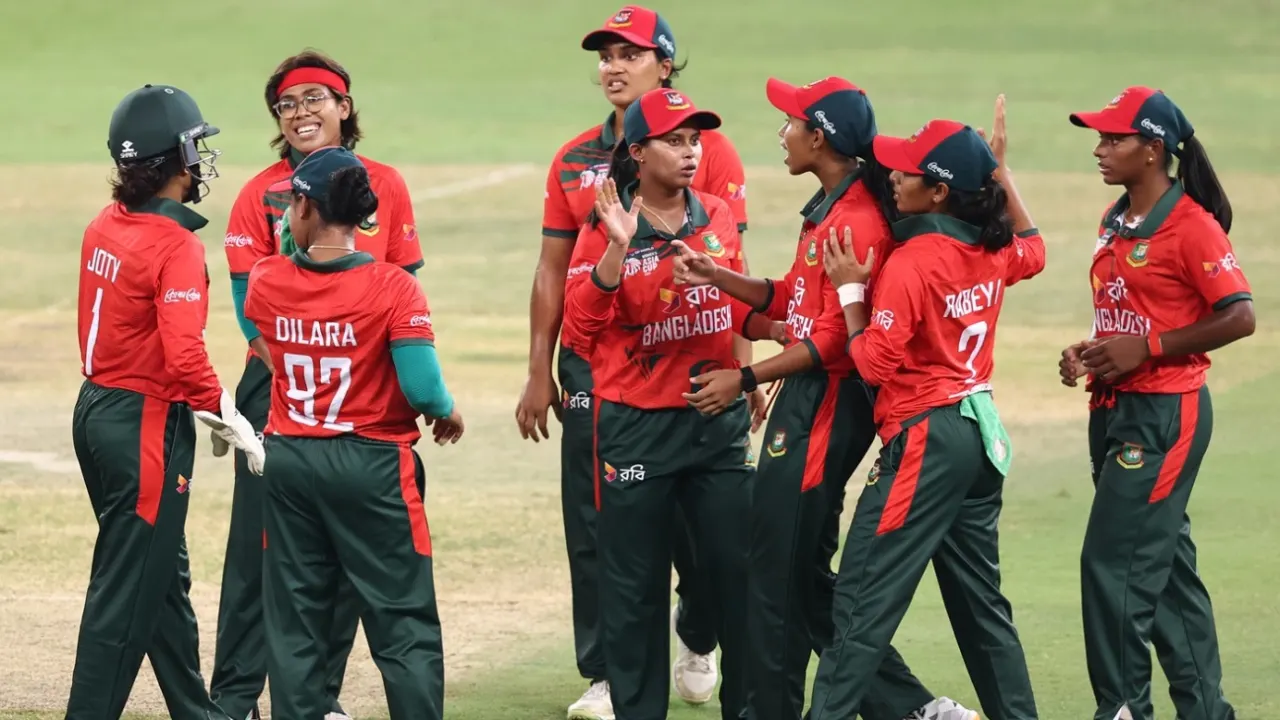
Bangladesh have gained a direct entry into the semi-finals of the Women’s Asian Games 2026 after their quarter-final against China was washed out on Thursday. The match was abandoned without a ball bowled and Bangladesh advanced by virtue of their higher seeding.
The game was the opening clash and the first quarter-final of the Asian Games that kicked off on Thursday. Bangladesh will now take on the winner of India vs Japan (the fourth quarter-final), on September 20.
The match was initially delayed by a wet outfield and eventually called off without the toss also taking place.
The women’s games of the tournament have started with the quarter finals, with two games scheduled on Thursday and two on Friday. After Pakistan vs Thailand later on Thursday, Friday will see Malaysia vs Sri Lanka before India take on Japan. Both semi-finals are scheduled for September 20 and the final for September 22.
All games will be played at the Korogi Sports Park in Nisshin, Japan, in the outskirts of Nagoya.
The men’s tournament will start on September 24.
[Cricinfo]

River home to 500 crocodiles chosen as Olympic rowing venue

Steps will be taken to implement a new National Youth Policy in Sri Lanka in the first quarter of 2027 – PM

Pakistan survive Thailand scare to make Asian Games semi-finals

Bangladesh through to semi-final after washout against China

Showers in most parts of the island today (17)

US embassy won’t comment on IGP’s probe into joint drug raid

‘Dates have the highest sugar content to fight Coronavirus’

Sunday Island 27 December – Headlines

#SundayIsland 17th December – Headlines

Sunday Island – 28th March

Sunday Island Headlines – 21 March

Sunday Island – 21st February – Headlines
-

 Sports6 days ago
DDS set to lose Test captaincy
-

 News6 days ago
Sri Lanka faces new grid challenge as rooftop solar surges: former CEB GM
-

 Latest News6 days ago
Shafali, Deepti power India into sixth T20 Asia Cup final
-

 Latest News6 days ago
Sri Lanka thwart Fatima Sana challenge to secure Asia Cup final spot
-

 News4 days ago
Gnanasara Thero absconding after SC ruling
-

 News5 days ago
Ammunition cache found in old Kandy bungalow
-

 Editorial6 days ago
A flight of fancy
-

 News5 days ago
Green Climate Fund (GCF) Regional Dialogue for East and South Asia will be held from 14 to 17 September 2026 at Cinnamon Life at City of Dreams Hotel, Colombo