
News
Embarking on a digital journey: Exploring Sri Lanka’s readiness

The new normal requires new approaches and solutions, an imperative change that must be embraced by all sections of the economy to survive and to stay relevant.
The outbreak of the pandemic saw the country grappling to keep up with day-to- day activities, both on a personal and corporate level. One of the key challenges observed was in the areas of transacting for goods and services in what can be called an increasingly contactless word.
Although relevant authorities have pushed for Sri Lanka to move towards a cashless economy, it was during the initial outbreak of COVID-19 that people actively looked to use the digital payment infrastructure that is in place.
Across the world, including Sri Lanka, the digital modes of communications including payments are continuing to boom, thanks to the introduction of new technologies coupled with other developments to encourage the emergence of innovative ways of doing things, which leads to the creation of new business opportunities.
The Information Communications Technology Agency (ICTA) has been in the forefront in driving the adoption of digital technologies and legal frameworks in the country especially within the government.
However, despite efforts to deploy platforms and technologies by many stakeholders, the uptake has been slow largely due to the lack of awareness.
Sri Lanka’s readiness to embrace the digital journey
Even before the crisis hit, Sri Lanka had all the necessary framework to embark on the digital journey, and the ability of consumers to make an immediate transition from manual to electronic transactions provide clear evidence that a strong foundation has already been laid.
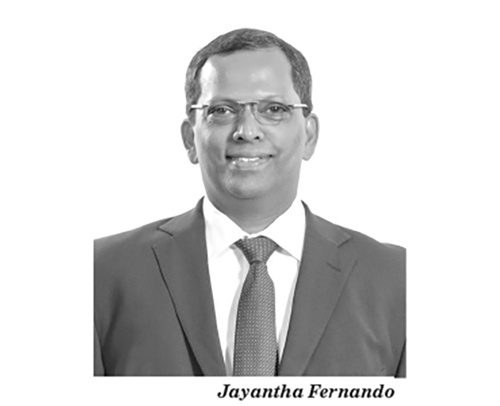
In order to enable this transition from a policy perspective, Director/Legal Advisor at ICTA & Director, Sri Lanka CERT, Mr. Jayantha Fernando affirmed that Sri Lanka has the enabling legal framework to transform every form of physical activity that is carried out, into the digital medium, except for certain classes of instruments where notarization is needed.
“I believe and can firmly say that we have sufficient legal grounds to embrace this transition,” Fernando assured.
Digital signatures
Making the digital journey even more convenient to embark on is the ability to use digital signatures. Digital signatures essentially work by proving that a digital message or document was not modified, intentionally or unintentionally, from the time it was signed. This is done by generating a unique hash of the message or document and encrypting it using the sender’s private key. In addition, the sender is bound to the communication if a digital signature is affixed, thus, providing non-repudiation.
In this context, Sri Lanka has been successful in terms of cross border transactions as well, since the root key from the island nation is recognized globally from the beginning of this year, after its launch on 14th February 2020.
In the first phase, digital certificates were provided to banks for use in financial transaction clearing systems, such as SLIPS and CITS.
During the second phase of development in 2011, digital certificates were provided to all sectors including their enterprise applications; SSL certificates and end-user certificates on both private and public networks. LankaSign provided an affordable option to Sri Lanka’s financial as well as other sectors and allowed them to automate documentation work, which was previously done manually.
With regards to verifying the validity of digital signatures, what is required is a valid certificate from the signatory, and the complete issuer chain of certificates up to the root certificate. In addition, the signatory’s public key, issuer Certificate Status Protocol (CSP) certificates and their Certificate Revocation List (CRL) are also required.
A seamless Work from Home (WFH) arrangement: Is SL capitalizing enough?
While most enterprises have been focusing on their digital transformation over the last few years, many are still utilizing processes that have manual, physical, or face-to-face components and document signing is probably the best example of this.
According to Fernando, digital signatures actually help in the current context since there is reluctance at the moment to work on premise due to the outbreak of the pandemic.
“The digital signatures are the electronic equivalent of hand-written signatures. A digital certificate issued from a trusted party would have a higher degree of validity attached to them, which ensures integrity to the transactions. What should be ideally done is for governments, Corporates and SMEs to consider the option of using digitally signed documents, so that they can communicate those in electronic form to all participants in a transaction,” he said.
However, due to lack of awareness, most private organizations are somewhat reluctant to use digital certificates or digital signatures for their day-to-day transactions, he said.
Fernando stressed that companies should embrace digital signatures as they are convenient, versatile, legally binding, secure and adaptable.
The choice of digital signatures
This again is a business choice. Customers opting for digital signatures under the Electronic Transaction Act have a number of options across various categories.
“In law, we have left it to the trading parties to decide the category of electronic signatures they would like to use. One important feature of the Act is that we have kept the law technology neutral so that it can adapt to developments in technology,” Fernando, further said.
He added that under the law, it is said that any method that helps to identify a person and to indicate that person’s intention in relation to an electronic communication would fall within the framework of an electronic signature and depending on the type of transaction, the parties can use various methods.
“So basically, customers and businesses have choices, they must pick what is suitable to them. My suggestion is to make that choice wisely and use a method that is secure, ensures integrity to the transactions and guarantees digital transactions are not tampered with. Digital signatures achieve this objectives and there are no legal barriers to use them”, he said.
Fernando outlined that Sri Lanka has been examining this area and plans are afoot to fast track the Data Protection Bill. He Chairs the drafting committee responsible for this area, and drafted the Legislation that went through a public consultation process, which has received policy level approval.
Given the recent developments in the country and the world since the emergence of an unforeseen crisis, the Data Protection bill is being further refined and amended, Fernando stressed.
The bill will be finalized in the next few months and the new Ministry of Technology, established on 20th November 2020 is given the mandate to fast track the initiative and set up the institutional framework for its implementation.


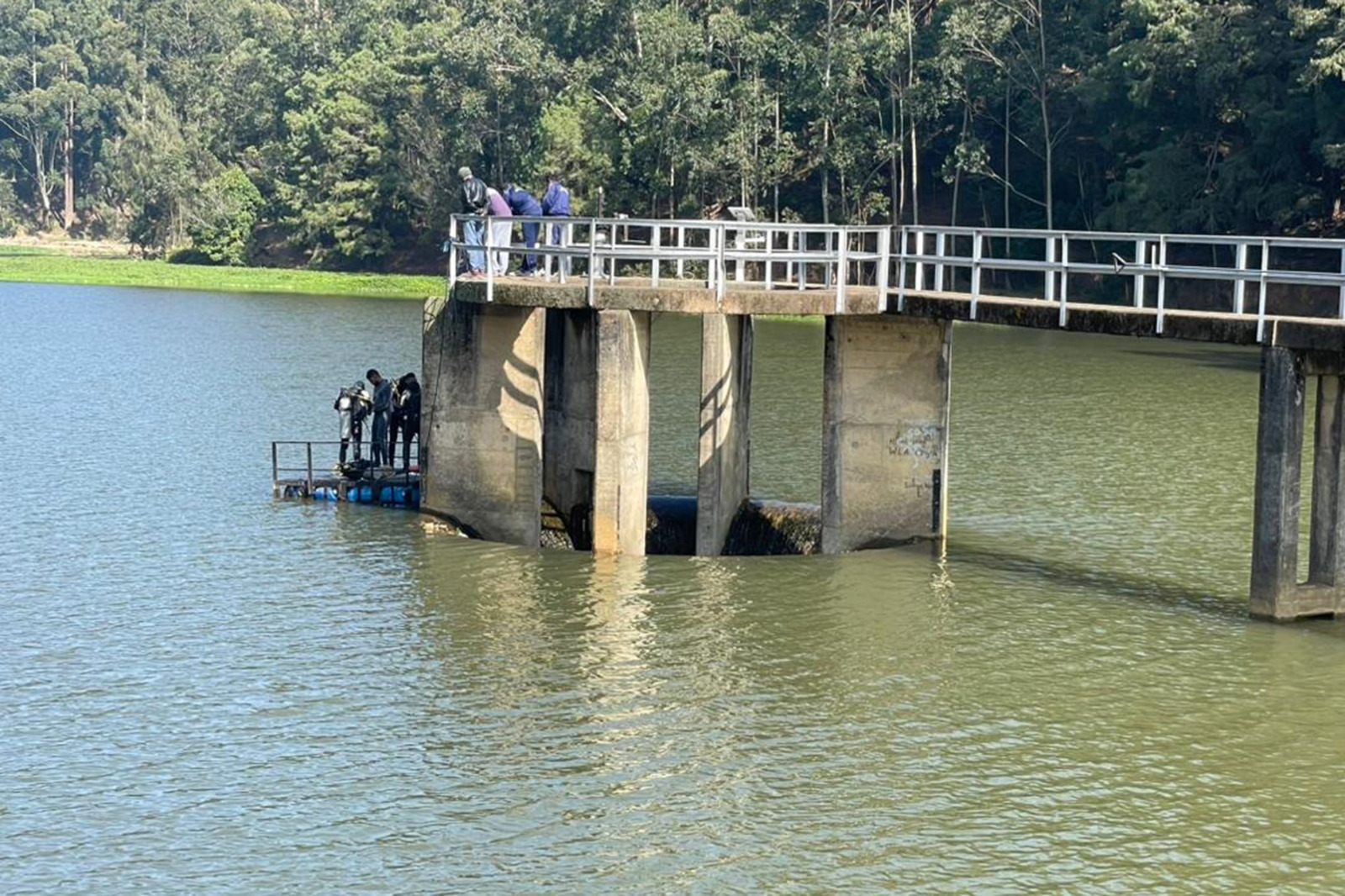
The Sri Lanka Navy successfully conducted a diving operation on 19 Jan 26 to inspect and restore the sluice gate of the Bomburuella Reservoir.
Acting on a request from the Department of Irrigation, the Sri Lanka Navy deployed a specialized diving team from the Western Naval Command, for the urgent requirement.
Through concerted effort, the Navy divers successfully cleared accumulated debris, including a significant quantity of wooden fragments, which had impeded the sluice gate mechanism.
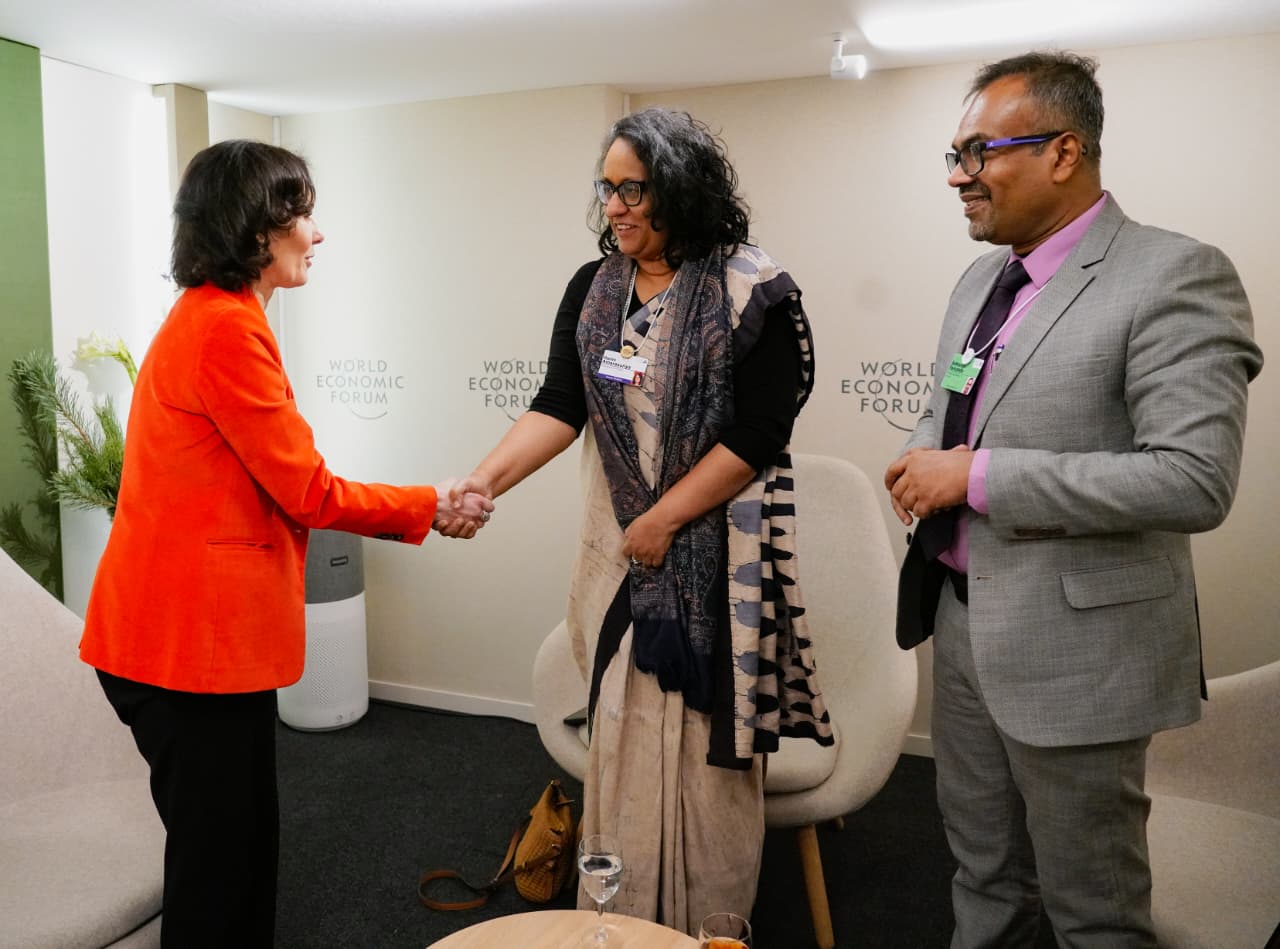
Prime Minister Dr. Harini Amarasuriya held a series of high-level bilateral meetings on Wednesday [January 21] on the sidelines of the World Economic Forum in Davos, Switzerland, engaging with representatives of the European Union, the United Nations Development Programme, and the global private sector.
The Prime Minister met with Hadja Lahbib, European Commissioner for Preparedness and Crisis Management. During the meeting, she expressed Sri Lanka’s appreciation for the support extended by the European Union and its member states following Cyclone Ditwa. The Prime Minister also briefed the Commissioner on the key findings of the World Bank’s GRADE report and requested continued EU support for Sri Lanka’s development and recovery efforts.
Prime Minister Amarasuriya also met with Alexander De Croo, representing the United Nations Development Programme. She expressed appreciation for the longstanding partnership between Sri Lanka and the United Nations and acknowledged the UN’s support in flood relief and livelihood assistance. The Prime Minister noted that, following the mandate received at the parliamentary election, the government is focused on meeting public expectations through national rebuilding grounded in public trust and good governance. She further reaffirmed the Government of Sri Lanka’s commitment to strengthening social protection systems and safeguarding vulnerable communities.
In addition, the Prime Minister met with Robert M. Uggla, Chairman of A.P. Moller Holding. The discussion focused on engagement with the private sector and potential areas of collaboration.
These meetings reflected Sri Lanka’s continued engagement with international partners and global stakeholders to support recovery, development, and long-term economic stability.
[Prime Minister’s Media Division]

… alleges Prez trying to control judiciary
Opposition grouping ‘Mahajana Handa’ has accused President Anura Kumara Dissanayake of trying to exercise control over the judiciary by appointing a sitting High Court judge as Additional Secretary to the Justice and National Integration Ministry.
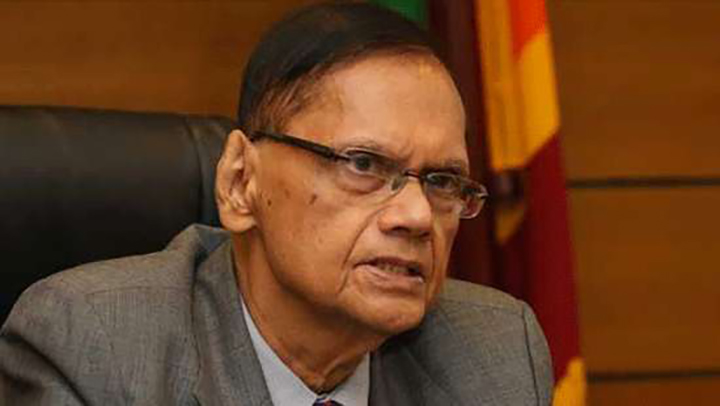
Addressing the media at Dr. N. M. Perera Centre, Punchi Borella, on Tuesday (20) top Opposition spokesman and former External Affairs Minister Prof. G. L. Peiris warned the High Court judge D.M.D.C. Bandara’s appointment was nothing but a direct executive intervention in the judiciary.
Responding to The Island queries, Prof Peiris asked how the government could compel courts to deal with a sitting judge who functioned as Secretary to the Justice and National Integration Ministry.
Prof. Peiris explained that the latest move by the Executive should be examined taking into consideration the attacks on Attorney General Parinda Ranasinghe Jr, PC., the deliberate delaying of the appointment of Auditor General and the controversy over the process of promotions of Judicial Officers, Judges of the High Court and the Court of Appeal in Sri Lanka. Prof. Peiris pointed out that the Bar Association of Sri Lanka (BASL) had raised those controversial promotions with President Anura Kumara Dissanayake.
D.M.D.C. Bandara, Senior Assistant Secretary, Judicial Service Commission, was among altogether 18 High Court judges appointed by President Dissanayake in early Sept this year. The group consisted of 17 Special Class Judicial Officers and a Senior State Counsel serving in the Attorney General’s Department.
Referring to a recent meeting ‘Mahajana Handa’ representatives, including him had with the Mahanayake theras of the Asgiriya and Malwatta Chapters in Kandy, Prof. Peiris said that they had received the blessings of the Mahanayakes to go ahead with what he called a programme of action meant to address major issues.
Prof. Peiris said they would initiate talks with other like-minded political parties and groups in this regard soon. Referring a protest held at the Hulftsdorp on Wednesday (21) demanding the removal of the AG Ranasinghe, Prof. Peiris emphasized that the government’s hand in that demonstration was very clear. President Ranil Wickremesinghe appointed him as the AG in July 2024 with the unanimous backing of the Constitutional Council.
Prof. Peiris said that action was yet to be initiated to appoint new civil society representatives to the Constitutional Council. That issue hadn’t received sufficient public attention, Prof. Peiris said, urging President Dissanayake to come down from his high horse.
Asked whether the President could appoint a sitting judge as an Additional Secretary to a Ministry without consulting the Chief Justice and President of the High Court Judges Association, sources familiar with the issues at hand said that certain appointments could be made on secondment. However, that has to follow the proper procedure, sources said.
The Island sought a response from the Justice and National Integration Ministry to the accusations made by Prof. Peiris on behalf of ‘Mahajana Handa,’ but did not receive one until this edition went to press.
By Shamindra Ferdinando ✍️

Navy divers restore sluice gate of Bomburuella Reservoir

Gujarat Giants comfortably overcome sloppy UP Warriorz

After fall from grace, Asalanka aims to bat on for Sri Lanka

PM holds High-Level meetings with EU, UNDP, and corporate leadership at World Economic Forum

Trump withdraws Canada’s invite to join Board of Peace

Vampire film Sinners breaks Oscar nominations record

‘Dates have the highest sugar content to fight Coronavirus’

Sunday Island 27 December – Headlines

#SundayIsland 17th December – Headlines

Sunday Island – 28th March

Sunday Island Headlines – 21 March

Sunday Island – 21st February – Headlines
-

 Editorial6 days ago
Illusory rule of law
-

 News7 days ago
UNDP’s assessment confirms widespread economic fallout from Cyclone Ditwah
-

 Editorial7 days ago
Crime and cops
-
 Features6 days ago
Daydreams on a winter’s day
-
 Features6 days ago
Surprise move of both the Minister and myself from Agriculture to Education
-

 Features5 days ago
Extended mind thesis:A Buddhist perspective
-

 Features6 days ago
The Story of Furniture in Sri Lanka
-
 Opinion4 days ago
American rulers’ hatred for Venezuela and its leaders