
Latest News
Elon Musk’s Tesla recalls two million cars in US over Autopilot defect

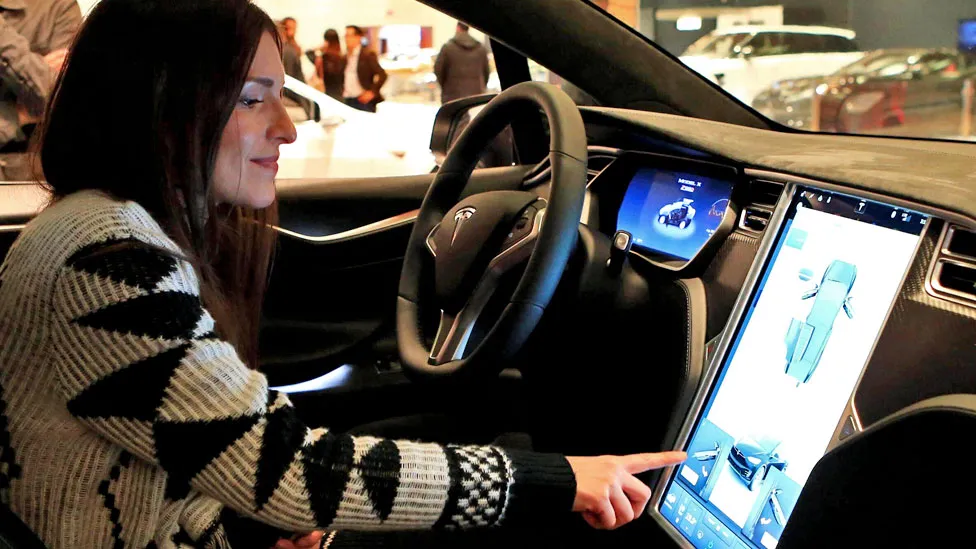
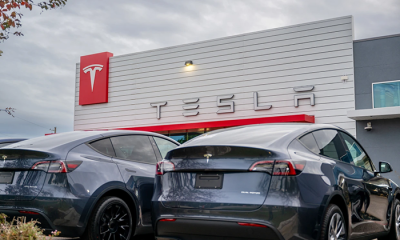
Tesla is recalling more than two million cars after the US regulator found its driver assistance system, Autopilot, was partly defective.
It follows a two year investigation into crashes which occurred when the tech was in use.
The recall applies to almost every Tesla sold in the US since the Autopilot feature was launched in 2015.
Tesla, owned by billionaire Elon Musk, said it would send a software update “over the air” to fix the issue. The update happens automatically and does not require a visit to a dealership or garage, but is still referred to by the US regulator as a recall.
The UK Driver and Vehicle Standards Agency said it was not aware of any safety issues involving Teslas in the UK, noting that cars sold in the UK are not equipped with all of the same features as cars in the US. “Teslas sold in the UK market are not self-driving and are not approved to do so,” a spokesperson said, adding that the agency would continue to monitor the situation.
Autopilot is meant to help with steering, acceleration and braking – but, despite the name, the car still requires driver input.
Tesla’s software is supposed to make sure that drivers are paying attention and that the feature is only in use in appropriate conditions, such as driving on highways.
But the US National Highway Traffic Safety Administration (NHTSA) said a two-year investigation of 956 Tesla crashes found that “the prominence and scope of the feature’s controls may not be sufficient to prevent driver misuse. Automated technology holds great promise for improving safety but only when it is deployed responsibly”, the NHTSA wrote, adding it would continue to monitor the software once it was updated.
Tesla did not respond to a request for comment.
According to the recall notice, the company did not concur with the agency’s analysis but agreed to add new features to resolve the concerns, including additional checks on turning on the self-driving features.
The recall comes a week aftera former Tesla employee told BBC he believed the technology was not safe. Lukasz Krupski, speaking after winning the Blueprint Prize which recognises whistleblowers, told the BBC: “I don’t think the hardware is ready and the software is ready. It affects all of us because we are essentially experiments in public roads”, he claimed.
Reacting to the news of the recall Mr Krupski told the BBC it was “a step in the right direction” but pointed out it was not just a problem in the US. “The hardware is the same in all the Teslas in the US, China etc.”, he said
Safety metrics
On Tuesday, Tesla defended the safety of Autopilot in a post on X (formerly Twitter) in response to a Washington Post article.
“Safety metrics are emphatically stronger when Autopilot is engaged than when not engaged” it wrote, pointing to statistics that suggested there were fewer crashes when the system was used.
Jack Stilgoe, associate professor at University College London, who researches autonomous vehicles, said Tesla should have spent more time developing the system in the first place. “The conventional way of ensuring safety is to check that a car is safe when it leaves the factory”, he told the BBC.
But despite this being the second recall this year affecting Tesla vehicles, Susannah Streeter of investment company Hargreaves Lansdown, said her assessment was that it should not check the carmaker’s momentum too greatly:
“This recall of 2 million cars on its own is not likely to seriously quash enthusiasm. The share price has dropped back slightly, but it doesn’t look like it’ll be hit by a bad bout of skidding. “After all, recalls in the car industry are far from unusual and the group also has the financial ability to invest in fixes”, she added.
Tesla has heavily promoted the technology in its cars and says remaining at the cutting edge of self-driving is key to its future growth.
Goldman Sachs analysts estimated this month that Tesla’s most advanced Autopilot offering, full self driving, could end up generating more than $50bn a year in revenue by 2030, up from $1bn-$3bn presently.
In the US, the full-self driving package costs $12,000, or a $199 monthly subscription fee.
“Autonomy is really where it’s at,” Mr Musk told investors this summer.
Additional alerts
Critics have said Tesla has misled customers about its software’s capabilities, contributing to risks.
The carmaker is facing other government investigations, as well as a number of lawsuits in the US in relation to crashes involving the software.
But a jury in one of the first cases to go to trial found that Tesla’s autopilot technology was not to blame.
The new controls that Tesla has agreed to do should help limit drivers from using Autopilot unsafely, said Professor Missy Cummings, director of the Autonomy and Robotics Center at George Mason University. But she added that there was “an opportunity missed” for regulators to require Tesla to make Autopilot features unavailable in places where it is not supposed to be used.
The recall centres on a part of Autopilot called Autosteer.
Autosteer helps keep a car in the correct lane in conjunction with “traffic-aware cruise control” which matches the speed of the car to that of the surrounding traffic. The driver is expected to have their hands on wheel and be ready to take over from the assistive system when required.
When Autosteer is on, systems in the car monitor that the driver is paying attention. If it detects the driver isn’t there are warning alerts. There are also alerts if the driver tries to use Autosteer in inappropriate circumstances.
According to the NHTSA recall report, the “over the air update” will include additional alerts and monitoring “to encourage the driver to adhere to their continuous driving responsibility whenever Autosteer is engaged.”
(BBC)







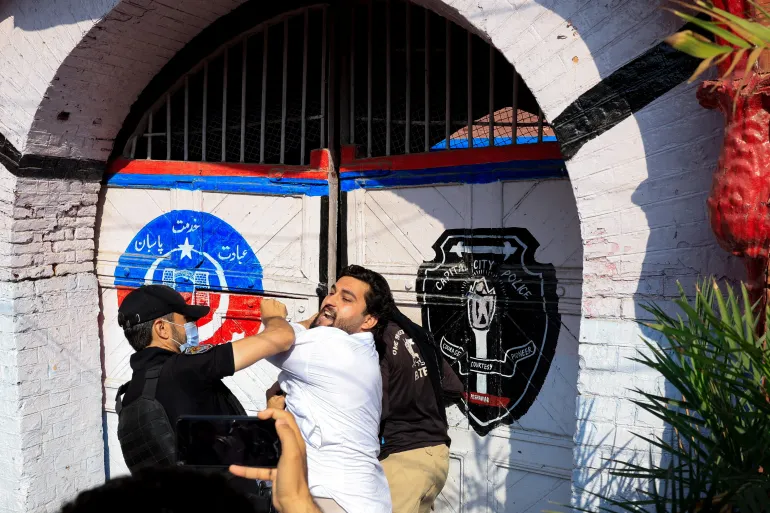
The Pakistan Tehreek-e-Insaf party of jailed ex-Prime Minister Imran Khan is planning to legally challenge the federal government’s Sunday takeover of Khyber Pakhtunkhwa, a province that the party governed.
Sheikh Waqas Akram, the PTI’s central information secretary, told Al Jazeera that the party would challenge the imposition of emergency laws — suspending civil liberties — and governor’s rule in the province in court on Tuesday. A petition had been drafted by a legal committee headed by PTI secretary general Salman Akram Raja, but Akram did not say whether it would be filed in the Supreme Court or the Federal Constitutional Court.
The federal government’s moves have emerged as Pakistan’s latest political flashpoint, with competing narratives from the government and the PTI, at a time when the party was in the middle of a delayed march towards Islamabad, aimed at pressuring authorities to release former PM Khan, who has been in incarceration for more than three years.
Interior Minister Mohsin Naqvi on Monday justified the government’s moves by arguing that federal rule in Khyber Pakhtunkhwa was needed for Pakistan to effectively combat “terrorism” in the province that shares a porous border with Afghanistan.
“No war can be won, however many resources you bring, whatever you do, until the government there leads it,” Naqvi said in Peshawar on Monday.
On Sunday, President Asif Ali Zardari imposed emergency rule and governor’s rule, suspending the PTI government in the northwestern province. The party has governed Khyber Pakhtunkhwa since 2013.
[Aljazeera]

Pathum Nissanka’s return to the red-ball fold provides a downtrodden Sri Lanka with a timely boost, while debuts are also in the offing for wicketkeeper Anjala Bandara and seamer Eshan Malinga after both were named in Sri Lanka’s 15-man squad for the upcoming two-Test series against Pakistan.
The 22-year-old Bandara is tipped to make the playing XI following Kusal Mendis’ promotion to captain, with the longtime Test keeper now likely to play solely as a specialist batter. Malinga’s inclusion is less certain, with Asitha Fernando, Lahiru Kumara, Milan Rathnayake and Dilshan Madushanka – who returns to the squad having been omitted from the one named for the second Test against India – all in line to make up Sri Lanka’s pace contingent. Dinesh Chandimal, who missed the second India Test with an injury, is also in the squad.
Making way are Kamil Mishara and Sahan Arachchige – both of whom had drafted in for the second Test against India – as well as Lahiru Udara, Niroshan Dickwella and Vishwa Fernando.
Malinga’s inclusion comes as Sri Lanka’s red-ball fast-bowling stocks had been waning. Former skipper Dhananjaya, who has been retained in the squad, had been vocal during the India tour of Sri Lanka’s need for more express seamers in the playing XI – aside from Lahiru Kumara, who is capable of clocking speeds in the 140kph range, most other options tend to veer around the low 130s. Malinga is certainly capable of matching Kumara on the speed gun, and that could point towards a potential first Test cap.
Bandara has been a player of genuine promise since making his debut in 2022, with his 31 first-class matches fetching 2239 runs at an average 65.85. There had been a clamour among fans for The Colombo CC keeper to be included in the squad to face India, but that spot was eventually taken by Dickwella.
The rest of the squad pans out as expected, with Nissanka’s return the headline. Pasindu Sooriyabandara, who made his debut earlier this year against India, retains his place ahead of the more experienced Udara. However if Bandara does take up wicketkeeping duties as expected, it Dhananjaya could be the odd man out, with Chandimal, Kamindu Mendis, Sonal Dinusha and Kusal Mendis all assured a spot in the playing XI. Sri Lanka have two spin bowling options in Prabath Jayasuriya and Keshara Nuwantha.
The first Test will take place in Rawalpindi on November 9.
Sri Lanka squad for Pakistan Tests
Pathum Nissanka, Pasindu Sooriyabandara, Dinesh Chandimal, Kamindu Mendis, Sonal Dinusha, Kusal Mendis (capt), Dhananjaya De Silva, Anjala Bandara, Keshara Nuwantha, Prabath Jayasuriya, Milan Rathnayaka, Lahiru Kumara, Asitha Fernando, Dilshan Madushanka, Eshan Malinga
[Cricinfo]
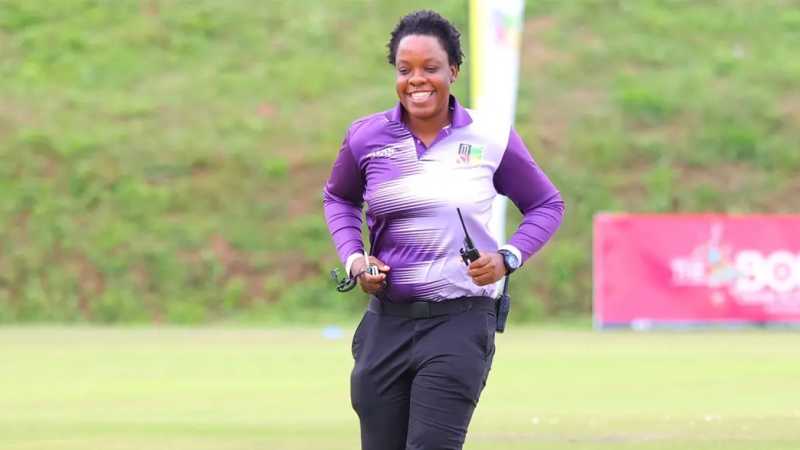
Former Zimbabwe fast bowler and umpire Sarah Dambanevana passed away in Harare on Monday. She was 36.
A Zimbabwe Cricket release said Dambanevana was in hospital receiving care since undergoing a medical procedure in March.
Her senior international umpiring career began on 2 September 2023, and she went on to officiate at the Women’s T20 World Cup 2024 in the UAE and the Women’s ODI World Cup 2025 in India and Sri Lanka, where she was part of the tournament’s historic all-female panel of match officials.
Prior to that, Dambanevana officiated in the final between India and England at the 2023 Under-19 Women’s T20 World Cup in South Africa, becoming the first Zimbabwean woman to umpire a World Cup final.
Overall, she officiated in 63 senior internationals, comprising 42 women’s T20Is, 11 women’s ODIs and 10 men’s T20Is, alongside her assignments in domestic cricket and global youth tournaments.
Dambanevana also represented Zimbabwe as a player between 2009 and 2014, including at the World Cup Qualifier in 2011. She joined the ICC development panel of umpires in 2022.
“Sarah served Zimbabwe with distinction, first as a player and then as an umpire whose ability earned her a place on the world stage,” ZC chairman Tavengwa Mukuhlani said. “Watching her stand in a World Cup final was a moment of immense pride for our cricket community and our country. She showed young Zimbabwean women that they belong at the highest levels of the game, including in roles where opportunities had long been limited.
“Through her achievements, she opened doors and gave others the confidence to pursue their own ambitions. We will remember her dedication, her professionalism and her willingness to help others grow. Her passing leaves a painful void in our cricket family, but the example she set will continue to inspire those who follow in her footsteps.”
(Cricinfo)

Obtaining financial facilities for the Water Supply and Sanitation Improvement Program (Sub-program 2) from the ADB

Delegation from Korean Volunteer Association meet Secretary to the President

Imran Khan’s PTI braces to fight federal takeover of Khyber Pakhtunkhwa

Nissanka’s return headlines Sri Lanka’s Test squad against Pakistan

HRCSL issues recommendation on seizure of four books by B. Piratheepan by Sri Lanka Customs

Former Zimbabwe player and umpire Sarah Dambanevana dies aged 36

‘Dates have the highest sugar content to fight Coronavirus’

Sunday Island 27 December – Headlines

#SundayIsland 17th December – Headlines

Sunday Island – 28th March

Sunday Island Headlines – 21 March

Sunday Island – 21st February – Headlines
-

 Features6 days ago
The Sri Lankan who made Scottish history
-

 Sports6 days ago
Nissanka absence opens door for Sri Lanka’s young guns
-

 News5 days ago
NDB fraud Rs 60mn more than reported
-

 News7 days ago
Gnansara Thera to be assigned to prison printing section: Officials
-

 News5 days ago
Removing monk’s robes matter for Sangha to decide: Mahanayake Theras
-
 News7 days ago
OIC of FCID summoned before Maligakanda Magistrate
-

 Features6 days ago
Future of Sri Lanka’s state university system: Should it be shut down and reopened?
-
 News6 days ago
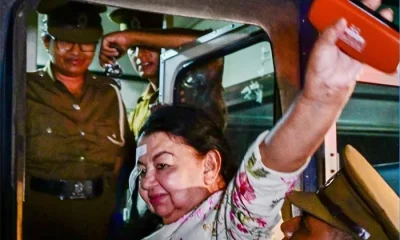
Shiranthi R remanded until 13 Oct.