
Latest News
Electricity price slash should result in 20% savings on goods and services


Minister of Power and Energy, Kanchana Wijesekera highlighted that following the revision of electricity prices, there is potential for a reduction of approximately 20% in the prices of goods and services in the market.
The Minister further urged the business community to alleviate the burden on the public by lowering prices, starting from midnight on the day of the electricity price adjustment, coinciding with the reduction in electricity bills.
Addressing the press briefing titled “Collective Path to a Stable Country” held at the President’s Media Centre (PMC) today (16), Wijesekera said that those consuming less than 90 units have benefited the most from the recent electricity tariff revision.
The Minister further elaborated,
The government has decided to revise the electricity tariff every January, April, July, and October each year. Following the price adjustment in March, the Public Utilities Commission (PUCSL) requested a July revision instead of April. Therefore, the new electricity tariff revision will take effect from July 16. The next revision is scheduled for October.
Amid the economic crisis of 2022, bank interest rates soared to 36%. Escalating prices of coal, fuel, and other commodities due to the Russian-Ukrainian war also contributed to the need for an electricity price revision, the first since 2014, which took place in August 2022.
However, this time, there are several key factors contributing to a 22.5% reduction in electricity prices. Notably, there has been significant improvement in the economic situation. Additionally, over the past two years, there has been an increase in rainfall, leading to higher hydropower generation. Renewable energy production has also seen a rise. In April, electricity from the Uma Oya hydropower plant was integrated into the national grid.
Over the last 18 months, the Ceylon Electricity Board (CEB) has diligently worked to reduce operational costs. No new employees have been hired, reducing the workforce from 26,000 to 22,000 employees.
This tariff revision has provided the most relief to consumers using less than 90 units of electricity, particularly benefiting the 79% of households in this category.
During the peak of electricity billing, the production cost per unit was approximately Rs.48.00, which has now decreased to Rs.35.00. A reduction of 25%-26% in electricity prices has been granted to hotels and industries, while religious institutions have seen a 30% decrease across their entire category.
Looking ahead, the key to further reducing electricity tariffs lies in lowering generation costs, which necessitates the rapid establishment of cost-effective power plants. These new facilities are projected to be operational within the next three years, promising additional reductions in electricity charges thereafter.
Currently, there are only 189,000 consumers using more than 180 units of electricity. For those consuming 30 units, the bill amounts to just Rs.290.00, while those using between 1 and 60 units pay around Rs.790.00.
There has been a significant 20% price reduction for factories and small businesses in this electricity tariff revision. Despite this reduction, it appears unlikely that the prices of goods and services, which typically rise on the same night as electricity price hikes, will decrease accordingly. Recently, fuel and kerosene prices have also dropped without leading to lower consumer prices. Therefore, with the substantial decrease in electricity costs this year, we urge the public to take advantage of these savings, with potential for at least a 20% reduction in overall expenses.
During previous electricity price increases, media reports often compared our tariffs with those of neighbouring countries in the region. I encourage the media to now initiate discussions on how this reduction compares with regional electricity prices and emphasize the continuity of electricity supply. Some media and journalists have speculated that this tariff revision was timed due to upcoming elections. However, these policies were formulated back in 2022 through a formal process, resulting from sound policy decisions rather than populist measures. Therefore, I kindly request equal recognition and acknowledgment for the President and the government when electricity prices are reduced.
In the future, we are focusing on implementing an electricity generation plan that emphasizes efficiency and low operating costs. Prior to 2022, the power sector consistently operated at a loss. However, we have achieved operating profits in both 2023 and 2024.
Due to our agreement with the International Monetary Fund (IMF), funding for the CEB from the Treasury has ceased since August of last year. Despite this, through stringent financial discipline, we have successfully steered the CEB into a profitable position. Significant efforts have also been made to repay a substantial portion of the CEB’s debts to other institutions.
Moreover, the government has actively promoted the installation of solar panels to bolster renewable energy adoption. A plan was devised for rooftop solar panels to contribute 150 megawatts annually to the national grid. Thus far, these installations have added 149 megawatts per year to our national grid.






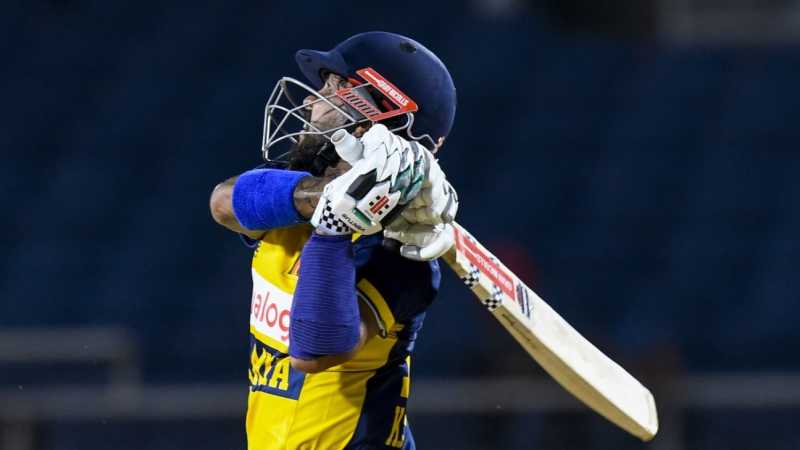
Kusal Mendis and Binura Fernando have been ruled out of Sri Lanka’s upcoming T20I series against England, with the SLC saying that the two were “still undergoing rehabilitation” after injuries picked up at the 2026 Lanka Premier League.
The update came just over a day after the two were named in the 16-member squad, with Kusal retained as captain of both the T20I and the ODI sides.Charith Asalanka, who had returned to the vice-captain’s position for the series, will now lead the side in the T20Is. Though Kusal hasn’t been ruled out of the ODIs just yet, were he to miss out, Asalanka, as the designated vice-captain, might step in there too.
Kusal has been out of action since July 19 with a right hamstring injury, while Binura hasn’t played since August 5, SLC putting his absence down to a back injury.
Pavan Rathnayake, the 24-year-old top-order batter, has replaced Kusal in the T20I touring party, while Dilshan Madushanka, the fast bowler who was in the squad for the Tests against India recently but didn’t get to play, has come in for Binura.
(Cricinfo)
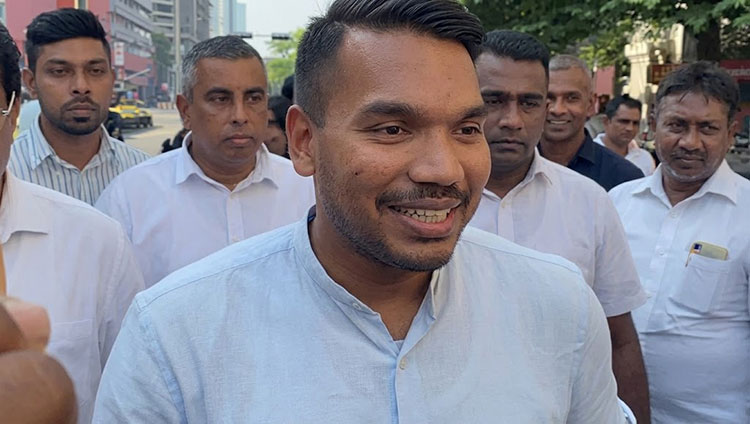
Sri Lanka Podujana Peramuna (SLPP) Member of Parliament Namal Rajapaksa has been arrested by the Commission to Investigate Allegations of Bribery or Corruption (CIABOC).
Namal Rajapaksa had been summoned by CIABOC to provide a statement in connection with investigations into the controversial Airbus deal. He was subsequently arrested by CIABOC after recording his statement for over 5 hours.
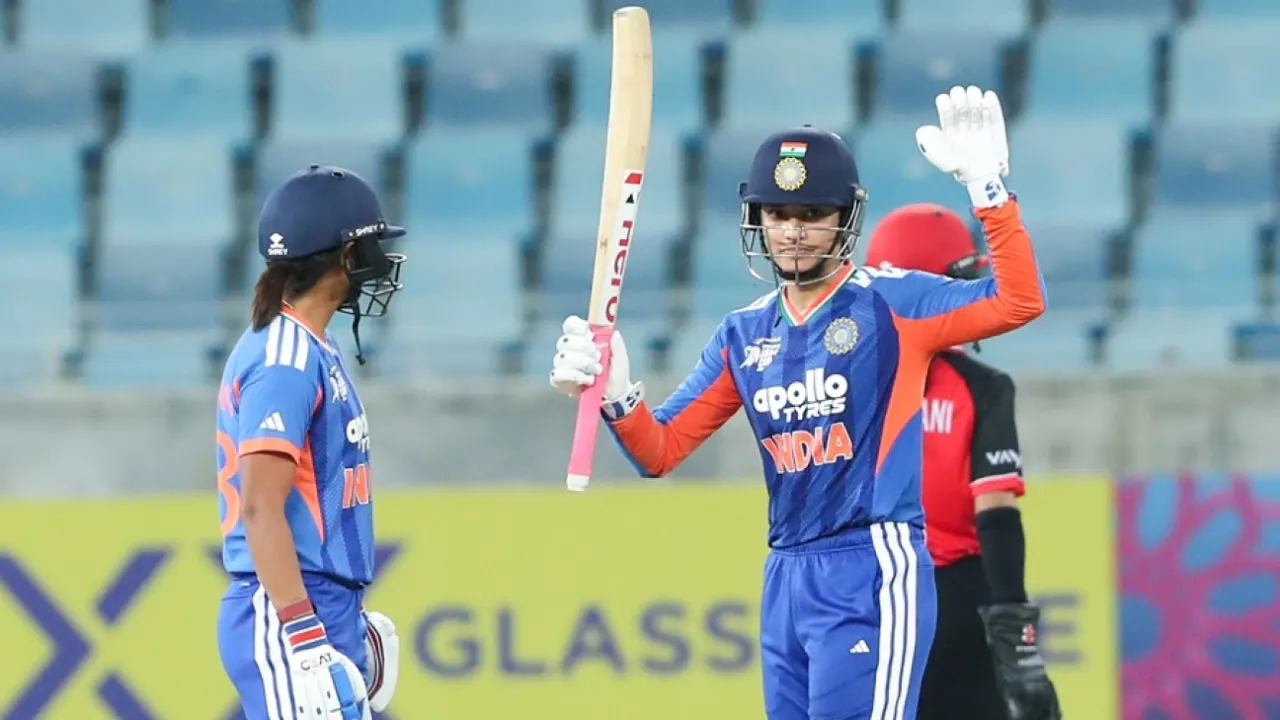
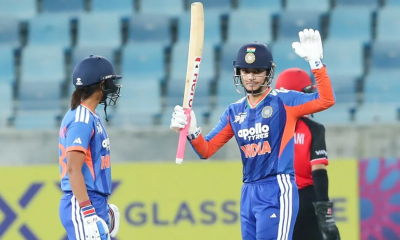
Smriti Mandhana filled her batting coffers with her second T20I century, along the way surpassing Mithali Raj for the record for most runs in women’s internationals, to help India secure a second straight win on Thursday night in Dubai.
Hong Kong’s nerves showed on the field when they fell flat at the first sign of attack from India’s batters, and their timid approach in the chase further exposed the gulf in quality and experience. In the end, they lost by 137 runs – 13 more than what Mandhana managed on her own.
A second straight loss meant Hong Kong will only have some pride to play for, as a berth in the next round is now out of the equation.
India’s cautious start
At the end of five overs, India were 38 without loss – not concerning, but not dominating enough either. They took a while to suss up the lack of pace from the bowlers. Mandhana hogged much of the strike; Shafali Verma faced just six balls in the first five overs. Hong Kong couldn’t have been happier at having kept a lid on the scoring.
Shafali steps up
After a tight first over that went for just seven, offspinner Maria Lamplough was clobbered by Shafali for two fours and two sixes in a 22-run over that helped India take off.
Lamplough struggled for consistency and kept looping the ball up, with Shafali needing no second invitation. The first of the two sixes was a shovel over deep midwicket; the next even better – lofted inside-out over deep extra cover.
Shafali’s brief surge ended on 28 in the eighth over, when Marina took an excellent catch running in and diving full stretch from long-on off Ruchita Venkatesh’s bowling. By then, the openers had put on 74.
Mandhana prances towards record century
As new No. 3 Pratika Rawal took a while to gauge the pace of the surface, Mandhana reached her half-century – her 36th in T20Is – off 40 deliveries with a flat six over deep square. Mandhana’s default setting for much of this period was moving over to the off-side to set herself up for several variations of the slog in the arc between wide long-on and deep square.
Her next fifty came off just 18 deliveries. The century could’ve been nipped in the bud had she been taken at deep square leg in the 16th over off Siu Wai, but she accelerated even more soon after bringing up her century that helped her climb atop the list for most international hundreds in women’s cricket.
In the 18th over, she clobbered Venkatesh for three consecutive sixes, and in the same over also went past Mithali’s record for most international runs. This helped India finish strongly, the second half of their innings brought them 107 despite losing a clutch of wickets.
Nandani’s dream run continues
Coming off a three-for against Thailand, Nandani Sharma’s seam presentation and control was immaculate with the new ball as Hong Kong crawled to 4 for 1 in four overs. The wicket, off Mariko Hill, one of their most experienced batters, came off a superb in-ducker on the back of three successive away-swingers. Nandani added one more wicket to her kitty to finish with 2 for 6 off her three overs.
The collapse
The highest partnership of the innings was the 27 between Yasmin Daswani and Natasha Miles for the second wicket; a period where they hardly threw any caution to the wind, choosing instead to bat overs and gain some match time against an opponent they were playing for the first time in 14 years.
The partnership ended when Daswani’s attempt to heave into the leg side was intercepted by a leaping Bharti Fulmali at midwicket to give Deepti Sharma a wicket. Six balls later, Miles was out attempting to cut Prema Rawat’s sharp leg break, nicking behind to Richa Ghosh.
That was the start of the collapse, as India’s spinners closed in, each one getting onto the scorecard with a bagful. There were eight single-digit scores, with 15 the highest. They lost their last five wickets in 11 deliveries, collapsing from 54 for 5 to 56 all out.
India couldn’t have asked for an easier route into the semi-finals.
Scores:
India Women 193 for 5 in 20 overs (Smriti Mandhana 124, Shafali Verma 28, Pratika Rawal 10, Richa Gosh 11, Harmanpreet Kaur 10; Marina Lamplough 2-46, Ruchitha Venkatesh 1-30, Joyleen Kaur 1-12) beat Hong Kong Women 56 in 16.2 overs (Natasha Miles 15, Yasmin Daswani 11, Marina Lamplough 14; Nandani Sharma 2-06, Shree Charani 2-16, Deepti Sharma 3-09, Prema Rawat 2-12) by 137 runs
[Cricinfo]

Prime Minister of Sri Lanka holds a bilateral meeting with Minister for Education and Skills Development of Bhutan

Prime Minister Meets His Majesty the King of Bhutan

Kusal Mendis, Binura Fernando ruled out of T20I series in England

SLPP MP Namal Rajapaksa arrested by CIABOC

Devapathiraja clinch U15 Division I title with 33-run win over Royal

Mandhana’s record ton powers India into semi-finals

‘Dates have the highest sugar content to fight Coronavirus’

Sunday Island 27 December – Headlines

#SundayIsland 17th December – Headlines

Sunday Island – 28th March

Sunday Island Headlines – 21 March

Sunday Island – 21st February – Headlines
-

 Features6 days ago
“Wrap Me Up in My Blazer”— A Gentlemanly Bradby Reminiscence
-

 Features5 days ago
When Sri Lankan stories find their own voice
-
 Features6 days ago
JVP/NPP government as seen from outside by Lionel Bopage now domiciled in Australia
-

 News5 days ago
BASL takes exception to Justice Ganepola being denied a place in SC
-

 Editorial7 days ago
Govt. trying to dupe UN Rapporteur?
-
 Features6 days ago
Prof. Savitri Goonesekere: What has she done?
-

 News2 days ago
Denied of promotion to SC despite vacancies, justice Gurusinghe retires
-

 Latest News2 days ago
Grade 5 scholarship exam results released