
Business
EFC spurs a dialogue on IT-integrated remote work culture

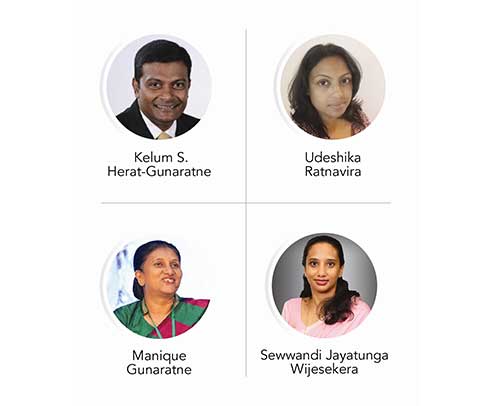
The first edition of the HR/IR Forum for 2021 of the Employers’ Federation of Ceylon (EFC) was held recently on the theme of ‘IT-integrated remote work culture: Pandemic and Beyond’.
The webinar-forum which brought together experts in HR/IR, Industrial and Labour Law and disability sector from the EFC and its member-companies, deliberated on opportunities and challenges a remote work culture driven by IT entails in the pandemic-clouded environment. It also brought to the table the shifts to be forged in an IT-driven work culture beyond the pandemic, an EFC news release said.
Opening the forum, Kelum Herat-Gunaratne, Head of Business Transformation, Hirdaramani Group, provided a snapshot of the labor-intensive, diversified conglomerate’s key areas of business impact due to the pandemic which included both primary and supporting activities.
With an unprecedented toll on sales due to market and operation closure, non-supply of raw materials etc. all of which had a ‘domino effect on operations’ as Herat-Gunaratne explained, the company was driven to adapt mitigation strategies which were largely IT-fuelled, the release said.
“All were counting on technology as the answer. Infrastructure and finance too had a huge role to play and we strategized collectively to see how we could adapt to this new environment,” noted Herat-Gunaratne who went on to emphasize that the IT-HR fusion gave new interventions a further thrust.
Resources for remote work, adapting a change in the work culture, and health & safety of the employees were among the core strategies adopted, said the senior professional who went on to remark that the flip-side of the pandemic was that it ‘fast-tracked the implementation of Hirdaramani’s digital transformation strategy’.
Amplifying the existing processes and leveraging the right technology, pushed WSO2 to brave COVID-induced business challenges, remarked Udeshika Ratnavira, Vice President, Human Resources and Administration at WSO2.
Citing monthly town halls, buddy chats, employee surveys, interactive on-boarding sessions, support to set up home offices and creating awareness on coping with crisis as chief strategies embraced by her company, Ratnavira also alluded to the challenges which had to be braved.
“Employees were missing out social experience, their mental health was affected, brainstorming sessions were difficult on the phone and there were domestic interventions impacting work which we had to take stock of.”
With the challenges, learnings were also many said the HR professional who cited prioritizing costs and essentials, investing in technology, fostering a larger and a deeper pool of talent, connectedness, communication, agility, thinking global and wellness among them.
“During a lockdown people with disabilities are placed in a double-lock down,” remarked Manique Gunaratne, Manager, Specialised Training and Disability Resource Centre of the EFC. “Work-from-home policies must ensure that employees with disabilities have appropriate adjustments at home, similar to what they have in their regular workplace,”
Gunaratne urged employers to champion accessibility and disability-inclusion. It is imperative for the employer to understand what format best suits each employee she said emphasizing the importance of enabling telework arrangements, work-related communication and websites on accessible formats.
Support to purchase assistive devices for remote work, promotion of skills of people with disabilities in assistive technologies and online tools are also urgent in moving forward, she added.
Throwing light on IT-integrated remote work and Sri Lankan Labour Law, Sewwandi Jayatunga Wijesekera Head of Solutions (Legal & HR) and Assistant Director General of the EFC, shared some of the common legal concerns raised by the EFC members in navigating through the new business fabric brought about by the pandemic.
Deviations from the terms in the contract of employment, new work arrangements, leave and holidays, remuneration and benefits, monitoring the performance of probationers and poor performers and managing discipline were among these.
“None of the labour laws of Sri Lanka have specific provisions pertaining to new ways of work such as remote work, compelling employers to manage within the existing legal framework,” she observed.
Noting that moving forward, all work agreements should incorporate provisions related to remote work in case of such necessity, she said. All remote work policies should be “employee-friendly, feasible and practical without compromising on the safety of sensitive internal data and information.”
She added that in formulating such policies, work-life balance, occupational safety and health and communication related challenges should be taken into account.
The forum was followed by a panel discussion which gave the participants at the webinar an opportunity to share their thoughts and elicit responses from the experts.

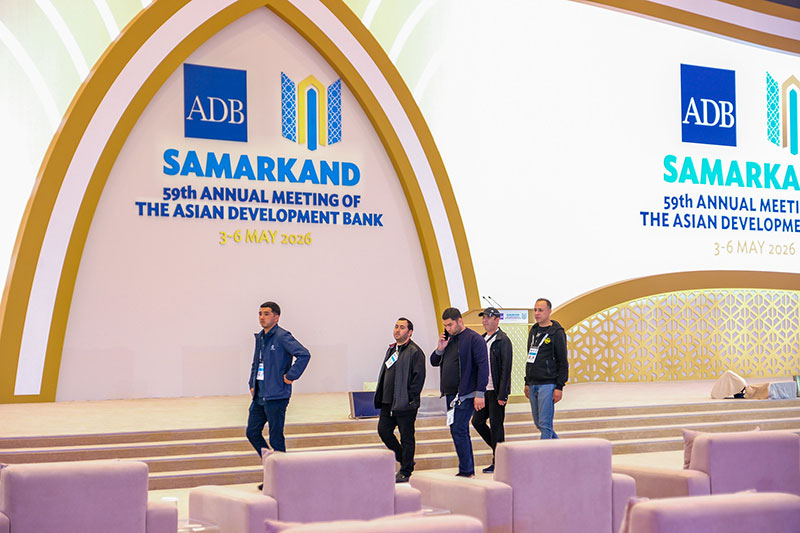
The 59th Annual Meeting of the Board of Governors is set to commence this week, bringing together finance ministers, central bank governors, policymakers and development leaders from across Asia and beyond at a time of mounting global economic and geopolitical uncertainty.
Addressing journalists ahead of the opening sessions, Bernard Woods, Principal Director of the Department of Communications, said the meetings were beginning at a pivotal moment for the world, with fuel markets, food security and fertilizer supply chains coming under strain due to tensions in the Middle East.
He noted that amid rising political and economic fragmentation, regional connections and stronger collaboration have become more important than ever. Against that backdrop, the key sessions and high-level discussions in Samarkand will focus on building collective resilience and strengthening cooperation among member countries.
Among the major themes expected to dominate the agenda are cross-border digital connectivity, cyber security, energy integration, capital market development, transport corridors and the responsible adoption of artificial intelligence to improve resilience and productivity in member economies. Woods also said discussions would examine how resources can be distributed more effectively to meet the unique development priorities of each country.
The official programme features a series of strategic seminars and media events over four days. The opening session of the Board of Governors will include addresses by high profile authorities and subject experts.
Other key sessions include discussions on how capital markets can drive development across Asia and the Pacific, scaling up investments for critical minerals and manufacturing value chains, digital highways for inclusive growth, and pan-Asia transport and power connectivity initiatives.
ADB President Kanda is also scheduled to hold a press conference to announce major new initiatives, while several technical briefings will examine global value chains, private sector operations, digital transformation and regional energy cooperation.
With global shocks increasingly spilling across borders, the Samarkand meeting is expected to underline a central message: that regional cooperation, practical partnerships and timely investment remain essential for sustaining growth and stability across Asia and the Pacific.
By Sanath Nanayakkare in Samarkand, Uzbekistan
Business
Nations Trust Bank completes transfer of HSBC Sri Lanka’s Retail Banking Business to its portfolio

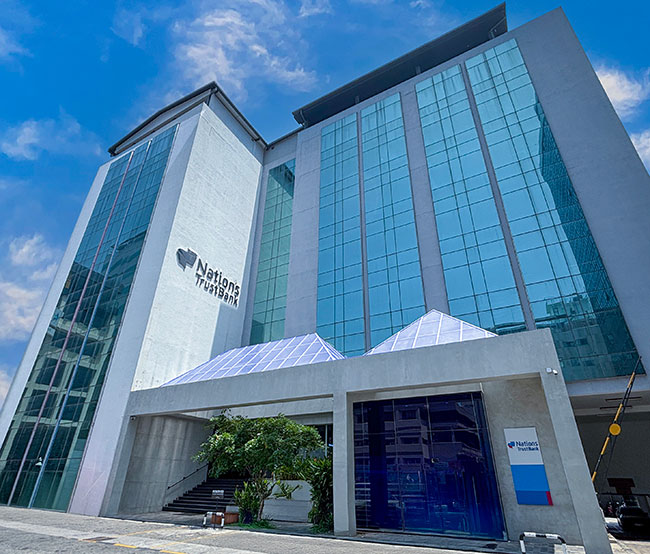
Nations Trust Bank PLC (NTB) has announced that the transfer of Hongkong and Shanghai Banking Corporation’s (HSBC) Retail Banking business in Sri Lanka to NTB has officially been completed, with the acquired portfolio transitioning to NTB effective 1st May 2026.
NTB has integrated HSBC Sri Lanka’s retail banking customers into its operations, ensuring continuity of service and relationship management. The transition also includes the onboarding of HSBC Sri Lanka staff as part of the integration process. The transition has been carried out with a focus on operational stability and minimal disruption, with ongoing support in place as customers familiarise themselves with their banking arrangements at NTB.
The migration brings approximately 200,000 retail customer accounts under NTB, encompassing savings and current accounts, fixed deposits, credit and debit cards, retail loans and a high‑net‑worth customer segment that now joins Nations Trust Bank Private Banking. Through this transfer, Nations Trust Bank’s countrywide network expands to 96 branches. The transition adds seven branches to the network, with locations in Bambalapitiya, Flower Road, Union Place, and Pelawatte operating as dedicated Private Banking Centres, while three other branches are located in Nugegoda, Jaffna, and Kandy.
To support customers during the transition period, NTB has ensured that multiple access points and support channels remain available. Customers may continue to bank through the nearest NTB branch, contact NTB’s 24-hour Help Desk via +94 11 441 4151, and access digital banking services through the Nations Direct mobile app. Dedicated transfer‑related information and FAQs are also available at https://migration.nationstrust.com
Additionally, arrangements were made to extend branch support across two weekends as part of the transition programme.
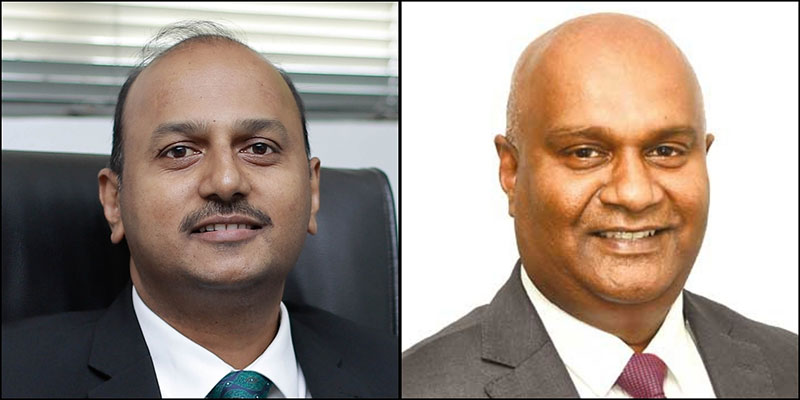
Amana Takaful Insurance has been recognized as Sri Lanka’s Most Awarded Insurance Company for 2026 by LMD Magazine, marking its third consecutive year of achievement. This recognition reflects the company’s consistent focus on delivering value across both its Life and General businesses, supported by customer-centric solutions, operational discipline, and continued innovation.
Over the years, Amana Takaful has strengthened its market position by enhancing service delivery, investing in digital capabilities, and expanding access to insurance solutions for a wider segment of Sri Lankans.
Commenting on the recognition, Siva Karthigun, Chief Executive Officer – General, stated: “This recognition reflects the discipline and focus we maintain across our operations to deliver consistent outcomes for our customers. Our continued investments in process improvements, digital capabilities, and service excellence have enabled us to strengthen our responsiveness and reliability, ensuring we meet the evolving expectations of our customers across all touchpoints.”
Commenting further, Gehan Rajapakse, Chief Executive Officer – Life, stated: “This recognition reflects the consistency of our efforts in delivering meaningful value to our customers, while continuously strengthening our capabilities across both Life and General businesses. As we move forward, our focus remains on enhancing accessibility, leveraging digital innovation, and ensuring our solutions remain relevant to the evolving needs of Sri Lankans, while maintaining the highest standards of service and reliability.”
Notably, a significant portion of these awards were received for digital excellence, underscoring the company’s continued progress in its digital transformation journey. Amana Takaful’s investments in technology-driven solutions, process automation, and enhanced digital customer experiences have played a key role in strengthening accessibility, efficiency, and service delivery across both Life and General businesses.
The recognition further reinforces Amana Takaful’s standing within the industry, highlighting its ability to sustain performance and adapt in a dynamic environment. For Every Sri Lankan, as one.

Spain seizes record amount of cocaine in Atlantic Ocean, authorities say

Three dead in suspected virus outbreak on Atlantic cruise ship

US strikes seven Iranian boats, Trump says, as tensions spike in Strait of Hormuz

Rohit and Rickelton power Mumbai Indians to crucial win over rock-bottom Lucknow Super Giants

Heat Index at Caution Level in the Northern, North-central, North-western and Eastern provinces and in Hambantota and Monaragala districts during the day time

Maldivian President plants a sapling to mark 60 years of Sri Lanka–Maldives Diplomatic Relations

‘Dates have the highest sugar content to fight Coronavirus’

Sunday Island 27 December – Headlines

#SundayIsland 17th December – Headlines

Sunday Island – 28th March

Sunday Island Headlines – 21 March

Sunday Island – 21st February – Headlines
-

 News6 days ago
Treasury chief’s citizenship details sought from Australia
-

 News5 days ago
Rooftop Solar at Crossroads as Sri Lanka Shifts to Distributed Energy Future
-
 News4 days ago
“Three-in-one blood pressure pill can significantly reduce risk of recurrent strokes”
-
 News7 days ago
Govt. assures UN of readiness to introduce ‘vetting process’ for troops on overseas missions
-

 Business7 days ago
ADB-backed grid upgrade tender signals next phase of Sri Lanka’s energy transition
-

 News6 days ago
Central Province one before last in AL results
-

 Sports6 days ago
Well done AKD!
-
 Business7 days ago
Update on independent forensic review