
Latest News
Ebrahim Raisi, Iran’s president, dies in helicopter crash aged 63

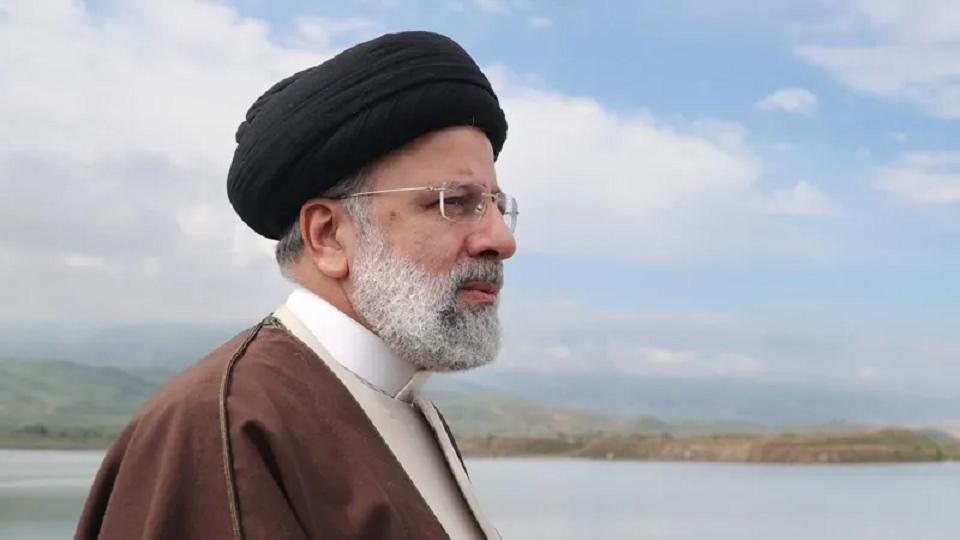
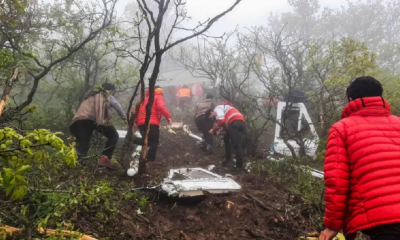
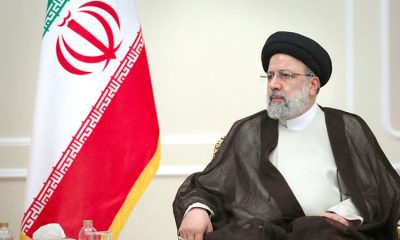
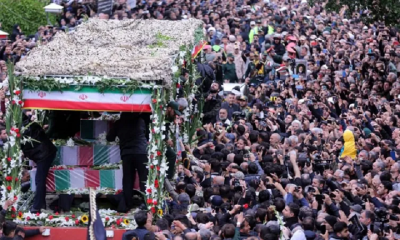
Iran’s President Ebrahim Raisi has died after a helicopter carrying him and other officials crashed in a mountainous and forested area of the country in poor weather.
The 63-year-old, a figure representing conservative and hardline factions in Iranian politics, was president for nearly three years and appeared on track to run for re-election next year.
A former chief justice, Raisi was touted as a potential successor to Ayatollah Ali Khamenei, the 85-year-old supreme leader of Iran.
Raisi was born in Mashhad in northeastern Iran, a religious hub for Shia Muslims. He underwent religious education and was trained at the seminary in Qom, studying under prominent scholars, including Khamenei.
Also like the supreme leader, he wore a black turban, which signified that he was a sayyid – a descendant of the Prophet Muhammad, a status with particular significance among Twelver Shia Muslims.
Raisi racked up experience as a prosecutor in multiple jurisdictions before coming to Tehran in 1985. It was in the capital city that, according to human rights organisations, he was part of a committee of judges who oversaw executions of political prisoners.
The late president was a longtime member of the Assembly of Experts, the body that is tasked with choosing a replacement for the supreme leader in the event of his death.
He became attorney general in 2014 for two years, when he was appointed by Khamenei to lead the Astan Quds Razavi. The colossal bonyad, or charitable trust, has billions of dollars in assets and is the custodian of the shrine of Imam Reza, the eighth Shia imam.
Raisi initially ran for president in 2017, unsuccessfully challenging the re-election of former President Hassan Rouhani, who represented the centrist and moderate camps.
After a short hiatus, Raisi was making headlines as the new head of the Iranian judiciary system, having been appointed by Khamenei in 2019. He presented himself as a defender of justice and a fighter against corruption, and made many provincial travels to garner popular support.
Raisi became president in 2021 amid low voter turnout and wide disqualification of reformist and moderate candidates, and appeared to have secured a firm footing for re-election.
Like other top Iranian officials, his harshest rhetoric was reserved for Israel and the United States, followed by their Western allies.
Raisi made many speeches since the start of the war on Gaza in October to condemn ‘genocide’ and ‘massacres’ committed by Israel against Palestinians, and called on the international community to intervene.
He promised revenge against Israel after it levelled Tehran’s consulate building in Syria and killed seven members of the Islamic Revolutionary Guard Corps (IRGC), including two generals.
And he welcomed Iran’s response which was to launch hundreds of drones and missiles at Israel, most of which were shot down by a coalition of Israeli allies – but left Iran claiming an overall success.
Raisi was hawkish on Iran’s 2015 nuclear deal with world powers, or the Joint Comprehensive Plan of Action (JCPOA), which has been in limbo after former US President Donald Trump unilaterally withdrew from it in 2018.
He was a champion of the strategic policy of “resistance” and “resilience” that Khamenei has adopted in the face of the harshest-ever sanctions that Iran has faced – imposed after the nuclear deal fell through.
A close ally of the IRGC, the late president was also a staunch backer of the “axis of resistance” of political and armed groups that Iran supports across the region, including in Iraq, Syria, Lebanon and Yemen.
And he was a strong backer of Syrian President Bashar al-Assad, who Iran has supported in his government’s war against the Syrian opposition, which has left hundreds of thousands dead.
(Aljazeera)






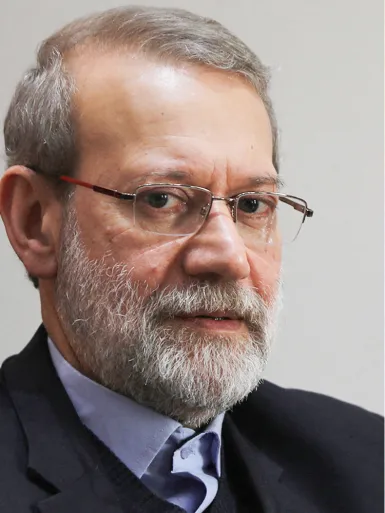
Israel has claimed two high profile assassinations of Ali Larijani, secretary of Iran’s Supreme National Security Council, according to Israel’s Defence Minister Katz, and the commander of the internal Basij militia, Gholamreza Soleimani, neither of which Iran has commented on or confirmed
Iranian state media published a handwritten note by Larijani, it is not clear whether it is intended as proof of life. Larijani’s note published on his social media outlets commemorates memory of Iranian sailors killed, hose funeral is expected to be held on Tuesday, in the US attack on their boat in international waters.
if confirmed, Larijani would be the highest level assassination in the war since United States-Israeli strikes killed the former Supreme Leader Ali Khamenei, and several members of his family on the first day of the war they launched on February 28.
Larijani was last seen publicly on Friday, attending the al-Quds day rally in support of Palestinians in Tehran, along with Iran’s President Masoud Pezeshkian.
Larijani has been a political figure in the Iranian hierarchy for years, at one time leading the nation’s nuclear negotiations with the West. He was also previously the Iranian Speaker of the Parliament.
The Israeli military also claimed in a post on X Tuesday that it had killed Gholamreza Sileimani, the commander of the Basij unit, the internal security paramilitary militia of the Islamic Revolutionary Guard Corps (IRGC).
[Aljazeera]
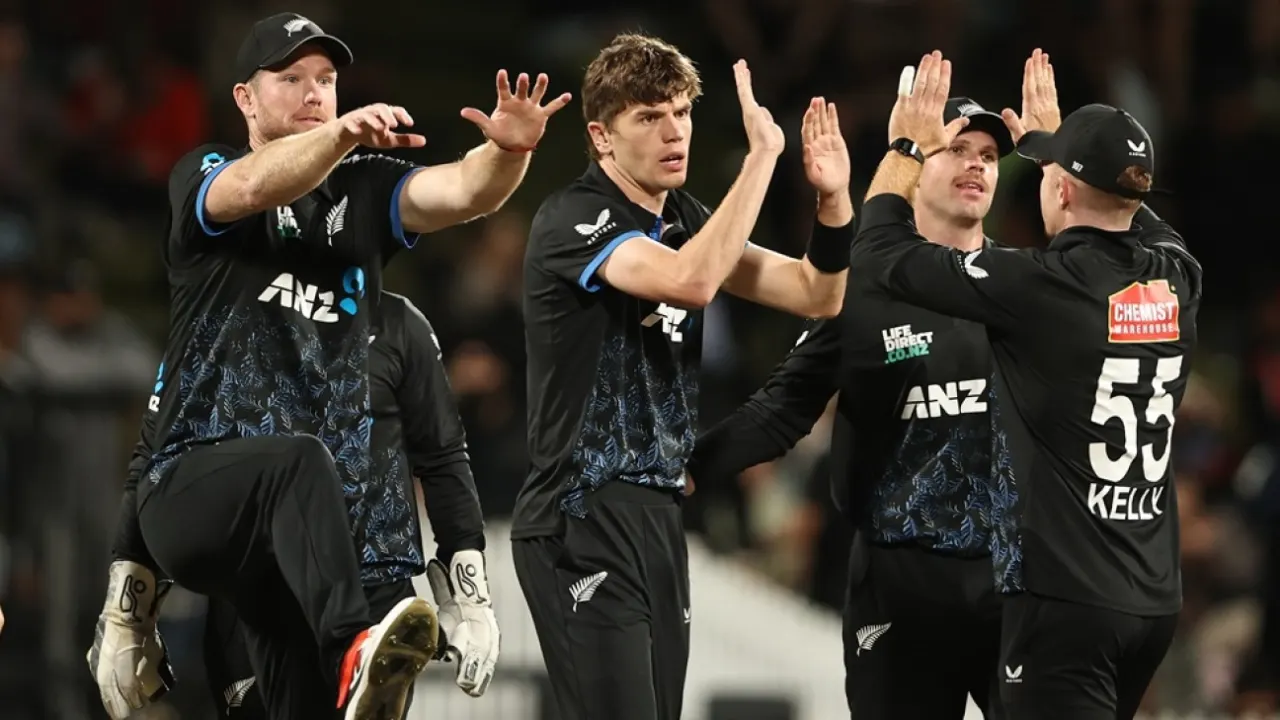
New Zealand levelled the five-match T20I series against South Africa with a dominant performance in Hamilton. After being put in to bat on a surface the women’s sides praised for its batter friendliness, New Zealand relied on Devon Conway’s experience to post a challenging target.
They may even have felt they left a few runs out there as few stayed with Conway with the 48-run opening stand their highest. South Africa’s spinners were particularly expensive as Keshav Maharaj and George Linde conceded 78 runs in the six overs they bowled.
In the end, New Zealand scored exactly the same number of runs as they posted just over a month ago against South Africa, in the group game of the T20 World Cup. Then, South Africa eased to the target with 17 balls to spare. This time, they were bowled out for their 10th lowest score in the format: an exact mirror of what New Zealand’s line-up did in the first match. Only Linde scored more than 30 as Ben Sears and Lockie Ferguson took six wickets between them in an incisive display of quick bowling.
With South Africa women winning earlier in the day, both the men’s and women’s series are locked at 1-1.
Conway collects his highest in two years
Conway didn’t get any games at the T20 World Cup but showed he still has plenty to offer with an innings that provided a solid foundation for New Zealand to build on. He was productive on the leg-side from the get-go, when he flicked the first ball of the match through mid-wicket for four and scored 80% of his runs in that half of the field. That included both his sixes: the slog-sweep off Keshav Maharaj in the over after the Powerplay and his launch over long-on off Wiaan Mulder which brought up his fifty off 39 balls. Conway has not scored this many runs in 20 T20I innings, since February 2024. He was ready to up the ante as New Zealand entered the last five overs and tried to pull Wiaan Mulder but was cramped for room and top-edged. New Zealand were 124 for 4 with 27 deliveries remaining.
South Africa’s death bowling misses a trick
With Conway dismissed, and New Zealand 126 for 5 after 16 overs, South Africa had the opportunity to keep the hosts under 160 but their death bowling plans faltered. Nqobani Mokeona, the 19-year old, bowled a good 17th over that cost only seven runs and finished with excellent figures of 0 for 22 in four overs. Gerald Coetzee’s final over went for eight runs and brought the wicket of Jimmy Neesham before Ottneil Baartman’s last over cost 10 runs.
Keshav Maharaj came on to bowl at the end, and it went awry. Cole McConchie advanced on him to hit the first ball for six and then Josh Clarkson plundered 16 runs off the four deliveries. Maharaj’s plan to go wide of the stumps didn’t work as Clarkson chased it and finished unbeaten on 26* off nine balls. What may irk Maharaj most is that he had another option. Wiaan Mulder, playing a T20I for the first time since September 2024, bowled two overs for 14 runs and could have had one towards the end of the innings. South Africa conceded 42 runs in the last three overs.
New Zealand’s hat-trick of early strikes
South Africa were off to a solid start on 24 without loss after the first three overs but then trouble struck. In the fifth over, Connor Esterhuizen thought he had carved Sears in front of backward point, but Tim Robinson timed his jump well to take a good catch. In the next over, Mulder, opening for the first time in T20Is, worked his way to 16 off 20 balls before he also tried to cut but was beaten by turn and bounce from Mitchell Santer and caught in the covers. With both openers dismissed early, South Africa would have been looking for a big performance from Tony de Zorzi, the No.3 who was originally part of the T20 World Cup squad. But the left-hander fell victim to the McConchie curse (remember he dismissed Quinton de Kock and Ryan Rickelton in the T20 World Cup semi-final?) and top-edged a sweep to short fine. South Africa were 31 for 3 in the seventh over.
Santner gets Smith again and Sears steals the show
It’s gone from tough to tougher for finisher Jason Smith, who has been dismissed by New Zealand’s captain in successive matches. Smith was stumped for 10 in the first T20I off Santner’s bowling, as he lunged forward, and this time was caught for 12 as he top-edged a sweep. Smith handed a simple catch to Sears at short fine and will be concerned with his lack of runs on the tour so far. Sensing an opportunity to finish things off quickly, Santner brought Sears back on to replace and kill the game. Sears responded to plan and used the short ball well. He had both Dian Forrester and Gerald Coetzee caught on the pull to leave South Africa 91 for 7 after 13 overs and the game all but over. South Africa were bowled out in the 16th over.
Brief scores:
New Zealand 175 for 6 in 20 overs (Devon Conway 60, Tom Latham 11, Nick Kelly 21, Mitchell Santner 20, Cole McConchie 18*, Josh Clarkson 26*; Gerald Coetzee 1-28, Otnell Baartman 1-31, Keshav Maharaj 1-45, George Linde 1-33, Wiaan Mulder 2-14) beat South Africa 107 in 15.3 overs (Wiaan Mulder 16, Rubin Hermann 19, Jason Smith 12, Dian Forester 10, George Linde 33; Ben Sears 3-14, Lockie Ferguson 3-16, Mitchell Santner 2-19, Cole McConchie 1-24, James Neesham 1-10) by 68 runs
[Cricinfo]
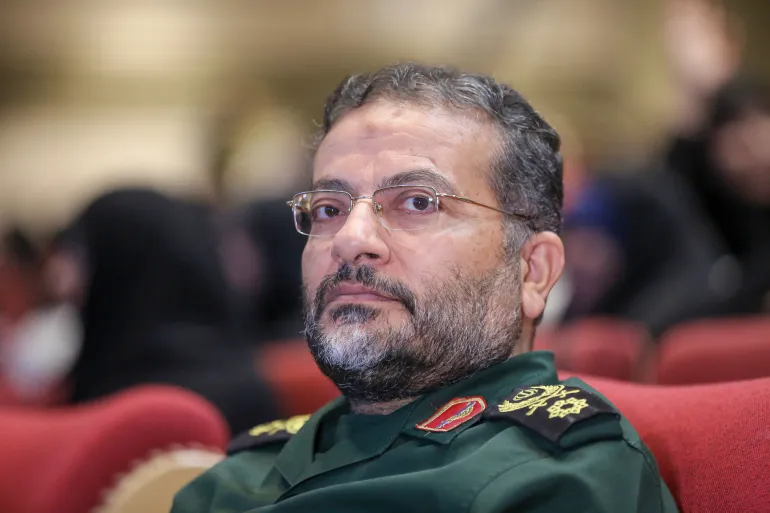
The Israeli military has claimed in a post on X Tuesday that it has killed Gholamreza Soleimani, the commander of the Basij unit, the internal security paramilitary militia of Iran’s Islamic Revolutionary Guard Corps (IRGC).
“Guided by precise intelligence from Military Intelligence, the Air Force conducted a targeted strike yesterday in the heart of Tehran, eliminating Gholamreza Soleimani, commander of the Basij unit over the past six years,” it said on Tuesday.
Iran has not commented on, nor confirmed this claim.
If confirmed, Soleimani would be the highest level assassination in the war since United States-Israeli strikes killed the former Supreme Leader Ali Khamenei, and several members of his family on the first day of the war they launched on February 28.
The US Treasury records Soleimani’s birth year as 1965. He has been sanctioned by the United States, the European Union, and other countries for his alleged role in suppressing dissent through the Basij.
[Aljazeera]

Israel says it’s killed Ali Larijani, Iran’s security chief and Basij commander

Devon Conway, bowlers star as New Zealand make it 1-1

Israel claims to have assassinated commander of Iran’s Basij militia unit

Trump seeks to delay meeting with Xi in China

Pakistan lodge official complaint about Bangladesh’s review at end of chase

Showers or thundershowers will occur at several places in the Central, Sabaragamuwa, Southern and Uva provinces after 2.00 pm.

‘Dates have the highest sugar content to fight Coronavirus’

Sunday Island 27 December – Headlines

#SundayIsland 17th December – Headlines

Sunday Island – 28th March

Sunday Island Headlines – 21 March

Sunday Island – 21st February – Headlines
-

 Business7 days ago
BOI launches ‘Invest in Sri Lanka’ forum
-

 News6 days ago
Historic address by BASL President at the Supreme Court of India
-

 Sports6 days ago
The 147th Royal–Thomian and 175 Years of the School by the Sea
-

 Sports7 days ago
Royal start favourites in historic Battle of the Blues
-

 News7 days ago
CEBEU warns of operational disruptions amid uncertainty over CEB restructuring
-
 Features7 days ago
Indian Ocean zone of peace torpedoed!
-
 News6 days ago
Power sector reforms jolted by 40% pay hike demand
-

 Life style3 days ago
From culture to empowerment: Indonesia’s vision for Sri Lanka