
Features
Eating not for pure entertainment


By B. Nimal Veerasingham
It was probably during my Grade 5 or 6 in school that I came across the factors that ultimately would become the guiding principles of our overall long-term wellbeing. It was a time of playfulness and plenty of time over the green grass as long as the sun is out there. The dash to the playground as soon as the final period ended was as natural as the waves reaching the shores. Part of that growing-up season also involves consuming any amount of food without second thought much less guilt.
Classroom and aroma
Our classroom was on the first floor, parallel to the tail end of the ‘Central Road’, which was not wide enough for two cars to pass freely without difficult and risky manoeuvering. A row of houses on the other side of the road is clearly visible from the classroom, mostly dominated by their roofs. But once or twice during the week closer to noon something magically wafts through the opened windows of the classroom like an uninvited guest. The winds swirling upstream unopposed from the lagoon not far away carried the aromatic compounds directly into our nostrils. It was the aroma of tantalising mutton or chicken curry replete with fine spices, curry leaf, coconut milk and roasted chili/curry powder. Nobody disputes the science behind the nose and the frontal brain, the route to the body’s central command. Odours take a direct hit to the limbic system related to emotion and memory, a kind of greater anticipation in this case before anything gets to our mouth. But in our case the expectation simply begins and dies while we are still in class, only being a minor inconvenience to our concentration on the books.
There was this aroma and then there was a set of back-benchers who were simply practicing the rules of idling, both mentally and physically as part of their curriculum. Our literature teacher called them ‘loafers on easy chairs’. If aroma could lead one to the dining table, idling loafers did not want to see the food there, said our teacher with a chuckle.
As I grew older and realised the fundamentals of our anatomy, the picture painted as what is pain-free and largely lethargic easy-chair lifestyle the retirement years supposed to bear on, became increasingly illusional. After all, humans have a rolling evolutionary history where the upkeep of our physical body at optimal levels depends largely on nutrition, mindfulness, and physical activity irrespective of age. There are no such things as intervals or grace periods.
Squad member
A few years ago, I met a friend at the parking lot of a local mall, who was part of the original ‘curry smelling squad’, almost after five decades of that famous escapade. It was around 5 o’clock on a lazy Saturday, and the sun was making that orange and crimson melodrama all over the lower sky. The show of the heavenly artist was clearly visible from the parking lot due to its low-lying position bounded by elevated exits from the nearby highway. I am not sure whether the evening of our lives would be as bright as the short-lived evening skies, but certainly down the exit ramp tired of being on the strenuous highway for so long.
He looked aged and bloated despite what appeared to be a more than spotless pitch-black hairdo. People age and the age of the people get blurred up or down depending on their ancestry and maintenance. But as customary we tend to paint a positive picture despite what is on the wall. I enthusiastically greeted and paid a rosy compliment inquiring the secrets of his younger appearance expecting his views on a healthy lifestyle. What I did not expect from him was the forceful preaching of the health gospel; all of it, from Mathew to Revelations, sedentary lifestyle to stretched waistlines. Though I was not closer to the word of healthy living, it was a pleasant surprise to hear the call from a person who would literally struggle to even do one lift on the school monkey bar. The physical training teacher had to retire him after his very first attempt so that others would get a chance on the bars. Here he is, converted and reincarnated. It was more like a command, a lonely voice from the desert(ed) parking lot.
That night as usual, I slept well, but the lingering conversation at the parking lot kept coming at me like the piece of Pizza from the fridge asking to join for a walk in Garfield’s dreams. Healthy living especially when you are approaching your 50s or 60s is not a choice, but far from it, a firm verdict of life sentence with hard labour. Heart diseases and diabetes are not mere advisory notes; they may signal ‘Waterloo’ for our Napoleonic wellbeing. For many entering and learning the ropes of meaningful parenting while scaling the career ladders and balancing domestic balance sheets, healthy living takes a back seat, like the short span of the barking dog behind a vehicle.
The changing work-life cycle
Reduced physical activity at work due to mechanisation, improved motorised transport, a whole heap of labor-saving domestic gadgetries and preference for couch TV as opposed to outdoors have resulted in positive energy balance to most of us. This is much more evident and faster over 20th Century and as a result the emergence of an expanding middle class among economies.
Humans evolved to be active animals and may not be able to adapt well to the modern sedentary lifestyle. Evolutionary biologists point out that from a genetic standpoint, humans living today are stone age hunter gatherers displaced through time to a world that differs from that for which our genetic constitution was selected.
Risks for South Asians
The task becomes even more tedious if you are a South Asian arriving from a largely non-migratory agrarian society where rice and related byproducts convulse into our prime energy sustainers. The bleached wheat flour introduced by our colonial masters of the past as the quick fix for our energy needs did not do any justification. Instead, mixed with other obvious sugary products of palm, coconut and sugarcane, it made a deadly carbo-sugary cocktail that fills three quarters of our living cells. Studies have revealed that South Asians face a high risk of developing high blood pressure, high triglycerides, abnormal cholesterol, and type 2 diabetes at lower body weights than other groups. ‘Every South Asian has a very common experience unfortunately, and it is that we all have someone in our first-degree circle that has either died suddenly or had premature cardiovascular disease,’ said Dr. Abha Khandelwel, a cardiologist at the Stanford South Asian Translational Heart Initiative.
More consumption
The sheer popularity of YouTube is more prevalent in none other than in the record number of ‘cooking shows’ available in every taste, shape, source and size. Some presenters cook for a family while some for the whole village. The bottom line here is that cooking is not completed without eating and raising a high five. According to YouTube creator’s academy the topic ‘Food’ comes on the popular top five in the medium. As the nutritionist Marion Nestle remarked 10 years ago in her book ‘What to eat’, “it is human nature to eat when presented with food, and to eat more when presented with more food.” Humans ate food when only food was available throughout the evolutionary cycles, but now our fridges and supermarkets are fully stocked and available 24/7, we are feasting without the necessity to have any additional energy. Electrical and electronic gadgets have reduced our work time and the need for more energy, yet we have no qualm in consuming 3 slices of pizza of roughly 1000 calories which is all needed energy for half a day.
Throughout history, we have consumed one meal a day including the ancient Romans who ate one meal around midday, says food historian Seren Charrington-Hollins. “Over the centuries, we have become conditioned to three meals a day because food is available in abundance despite our sedate lifestyles.”
Some of the striking findings that came out of the University of California (SF) Masala project study was related to body compositions. South Asians have a greater tendency to store fat in places where it shouldn’t be, like the liver, abdomen and muscles. Fat that accumulates in these areas, known as visceral or ectopic fat, causes greater metabolic damage than fat that is stored just underneath the skin, known as subcutaneous fat.
Robust and Retirement
In hunter-gatherer vocabulary, there is no such thing as retirement and though we may rightfully deserve one now, our anatomies haven’t evolved quickly to accommodate that aspect in our bodies. In other words, putting legs up when you have done your time, paid your dues and put long hours is literally a bad thing for your overall well being. Evolutionary biologists have tended to argue that since only recent human generations have been able to think of relaxing in their twilight years, evolution hasn’t had a lot of time to adjust. Its only about 100 years since industrialization and technological breakthroughs have made our lives so labor free as opposed to the evolutionary tracking that was in place for thousands of years with labor to the end.
In many countries of the West, the average retirement age for full governmental benefits is 65 although attempts and studies are underway to move it further to 67. This is in relation to various factors, notably the expanding longevity, governmental funding obligations, and replacement of human resources in relation to retirements and economic expansion. Although there are positive and negative arguments no one will deny that medical advancements have brought in many benefits, identifying deficiencies or potential concerns ahead of them becoming problematic or fatal. In the West, annual medical and dental check-ups are encouraged and followed resulting in a more preventive medicine with less cost than therapeutic.
Smelling curry and mother earth
During the early days of the pandemic that disrupted all our lives when stores and supermarkets were running low on stocks, a colleague with an Asian background called me one day to inquire whether I had stocked enough. I asked her what. ‘Of course,’ she said with a laugh, ‘rice and toilet paper’. Really?
For a moment I thought about it to realise that whether the humans are just looking for ways to exist or simply survive? Shouldn’t Mother Earth be proud of allowing us to stand on its surface till we exit. It’s like what our literature teacher said, ‘If aroma could lead one to the dining table, idling loafers don’t want to see the food there’. We can only take control of the things we can change, albeit the faulty genetics and delayed evolutionary traits.

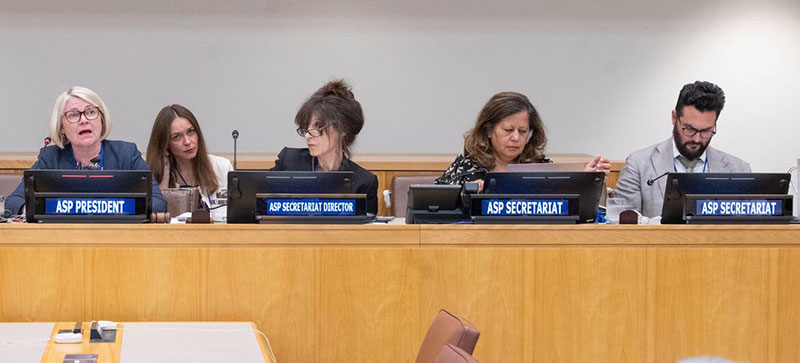
 US Secretary of State Marco Rubio’s warning to the International Criminal Court (ICC) was stark: ‘Either the ICC will end its threats, or we will end the ICC.’ It followed US central administration accusations that the court was unfairly targeting Americans on the basis of trumped-up war crimes charges.
However, a new plethora of sanctions has been clamped on the ICC by the US, which in turn has spurred accusations by sections of the world that the latter has unleashed an ‘assault’ on the international legal order.
What some of the sanctions would mean for the ICC was outlined by Rubio: ‘We will ban transactions with this rogue court, cutting off their resources and crippling their ability to operate against us.’
The ICC has shown consistency of purpose over the years. Despite some operational constraints it has indicted a large number of political strongmen from around the world, accused of war crimes and other governance excesses that come under its purview. Two such recent figures are: Russian President Vladimir Putin and Israeli Prime Minister Benjamin Netanyahu.
Rather than enjoy a mere nominal presence in the world community, the ICC has proved its effectiveness by detaining and bringing to justice scores of VIP politicians and others of their ilk who have been found guilty of human rights abuses and kindred excesses that come within the terms of reference of the ICC.
Accordingly, the international justice system would be stymied considerably as a result of the ICC being dis-empowered, particularly financially. Needless to say, potential and real perpetrators of the species of crime coming under the jurisdiction of the ICC would stand to gain most from such anarchic tendencies. That is, political repression globally would be enabled to enjoy a new lease of life.
A detailing of the types of crime coming under the purview of the ICC provides an idea of what it would cost the international community if the ICC’s operations are gravely hampered. They are mainly: genocide, war crimes, crimes against humanity and the crime of aggression.
That is, the part of the world to be worst affected would be the global South, since the latter is awash with the mentioned crimes. Needless to say, a chronically-disaffected South will sooner rather than later undermine the well being of the world dangerously. The world is already being put through these paces.
At the time of writing, ‘illegal migrants’ from the South, for example, are aggravating many a Western economy’s woes, besides creating for them acute law and order issues. The fact that these migrants’ presence goes on to become a virtual test of the migrant receiving states’ ability to forge domestic social inclusion in the face of jingoistic protests by mainly white supremacist groups is evidence of the latter. As is known, the US, to take just one example, has been up against this crisis for quite a while.
Accordingly, it will be in the best interests of the West if ‘illegal’ migrant arrivals on their shores are stemmed. If the socio-political and economic problems assailing the South are effectively managed through North-South collaborative, ‘trouble-shooting’ efforts the causes leading to ‘illegal’ migration and connected issues could be resolved at source as it were. For, it is the aggravation of the South’s material questions that lays the basis for the emergence of repressive and anti-democratic regimes in the hemisphere.
Until such time that the aforementioned issues in North-South relations are visited afresh and addressed urgently, a vibrantly functioning ICC would be needed. For, the latter would prove a deterrent to Southern political and military strongmen, highly prone to power abuse and like excesses, from coming into being in the wake of the South’s chronic material woes and the wars and conflicts that result from them.
It stands to reason then that the US would be acting in its own interests by enabling the ICC to perpetuate its mandate without hindrance. For a crop of issues that impinges negatively on internal law and order would be defused.
Meanwhile, there needs to be a meeting of minds among the rest of the West to put back in place a North-South dialogue process aimed at reducing some of the economic pressures that are weighing on the South.
Since economics usually drives politics it will be in the interests of the world community to scrutinizingly re-visit North-South issues of the past and put in place economic relief packages for Southern publics that would enable them to tide over their material hardships rather than permit the latter to aggravate into social disaffection and eventually armed militancy. It is the latter juncture that paves the way for the emergence of authoritarian rulers in the South who then go on to be a blight on their publics.
Accordingly, the Southern-based global development thinking of the past that envisaged a more equitable world economic order needs to be seen as an urgent need. That is, NAM’s international development paradigms need to be resuscitated to the extent possible.
It is unlikely that rightist governments of the West, such as the current Republican administration in the US, would find these projects feasible, but democratic states of Europe, led by perhaps the UK, are likely to think otherwise. For it would not be beneficial for the democratic world to be having on their hands repressive governments in the South who would be gravitating towards the major military and economic actors of the South, such as Iran and North Korea, who tend to be in constant power struggles with the West.
However, until such time that the mentioned, pro-people initiatives are given serious thought the ICC would need to be enabled by the international community to be in place comfortably and carry on with its mandate of bringing repressive rulers to book. Besides the ICC should pave the way for the peoples of the developing world to enjoy some substantial respite from the political repression and even terror which tend to be their lot.
Meanwhile, the wars of West Asia are relentlessly aggravating the economic hardships of people everywhere, driving the point home to enlightened sections that there is no alternative to peacemaking. A challenge is to convert the US under President Trump to this line of thinking.
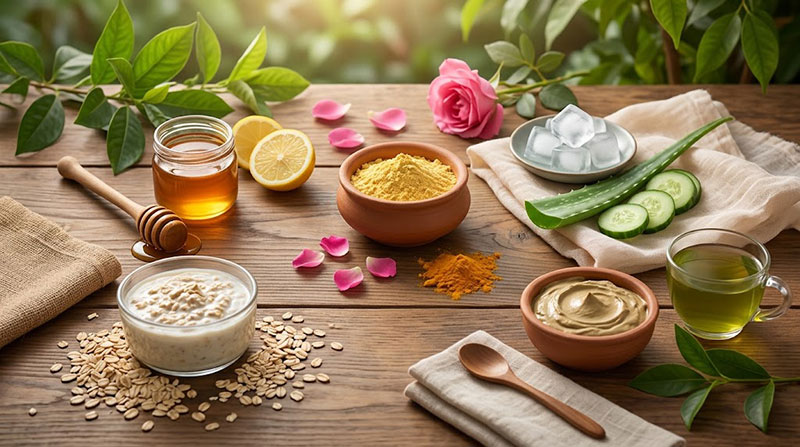
 This week, I give you five simple, time-tested homemade remedies that help reduce the appearance of blemishes, control excess shine and leave your skin feeling softer and smoother.
The Honey and Lemon Brightening Dab:
For stubborn blemish marks, this is a classic. Mix one teaspoon of pure bee honey with three to four drops of fresh lemon juice. Apply gently, only on the affected spots, and leave for 10 minutes before rinsing with lukewarm water. While honey soothes and softens, lemon helps to brighten naturally. Use twice a week in the evening.
Besan and Rose Water Oil-Control Pack:
An ideal remedy to combat shine, especially on the T-zone. Take two teaspoons of besan (gram flour) and mix with sufficient rose water to form a smooth paste. Add a pinch of turmeric for its antiseptic goodness. Apply evenly, keep for 15 minutes and wash off. It absorbs excess oil without over-drying, leaving a beautiful matte finish.
Aloe Vera and Cucumber Ice Soother:
Blend fresh aloe vera gel with the juice of a grated cucumber and freeze the mixture in an ice tray. Each morning, wrap one cube in a soft muslin cloth and gently rub over a cleansed face for 30 seconds. It calms, tightens pores and imparts a baby-soft smoothness.
Oatmeal and Curd Gentle Polish:
Roughness and old blemish marks need gentle exfoliation. Combine one tablespoon of finely powdered oatmeal with one tablespoon of fresh curd (yoghurt). Massage very gently, in circular motions, for one minute, leave for five minutes and rinse. It removes dead cells and unveils softer, clearer skin.
Multani Mitti and Green Tea Magic Mask:
Brew some green tea and allow it to cool completely. Mix one and a half teaspoons of Multani Mitti (Fuller’s Earth) with the tea water to make a fine paste. Apply for 10 to 12 minutes – do not let it dry and crack completely – and wash off. It draws out impurities, fades blemishes and bestows a fresh, shine-free glow.
A Gentle Reminder:
As with any natural remedy, always do a patch test on your inner arm first. For those with oily or combination skin, avoid heavy coconut oil application and harsh scrubbing, as they tend to aggravate shine and blemishes.

 Dream of performing on a world stage? Well, here is your unique, golden opportunity!
The World Championships of Performing Arts (WCOPA) — the one and only official “Talent Olympics” — is the world’s premier global platform for aspiring singers, dancers, actors, models, instrumentalists, etc., to compete, shine and be discovered!
And, yes, this world stage is open to YOU, Sri Lankans living in Sri Lanka and overseas!
Held annually in glittering Las Vegas, WCOPA brings together over 70 countries, all competing for Gold, Silver and Bronze Medals, just like the traditional Olympics.

Lakisha Bernard: Will represent Team Sri Lanka at WCOPA 2027
Outstanding performers vie for the coveted titles of Junior and Senior Grand Champion Performer of the World, with winners and standout participants awarded over $500,000 in scholarships, cash awards and prizes to catapult their education and careers!
Sri Lanka is already making waves! At WCOPA 2026, Natharie Wickramasinghe, representing Team Sri Lanka, made the nation proud by winning a Bronze Medal in the Ethnic/Folklore Dance category!

Lakisha: Accomplished freelance Model and Fashion Design graduate
Recruitment for this prestigious competition is handled through a system of scouts and licensed National Directors — and this is where our very own Chris Rajendra, now based in Las Vegas, and National Director for Team Sri Lanka, comes into the scene.
If you are a singer, dancer, actor, model, instrumentalist — if you have talent burning inside you — contact Chris Rajendra today for registration and, who knows, you may find yourself in Las Vegas, and proudly draped in the Sri Lankan flag, at WCOPA 2027!
The contact address is: Chris Rajendra, wcopa.nationaldirector.sl@gmail.com
or chris.rajendra@gmail.com
Meanwhile, a star is born for 2027, in the form of Lakisha Bernard who is all set to represent Team Sri Lanka at WCOPA 2027.
Originally hailing from the sun-drenched coastal city of Colombo and now carving out her creative career in Canada, 22-year-old Lakisha is stepping into the international spotlight.
This accomplished freelance Model and Fashion Design graduate has officially been appointed as the Team Sri Lanka Promoter for Canada as she prepares to represent Team Sri Lanka at WCOPA in Las Vegas.
Lakisha brings a unique blend of high-fashion sensibility, captivating camera presence and expert garment design to the Team.
Having built her career, from local college shoots to high-glamour concepts, Lakisha’s inspiring journey embodies the true spirit of cultural bridge-building and creative resilience, bringing immense pride and recognition to Sri Lanka on the global stage.
WCOPA 2027 will be held at the legendary Westgate Hotel & Casino, Las Vegas, from 12th to 20th July – the very same iconic arena where the late, great Elvis Presley himself performed!
Your moment is now. Your stage is Las Vegas, so hurry and contact Chris Rajendra.

Showers or thundershowers will occur at most parts of the island

Prison rules to be revised over monks’ attire

AC President recuses himself from hearing prison attire case pertaining to Gnanasara Thera

Court orders steps to obtain INTERPOL Red Notice against Basil

CID informs Fort Magistrate’s Court investigation into money laundering case against Namal completed

No force used to make Gnanasara Thera wear prison garb – Prisons

‘Dates have the highest sugar content to fight Coronavirus’

Sunday Island 27 December – Headlines

#SundayIsland 17th December – Headlines

Sunday Island – 28th March

Sunday Island Headlines – 21 March

Sunday Island – 21st February – Headlines
-

 News6 days ago
NDB fraud Rs 60mn more than reported
-

 News6 days ago
Removing monk’s robes matter for Sangha to decide: Mahanayake Theras
-
 News5 days ago
NPP govt. reminded of its responsibilities as US warship leaves Colombo
-

 News4 days ago
Sri Lanka escalates anti-graft drive with Shiranthi’s jailing
-

 Latest News6 days ago
Farhan, Sadaqat help Pakistan ace 183 chase to go 1-0 up
-
 News6 days ago
BHC, Colombo: “LTTE remains a proscribed org. in the UK”
-

 Latest News4 days ago
Farhan and Sadaqat help Pakistan seal series in style
-

 News4 days ago
Iranian ships stranded, Lanka fears US sanctions