
Business
Dr. Ganeshan Wignaraja cautions at RCSS that Sri Lanka needs to plan for an 18th IMF Programme

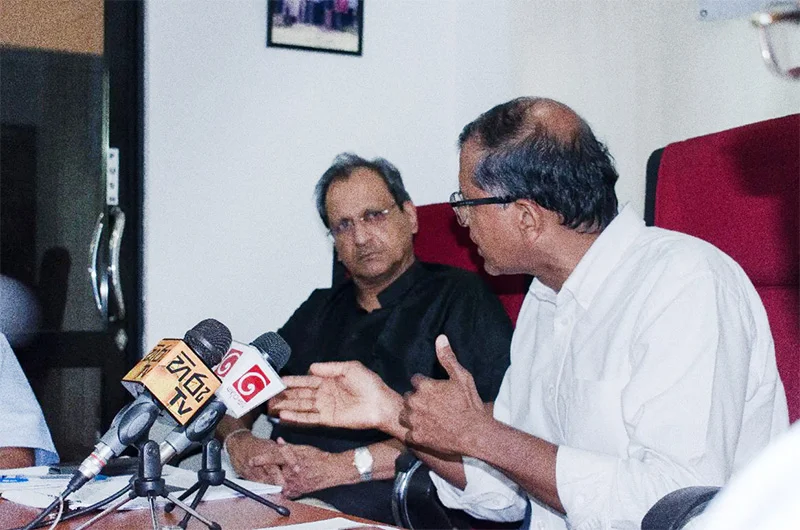
Dr. Ganeshan Wignaraja has cautioned that Sri Lanka should consider an 18th IMF programme. He said, with the current programme ending in mid-2027 and significant debt repayments due from 2028, the compounding effects of Cyclone ‘Ditwah’ and the Middle-East War’ have made what was once a contingency, increasingly inevitable, and that planning for it is the responsible course of action.
Dr. Wignaraja, Visiting Senior Research Fellow at ODI Global, London (formerly Overseas Development Institute), London and Professorial Fellow at Gateway House, Mumbai, made these observations when he addressed the RCSS Strategic Dialogue – 4 on the theme “A Global Economy in the Shadow of Middle-East War: Implications for Sri Lanka’s Debt Recovery” on 4 May 2026 at the Regional Centre for Strategic Studies (RCSS) in Colombo. The dialogue brought together senior serving and retired policy makers diplomats, defence, academic, think-tank, civil society and media representatives.
Executive Director of the RCSS, Amb. (Retd.) Ravinatha Aryasinha who moderated the session, noted that beyond assessing the immediate effects of the multiple crisis caused by the war in the Middle-East, the discussion was intended to take a futuristic view and critically project both internal and external measures that could be actively pursued to overcome Sri Lanka’s current predicament, which would provide lessons to other comparable regional and ‘Global South’ countries as well.
Dr. Wignaraja opened his presentation by drawing on the IMF’s April 2026 World Economic Outlook, which projects global growth slowing to 3.1% in 2026, with downside risks dominating: prolonged conflict, geopolitical fragmentation, and renewed trade tensions bearing down hardest on emerging and developing economies. It is against this external environment, he said, that Sri Lanka’s vulnerabilities must be understood. From being treated by the IMF as a post – 2022 ‘Poster Child’ of IMF aided economic stabilization and the post-budget optimism built in late 2025, the compounding shocks of Cyclone ‘Ditwah’, and the ramifications of the recent Middle East War had simultaneously hit Sri Lanka through rising oil-gas-fertilizer prices, disrupted remittances, airline and tourism disruptions. It had also resulted in a contraction of exports in general and particularly tea, of which approximately 20% go to the Middle East. Despite this, he also noted that the War also presents Sri Lanka some long-term opportunities. As Gulf states lose their safe-haven status, Sri Lanka could, if it builds the right regulatory, governance, and infrastructure environment, position itself as an Indian Ocean hub for maritime trade, aviation, finance, and professional services. Whether that opportunity is seized or not, he said, depends on decisions and reforms that should taken now.
Two near-term scenarios were outlined by Dr. Wignaraja. In the best case, the Strait of Hormuz remains open, oil prices hold in the $78–90 per barrel range, inflation remains low, and growth is sustained between 2.7% and 4% – a difficult but manageable fiscal position. In the more likely moderate case, persistent disruption pushes oil above $100 per barrel, inflation rises to the 5.6–6.3% range, growth slows to between 2.4% and 3.5%, poverty rises notably, and public finances come under increasing strain. Sri Lanka, he said, appears to be trending toward the moderate scenario, noting however that there remains the risk of a third scenario of a prolonged Middle East War which could be much worse.
During the dialogue that followed, some participants noted that the prescriptions for Sri Lanka’s recovery and enabling sustainable growth are not new, but that the persistent challenge across governments, has been one of non-implementation and the various political economy reasons given for it. Further some questioned whether the IMF model and its responsiveness to the evolving developments compounded the problems faced by Sri Lanka and whether there might be alternate avenues to address some of these issue. Also had Ditwah not struck and the Middle-East war not taken place, whether Sri Lanka had done enough reforms in the intervening years to avoid going back to the IMF was also raised. The suggestion was also made, that besides the peculiar circumstances Sri Lanka is placed due defaulting, other South Asian countries too were caught in a similar ‘dependency trap’ on the Middle-East region where the possibility of conflict and blocking of choke points could well have been anticipated, and hence the need to build greater economic resilience to meet such challenges demands serious re-examination.
In response, Dr. Wignaraja indicated that the IMF is not the problem, and in 2022, with reserves effectively exhausted and no alternative available, it was the only lifeline available. The IMF is a global lender of last resort for countries in an acute balance of payments crisis but this comes with policy conditionalities. Without it, the Sri Lankan people would have faced severe economic insecurity and crisis with no prospects. The deeper failure, he argued, is domestic, with a persistent culture of non-implementation, weak state capacity, and the absence of strategic decision-making have meant that known economic reforms consistently go unexecuted. He also noted that alternative financing instruments, such as climate finance, which could mobilise at best $500 million, fall critically short of Sri Lanka’s debt obligations, and without access to international capital markets, no real development financing exists outside another IMF programme. He also pointed to governance failures, including the recent Treasury cyber breach and a bank fraud case, as actively undermining investor confidence and creditor trust, and raised concern at the possibility that external actors could refrain from committing capital to Sri Lanka under current conditions.

Business
Climate damage costing Sri Lanka over Rs. 50 billion annually; private capital key to recovery and growth
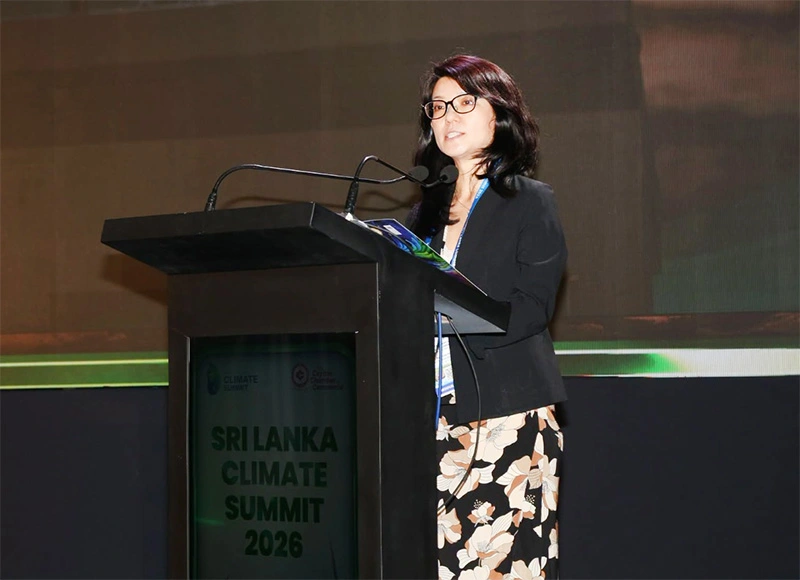
– UNDP Resident Representative Azusa Kubota
Sri Lanka’s climate crisis is no longer merely an environmental challenge but a growing economic threat that is inflicting losses exceeding Rs. 50 billion annually, while placing immense pressure on public finances, investment flows and long-term economic stability, according to United Nations Development Programme (UNDP) Resident Representative Azusa Kubota.
Delivering the keynote address at the Climate Summit organised by the Climate Action Committee of the Ceylon Chamber of Commerce, Kubota said the country urgently needs to transform climate ambition into investable projects capable of attracting private capital, strengthening resilience and driving economic growth.
“Climate change is no longer a distant environmental issue. It is already a risk shaping markets, supply chains, trade, investment and human development. It is fundamentally an economic and development issue,” she stressed.
Kubota warned that climate volatility is intensifying in real time, citing forecasts from the World Meteorological Organisation indicating an 80 percent probability of El Niño conditions during the June-August period, rising to over 90 percent later this year.
For Sri Lanka, this could mean weaker rainfall, higher temperatures, greater pressure on agriculture and hydropower generation, and increased risks to water security, food production and business continuity.
The UNDP official noted that the devastating impacts of recent climate-related disasters had exposed the vulnerability of the economy. Following last year’s severe weather events, the Government’s Post Disaster Needs Assessment estimated damages of approximately Rs. 618 billion, while recovery requirements over the next three years are expected to exceed Rs. 1 trillion, with nearly half the losses concentrated in infrastructure.
“Public finance alone will not be sufficient. Private capital must be strategically directed towards bridging these enormous financing gaps,” she said.
Kubota highlighted that global climate finance reached a record USD 1.9 trillion in 2023, while private climate finance surpassed USD 1 trillion for the first time. However, she pointed out that the world still requires approximately USD 6.3 trillion annually through 2030 to remain on track with climate goals.
“The capital exists. But it will only flow at scale where policies, institutions and project pipelines are credible,” she observed.
She said Sri Lanka has made significant progress in strengthening its climate policy framework through the updated National Climate Change Policy, Nationally Determined Contributions (NDC 3.0), sectoral transition plans and the recently Cabinet-approved Climate Finance Strategy.
However, she cautioned that policy ambitions alone are insufficient unless backed by strong implementation mechanisms.
“The private sector does not invest on the basis of ambition alone. Businesses invest where policy is credible, institutions are clear and projects can move from concept to execution,” Kubota said.
She stressed that investors require certainty regarding procurement systems, regulatory frameworks, financing mechanisms, revenue models and governance structures before committing capital.
The UNDP representative identified renewable energy, energy efficiency, industrial decarbonisation, waste management, circular economy solutions, climate-smart agriculture, ecosystem restoration, resilient infrastructure and carbon markets as sectors with substantial investment potential.
She also pointed to Sri Lanka’s emerging carbon market framework under Article 6 of the Paris Agreement as a potentially significant source of climate finance and international partnerships.
“These are not technical details. They are the conditions that determine whether market interest becomes a credible investment,” she said.
Kubota further noted that Sri Lanka’s first Biennial Transparency Report (BTR), submitted to the UN Framework Convention on Climate Change, provides valuable insights into policy, financing and implementation gaps that need to be addressed.
According to her, transparency and accurate climate reporting are increasingly important not only for international compliance but also for investor confidence, risk assessment and financing decisions.
She urged stronger collaboration between government agencies, financial institutions, industry leaders and development partners to accelerate implementation of climate commitments.
“Climate policy succeeds when it becomes economic policy, and when the private sector becomes a co-owner of implementation, resilience and recovery,” she emphasized.
Kubota said resilience should be viewed not as a social cost but as a strategic economic investment.
“Building back better is not simply a humanitarian imperative. It is central to protecting supply chains, lowering long-term costs and strengthening economic confidence,” she noted.
She added that investments in resilient infrastructure, insurance, climate-smart agriculture, water efficiency, early warning systems and sustainable construction could create entirely new markets and competitive advantages for Sri Lanka.
Looking ahead, Kubota called for stronger alignment between NDC 3.0, the country’s long-term economic vision, emerging carbon market frameworks and financing mechanisms.
“The task now is to connect policy to projects, projects to finance, and finance to measurable results for people, businesses and communities,” she said.
She reaffirmed UNDP’s commitment to supporting Sri Lanka through initiatives including climate investment pipeline facilities and the proposed Canopy Fund, a blended finance mechanism designed to mobilise investment for nature-based solutions.
“The decisions we make today will shape not only Sri Lanka’s climate future, but its economic future as well,” Kubota concluded.
By Ifham Nizam
A new era of premium mobility begins at Union Place, Colombo 02
David Pieris Automobiles (Private) Limited (DPA), the four-wheeler sales arm of the David Pieris Group, proudly announced the opening of its state-of-the-art GWM Flagship Experience Centre at 250, Access Tower 03, Union Place, Colombo 02, marking a significant milestone in the evolution of Sri Lanka’s automotive retail landscape.
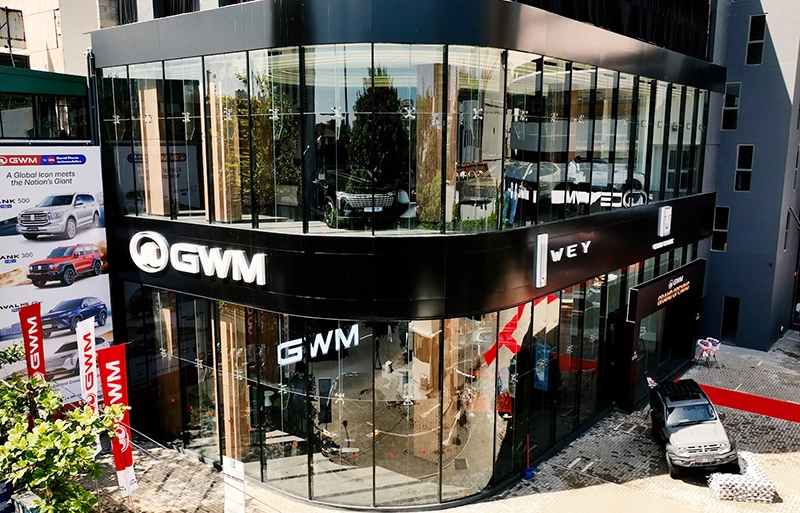
GWM Flagship Experience Centre at Access Tower, Union Place,
Colombo 02
The newly opened flagship facility is designed to deliver a truly world-class automotive experience, showcasing the latest innovations and technologies from GWM, one of the world’s leading automobile manufacturers. As the first and only vehicle experience centre of its kind in Sri Lanka, it offers customers an immersive journey that goes beyond the traditional showroom concept. Visitors can explore GWM’s premium range of SUVs and electric vehicles, including the HAVAL H6 HEV, HAVAL H6 PHEV, HAVAL H6 GT PHEV, TANK 300 HEV and TANK 500 HEV, while enjoying dedicated vehicle demonstration zones, test-drive opportunities, and a host of innovative customer engagement experiences designed to redefine the vehicle purchasing journey. GWM’s product portfolio in Sri Lanka will be further expanded in the coming months with the introduction of several new models, including a range of fully electric vehicles.

GWM vehicles at the newly opened Experience Centre at Access Tower, Union Place, Colombo 02
With a legacy spanning over four decades, the David Pieris Group has earned a reputation as one of Sri Lanka’s most trusted automotive organisations, particularly for its comprehensive after-sales support and customer service excellence. Strengthening its commitment to GWM customers, DPA has already established a dedicated, state-of-the-art GWM service centre at No. 75, Hyde Park Corner, Colombo 02, supported by an expanding network of authorised service dealers across the island to ensure convenient and reliable customer care.
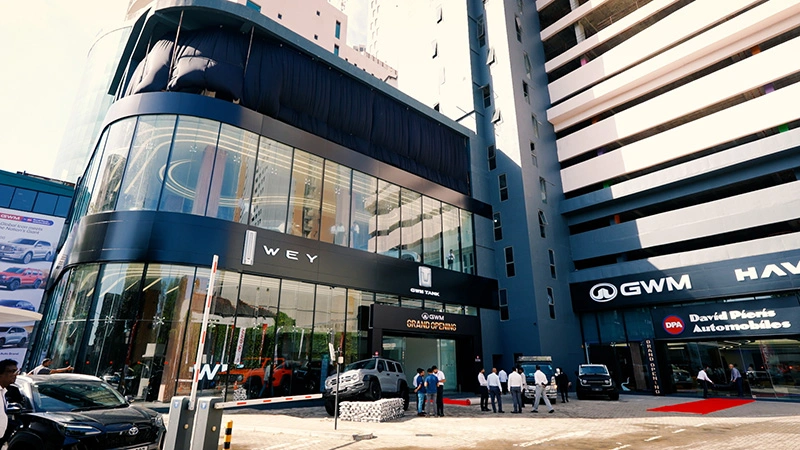
The state-of-the-art Flagship Experience Centre at
Access Tower, Union Place, Colombo 02.
Commenting on the opening, Mahesh Gunathilake, Director, David Pieris Automobiles, stated: “The opening of the GWM Flagship Experience Centre represents a significant milestone in our journey with the GWM brand in Sri Lanka. This is the country’s first dedicated state-of-the-art experience centre for GWM vehicles, offering customers the opportunity to experience world-class automotive technology, premium comfort and advanced safety features. GWM has successfully redefined modern mobility by delivering high-end luxury and innovation at an affordable price point, and we are proud to bring this exceptional experience to Sri Lankan motorists.”

GWM vehicles at the newly opened Experience Centre at
Access Tower, Union Place, Colombo 02
The opening of the flagship facility further reinforces David Pieris Automobiles’ commitment to expanding GWM’s presence in Sri Lanka, while providing customers with an unmatched ownership experience, backed by the Group’s renowned sales and after-sales expertise.

GWM vehicles at the newly opened Experience Centre at Access Tower, Union Place, Colombo 02
Customers interested in learning more about the GWM vehicle range, booking test drives or making pre-bookings can contact 011 7888 866, visit www.gwmsrilanka.lk or follow the GWM Sri Lanka by DPA Facebook page for the latest updates and promotions.
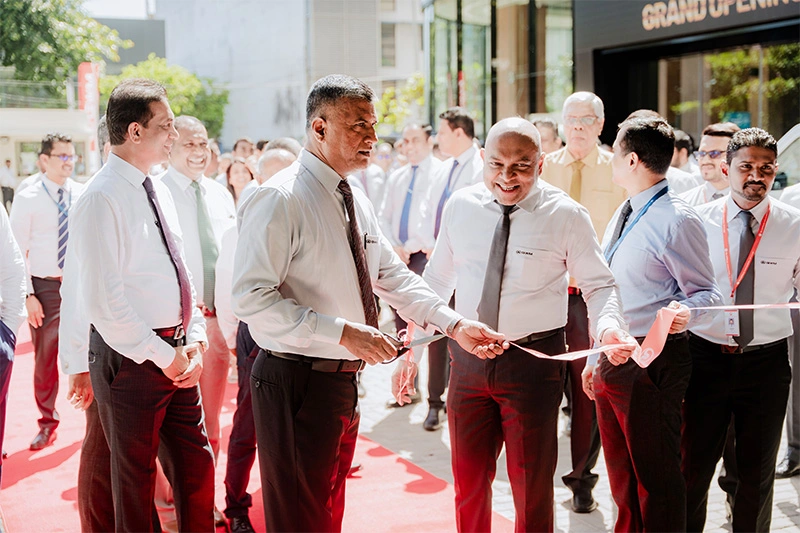
Rohana Dissanayake, Group Chairman and Managing Director, David Pieris Group of Companies, along with Mahesh Gunathilake, Director, David Pieris Automobiles (Private), cutting the ribbon to open GWM Flagship Experience Centre at the Access Tower, Union Place, Colombo 02.
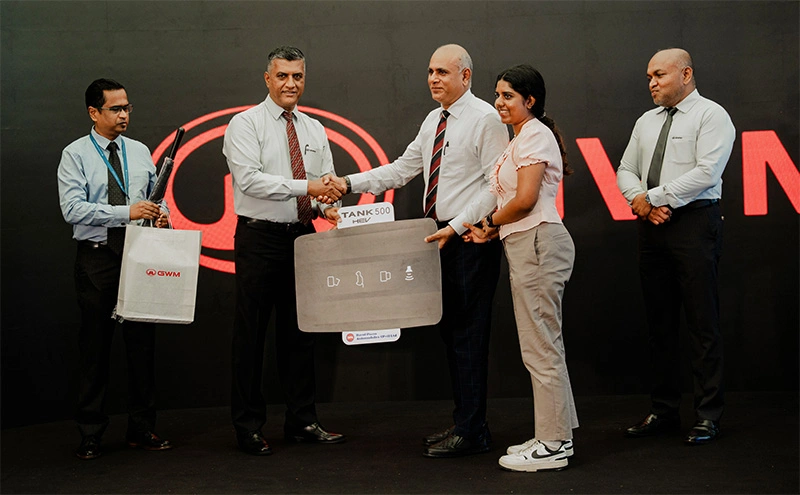
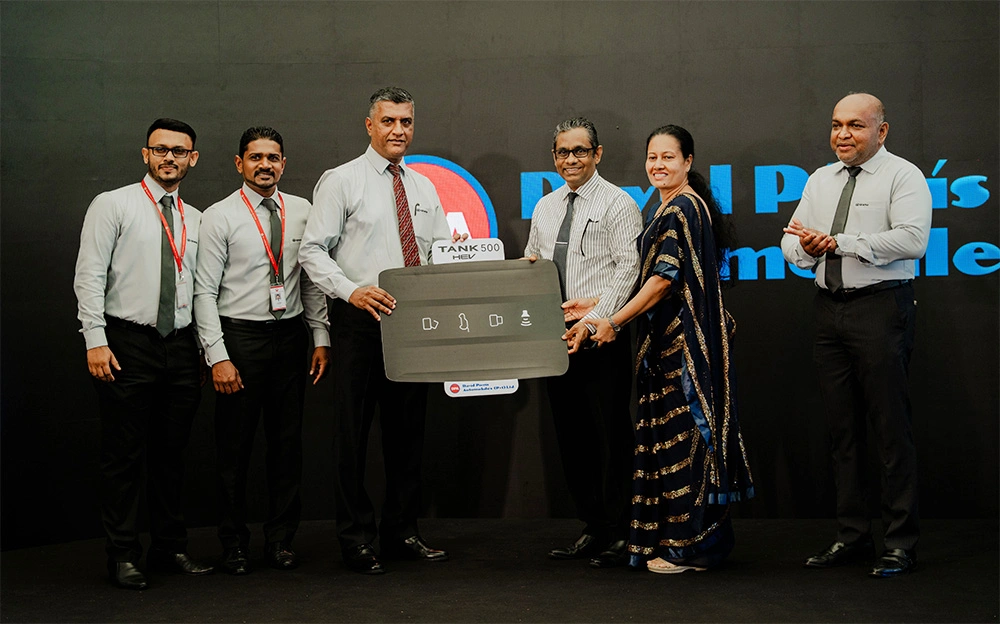
One of first GWM customers receiving the keys from Mr. Rohana Dissanayake, Group Chairman and Managing Director, David Pieris Group of Companies

Sri Lanka’s largest private real estate investment by Home Lands Group is set to test the country’s ability to attract foreign capital into the Port City Colombo project, with the upcoming unveiling of its US$150 million twin-tower residential development.
The company announced that its flagship project, Central Park Boulevard Port City Colombo, a 37-storey twin-tower development located within Port City’s Central Park District, carries an estimated end value exceeding US$300 million and has already sold about 50 percent of its units ahead of the official launch.
Speaking at a media briefing, Home Lands Chairman and Managing Director, Nalin Herath, said the project represents more than another luxury apartment development and is intended to position Sri Lanka within the international real estate investment market.
“The total investment is around US$150 million and the total value of the project is over US$300 million. This will generate a useful cash flow to the Sri Lankan economy,” Herath said.
The launch, branded as “The Grand Launch Weekend”, will be held from June 12 to 14 at Cinnamon Life and is expected to attract around 1,800 invitees, including business leaders, professionals, artists, celebrities and international guests.
Herath said changing conditions in regional property markets had created an opportunity for Sri Lanka to compete for international investors.
“The current geopolitical tensions in the Middle East have adversely affected segments of the property market in the Gulf region, particularly Dubai. This creates an opportunity for us to enter the global real estate market. Port City is the ideal location because it has the infrastructure and resources required to cater to that market,” he said.
His comments came amid growing confidence that world-class infrastructure would draw international capital into the Port City ecosystem.
Home Lands’ latest project therefore represents one of the most significant private-sector bets yet on Port City’s future growth prospects.
Responding to concerns regarding the source of investment flows, Herath said the necessary regulatory safeguards were already in place.
“Government regulations and the Port City Commission’s compliance frameworks ensure that the project attracts legitimate institutional and private funds,” he told The Island Financial Review in response to a question.
The development will comprise more than 640 residential units overlooking Port City’s central green park and waterfront district. Home Lands describes the project as Sri Lanka’s first high-rise residential development inspired by an international ultra-luxury lifestyle brand.
The company, which has delivered approximately 3,750 apartments and villas across Sri Lanka and has more than 2,200 units currently under construction, is positioning the project as a landmark investment capable of generating foreign currency inflows as well as creating thousands of jobs.
The unveiling will also mark one of the biggest real estate launches ever staged in Sri Lanka, with former Sri Lanka cricket captain Mahela Jayawardene serving as the project’s brand ambassador.
For investors and policymakers alike, however, the larger question extends beyond the launch itself: whether Port City can evolve from a high-profile development concept into a functioning international financial centre, as envisaged when the project was first conceived.
By Sanath Nanayakkare

Canada introduces bill to ban social media for children under 16

Lutkenhaus, 17, upsets Olympic champion Wanyonyi in Oslo

An Everest guide’s miraculous survival raises questions for tourism industry

Whale graveyard dating back five million years discovered

Trump says US will hit Iran ‘hard’ again today

Showers will occur at times in the Western, Sabaragamuwa and North-western provinces and in Galle, Matara, Kandy and Nuwara-Eliya districts

‘Dates have the highest sugar content to fight Coronavirus’

Sunday Island 27 December – Headlines

#SundayIsland 17th December – Headlines

Sunday Island – 28th March

Sunday Island Headlines – 21 March

Sunday Island – 21st February – Headlines
-

 Features6 days ago
Power crept into the Sangha and is now tearing it apart
-

 Features6 days ago
Kondachchi wind farm and battery storage project to boost energy security, says Power Ministry Secretary
-

 News4 days ago
Women’s T20 World Cup 2026 warm-up: Chamari Athapaththu’s 94 helps Sri Lanka beat Pakistan
-

 Features6 days ago
Saudi Arabia sets new benchmark in Hajj management as 1.7 million pilgrims complete sacred journey
-

 News5 days ago
Asst. Manager, security officer arrested over Rs 30 mn snatch at Horana PB branch
-

 Editorial3 days ago
Probe Sallay’s complaint
-

 News4 days ago
Lankan-Canadian inducted to Toronto Sports Hall of Fame
-
 News1 day ago
Local firms move millions of dollars overseas for phantom imports: Govt.