
Business
Domino’s debuts flagship outlet at Bandaranaike International Airport setting new standards in hospitality


The distinct aroma of fresh-baked pizza now mingles with departure announcements as Domino’s Pizza Sri Lanka debuts its world-class flagship outlet at Bandaranaike International Airport (BIA), the country’s primary aviation hub, setting new benchmarks in travel hospitality.
Strategically positioned in the Departure Terminal, the restaurant operates 24/7 to accommodate all flight schedules, is specifically engineered to meet the unique demands of airport travellers and ensures every traveller has access to a high-quality, comforting meal before embarking on their journey.
Whether passengers are departing, transiting or working within the terminal, they can expect a premium experience that prioritizes satisfaction and convenience. The service model is designed for the fast-paced airport environment, guaranteeing access to hot, fresh meals regardless of departure times.
Featuring a modern, inviting ambience that echoes the warmth Domino’s signature branding, the establishment offers the complete menu of signature pizzas, cheesy sides, desserts, and an assortment of beverages with exceptional culinary and service standards that deliver an outstanding dining encounter.
Vijaya Bhaskar, Country Head & CEO, Domino’s Pizza Sri Lanka explained, “We are thrilled to launch the new premier flagship outlet at Bandaranaike International Airport, a gateway connecting Sri Lanka to the world. The store is designed with customers in mind, providing swift service and a warm ambience to truly convey our commitment to being an accessible, on-the-go brand presenting a memorable occasion. The establishment will enhance the travel journey and contribute to foreign exchange earnings, positioning Domino’s as an integral component of Sri Lanka’s tourism infrastructure.”
With thousands of passengers transiting through BIA daily, the new location also serves as a crucial stepping‑stone for Domino’s expansion blueprint, contributing significantly to Sri Lanka’s economy.
Ruban Ratnasingham, Country Corporate Affairs Head, Domino’s Pizza Sri Lanka, said, “Constructing an outlet in such a high-security environment has always presented significant challenges. However, through the collaborative efforts of our project team and BIA officials, we have successfully created a state-of-the-art store at BIA’s departure transit area. The outlet is thoughtfully designed to ensure the comfort of passengers and offer an experience they will remember as they depart the country.”
The opening of the BIA venue endorses Domino’s Pizza Sri Lanka’s position as a key player in the national marketplace committed to superior standards. As the brand continues to lead by example, Domino’s Pizza Sri Lanka draws strength from forging new pathways, merging great taste with economic and social contributions, and enriching overall customer engagement.


The corridors of power in Sri Lanka’s Parliament became a theater of intense debate on April 7, 2026, as lawmakers confronted the fallout of the National Development Bank (NDB) fraud scandal. What began as a Securities Exchange Commission (SEC) disclosure has now transformed into a scathing critique of the nation’s financial regulatory domain.
Opposition MP Ravi Karunanayake took to the floor to demand accountability, not just from the bank, but from the regulatory authorities themselves. Highlighting the alarming jump in reported losses – from an initial LKR 380 million on April 2nd to a massive LKR 13.2 billion by April 6th – Karunanayake questioned how such a systemic breach could occur undetected.
“I want to focus your attention on the operations… and its supervision process,” Karunanayake told the House. “I was more shocked about what we heard at the Public Finance Committee… as there was no one to take the responsibility for detecting this earlier”.
The MP emphasised that his intention was not to trigger a ‘run’ on the bank, but to ‘purify’ oversight mechanisms, which he suggested had failed in their primary duty of early detection.
The gravity of the situation was underscored by Minister Bimal Ratnayake, who confirmed that the President has been formally briefed on the fraud. The Minister assured Parliament that the administration would take all necessary actions to ensure ‘financial sector’s discipline’ in the wake of this fraud.
Regulatory authorities have already moved to assert authority, issuing a statement on April 5, 2026, to provide oversight and maintain liquidity stability. However, the ‘appropriate regulatory support’ mentioned came with heavy strings attached as follows:
Dividend Freeze: The bank was ordered to immediately suspend cash dividends scheduled for distribution in April 2026.
Operational Curbs: NDB has been directed to restrict discretionary spending and halt all branch expansions until further notice.
Forensic Mandate: Under regulatory and board pressure, NDB is appointing an independent forensic auditor to conduct an impartial review of its systems.
The LKR 13.2 billion fraud is estimated to impact NDB’s unaudited total asset base by 0.7%. While NDB Chairman Sriyan Cooray and CEO Kelum Edirisinghe were noted for their expertise by Ravi Karunanayake, the focus has shifted toward the systemic vulnerability of the sector. As the criminal investigation and internal inquiries proceed, the primary question remains: how did a fraud of this magnitude remain invisible to the regulators until it reached the breaking point?
With the Public Finance Committee now involved, the NDB incident is no longer just a corporate crisis – it is a test of the integrity of Sri Lanka’s entire financial supervisory framework.
By Sanath Nanayakkare

The Ceylon Chamber of Commerce announces a planned and orderly leadership transition, underscoring its commitment to strong governance, leadership continuity, and long-term institutional stability.
Accordingly, Shiran Fernando has been appointed Secretary General and Chief Executive Officer, effective 8th May 2026, succeeding . Buwanekabahu Perera, who will conclude a three-year tenure at the helm of the Chamber.
Commenting on the transition, Krishan Balendra, the Chairperson of The Ceylon Chamber of Commerce stated:
“This leadership transition reflects the Chamber’s long-standing belief that strong institutions are built through continuity, sound governance, and deliberate succession planning. Over the past three years, the Chamber has been further strengthened institutionally, allowing us to move forward with confidence. The Board is fully assured that this transition will ensure stability while positioning the Chamber to meet the evolving needs of our members and the broader economy.”
Supporting this transition, institutional stability is further reinforced by the continued leadership of Ms. Alikie Perera, who serves as Deputy Secretary General, Chief Operating Officer / Financial Controller and CEO of GS1 Lanka. With over three decades of service spanning multiple leadership cycles and governance eras, including service under 16 successive Chairpersons, she has been instrumental in sustaining the Chamber’s operational integrity and financial discipline. Notably, she has played a key role over two decades in steering the Chamber’s flagship platforms, including the Sri Lanka Economic and Investment Summit (SLEIS) and the Best Corporate Citizens Awards [BCC Awards], both of which have become nationally and internationally recognised benchmarks. Her continued role provides assurance that institutional memory and organisational continuity remain firmly intact.
Business
Dialog Finance Launches Next-Generation Virtual Debit Card, Elevating Digital Payments in Sri Lanka


Dialog Finance PLC, Sri Lanka’s leading fintech innovator, announced the launch of its Virtual Debit Card, the first in Sri Lanka to enable customers to generate multiple virtual cards for different purposes within a single app. This cutting-edge, digital-first payment solution is designed to deliver smarter control, enhanced security, and effortless everyday transactions, making online payments safer, more flexible, and fully manageable through the Genie app.
Designed for today’s mobile-first lifestyle, the Virtual Debit Card is managed seamlessly within the Genie app, allowing customers to generate multiple virtual cards tailored for specific use cases such as subscriptions, individual merchants, or shared spending scenarios. Each card offers customizable spending limits, real-time transaction tracking, and the option to delete or deactivate it once its defined use is complete. By isolating transactions across different purposes, this approach significantly enhances online payment security while providing complete visibility and control.
Issued on the UnionPay International network, the Virtual Debit Card ensures wide global acceptance for online and in-store payments. It also paves the way for future enhancements, including Tap to Pay functionality on NFC-enabled smartphones, enabling fast, contactless in-store transactions scheduled to be activated soon as part of Dialog Finance’s ongoing product evolution.
Commenting on the launch, Nazeem Mohamed, CEO & Director of Dialog Finance PLC, said, “This launch strengthens our position as Sri Lanka’s leading fintech provider. By offering multiple virtual cards, and intuitive in-app controls, we are delivering a secure, flexible digital payment experience that perfectly aligns with modern customer needs.”
The Dialog Finance Virtual Debit Card is now available exclusively through the Genie mobile app, allowing customers to instantly generate, manage, and control their cards from a single interface. This milestone further solidifies Dialog Finance’s leadership in delivering customer-centric, innovation-led digital payment solutions in Sri Lanka.
Dialog Finance PLC, a subsidiary of Dialog Axiata PLC, is a licensed finance company regulated by the Central Bank of Sri Lanka. The Company offers a range of digital-first financial solutions to individuals, businesses, and corporations, and is backed by a strong Fitch Rating of AA (lka), reflecting its financial stability, robust governance, and high creditworthiness.

Greece to ban social media for under-15s from next year

Showers will occur at a few places in the Western, Sabaragamuwa and North-western provinces and in Galle, Matara, Kandy, Nuwara-Eliya and Mannar districts after 2.00 p.m.

Sun directly overhead Chilaw, Bingiriya, Halmillawewa, Panduwasnuwara, Gokarella, Kawudupelella, Koppaveli and Kirankulam about 12:12 noon. today (09)

Heat Index at Caution Level in the Western, Sabaragamuwa, Southern, Eastern, North-western, Northern and North-central provinces and in Monaragala district

AG: Coal procurement full of irregularities

Rs 13.2 bn NDB fraud: House committee declares serious breach in banking system

‘Dates have the highest sugar content to fight Coronavirus’

Sunday Island 27 December – Headlines

#SundayIsland 17th December – Headlines

Sunday Island – 28th March

Sunday Island Headlines – 21 March

Sunday Island – 21st February – Headlines
-

 Features4 days ago
Ranjith Siyambalapitiya turns custodian of a rare living collection
-

 News4 days ago
Global ‘Walk for Peace’ to be held in Lanka
-

 News2 days ago
Lankan-origin actress Subashini found dead in India
-
 Opinion6 days ago
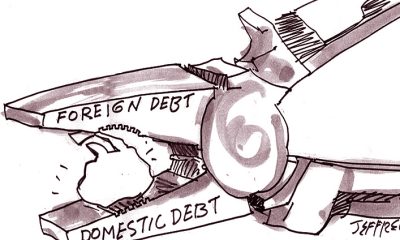
Hidden truth of Sri Lanka’s debt story: The untold narrative behind the report
-

 Features4 days ago
Beyond the Blue Skies: A Tribute to Captain Elmo Jayawardena
-

 Features6 days ago
The Ramadan War
-

 Features4 days ago
Aspects of Ceylon/Sri Lanka Foreign Relations – 1948 to 1976
-

 Editorial5 days ago
Brouhaha over a book