
News
Do not have any fear about the constitutional amendment – President

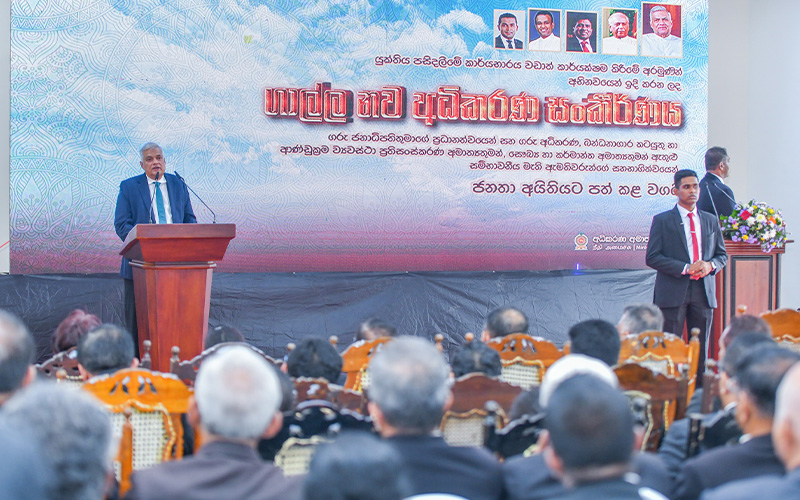
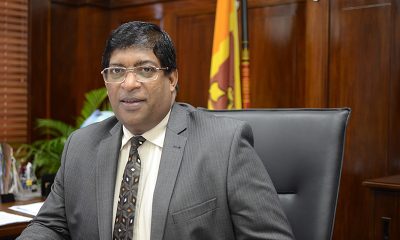
President Ranil Wickremesinghe reiterated that there should be no fear regarding the constitutional amendment. He emphasized that when making constitutional amendments, he entrusts the responsibility to experienced professionals. He mentioned that in the past, lawyers like K. N. Choksi were involved in such matters.
However, since Mr. Choksi had passed away by the time of the new constitutional amendment in 2015, the task was assigned to lawyer Jayampathi Wickramaratne and acknowledged that the current issues have resulted from an oversight on his part and expressed his apology to the public for it.
He made this statement on Friday (19) during the opening of the new court complex in Beligaha, Galle.
To enhance the efficiency of justice administration for the people of Galle, a new court complex was constructed at a cost of LKR 1600 million. The complex houses a Civil Appeal High Court, two High Courts, three District Courts, two Magistrate Courts, a Legal Aid Centre, a Community Corrections Office, a Probation Office, and a Debt Relief Board. It is fully equipped with necessary facilities for court proceedings, including administrative offices.
After unveiling the plaque and officially opening the new court complex, the President took an observation tour of the premises.
President Wickremesinghe further stated:
“I would like to extend my gratitude to Minister Wijayadasa Rajapakshe for overseeing the completion of this Judicial Complex. With plans to develop the area as a tourist destination, it was crucial to relocate the existing Court Complex, and I am pleased to say that this has been accomplished.
As we work to transform the Galle area into a tourist hub, we have identified locations outside the province for large hotel developments. Additionally, there are plans to move the Transport Board, Timber Corporation, Mahamodara Hospital, Nursing College, Prison and Post Office to the city centre. We also plan to build a similar court complex in the Hikkaduwa area.
The Galle District Court Complex holds historical significance. After Dutch rule, the Batavian Statutes introduced Roman-Dutch law to Ceylon, making Galle a jurisdictional centre with a judicial board, a civil board, and a land board. This marked the beginning of our judicial system. While the Galle judicial area was originally divided into the Matara and Galle districts, only the Galle district continues to operate as a judicial region.
During the Dutch period, the majority of the Land Board members were Dutch, while the minority were Sri Lankans from Ruhuna. The Sri Lankans learned the law from the Dutch and later emerged as lawyers during the English colonial period.
Over time, many Sri Lankans pursued careers in law and entered the Legislative Assembly. Lawyers became a cornerstone of the legislative system. Under the Donoughmore Constitution, they served in the State Council with significant voting power. The English system of governance was established through the Soulbury Constitution, and when India adopted a republican constitution, Sri Lanka followed suit with the English system.
Colvin R. de Silva introduced the first Republican Constitution, while J.R. Jayewardene presented the Second Republican Constitution. Sri Lanka has a rich constitutional history and a strong commitment to the rule of law.
In 1931, Sri Lanka became the first country in Asia and Africa to grant universal suffrage. Unlike in the United States, where some states did not extend voting rights to Black people, Sri Lanka is unique for maintaining democracy continuously since then. We should take pride in this achievement. Despite facing wars and rebellions, Sri Lanka has preserved its democratic system, and democracy has remained intact despite numerous challenges.
In Sri Lanka, power transitions take place smoothly and without conflict after elections, it is a testament to the strength of our democratic process. Despite various debates and issues, democracy has never been compromised.
Some critics argue that democracy is at risk during certain crises. However, our constitution, judiciary, and political system have worked to advance and protect it. The most significant threat to our democracy occurred in 2022, yet we have continued to progress through consensus.
While Parliament remains a venue for debate, protecting democracy is crucial. The upcoming election is on schedule, with the Chief Justice and the Supreme Court confirming that it should be held within the specified time frame, and we support this directive.
In 2015, we proposed a new constitutional amendment. Typically, I would have assigned this task to K. N. Choksi, a lawyer. However, since he had passed away, the responsibility fell to lawyer Jayampathi Wickramaratne. He was unable to make the necessary revisions. This oversight is regrettable, and I apologize to the nation for it. There is no need for further discussion on this matter; as our country has upheld democracy since 1931.
Additionally, the government will fund the compilation of a book on Galle’s heritage”.








Latest News
Advisory for Heavy Rain issued for the Central, Uva and Sabaragamuwa provinces and in the Ampara, Batticaloa and Polonnaruwa districts

Advisory for Heavy Rain Issued by the Natural Hazards Early Warning Centre at 12.00 noon on 21 February 2026 valid for the period until 08.30 a.m. 22 February 2026
Due to the low level atmospheric disturbance in the vicinity of Sri Lanka, Heavy showers above 100 mm are likely at some places in the Central, Uva and Sabaragamuwa provinces and in the Ampara, Batticaloa and Polonnaruwa districts and fairly heavy showers above 75 mm are likely at some places elsewhere.
Therefore, the general public is advised to take adequate precautions to minimize damages caused by heavy rain, strong winds and lightning during thundershowers.
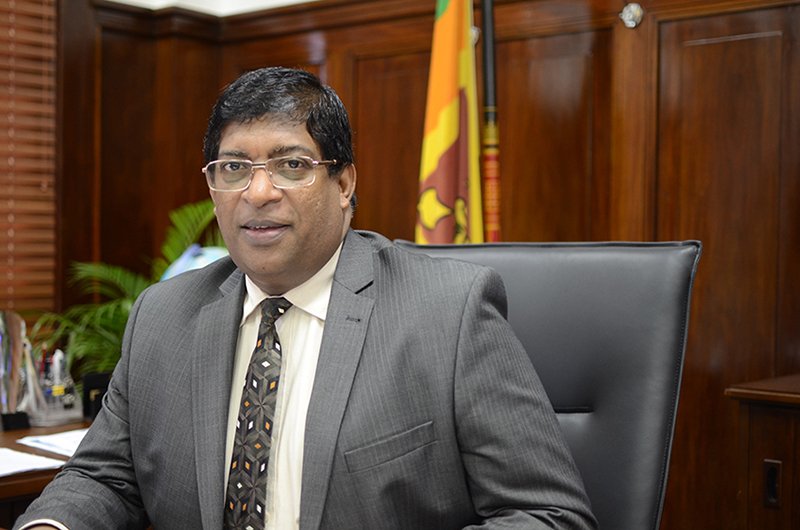
Opposition MP Ravi Karunanayake on Wednesday called for an urgent government statement to Parliament on the integrity and usability of Sri Lanka’s Gross Official Reserves (GOR), raising concerns over foreign exchange leakages and regulatory consistency under the Foreign Exchange Act No. 12 of 2017.
Raising the issue under Standing Order 27 (i), Karunanayake urged the Government to provide a comprehensive disclosure on the composition, encumbrances and deployability of the country’s reserves, as well as on the Central Bank’s oversight of foreign currency transactions.
“Reserve credibility depends not merely on headline numbers, but on transparency, enforceability and consistency in regulation,” the MP told the House.
He sought clarification on the latest reported GOR figure and the net usable reserves after excluding encumbered assets, swaps and pledged balances. He also requested details of annual revenue earned on reserves from 2023 to 2025.
Following are the questions raised by MP Karunanayake:
1. What is the latest reported GOR figure, and what is the net usable reserve after excluding encumbered assets, swaps, and pledged balances? What is the revenue earned on are GOR 23-25 per year?
2. Provide a separate and detailed breakdown of GOR, including: (a) Monetary gold (quantity and valuation basis) is it real gold or gold paper? (b) Foreign currency assets by major currency and instrument; (c) SDR holdings; (d) IMF reserve position; (e) Foreign currency swaps, specifying counterparty type, principal amount, tenure, maturity profile, and all-in cost; (f) Domestic swaps, specifying amount, tenure, rollover terms, collateralisation, and effective cost.
3. Of the total reserves reported, how much is encumbered, swap-backed, or otherwise not immediately deployable for debt servicing or currency stabilisation?
4. What SLR spread, fee, or margin does the Central bank apply when buying or selling USD to the Government for reserve accumulation and external debt servicing and what total profit or gain has the C.bank realised from such transactions during the past three financial years? Advice per year.
5. Is the Central Bank subject to continuous and statutory audit by the Auditor General? If so, will the Government table the most recent audit report, specifying audit scope, sample size, reserve confirmations, swap verification and gold custody validation?
6. What triggered the recent circular warning domestic institutions on foreign currency transactions?
7. Has the C.bank quantified foreign exchange and tax revenue losses resulting from Sri Lanka-based businesses routing credit card and commercial payments through overseas payment gateways?
8. If domestic entities are regulated strictly, why has a binding circular not been issued against noncompliant business entities using foreign payment gateway arrangements that divert foreign exchange outside Sri Lanka’s regulated banking system?
The government asked for two weeks’ time to respond to the queries.
by Saman Indrajith
News
Sajith exposes highly questionable coal imports from South Africa in 25 vessels; calls for independent probe

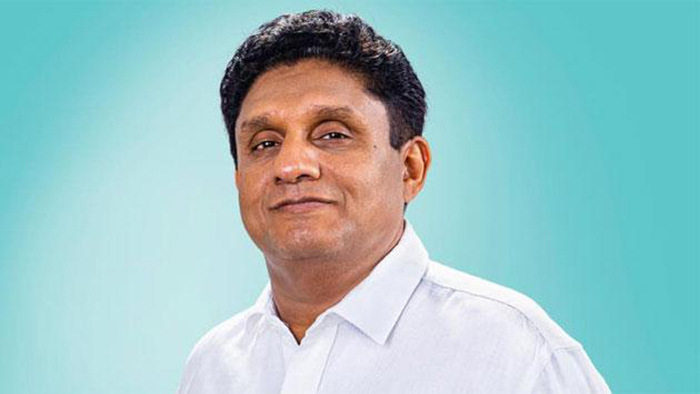
Opposition Leader Sajith Premadasa yesterday alleged in Parliament that eight recently imported coal shipments were substandard and called for an independent probe into the matter.Speaking in the House, Premadasa said Sri Lanka typically requires 36–38 coal shipments annually. While 11 Russian shipments received so far had raised no concerns, he claimed that 25 vessels ordered from South Africa under a new tender were facing quality issues.
He cited combustion reports from the Norochcholai Coal Power Plant showing that the eight shipments already received under the new tender failed to generate the expected 300 megawatts per unit. According to the MP, the outputs were: 285 MW, 290 MW, 260 MW, 295 MW, 285 MW, 270 MW, 275 MW, and 255 MW.
“These are scientific data generated automatically through boiler combustion reports that cannot be altered,” Premadasa said, asserting that the figures indicate the coal supplied was below required standards.
He warned that low-quality coal could increase fuel consumption, raise operational costs, and damage equipment. Any shortfall in power generation, he said, would necessitate additional coal imports or greater reliance on diesel power, ultimately driving up electricity tariffs for consumers.
“The loss will have to be borne by the electricity consumer,” Premadasa said, urging the government to clarify whether the shipments met required specifications.
He also criticized delays and changes in tender requirements, alleging that supplier eligibility criteria had been relaxed to allow non-standard providers.
by Saman Indrajith

Advisory for Heavy Rain issued for the Central, Uva and Sabaragamuwa provinces and in the Ampara, Batticaloa and Polonnaruwa districts

Ranaweera’s four-for leads Sri Lanka to tense win over West Indies

How photography helped the British empire classify India

Atmospheric conditions are favorable for thundershowers over most parts of the island

Trump brings in new 10% tariff as Supreme Court rejects his global import taxes

Ravi demands full disclosure on Lanka’s usable reserves, flags forex leakages

‘Dates have the highest sugar content to fight Coronavirus’

Sunday Island 27 December – Headlines

#SundayIsland 17th December – Headlines

Sunday Island – 28th March

Sunday Island Headlines – 21 March

Sunday Island – 21st February – Headlines
-
 Life style7 days ago
Marriot new GM Suranga
-

 Business6 days ago
Ministry of Brands to launch Sri Lanka’s first off-price retail destination
-
 Features7 days ago
Monks’ march, in America and Sri Lanka
-

 Features7 days ago
The Rise of Takaichi
-
 Features7 days ago
Wetlands of Sri Lanka:
-

 News7 days ago
Thailand to recruit 10,000 Lankans under new labour pact
-

 Latest News1 day ago
ECB push back at Pakistan ‘shadow-ban’ reports ahead of Hundred auction
-
 News7 days ago
Massive Sangha confab to address alleged injustices against monks