
Foreign News
Diwali: Indians celebrate the sparkling festival of lights


Millions of Indians are celebrating Diwali, the Hindu festival of lights, which is one of the most important festivals in the country.
People pray, enjoy festive meals and light fireworks; sweets are distributed among neighbours and friends and a feeling of joy permeates the air.
However, the celebrations also spark concerns about air pollution, including in the national capital Delhi, as many people burst firecrackers despite state governments imposing curbs or banning the practice.
Delhi has seen an alarming rise in air pollution levels for the past week, and on most mornings and evenings the city has been enveloped by a thick layer of smog.
Diwali celebrates the triumph of good over evil. People light up their homes with small oil lamps called diyas and paper lanterns to signal the victory of light over darkness and joy over sadness.
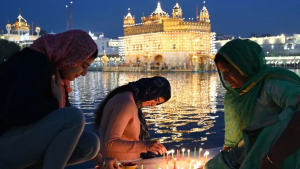
The Golden Temple in Punjab state is lit up during Diwali
People also decorate outdoor spaces with vibrant rangolis – designs made with colourful powders – to welcome guests and to bring good luck and prosperity into their homes.
The exact dates of the festival change each year and is determined by the position of the Moon, but it typically falls between October and November. This year, Diwali is being celebrated today (12)
In the days leading up to the festival people thronged shops to buy festive garments, devotional items and gifts for family and friends. People also visit relatives and often take a box of mithai – the Hindi word for sweets – with them.
Many people also light firecrackers over several days and this affects the quality of the air. In Delhi – one of the most polluted cities in the world – the air gets particularly bad during the winter months because farmers burn stubble in neighbouring Punjab and Haryana states.
The state government has banned the sale and use of firecrackers this year, but many people flout this rule.
(BBC)











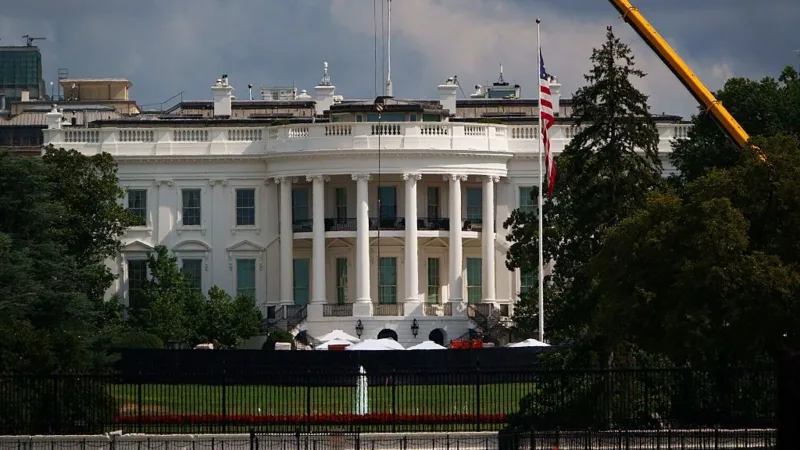
A former White House teleprompter operator has been ordered to pay more than $172,000 (£127,000) for using inside information to bet on US President Donald Trump’s speeches.
Gabriel Perez was found to have made trades on what the president would say during addresses between December 2025 and February 2026 on Kalshi – a prediction markets platform where users can bet on real-world events.
Its regulator, the Commodity Futures Trading Commission (CFTC), said Perez would have to surrender profits of $107,539.02 (£79,452) and pay a civil penalty of $65,000 (£48,000).
The White House has not yet commented. In July then press secretary Karoline Leavitt said Perez was on unpaid leave and would not return to his post.
Announcing the settlement on Friday, the CFTC said Perez had “misappropriated” his prior knowledge of Trump’s speeches to place bets “in breach of his duty of trust and confidence”.
It said his civil penalty had been reduced due to his “exemplary co-operation” with the investigation.
Perez has also been banned from trading for three years.
Writing on X, Kalshi’s lead lawyer Bobby DeNault welcomed the decision: “It doesn’t matter who you are: violate our rules or federal law and you will face the consequences.”
(BBC)
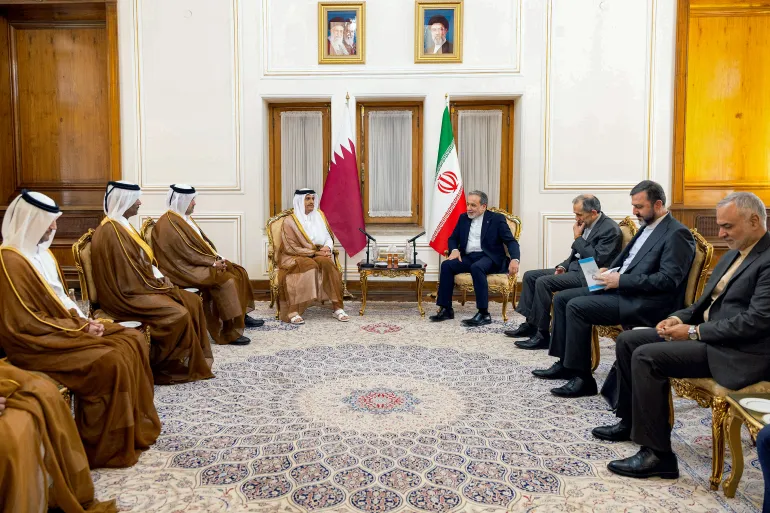
Qatar’s prime minister has held meetings in the Iranian capital, discussing key issues including the future of the Strait of Hormuz, amid international hopes that dialogue between the United States and Iran on ending the war will resume.
Iran’s Foreign Minister Abbas Araghchi and Qatar’s Sheikh Mohammed bin Abdulrahman bin Jassim Al Thani on Thursday discussed a proposed framework that includes the creation of a temporary shipping corridor through the Strait of Hormuz, as well as a possible “joint project” to clear the strait of mines, the Qatari Ministry of Foreign Affairs said in a statement. Iran says the mines were laid during the war.
The two officials also reviewed “the latest developments in the regional situation … along with the efforts being made to reduce escalation and create appropriate conditions for dialogue, contributing to the enhancement of regional security and stability”, the statement added.
Sheikh Mohammed, who is both prime minister and foreign minister of Qatar, later met separately with Iranian President Masoud Pezeshkian and parliament speaker and top negotiator, Mohammad Bagher Ghalibaf.
Ghalibaf emphasised the need to de-escalate regional tensions, according to Iran’s Tasnim news agency. He and Sheikh Mohammed also exchanged views on the current developments in the region and efforts to create suitable conditions for resuming dialogue, the report added.
“Qatar believes that dialogue and diplomatic solutions remain the optimal path for addressing disputes and overcoming crises,” Sheikh Mohammed said in a post on X, adding that his discussions in Tehran serve as “confirmation of our continued efforts to de-escalate tensions … while opening the door to peaceful solutions – including underscoring the importance of respecting freedom of navigation in the Strait of Hormuz in accordance with international law.”
Sheikh Mohammed also met with Iran’s security chief, Mohsen Rezai.
Rezai told him the “US must first take practical steps to fulfil Iran’s conditions and then Iran will proceed to open the Strait of Hormuz”, the Islamic Republic News Agency (IRNA) reported.
Rezai also reiterated previous pledges by Tehran that if Washington “starts any evil”, Iran would “bring disaster to its military and economic interests”.
Sheikh Mohamed’s visit follows a week of intense diplomacy in Iran involving separate meetings with Oman’s Foreign Minister Badr Albusaidi and senior Pakistani officials seeking ways to end the US-Israel war on Iran and reopen the strategic waterway through which about 20 percent of the world’s oil passes in peacetime.
[Aljazeera]

Nepal sent helicopters to the rescue after a huge flash flood swept away villages, killing at least eight people and damaging roads, bridges and power projects in areas near Tibet, authorities said.
Officials said 384 tourists, including 291 from countries including the United Kingdom, the United States, India and Malaysia were reported missing as a result of the flash flood on Wednesday.
The waters were too high for helicopters to land in Nepal’s affected areas of Syapru Besi and Timure in the mountainous district of Rasuwa, with a population of about 50,000, officials said.
“There could be heavy casualties or loss of property,” district administrator Narendra Pariyar told the Reuters news agency. “But I cannot say for sure now.”
Pariyar urged those living on the banks of the Bhote Koshi River in the area to seek higher ground, pointing to reports that nearby villages and infrastructure project sites were washed away.
Across the border, Tibet reported “major casualties” with people missing in the neighbouring county of Gyirong after a mudslide hit a land crossing between China and Nepal, the Xinhua official news agency said.
The mudslide hit China’s Gyirong port, cutting off roads, communications and power in the Shigatse region, Xinhua added, without giving details.
President Xi Jinping urged “all-out” efforts to search for the missing, and called for strengthening monitoring and early warning systems to prevent secondary disasters.
Prayash Adhikari, a climate justice activist in Nepal, said the “devastating” flood has wiped out “whole villages”
“Hundreds of people are missing,” Adhikari told Al Jazeera from Kathmandu, stating it wiped out buildings, schools, bridges and highways.
Videos shared by Nepal Police and others on social media showed torrents of muddy water crashing through mountain valleys.
Many people were caught off guard when the flash flood hit, as there was no heavy rainfall, said Kosh Raj Koirala, an editor of Republica Daily, an English newspaper in Nepal’s capital.
“People were at home … several houses have been washed away, swept away by the river,” Koirala told Al Jazeera.
Prime Minister Balendra Shah convened an emergency meeting of the National Disaster Risk Reduction and Management Authority to take stock of the situation.
“Work has started to take necessary steps in coordination with the medical team, scouts, and Red Cross,” Shah said in a social media post.

The Nepal Army said it had deployed helicopters and disaster response personnel to the affected area.
“The work of collecting details of the damage is under way,” it said in a statement.
The Nepal Electricity Authority said about 430 megawatts of production capacity, including from hydropower and solar facilities, have been damaged.
“The disaster has damaged the production, transmission and distribution facilities of the Authority … resulting in disruption of electricity supply,” it said.
Several highways were also closed, according to the authorities.
‘Glacial lake outburst’ could be underlying cause
Climate experts at the International Centre for Integrated Mountain Development in Nepal say an avalanche from a glacier likely caused the flash flood.
The Lhende Khola River, a tributary of the Bhote Koshi River, witnessed maximum flooding on Wednesday, they said.
“The Lhende Khola has flooded twice in 14 months, this time triggered by an ice rock avalanche from a glacier on the Nepal side that blocked the river and released a sudden surge downstream,” said Saswata Sanyal, a disaster risk reduction specialist at the climate research group.
Adhikari, the climate activist, told Al Jazeera that early warning systems are crucial to protect communities.
“This can’t be completely turned around because we are on the verge of climate catastrophe, but still we can protect our communities,” he said.
The Bhote Koshi River originates in Tibet and empties into Nepal’s Trishuli River, which eventually flows into India as the Gandak River.
A flood last year in the Bhote Koshi River killed nine people, with 24 missing, and washed away the “Friendship Bridge” linking Nepal and China, disrupting transport and trade for several months. That flood was triggered by the draining of a supraglacial lake in Tibet, a regional climate monitor said.
Monsoon rains from June to September regularly trigger deadly floods and landslides across South Asia.
Scientists say climate change is increasing the frequency and intensity of extreme weather events in the region.

Damaged houses stand precariously near the swollen, debris-choked banks of the Trishuli river after flash floods in Nepal’s Nuwakot district [Aljazeera]
[Aljazeera]

Lanka tracks 11 US-sanctioned Iranian tankers off coast

House to debate abolition of Chief of Defence Staff post

Mass graves tragic evidence of failed states – Rathnayake

Legal avenues explored to bring back Mahendran, aka Harjan Alexander

Nanda Malini Ascocenda: A flower that carries the name of a legendary voice

Vijita Fernando, literary personality, dies months short of her 100th birthday

‘Dates have the highest sugar content to fight Coronavirus’

Sunday Island 27 December – Headlines

#SundayIsland 17th December – Headlines

Sunday Island – 28th March

Sunday Island Headlines – 21 March

Sunday Island – 21st February – Headlines
-

 News5 days ago
Missing doctor’s body found in Mahiyanganaya
-
 News5 days ago
Australia declines to release Finance Secy Suriyapperuma’s citizenship details
-
 News5 days ago
22A: BASL suggests CJ recuse himself from hearing petitions
-

 News2 days ago
Eight politicians in drug kingpin probe
-

 Editorial6 days ago
Govts. drag feet as undergrads age
-
 Features4 days ago
Insights from Chieftains of Uva: Genealogy of two Kandyan Families – Part II
-

 Features4 days ago
Export diversification: Missing the wood for the trees – Part I
-

 Business2 days ago
Sri Lanka opens up: A new season of direct connectivity