
Business
Dialog impacted by further forex losses in Q2, accumulated NPAT in 1H negative Rs28.3Bn

Dialog Axiata PLC announced, Tuesday 09th August 2022, its consolidated financial results for the six months ended 30th June 2022. Financial results included those of Dialog Axiata PLC (the “Company”) and of the Dialog Axiata Group (the “Group”).
Sri Lanka continued to be battered by the socio-economic crisis in Q2 2022 which led to adverse movements in macro variables such as Sri Lankan Rupee (“LKR”) depreciating 23% against the United States Dollar (“USD”), Inflation rising to 54.6% (from 18.7% recorded by end Q1 2022), policy rates increasing by 8 percentage points and 12-month T-Bill rate increasing to 21% (from 12% recorded by end Q1 2022).
Despite the challenging environment witnessed in Q2 2022, the Group sustained its consistent performance to record strong Revenue growth across all business segments, namely, Mobile, Fixed Line, Digital Pay Television, International and Tele-infrastructure, relative to prior periods, namely, Year-to-Date (“YTD”) and Quarter-on-Quarter (“QoQ”). Accordingly, the Group recorded consolidated Revenue of Rs.81.6Bn for 1H 2022 and Rs43.3Bn for Q2 2022. However, driven by higher network spend and escalation in the cost base, Group Earnings Before Interest, Tax, Depreciation and Amortisation (“EBITDA”) declined to Rs27.5Bn for 1H 2022 down by a moderate 1% YTD. On a QoQ basis EBITDA declined 14% to record Rs12.7Bn for Q2 2022.
The Group Net Profit After Tax (“NPAT”) was impacted by the forex losses amid continued depreciation of the Sri Lankan Rupee (“LKR”) against the United States Dollar (“USD”). The resulting forex losses reached Rs.14.2Bn for Q2 2022 and Rs.34.3Bn for 1H 2022. The forex losses were predominantly contributed by market-to-market translational losses from USD denominated borrowings.
Group NPAT recorded a loss of Rs28.3Bn for 1H 2022 and a loss of Rs12.5Bn for Q2 2022 amid forex losses. Normalised for the said forex losses, NPAT continued to decline albeit recording profits of Rs6.0Bn for 1H 2022 and Rs1.6Bn for Q2 2022.
Dialog Group continued to be a significant contributor to state revenues, remitting a total of Rs16.9Bn to the Government of Sri Lanka (GoSL) during the first six months of 2022. Total remittances included Direct Taxes and Levies amounting to Rs9.2Bn and Rs7.7Bn in Consumption Taxes collected on behalf of the GoSL. The total taxes paid increased 46% YTD and 56% QoQ. The Direct Taxes included Rs3.8Bn paid during the quarter in lieu of one-off Surcharge Tax of 25% applicable on PAT of FY2020.
The Group continued to support critical investments in 1H 2022 to provide seamless and consistent connectivity whilst meeting the surge in data demand. Accordingly, the Capital expenditure reached Rs22.4Bn for 1H 2022. Capital expenditure was directed towards investments in High-Speed Broadband infrastructure to further expand Dialog’s leadership in Sri Lanka’s Broadband sector. In line with the above Capex, the Group Operating Free Cash Flow (“OFCF”) declined to Rs2.8Bn for 1H 2022.
During the quarter the Dialog Group entered into loan agreement of up to USD150Mn with the International Finance Corporation (“IFC”) that is expected to help expand and improve the network capacity through the upgrading of existing sites and the deployment of new 4G sites. IFC will also ensure that Dialog adopts an enhanced environmental and social management system (ESMS) according to IFC Performance Standards for their mobile network deployment, in line with Dialog’s endeavors of pursuing green connectivity, supporting global climate action goals and achieving net-zero CO2 emission by 2050.



Ceylinco Life’s Ambalantota branch agent AIP Manjula has been named one of three global finalists for the prestigious Insurance Agent of the Year award at the 11th Asia Trusted Life Agents & Advisers Awards (ATLAA) 2026.
The recognition places a Sri Lankan insurance professional among the finalists in a regional field spanning South Asia, Southeast Asia, East Asia and the wider Asia-Pacific region.
Ceylinco Life said the achievement reflected the calibre and customer-focused approach of its agency force, while recognising Manjula’s professionalism and commitment to policyholders.
The award evaluates insurance agents on criteria extending beyond sales performance, including ethical conduct, client service, policy persistency, digital adoption, innovative practices and contributions to the insurance industry and community.
The awards are organised by Asia Advisers Network and Asia Insurance Review, with LIMRA as co-organiser. An independent judging and balloting process is monitored by KPMG as the official scrutineer. The judging panel comprises senior insurance executives, association presidents and industry experts from across the Asia-Pacific region.
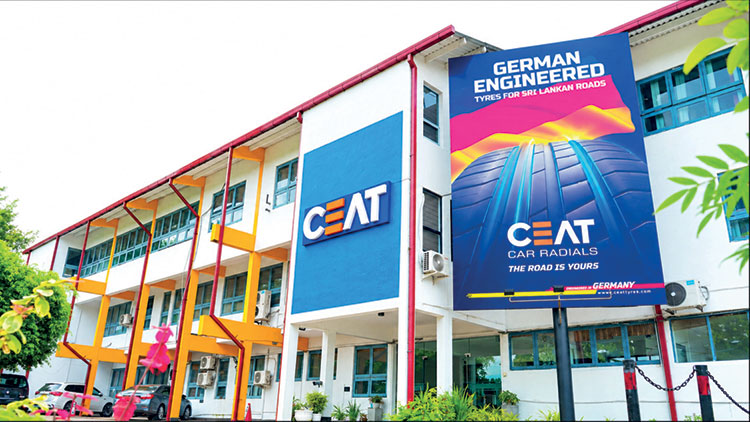
CEAT Kelani Holdings (CKH) has retained its National Long-Term Rating of ‘AA+(lka)’ with a Stable Outlook from Fitch Ratings for the sixth consecutive year, reflecting the company’s financial resilience and leading position in Sri Lanka’s pneumatic tyre market.
The ‘AA+(lka)’ rating, the second-highest on Fitch’s national scale, indicates a very strong capacity to meet financial commitments.
Fitch said CKH’s established market leadership and resilient financial profile remained key strengths, while noting its exposure to price-sensitive, cyclical and highly competitive markets.
The Stable Outlook reflects expectations that the company will maintain its market position despite rising input costs and increasing competition from imported tyres, while preserving adequate credit metrics during periods of weaker earnings and higher investment.
Fitch expects CKH’s established brand, extensive dealer network and adaptive pricing strategies to support its market position. Planned production facility upgrades are also expected to improve product quality, particularly in the radial tyre segment.
The rating agency expects near-term pressure on margins from higher raw material and energy costs but said the company’s low leverage and sound liquidity would provide a cushion.
CKH Chairman Chanaka De Silva said the rating reinforced the company’s focus on disciplined financial management, operational adaptability and long-term investment.
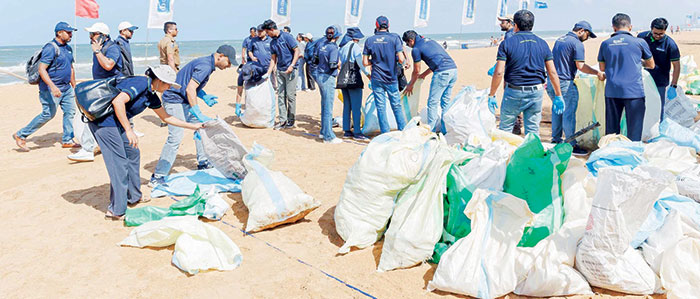
Commercial Bank of Ceylon mobilised employees, customers, volunteers and community members for a nationwide coastal and aquatic clean-up campaign across 20 locations on September 19 to mark International Coastal Cleanup Day 2026.
Conducted under the bank’s sustainability platform, themed ‘Forward Together for a Cleaner Future’, the initiative covered 16 coastal locations and four inland waterways, bringing together stakeholders for a coordinated environmental conservation effort.
The flagship programme was held at Mount Lavinia Beach, with additional activities at Wellawatte and Galle Face beaches. Similar initiatives were conducted by the bank’s regional offices at locations including Kalutara, Negombo, Trincomalee, Batticaloa, Puttalam, Jaffna, Galle, Dondra, Tangalle and along the Mahaweli River.
Employees, management, Future Force volunteers, customers and their families participated alongside the Marine Environment Protection Authority (MEPA), United Nations Global Compact Network Sri Lanka, government and local authorities, environmental organisations and community members.
The bank said the initiative reflected its commitment to water stewardship after adopting Sustainable Development Goal 6 — Clean Water and Sanitation — as a priority goal in 2025.

Buttler out of Oval decider as Lawrence earns ODI call-up

Showers will occur in the Western, Eastern, Uva and Sabaragamuwa provinces and in Galle, Matara, Kandy and Nuwara-Eliya districts.

Nor’easter brings flooding as New York and New Jersey declare emergency 2 hours ago

Trump rejects Iran deal to reopen Strait of Hormuz in seven days

Govt plans to hire 121,000 state workers, redistribute tax revenue

Parliament clears 22A amid protests

‘Dates have the highest sugar content to fight Coronavirus’

Sunday Island 27 December – Headlines

#SundayIsland 17th December – Headlines

Sunday Island – 28th March

Sunday Island Headlines – 21 March

Sunday Island – 21st February – Headlines
-

 News6 days ago
Hatton youth protest against reported death sentence for Lankan in Saudi Arabia
-

 News4 days ago
Mastermind Naufer Moulavi among 15 found guilty
-
 News5 days ago
Protest against setting up of cement factory in highly populated area near BIA
-

 News6 days ago
Mahaweli rises as heavy rain triggers flood, landslide fears
-

 Latest News7 days ago
Landslide Red Alerts issued to the districts of Kandy, Kegalle and Nuwara Eliya
-

 Midweek Review4 days ago
Thileepan’s fast unto death: An authentic narrative that many missed
-

 Editorial4 days ago
Big Bad Bills
-
Editorial5 days ago
Trouble beginning in earnest