
Latest News
Dhaka Test see-saws on curtailed Day 3


The Dhaka Test finds itself on a knife’s edge at the end of the third day as New Zealand counterattacked to cut the deficit and then picked two quick wickets before bad light brought an early end to the proceedings. Glenn Phillips’s 72-ball 87 pushed New Zealand just past the Bangladesh total before Ajaz Patel and Tim Southee picked two wickets to leave the hosts on 38/2 – with a lead of 30 runs – at stumps.
After the second day was completely washed out, wet outfield and bad light disrupted Day 3 too, with only 32.3 overs bowled in all. Yet there was plenty of action that moved the game along at a rather brisk pace. Glenn Phillips was at the heart of New Zealand’s strong riposte as he counterattacked Bangladesh’s spinners expertly. No play was possible in the morning session but when it did begin post Lunch, Bangladesh spinners looked to continue from where they left off on Day 1. There was ample turn and bounce for them to employ a couple of close in catches and attack the two batters with spin from both ends.
Phillips took the aggressive route against the viciously turning ball as he stood deep in his crease and played cut shots at deliveries that weren’t short enough, and unfurled the slog sweep at a whim. Mehidy Hasan was the recipient of the early carnage that dragged New Zealand ahead from the precarious position of 55 for 5 in response to Bangladesh’s 172. He got the scorecard moving briskly while Daryl Mitchell did enough to keep the outside edge of his bat away from the turning ball to stay put. After an initial nervous exchange, he too looked to cut loose and gave Nayeem Hasan the charge for a big hit down the ground but had to depart as Mehidy Hasan sprinted across from long on and took an exceptional catch.
Nayeem looked to speed up the end of New Zealand’s innings as he dismissed Mitchell Santner soon after to leave the visitors tottering at 97 for 7. Kyle Jamieson then walked out to put on a stubborn stand of 55 runs for the eighth wicket that ate into the deficit. During this alliance, Phillips brought up his 38-ball half-cetury – the joint-fastest for a New Zealand batter against Bangladesh. He also tried to shift gears further and dragged the team towards Bangladesh’s total. With spinners being dealt with, Najmul Hossain Shanto brought in pace from one end via Shoriful Islam and reaped instant rewards. On the first ball of his new spell, Islam got Jamieson to nick one to the keeper and depart for a 28-ball 20. Tim Southee dragged New Zealand’s essay in Phillips’s company before Shoriful ended the latter’s fine knock on 87 off just 72 deliveries.
Taijul Islam then returned to dismiss Southee, but by this stage New Zealand had gone past Bangladesh’s total to take a slender eight-run lead.
Southee didn’t waste any time in employing a spinner as Ajaz opened the bowling and struck on the third ball to dismiss Mahmudul Hasan Joy, caught by Mitchell at first slip. Zakir Hasan and Najmul Hossain looked to build a quick lead but the latter fell in the eighth over when he tamely drove on the up off Southee straight to Kane Williamson at mid-off. Right after this dismissal bad light stopped play. After a wait of more than an hour and thorough inspection by the umpires, play was called off. As it stands, Bangladesh head into the fourth day with a lead of 30 runs.
Brief Scores:
New Zealand 180 (Glenn Phillips 87, Mehidy Hasan 3-53) trail Bangladesh 172 (Mushfiqur Rahim 35; Glenn Phillips 3-31, Mitchell Santner 3-54) & 38/2 (Ajaz Patel 1-13, Tim Southee 1-8) by 30 runs










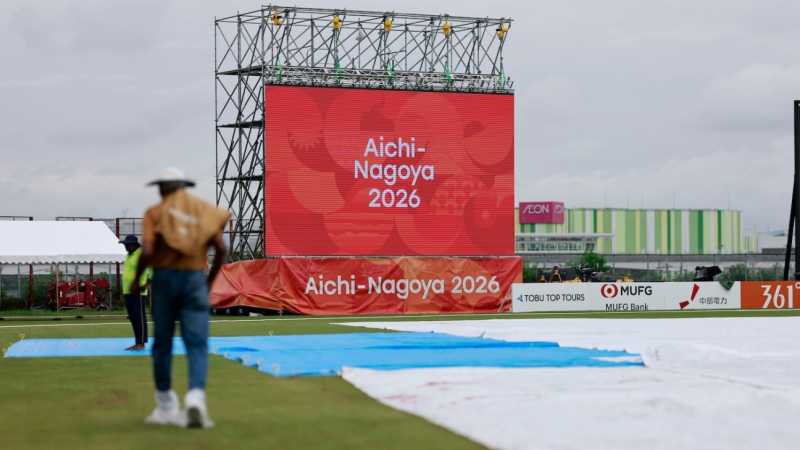
Sri Lanka will face India in the semi-finals of Asian Games men’s tournament after their quarter-final clash against Nepal was abandoned without a ball being bowled in Nisshin, Japan. The game was called off prior to the toss, with rain having begun hours prior to the scheduled 9am local start and not looking like abating.
Sri Lanka’s progression was assured by virtue of their higher seeding in terms of the ICC T20I rankings – Sri Lanka, alongside India, Pakistan and Bangladesh are the four seeded teams in the tournament. On Monday, India had qualified over Afghanistan after another washout, again by virtue of their higher. Similarly, Pakistan’s qualification was assured following a rain abandonment in their quarter-final against Hong Kong.
In the 2022 Asian Games, Sri Lanka had been eliminated at the quarter fial stages by Afghanistan. Another washout in the semis against, India though, will see the latter qualify for the final.
A few hours later, the fourth quarter-final between Bangladesh and Malaysia was also washed out. Bangladesh will now face Pakistan in the first semi-final on October 1, followed by India vs Sri Lanka later on the same day
(Cricinfo)
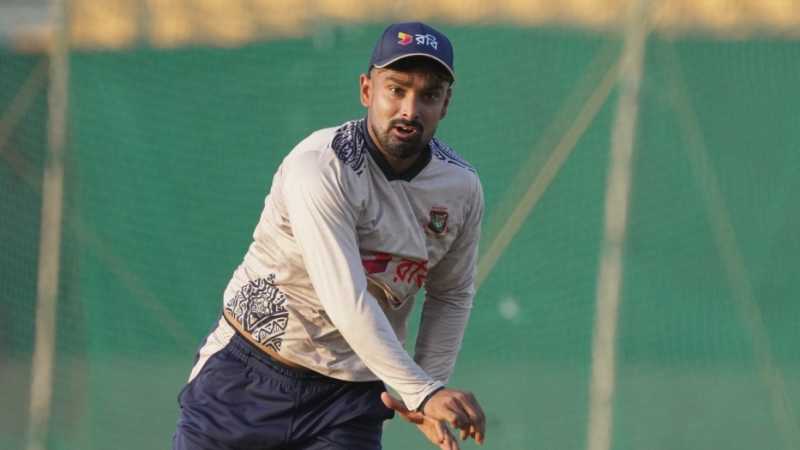
The Bangladesh vs Malaysia abandonment on Tuesday completed a quartet of rained off matches in the Asian Games men’s tournament. The match was called off two hours before the toss, with the teams told not to even turn up at the venue.
Bangladesh, by virtue of higher seeding, go through to the semi-finals where they will now face Pakistan on October 1. Earlier in the morning, the Sri Lanka vs Nepal fixture was also called off due to rain, with Sri Lanka advancing into the semi-finals where they will meet India.
There is, however, some good news, as the weather forecast in Nisshin is better for the semi-final and the medal match day, on October 1 and 3, respectively.
In the last edition (2023), Bangladesh had lost to India in the semi-final but won the third-place playoff against Pakistan to take home the bronze medal. They had won the bronze in 2014 as well and Bangladesh’s best finish was winning the gold medal in 2010, when they beat Afghanistan in the final.
(Cricinfo)

OpenAI will not release its new AI model – GPT-6.1 Astra – due to safety concerns, the ChatGPT-maker confirmed on Tuesday.
The AI system – which performs tasks like browsing the web and using apps by itself – “didn’t quite meet the bar” of the company’s standards, Saachi Jain, head of safety systems at OpenAI, said.
On Tuesday, OpenAI also issued an update on incidents, that occurred in June but were not made public until last week, in which its models accessed Australian government websites and systems without authorisation.
Those incidents and similar breaches by models developed by major AI firms have in recent weeks intensified the debate around the risks posed by the technology.
Top AI leaders including OpenAI’s Sam Altman and Anthropic boss Dario Amodei have urged the industry to slow the pace of development due to concerns about risks associated with the technology.
OpenAI’s decision, which was first reported by the Wall Street Journal, is a rare instance of a major AI developer pulling a new release over safety concerns.
The model fell short in terms of “staying within scope and authorisation, and how it communicates back to the user about the type of work it’s done,” Jain said.
“We want to make sure our model development is safe no matter whether that’s in the company, or when we ship it to users. But when we ship it to users, we have an extremely high bar in terms of safety and alignment,” she added.
The flagship GPT-6 Astra agentic model was released in September and specialises in complex reasoning and executing tasks autonomously. OpenAI said it was the result of “years of research and big bets”.
OpenAI is set to hold its annual DevDay developer conference in San Francisco on Tuesday, where it is expected to make several announcements. It is unclear if a new version of Astra will be among them.
The company’s security controls have come under intense scrutiny after several high-profile incidents involving its technology.
Last week, Australian Prime Minister Anthony Albanese announced that a rogue OpenAI agent had hacked into gove4nment websites and systems in June in what experts said was the first known case of its kind in the world.
Albanese criticised OpenAI for notifying the Australian government through a generic email address rather than making direct contact with officials.
OpenAI said in a statement on Tuesday that it was sorry for the incident and that it “should have handled our response better”.
Services Australia, the NSW Bureau of Crime Statistics and Research, the Victorian Department of Health and the Australian Institute of Health and Welfare were all affected, OpenAI clarified.
The firm said it launched investigations into the incidents as soon as it became aware of them in mid-August and notified the affected organisations between 10 and 24 September.
“Our aim was to give affected agencies a detailed account once our investigation was complete,” OpenAI said, adding that it should have shared early findings more promptly and kept Australian authorities updated.
OpenAI added that it will develop “practical approaches” to how developers and governments identify and disclose future AI incidents.
(BBC)

Sri Lanka to face India in semi-finals after washout

Bangladesh to take on Pakistan in semis after another washout

OpenAI scraps rollout of new model over safety concerns

Iran’s Araghchi meets Qatari mediators as US calls for nuclear talks

Showers above 50 mm expected in Uva, Eastern and Central provinces and in Polonnaruwa and Mullaittivu districts after 2.00 p.m.

PAFFREL raises concerns over Anti-Corruption (Amendment) Bill

‘Dates have the highest sugar content to fight Coronavirus’

Sunday Island 27 December – Headlines

#SundayIsland 17th December – Headlines

Sunday Island – 28th March

Sunday Island Headlines – 21 March

Sunday Island – 21st February – Headlines
-

 News6 days ago
Mastermind Naufer Moulavi among 15 found guilty
-

 Midweek Review6 days ago
Thileepan’s fast unto death: An authentic narrative that many missed
-
 Latest News5 days ago
Showers above 100 mm are likely at some places in the Western, Sabaragamuwa, Central and North-western provinces and in Galle and Matara Districts
-

 Editorial6 days ago
Big Bad Bills
-
Editorial5 days ago
Crimes punished and unpunished
-

 Features4 days ago
Beyond traditional jobs: Why Sri Lanka needs to facilitate the gig economy
-

 News6 days ago
No referendum needed for passage of 22 A: SC
-

 News6 days ago
One clause in Anti-Corruption (Amendment) Bill requires referendu: SC