
Latest News
Dercksen 104, Tryon 74 and hat-trick hand South Africa consolation win


Annerie Dercksen’s maiden ODI century – which came off the back of two successive fifty-plus scores and is also the fastest by a South African in the format – headlined South Africa’s consolation win at the women’s tri-series in Colombo.
With South Africa out of contention for Sunday’s final, they put together their most complete performance of the competition and posted their fifth highest score in all ODIs thanks to contributions from the lower order, which ultimately won them the game.
Dercksen arrived at the crease with South Africa on 85 for 5 as offspinner Dewmi Vihanga ripped through their top and middle-order. She consolidated with Nondumiso Shangase before sharing a 112-run sixth-wicket stand off 88 balls with Chloe Tryon, a seventh-wicket record for South Africa, to put them in sight of a big score. Tryon smashed 74 off 51 balls and was part of a 66-run stand off 30 balls with Nadine de Klerk which pushed South Africa over 300 and asked Sri Lanka to complete their highest successful chase.
Sri Lanka have already done that once before against South Africa – when they also chased down a 300-plus total – and were in a good position on 160 for 3 in the 30th over. But Ayabonga Khaka’s double strike, which included the dismissal of Chamari Athapaththu for 52, and a career-best 5 for 34, including a hat-trick by Tryon, ended their chances of another historic win.
Instead, the records were all Dercksen’s after she became only the second batter to score a hundred at No or lower in women’s ODIs and capped off a breakthrough series as a batter.
Dercksen scored her first half-century just two matches ago, at this tournament, and finished as the leading run scorer from the league stage. Her maturity and aggression should see her bat higher up the order in future and rescued South Africa after a start which turned in the wrong direction.
Laura Wolvaardt and Tazmin Brits put on 68 for the first-wicket and were both batting well when Vihanga first struck. She drew Brits forward and took the edge and Hasini Perera took a good, low catch at slip to give Sri Lanka their first. In her next over, Vihanga beat Wolvaardt’s inside-edge and bowled her and in the over after that, had Miane Smit caught slog-sweeping at mid-wicket.
Just when Vihanga may have thought things couldn’t go better, she plucked two more in her next over: Lara Goodall caught at slip and Sinalo Jafta, bowled while giving the charge. Vihanga, at 19 years old and playing in her third ODI, had her first five-for and is the second-highest wicket-taker of the series behind Sneh Rana.
Sri Lanka had the opportunity to run through South Africa from there but Dercksen stood in their way. She hit the third ball she faced over Vihanga’s head for four and there was no looking back. Dercksen favoured the area down the ground, where three of her five sixes were scored, including the one that took her to the century.
Dercksen’s innings was laced with cuts and pulls off the back foot and, unusually for her, a selection of sweeps including a reverse off Athapaththu. She dominated the partnership with Tryon, and scored 77 of the 112 runs they put on and it was only when she was dismissed, in the 44th over, that Tryon took over.
She charged Sugandika Kumari and hit her for six, moved across the crease to send Manudi Nanayakkara over midwicket and then took three sixes off Athapaththu before missing one and being stumped. De Klerk finished unbeaten on 32 off 19 balls and South Africa would have been comfortable with the target they set Sri Lanka, who began well in pursuit.
The opening pair of Hasini Perera and Vishmi Gunaratne put on 52 and it was Tryon’s introduction that separated them. Her second delivery was tossed up, Perera tried to drive and spooned a catch to Dercksen at cover. Four overs later. Tryon switched to around the wicket and had Gunaratne caught at backward point.
Athapaththu was in at No. 4 and gave Tryon a taste of her own medicine when she took 10 runs off her fourth over, including her first six.
Athapaththu and Harshitha Samarickrama’s third-wicket partnership grew to 52 and and they took Sri Lanka to the halfway stage on 124 for 2 but debutant legspinner Seshnie Naidu ended their stand. Samarawickrama tried to hit the first ball of Naidu’s fourth over out of the ground but was caught at mid-off.
Athapaththu brought up a 17th career half-century and kept Sri Lanka in the hunt but Khaka was brought back at a crucial time. In the 30th over, with Sri Lanka needing 158 runs to win, Khaka returned and Athapaththu sliced her to cover to all but end Sri Lanka’s hopes. In her next over, Khaka bowled Nilakshika Silva with the slower ball.
Brief scores:
South Africa Women 315 for 9 (Laura Wolvaardt 33, Tazmin Brits 38, Annerie Dercksen 104, Chloe Tryon 74, Nadine de Klerk 32*; Dewmi Vihanga 5-43, Chamari Athapaththu 2-70) beat Sri Lanka Women 239 in 42.5 overs (Vishmi Gunaratne 24, Harshitha Samarawickreme 33, Chamari Athapaththu 52, Anushka Sanjeewani 43*; Ayabonga Khaka 2-30, Chloe Tryon 5-34) by 76 runs
[Cricinfo]


United States President Donald Trump has said the plan for the Iran war initially “projected four to five weeks”, adding the US military has the “capability to go far longer than that”.
Speaking on Monday from the White House, Trump outlined his administration’s justification for going to war against Iran alongside Israel, saying that Iran posed “grave threats” to the US, even as he again claimed that US strikes on Iran in June of last year led to the “obliteration of Iran’s nuclear programme”.
Trump also said that Iran’s ballistic missile programme was “growing rapidly and dramatically, and this posed a very clear, colossal threat to America and our forces stationed overseas”.
“The regime already had missiles capable of hitting Europe and our bases, both local and overseas, and would soon have had missiles capable of reaching our beautiful America,” Trump said, repeating a claim his administration has repeatedly made in the run-up to Saturday’s attack, for which US government officials have not provided any evidence.
The statements were significant, with Trump appearing to pivot from claims that Iran posed an immediate threat to the US. Instead, he characterised the Iranian government as potentially posing a longer-term threat.
“The purpose of this fast-growing missile programme was to shield their nuclear weapon development and make it extraordinarily difficult for anyone to stop them from making these – highly forbidden by us – nuclear weapons,” Trump said.
“An Iranian regime armed with long-range missiles and nuclear weapons would be an intolerable threat to the Middle East, but also to the American people,” Trump said.
“Our country itself would be under threat, and it was very nearly under threat,” Trump said.
Under both US domestic law and international law, attacks on a foreign country must be in response to an immediate threat. Under the US Constitution, only Congress can declare war, while the president can act unilaterally in response to an imminent threat.
Trump has released two video speeches since the US and Israel began their attacks, including saying in a recorded message released yesterday that Iran had waged a “war against civilisation”.
He also predicted there would likely be more US military personnel deaths after the Pentagon confirmed the first three members of the military killed in the Middle East on Sunday.
To date, at least 555 people have been killed in Iran, 13 have been killed in Lebanon, 10 killed in Israel, three killed in the United Arab Emirates, and two killed in Iraq, with Oman, Bahrain and Kuwait each reporting one death amid Iranian retaliations in the region.
On Monday, shortly after the Pentagon confirmed a fourth member of the US military had died, Trump did not give a clear timeline for the operations.
He said “Right from the beginning, we projected four to five weeks, but we have capability to go far longer than that.”
Trump added that the military had originally projected four weeks to “terminate the military leadership” of Iran.
To date, Iran’s Supreme Leader Ali Khamenei and several other top officials, including the head of Iran’s Islamic Revolutionary Guard Corps (IRGC), have been confirmed killed in US-Israeli strikes.
“We’re ahead of schedule there by a lot,” Trump said.
Trump spoke shortly after Pentagon chief Pete Hegseth took questions from reporters for the first time since the attacks began.
Hegseth appeared to respond to concerns from Trump’s own “Make America Great Again” (MAGA) movement about entering into a prolonged war.
Trump had vowed to end US interventionism during his presidential campaign, promising to focus on domestic needs over adventurism abroad.
“This is not Iraq. This is not endless,” Hegseth said.
“This operation is a clear, devastating, decisive mission. Destroy the missile threat, destroy the navy, no nukes,” he said.
“Israel has clear missions as well, for which we are grateful, capable partners,” he said, without defining Israel’s mission.
Israeli Prime Minister Benjamin Netanyahu has long called for the toppling of Iran’s government
Hegseth further vowed to fight the war “all on our terms, with maximum authorities, no stupid rules of engagement, no nation-building quagmire, no democracy building exercise, no politically correct wars”.
[Aljazeera]
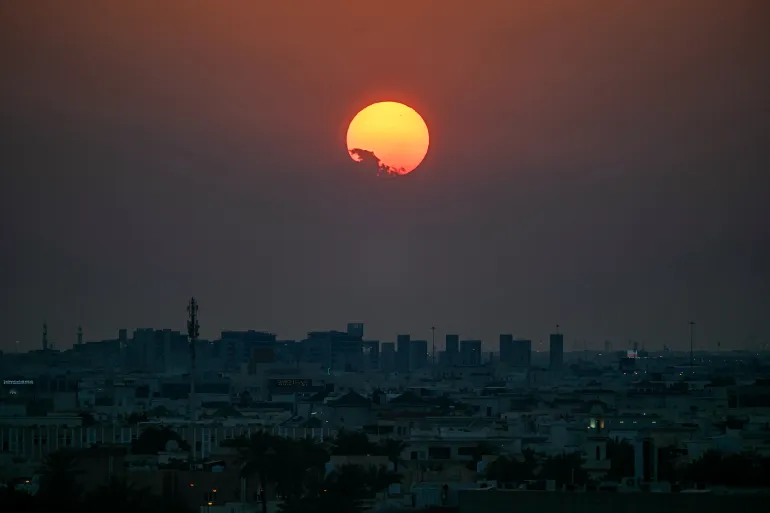
Qatar’s air force has “successfully shot down” two Iranian fighter aircraft, the country’s government says, as the fallout from the United States and Israeli attacks on Iran, and Iranian retaliation, grows across the wider Middle East.
The Qatari Defence Ministry said in a statement on Monday that the air force downed two SU-24 aircraft while seven ballistic missiles and five drones fired by Iran were also intercepted.
“The threat was addressed immediately upon detection, in accordance with the operational plan, as all missiles were shot down before reaching their targets,” the ministry said.
The Gulf country had condemned Iran for its “reckless and irresponsible” targeting of Qatari territory in response to US-Israeli attacks that have killed hundreds of people across Iran since Saturday.
Iran has launched a series of retaliatory strikes on targets in Qatar, Kuwait, the United Arab Emirates, Saudi Arabia and other countries in recent days.
[Aljazeera]
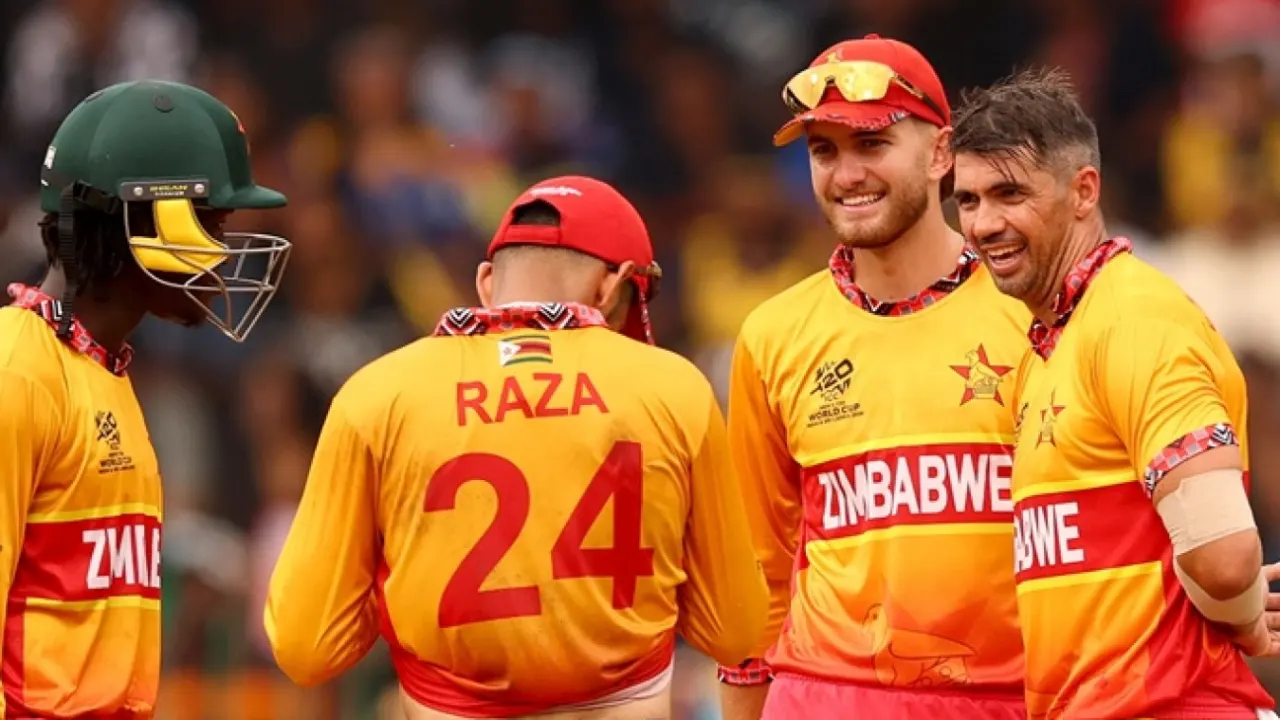
Zimbabwe have become the first team at the T20 World Cup to be affected by the closure of air spaces in West Asia, and will remain in India for the foreseeable future after their final match against South Africa on Sunday.
West Indies have also been forced to delay their departure from India*, due to “security threats posed by military action in the Gulf region”, CWI announced on Monday.
“CWI is working closely with the ICC, relevant governmental authorities and airline partners to secure the earliest possible safe travel arrangements for the squad and support staff,” the board said in a release. “The safety and wellbeing of our players, coaches, and officials remain our highest priority.
“The team is currently accommodated in India and remains safe and well. We continue to monitor the situation closely and will provide further updates as confirmed travel arrangements are finalised.”
Tournament organisers have been exploring alternative routes to get teams home as they finish their campaigns at the T20 World Cup in India and Sri Lanka. ESPNcricinfo understands that the Zimbabwe contingent was due to return home in batches, with some leaving as early as 4.30am on Monday morning and the rest to follow later in the day. They were booked on Emirates flights, which would take them from Delhi to Dubai and then on to Harare.
While it is understood that other airlines and routes are being considered, Zimbabwe are booked to stay at their Delhi hotel until March 4.
“No, not that I’ve heard of,” Zimbabwe’s coach Justin Sammons said when asked if there was clarity over the team’s travel plans. “When we started the game there wasn’t anything. And now we’ve just been focused on the game, so I’ve not heard anything since.”
Pakistan, who played their final Super Eight game on Saturday and were knocked out of the tournament, have returned to Lahore from Colombo via a Sri Lankan airlines flight.
On Saturday morning, the USA and Israel exchanged missile strikes with Iran, leading to the closure of airspace over several countries in West Asia, disrupting air travel to the region and also internationally, with several airlines having to cancel flights or change routes.
The ICC, in a statement on Saturday, said it had been monitoring the evolving situation and had “activated comprehensive contingency plans to safeguard the travel, logistics and well-being of all stakeholders” at the 2026 T20 World Cup.
“While the crisis in the Middle East has no direct bearing on the conduct of the tournament, the ICC acknowledges that a significant number of personnel – including players, team management, match officials, broadcast teams, and event staff – rely on Gulf hub airports, particularly Dubai (DXB), as key transit points for onward travel to their home countries upon concluding their commitments at the event,” the ICC said in a statement.
“The ICC Travel and Logistics team is actively working with major international carriers to identify and secure alternative routing options, including connections through European, South Asian and South-East Asian hubs. The ICC security consultants are liaising with relevant authorities and will provide real-time advisories as the situation develops. A dedicated ICC Travel Support Desk has also been activated.”
[Cricinfo]

Trump says Iran war projected to last 4 to 5 weeks, could go ‘far longer’

Qatar downs two Iranian fighter jets as conflict widens

Jammu and Kashmir’s long road to India cricketing glory

Rembrandt painting worth millions rediscovered after 65 years

Zimbabwe, West Indies delayed from returning home following West Asia airspace closure

Dry weather will prevail in most parts of the island

‘Dates have the highest sugar content to fight Coronavirus’

Sunday Island 27 December – Headlines

#SundayIsland 17th December – Headlines

Sunday Island – 28th March

Sunday Island Headlines – 21 March

Sunday Island – 21st February – Headlines
-

 Opinion4 days ago
Jamming and re-setting the world: What is the role of Donald Trump?
-
 Features4 days ago
An innocent bystander or a passive onlooker?
-

 Features5 days ago
Ratmalana Airport: The Truth, The Whole Truth, And Nothing But The Truth
-

 Features6 days ago
Building on Sand: The Indian market trap
-

 Opinion6 days ago
Future must be won
-

 Business6 days ago
Dialog partners with Xiaomi to introduce Redmi Note 15 5G Series in Sri Lanka
-
 Business5 days ago
IRCSL transforms Sri Lanka’s insurance industry with first-ever Centralized Insurance Data Repository
-
 Opinion1 day ago
Sri Lanka – world’s worst facilities for cricket fans