
News
Dengue mostly afflicts those between 15 and 49


Sri Lankans between the ages of 15 and 49 were affected by dengue more than those of other age categories, Dr. Sashini Ranaweera of the National Dengue Control Unit said.
Most of the dengue deaths were reported among the same age group, she said.
“So it’s the country’s workforce that’s most affected by dengue,” she said.
“If the attitude of people does not change, our efforts to contain dengue will be in vain. For example, when we visit people’s houses, check the premises, and give advice, people will adhere to our advice for a few days and then forget them,” she said.
Unless people took action to eradicate dengue breeding sites from their settlements, dengue would keep on raising its ugly head again and again during the rainy season, she said.
Dr. Ranaweera said 73,313 cases of dengue had been reported by 21 November, and out of them 34,713 were from the western province. (RK)







Latest News
Advisory for Heavy Rain issued for the Central, Uva and Sabaragamuwa provinces and in the Ampara, Batticaloa and Polonnaruwa districts

Advisory for Heavy Rain Issued by the Natural Hazards Early Warning Centre at 12.00 noon on 21 February 2026 valid for the period until 08.30 a.m. 22 February 2026
Due to the low level atmospheric disturbance in the vicinity of Sri Lanka, Heavy showers above 100 mm are likely at some places in the Central, Uva and Sabaragamuwa provinces and in the Ampara, Batticaloa and Polonnaruwa districts and fairly heavy showers above 75 mm are likely at some places elsewhere.
Therefore, the general public is advised to take adequate precautions to minimize damages caused by heavy rain, strong winds and lightning during thundershowers.
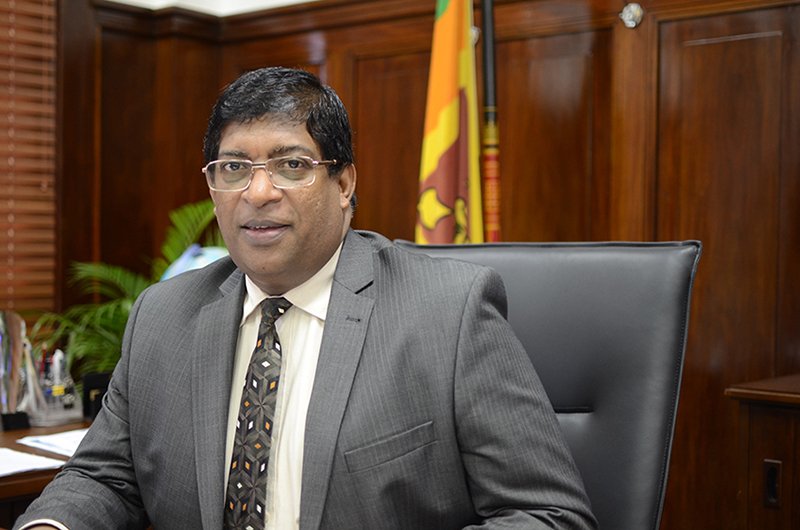
Opposition MP Ravi Karunanayake on Wednesday called for an urgent government statement to Parliament on the integrity and usability of Sri Lanka’s Gross Official Reserves (GOR), raising concerns over foreign exchange leakages and regulatory consistency under the Foreign Exchange Act No. 12 of 2017.
Raising the issue under Standing Order 27 (i), Karunanayake urged the Government to provide a comprehensive disclosure on the composition, encumbrances and deployability of the country’s reserves, as well as on the Central Bank’s oversight of foreign currency transactions.
“Reserve credibility depends not merely on headline numbers, but on transparency, enforceability and consistency in regulation,” the MP told the House.
He sought clarification on the latest reported GOR figure and the net usable reserves after excluding encumbered assets, swaps and pledged balances. He also requested details of annual revenue earned on reserves from 2023 to 2025.
Following are the questions raised by MP Karunanayake:
1. What is the latest reported GOR figure, and what is the net usable reserve after excluding encumbered assets, swaps, and pledged balances? What is the revenue earned on are GOR 23-25 per year?
2. Provide a separate and detailed breakdown of GOR, including: (a) Monetary gold (quantity and valuation basis) is it real gold or gold paper? (b) Foreign currency assets by major currency and instrument; (c) SDR holdings; (d) IMF reserve position; (e) Foreign currency swaps, specifying counterparty type, principal amount, tenure, maturity profile, and all-in cost; (f) Domestic swaps, specifying amount, tenure, rollover terms, collateralisation, and effective cost.
3. Of the total reserves reported, how much is encumbered, swap-backed, or otherwise not immediately deployable for debt servicing or currency stabilisation?
4. What SLR spread, fee, or margin does the Central bank apply when buying or selling USD to the Government for reserve accumulation and external debt servicing and what total profit or gain has the C.bank realised from such transactions during the past three financial years? Advice per year.
5. Is the Central Bank subject to continuous and statutory audit by the Auditor General? If so, will the Government table the most recent audit report, specifying audit scope, sample size, reserve confirmations, swap verification and gold custody validation?
6. What triggered the recent circular warning domestic institutions on foreign currency transactions?
7. Has the C.bank quantified foreign exchange and tax revenue losses resulting from Sri Lanka-based businesses routing credit card and commercial payments through overseas payment gateways?
8. If domestic entities are regulated strictly, why has a binding circular not been issued against noncompliant business entities using foreign payment gateway arrangements that divert foreign exchange outside Sri Lanka’s regulated banking system?
The government asked for two weeks’ time to respond to the queries.
by Saman Indrajith
News
Sajith exposes highly questionable coal imports from South Africa in 25 vessels; calls for independent probe

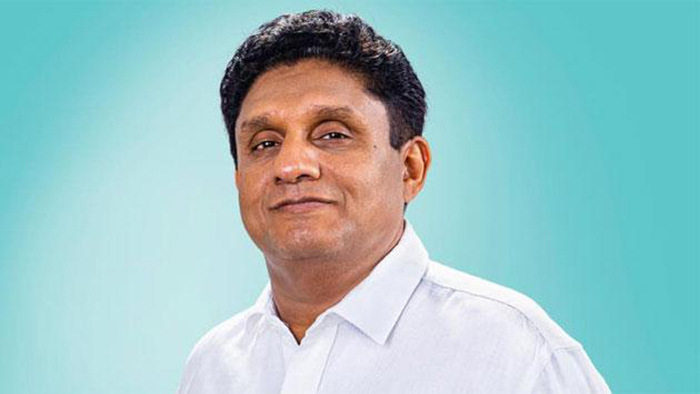
Opposition Leader Sajith Premadasa yesterday alleged in Parliament that eight recently imported coal shipments were substandard and called for an independent probe into the matter.Speaking in the House, Premadasa said Sri Lanka typically requires 36–38 coal shipments annually. While 11 Russian shipments received so far had raised no concerns, he claimed that 25 vessels ordered from South Africa under a new tender were facing quality issues.
He cited combustion reports from the Norochcholai Coal Power Plant showing that the eight shipments already received under the new tender failed to generate the expected 300 megawatts per unit. According to the MP, the outputs were: 285 MW, 290 MW, 260 MW, 295 MW, 285 MW, 270 MW, 275 MW, and 255 MW.
“These are scientific data generated automatically through boiler combustion reports that cannot be altered,” Premadasa said, asserting that the figures indicate the coal supplied was below required standards.
He warned that low-quality coal could increase fuel consumption, raise operational costs, and damage equipment. Any shortfall in power generation, he said, would necessitate additional coal imports or greater reliance on diesel power, ultimately driving up electricity tariffs for consumers.
“The loss will have to be borne by the electricity consumer,” Premadasa said, urging the government to clarify whether the shipments met required specifications.
He also criticized delays and changes in tender requirements, alleging that supplier eligibility criteria had been relaxed to allow non-standard providers.
by Saman Indrajith

Advisory for Heavy Rain issued for the Central, Uva and Sabaragamuwa provinces and in the Ampara, Batticaloa and Polonnaruwa districts

Ranaweera’s four-for leads Sri Lanka to tense win over West Indies

How photography helped the British empire classify India

Atmospheric conditions are favorable for thundershowers over most parts of the island

Trump brings in new 10% tariff as Supreme Court rejects his global import taxes

Ravi demands full disclosure on Lanka’s usable reserves, flags forex leakages

‘Dates have the highest sugar content to fight Coronavirus’

Sunday Island 27 December – Headlines

#SundayIsland 17th December – Headlines

Sunday Island – 28th March

Sunday Island Headlines – 21 March

Sunday Island – 21st February – Headlines
-

 Life style7 days ago
Marriot new GM Suranga
-

 Business6 days ago
Ministry of Brands to launch Sri Lanka’s first off-price retail destination
-

 Features7 days ago
Monks’ march, in America and Sri Lanka
-

 Features7 days ago
The Rise of Takaichi
-

 Features7 days ago
Wetlands of Sri Lanka:
-

 News7 days ago
Thailand to recruit 10,000 Lankans under new labour pact
-

 Latest News1 day ago
ECB push back at Pakistan ‘shadow-ban’ reports ahead of Hundred auction
-

 Latest News1 day ago
Tariffs ruling is major blow to Trump’s second-term agenda