
News
Decrease in fertiliser input leads to drastic drop in coconut output

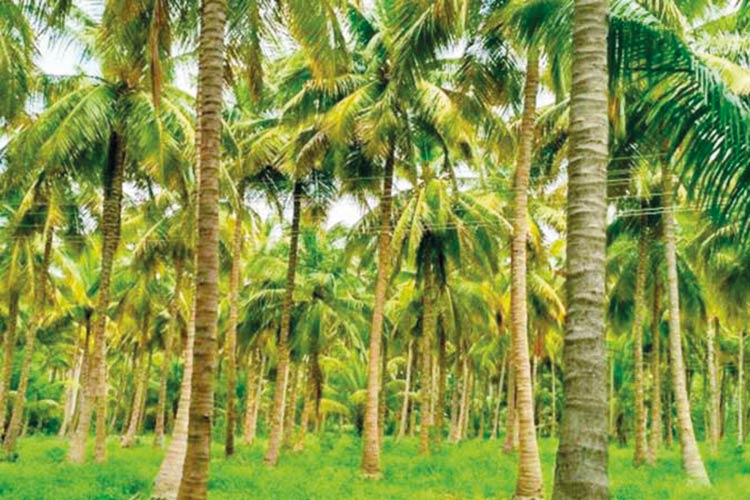
Climate change and wild animals also blamed
By Rathindra Kuruwita
A decrease in the fertiliser input has been one of the main reasons for a drop in the coconut harvest, Chairman of the Coconut Cultivation Board (CCB), Saman Dewage says,
“There was no fertiliser for about two years and now the price of fertiliser is very high,” he said.
Extreme weather events due to climate change also contributed to the decline in coconut production. “Pollination drops significantly when the temperature exceeds 30 degrees Celsius,” he said.
Dewage also said that a large number of coconuts are destroyed by wild animals such as monkeys and giant squirrels. Around 200 million nuts are destroyed each year by these animals, he said.
“You also need to replant coconuts to replace the old trees. According to our calculations cultivators need to replant about 10 percent of the trees each year. It has become hard to protect new plants because of porcupines, wild boars, and wild elephants. When coconut trees are young, we have to worry about red and black weevils. It has become difficult to control these pests because agricultural inputs are extremely expensive,” he said.
Dewage said Sri Lanka usually produces around three billion coconuts annually and it is highly unlikely that this number will be reached in 2025.
Meanwhile, Chairman of the Coconut Development Authority (CDA), Shantha Ranathunga said that Sri Lanka earns about 700 million dollars from coconut exports annually. The export of coconuts have increased significantly over the years, he said.
“Compared to 2023, our exports have risen by about 21 percent. In 2023, we made about 700 million dollars, by the end of 2024, we expect to make 850 million dollars,” he said.
Director of the Coconut Research Institute (CRI) Dr. N. S. Aratchige said that the coconut tree is highly sensitive to the fluctuations of weather patterns. If the rainfall of a month is under 100 millimeters, it is considered a serious drought for coconut cultivation, she said. There is also no propagation if the temperature exceeds 33 degrees Celsius. “CRI has recommended several varieties and on average a cultivator has the potential to extract about 80 nuts per year. Some of our hybrid varieties, when managed under recommended conditions, yield about 130 nuts per year,” she said.
She said while the coconut cultivator can’t change weather, he or she can take steps to mitigate the drought. “We can address droughts by following techniques to retain moisture. We can reach the potential of extracting 80 to 130 nuts if we apply the right inputs and if we retain moisture in the soil.
“The world average is 5,000 nuts per hectare. We produce about 7,000 nuts per hectare. India has achieved high productivity in recent years and produces about 9,000 nuts per hectare on average. There are some states in India that extracts about 15,000 nuts per hectare. How have they done this? By using fertilizer and through irrigation systems. The Indian state provides huge subsidies for fertilizer and irrigation systems. For example, coconut farmers get free electricity if they use new irrigation methods. On the other hand, our input costs are high and we hardly use irrigation systems, we produce about 60 nuts per tree annually although we have the potential to produce 80 to 130 nuts per tree,” she said.
Aratchige also said that in most coconut producing countries the crop damage by mammalian species is low compared to Sri Lanka. However, the damage caused by the coconut mite and red and black weevils are the same as Sri Lanka, she said.

Latest News
Landslide early warnings in force in the Districts of Badulla, Kandy, Kegalle, Kurunegala, Matale, Nuwara Eliya and Ratnapura

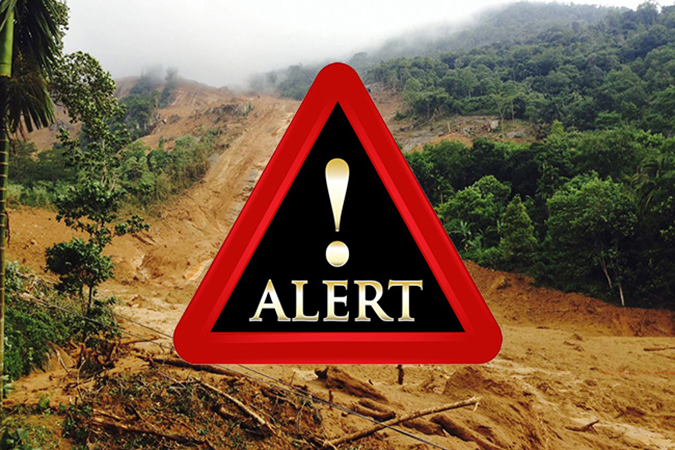
The Landslide Early Warning Center of the National Building Research Organisation [NBRO] has issued landslide early warnings to the Districts of Badulla, Kandy, Kegalle, Kurunegala, Matale, Nuwara Eliya and Ratnapura valid until 1600hrs on 14th December 2025.
Accordingly,
LEVEL III RED warnings are in force in the Divisional Secretaries Divisions and surrounding areas of Ududumbara, Medadumbara, Ganga Ihala Korale, Pathadumbara, Panvila, Udapalatha, Doluwa, Deltota and Minipe in the Kandy district, and Rideegama in the Kurunegala district.
LEVEL II AMBER warnings are in force in the Divisional Secretaries Divisions and surrounding areas of Uva Paranagama, Passara, Welimada, Haputhale, Lunugala, Soranathota, Ella, Kandeketiya, Bandarawela, Meegahakivula, Badulla, Hali_Ela and Haldummulla in the Badulla district, Harispattuwa, Pathahewaheta, Thumpane, Udunuwara, Poojapitiya, Hatharaliyadda, Gangawata Korale, Yatinuwara, Kundasale, Akurana and Pasbage Korale in the Kandy district, Rambukkana, Yatiyanthota, Aranayaka, Kegalle, Bulathkohupitiya, Mawanella, Warakapola and Galigamuwa in the Kegalle district, Polgahawela, Mallawapitiya, Alawwa and Mawathagama in the Kurunegala district, Ukuwela, Naula, Wilgamuwa, Matale, Laggala Pallegama, Rattota, Ambanganga Korale, Yatawatta and Pallepola in the Matale district, Walapane, Hanguranketha, Nuwara Eliya, Kothmale East, Mathurata, Nildandahinna, Thalawakele, Norwood, Kothmale West and Ambagamuwa Korale in the Nuwara Eliya district, and Kahawaththa, Kolonna and Godakawela in the Ratnapura district.
LEVEL I YELLOW warnings are in force in the Divisional Secretaries Divisions and surrounding areas of Dehiowita, Deraniyagala and Ruwanwella in the Kegalle district, and Kalawana, Kuruwita, Elapatha, Ayagama, Kiriella, Balangoda, Openayake, Imbulpe, Ratnapura, Kaltota, Eheliyagoda, Pelmadulla and Nivithigala in the Ratnapura district.
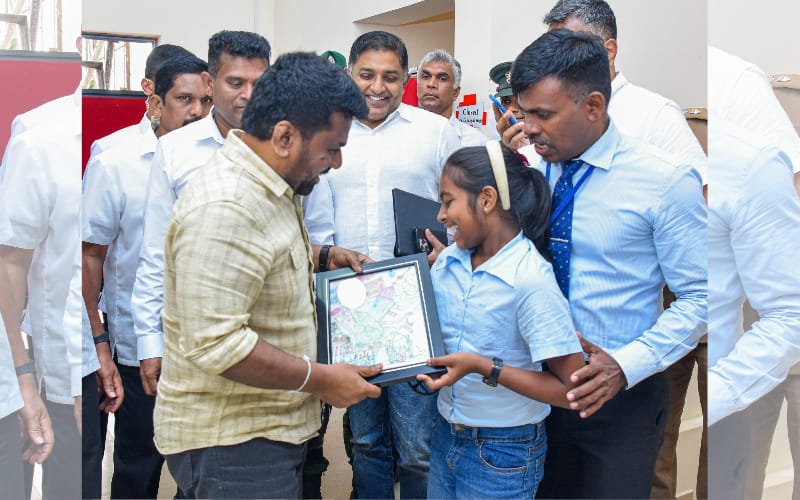
President Anura Kumara Dissanayake affirmed that the Government will never allow the violation of the rights of the fishing community, emphasizing the State’s firm commitment to protecting both land resources and the coastline.
The President also stated that the Government will address the challenges faced by fishing communities across the country through discussion and constructive engagement, ensuring sustainable solutions while safeguarding livelihoods.
President Anura Kumara Dissanayake made these remarks while attending a Special District Coordination Committee Meeting held on Saturday (13) afternoon at the Mannar District Secretariat, convened to review on-going efforts to restore normalcy to public life and rehabilitate infrastructure in the Mannar District following the recent disaster.
Highlighting the urgent need for a permanent solution to flooding in the Mannar District, the President instructed officials to proceed with the proposed flood control project after conducting comprehensive studies to ensure its long-term effectiveness.
Special attention was drawn to the severe impact of the disaster on the fishing sector. It was revealed that approximately 12,000 fishermen are currently unable to engage in fishing activities due to flooding and adverse weather conditions.
The President directed that dry ration packs be provided for one week to fishing families who, although not directly affected by floods, have lost their livelihoods due to unfavourable weather conditions.
Additionally, discussions were held on engaging with the Chinese Embassy to distribute a stock of fishing gear donated by the Government of China to fishermen affected by the disaster.
Attention was also focused on illegal land encroachments within the water catchment area of the Yodha Wewa Sanctuary. The President instructed that strict legal action be taken against individuals obstructing the placement of boundary markers around the reservoir.
It was reported that 70 families in the Mannar District have lost their homes due to the disaster. Discussions were held on rebuilding these houses and identifying suitable land for resettlement. A committee will be appointed to identify the required land within the next two weeks.
The meeting also addressed the expansion of facilities at Mannar Base Hospital and other hospitals, along with restoring health services and normalizing educational activities in the district.
The President further instructed that the Rs. 15,000 assistance provided by the Treasury for schoolchildren be disbursed promptly through Divisional Secretaries, based on recommendations from Grama Niladhari officers.
Extensive discussions were also held on reconstruction of damaged roads and bridges, restoration of water and electricity supply, rehabilitation of irrigation systems, compensation for losses in agriculture and livestock sectors and supporting affected communities to restart their livelihoods without delay
The meeting was attended by Deputy Minister of Cooperative Development and Chairman of the Vanni District Coordination Committee Upali Samarasinghe, Northern Province Governor N. Vethanayahan, Members of Parliament S. Thilaganathan, M. Jegatheeswaran, T. Ravikaran, Sathiyalingam, Selvam Adaikkalanathan, Kader Mastan and Rishad Bathiudeen, along with other government and opposition parliamentarians.
Also present were the Secretary to the Ministry of Finance, Secretary to the Ministry of Defence, Northern Province Chief Secretary D. Murugesan, Mannar District Secretary K. Kanageswaran, senior government officials, and representatives of the security forces.

President Anura Kumara Dissanayake has instructed officials to give top priority to restoring the livelihoods of communities affected by the disaster. He emphasized the need to expedite compensation payments for damages and to take immediate measures to revive the agriculture, fisheries and industrial sectors.
The President further directed that all compensation payments for crop damage be completed before December 25.
These instructions were issued during a special District Coordinating Committee meeting held on Saturday (13) morning at the Puttalam District Secretariat.
President Anura Kumara Dissanayake described the recent cyclone as one of the largest disasters the entire country has faced in recent times. He commended the dedicated efforts of the tri-forces, Police and public officials in restoring the lives of affected communities. The President noted that, thanks to their commitment, a significant portion of essential infrastructure including electricity, water supply and roads has already been rehabilitated.
He further emphasized that the Government’s ability to provide such substantial compensation to disaster-affected communities is the result of the strong fiscal discipline of the Government.
Taking into account the challenges that have arisen in the distribution of allowances and aid so far, the President instructed Divisional Secretaries to ensure that compensation is provided strictly to eligible recipients and to fully intervene to prevent any deviation from this policy under any circumstances.
During the meeting, the rehabilitation of damaged highways and bridges in the district was discussed in detail. The President inquired into issues arising during these reconstruction efforts and provided on-the-spot solutions in consultation with the relevant officials.
The construction of the Lower Kala Oya Bridge was also discussed. The President instructed that a temporary bridge be built to meet the needs of the tourism sector. He emphasized that all construction activities should be carried out with a thorough understanding of necessity and proper structural assessments.
The President further highlighted that previous large-scale projects were abandoned without delivering tangible benefits or the intended outcomes. He stressed that future infrastructure development should focus not only on regional needs but also on the broader economic benefits for the country as a whole.
The President inquired about the ongoing efforts to restore electricity supply in the district and emphasized the need to complete these works without delay.
He also reviewed measures being taken to re-establish water supply and instructed provincial authorities to intervene promptly, noting that current well cleaning efforts in the district are insufficient.
Regarding agriculture, the President inquired about preparations by local farmers for the upcoming Maha paddy cultivation. He directed officials to swiftly create a conducive environment for farming, minimize the amount of abandoned land and explore alternative methods to ensure productive use of farmland.
He instructed that all compensation due to farmers be disbursed before December 25, that payments be made regardless of whether the land is in reserves or legally protected areas, and that systematic measures be implemented to prevent cultivation on reserved lands.
The President also highlighted the need for comprehensive soil conservation programmes in areas such as Kalpitiya.
The President emphasized the need to provide fair compensation to those engaged in the livestock sector in order to restore their livelihoods. He also highlighted the importance of obtaining accurate ground-level data and stressed the necessity of introducing legislation to ensure the registration of all livestock farms.
Due to the disaster, 627 houses in the district were completely destroyed, and 20,813 houses sustained partial damage. The President instructed that compensation for the affected families be expedited, emphasizing priority resettlement on government land. Where government land is unavailable, he directed that Rs. 5 million be provided to each family for the purchase of alternative land.
For those whose houses were completely destroyed, the President directed that new housing projects be implemented in a manner that ensures ownership of a house valued at Rs. 5 million for each beneficiary.
Attention was also given to the fisheries sector. Discussions were held on providing assistance for the repair of damaged fishing boats, as well as implementing fair compensation and concessional bank loan schemes for prawn farmers.
President Dissanayake also inquired into the operations at Chilaw Hospital. Authorities informed him that patient admissions and the functioning of several units could resume by next week.
Minister of Public Administration, Provincial Councils, and Local Government and Chairman of the Puttalam District Coordination Committee Chandana Abeyratne, Deputy Minister of Environment Anton Jayakody, North Western Province Governor Tissa Warnasuriya, Government and Opposition Members of Parliament from Puttalam District, Local Government Representatives including the North Western Provincial Secretary, Secretary to the Ministry of Finance Dr. Harshana Suriyapperuma, Puttalam District Secretary, Divisional Secretaries, Government Officials, and Security Forces Representatives were present at the event.

Nine killed in shooting at Australia’s Bondi Beach, police say

Angry fans throw chairs and bottles at Messi event in India

Landslide early warnings in force in the Districts of Badulla, Kandy, Kegalle, Kurunegala, Matale, Nuwara Eliya and Ratnapura

The rights of the fishing community will never be compromised – President

Prioritize rebuilding the livelihoods of disaster-affected communities – President

A few showers may occur in the Northern, North-Central, Eastern, Uva and Central provinces

‘Dates have the highest sugar content to fight Coronavirus’

Sunday Island 27 December – Headlines

#SundayIsland 17th December – Headlines

Sunday Island – 28th March

Sunday Island Headlines – 21 March

Sunday Island – 21st February – Headlines
-

 Features5 days ago
Finally, Mahinda Yapa sets the record straight
-

 News7 days ago
Over 35,000 drug offenders nabbed in 36 days
-
 News6 days ago
Cyclone Ditwah leaves Sri Lanka’s biodiversity in ruins: Top scientist warns of unseen ecological disaster
-

 News7 days ago
Rising water level in Malwathu Oya triggers alert in Thanthirimale
-
 Features5 days ago
Handunnetti and Colonial Shackles of English in Sri Lanka
-
 Business3 days ago
Cabinet approves establishment of two 50 MW wind power stations in Mullikulum, Mannar region
-

 Business7 days ago
Sri Lanka betting its tourism future on cold, hard numbers
-

 News6 days ago
Jetstar to launch Australia’s only low-cost direct flights to Sri Lanka, with fares from just $315^