
News
Decision to float rupee was not unilateral – Cabraal

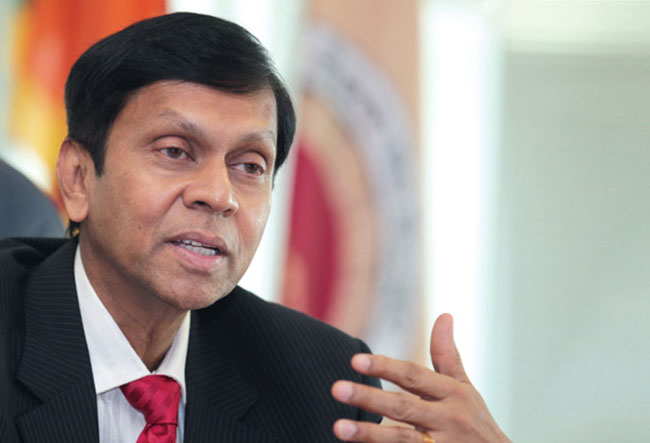
The decision to allow the Sri Lankan rupee to be flexible from 07 March, 2022, onwards, had been taken by the Monetary Board of the Central Bank, based on a Monetary Board Paper of the same date submitted by all three Deputy Governors, Director – Economic Research Department and Director – International Operations Department, said then Governor Ajith Nivard Cabraal, issuing a press statement yesterday.The three Deputy Governors are Mahinda Siriwardana, Dammika Nanayakkara and Y. Fernando.
Cabraal said that the decision to allow the rupee to be flexible is sometimes described by certain persons as being a “unilateral” decision he took. Therefore, he issued this statement to provide the factual position so as to set the record straight, Cabraal said.Given below is the statement in full: “The decision to allow flexibility in the exchange rate was taken by the Monetary Board of the Central Bank of Sri Lanka, based on a Monetary Board Paper, dated 7th March, 2022, submitted by all three Deputy Governors (Mr Mahinda Siriwardene, Mr Dammika Nanayakkara & Mrs Yvette Fernando), Director – Economic Research Department and Director – International Operations Department. The Board Paper stressed the need for changing the exchange rate policy, immediately, in order that the exchange rate acts as a “shock absorber” in the face of adverse developments in the global front on Sri Lanka’s already fragile Balance of Payments, including the increase of the crude oil price to nearly USD 140 per barrel and the worsening Russia-Ukraine war.
“Based on that Board Paper and the discussion at the meeting, the Monetary Board decided to “allow the market to have a greater flexibility in the exchange rate with immediate effect and communicate that the Central Bank is of the view that forex transactions would take place at levels which are not more than Rs. 230 per US dollar”. From the above it will be clear that, while the Monetary Board had expressed its “view” as to the level at which forex transactions would take place as a market guidance, a clear decision had been taken to allow for the flexibility of the LKR in the forex market. On the same day, a statement was issued to the media in line with the above decision.
Refer: https://www.cbsl.gov.lk/sites/default/files/cbslweb_documents/press/pr/press_20220307_policy_package_
to_support_greater_macroeconomic_stability_e.pdf
“Further, within about a week of floating the LKR, the President made a formal announcement that the government had initiated discussions with the International Monetary Fund (IMF) for a programme.
“Subsequently, Governor Cabraal resigned on 4th April 2022, on which day, the LKR was trading at Rs. 289.73/299.99 per USD in accordance with the new “flexible” exchange rate policy as announced by the Monetary Board. After Governor Cabraal’s exit, the Monetary Board, chaired by the new Governor Dr. Weerasinghe, continued with the “flexible” exchange rate policy, whist the Government and CBSL also took a series of far reaching decisions which included the decisions to: sharply increase policy interest rates by 700 bps from 8th April 2022 onwards, and to discontinue repayments of forex loans and interest from 12th April 2022 onwards. In the meantime, the LKR continued to depreciate to a range of Rs. 364.23/377.50 against the USD by 12th May 2022, at which point, the Monetary Board had apparently once again decided to “fix” the exchange rate at a new range between Rs.355.00/Rs.365.00 per USD. Such move to “fix” the exchange rate seems quite similar to the policy adopted by the Monetary Board chaired by Governor Professor W D Lakshman which “fixed” the LKR exchange rate at a range of Rs.199.00/203.00 per USD from 6th September 2021 onwards.
“It must of course be understood that there will always be conflicting opinions among stakeholders as to the value, timing and methodology to be followed in “fixing”, or “floating” or “pegging” a country’s currency. It is also quite possible that after decisions are taken to “float” or “fix” or “peg” the currency, others could, claim that the decision was right or wrong or implemented differently. However, it must be appreciated that the decision-making authority has to take its decision based on the prevailing circumstances, expert advice, practical ground conditions, judgement of future expectations and outcomes, etc. when viewed holistically. That is obviously why the Monetary Law Act provides the authority to the Monetary Board to change financial and monetary sector policies (including the exchange rate policy, interest rates, statutory reserve ratios, etc) when it deems appropriate to do so, from time to time.
It must also be appreciated that the implementation of policy measures is carried out by the professional and technical staff, of the Central Bank and they would naturally ensure that the policy measures being implemented are based on legal and binding decisions of the Monetary Board, which is the decision making authority, and not based on “unilateral” decisions of a single person.”

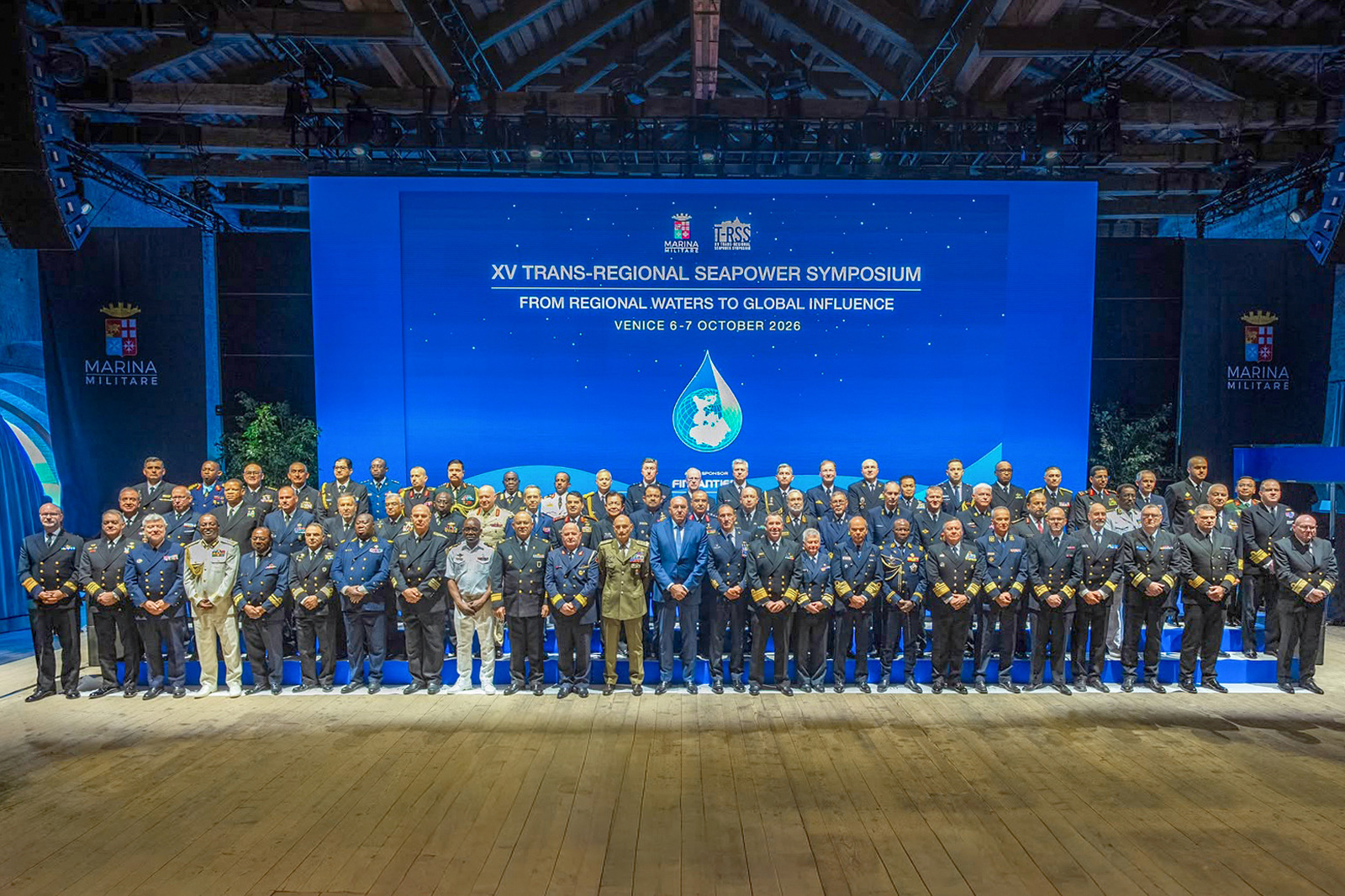
The Commander of the Sri Lanka Navy, Vice Admiral Damian Fernando attended the 15th edition of Trans-Regional Seapower Symposium, organised by the Italian Navy in Venice in Italy, on 6 and 7 October 2026.
The symposium was held at the Italian Navy‟s historic Arsenal in Venice under the theme “From Regional Waters to Global Influence: Generating Effects Across the Midland Seas of the World”.
Organised biennially by the Italian Navy since 1996, the symposium brings together heads of foreign navies, naval representatives, academics, industry representatives and scientific researchers to discuss maritime security and the role of regional maritime dynamics in shaping the global balance.
The sessions of the symposium aimed to present an analysis of the relevance and influence of regional dynamics on global balances and their relative implications within the maritime domain.
Thus, topics discussed included; ‘Geopolitical Background: Global and Regional Dynamics in Comparison,’ ‘Pivotal Role of Cooperation among Regional Alliances as Security Providers,’
‘Maritime Regional Security Complexes, Global Order and Sea-Based Flows – What Role for Navies?,’ ‘New Arctic Chessboard: Seapower, Resources and the Race for Connectivity,’ ‘Future-
Proof Capabilities: A Naval Force Designed to Operate Across Oceans, Act Within Regions and Deliver Effects on the Ground,’ ‘Future Seas: Industrial Scale, Decisive Mass and Innovation –
Securing the Maritime Domain’ and ‘Future-Proof Leadership: Preparing Maritime Commanders and Sailors for Complexity,’
Cooperation fostered through symposiums of this nature, which bring together a multitude of global maritime stakeholders, will enable the Sri Lanka Navy to respond collectively to maritime
challenges, in pursuit of maintaining a safe, secure, prosperous and a stable ocean region.
Latest News
Heavy showers about (100-150) mm are likely at some places in the Central, Sabaragamuwa, Uva and Southern provinces


WEATHER FORECAST FOR 13 October 2026
Issued at 2.00 p.m. on 12 October 2026 by the Department of Meteorology
A low-pressure area may form over the southeastern Bay of Bengal by 13 October.
Under the influence of this system, an increase in rainfall is expected over the island and the deep and shallow sea areas around the island during the next few days from tomorrow (13).
The general public, as well as the naval and fishing communities, are requested to be attentive to the future forecasts and bulletins issued by the Department of Meteorology in this regard.
Heavy showers about (100-150) mm are likely at some places in the Central, Sabaragamuwa, Uva and Southern provinces.
Fairly heavy showers above 75 mm are likely at some places in the other areas of the island. Showers or thundershowers will occur in most parts of the island.
The general public is kindly requested to take adequate precautions to minimize damage caused by temporary localized strong winds and lightning during thundershowers.
Misty conditions can be expected at some places in the Sabaragamuwa, Central and Uva provinces during the early hours of the morning.
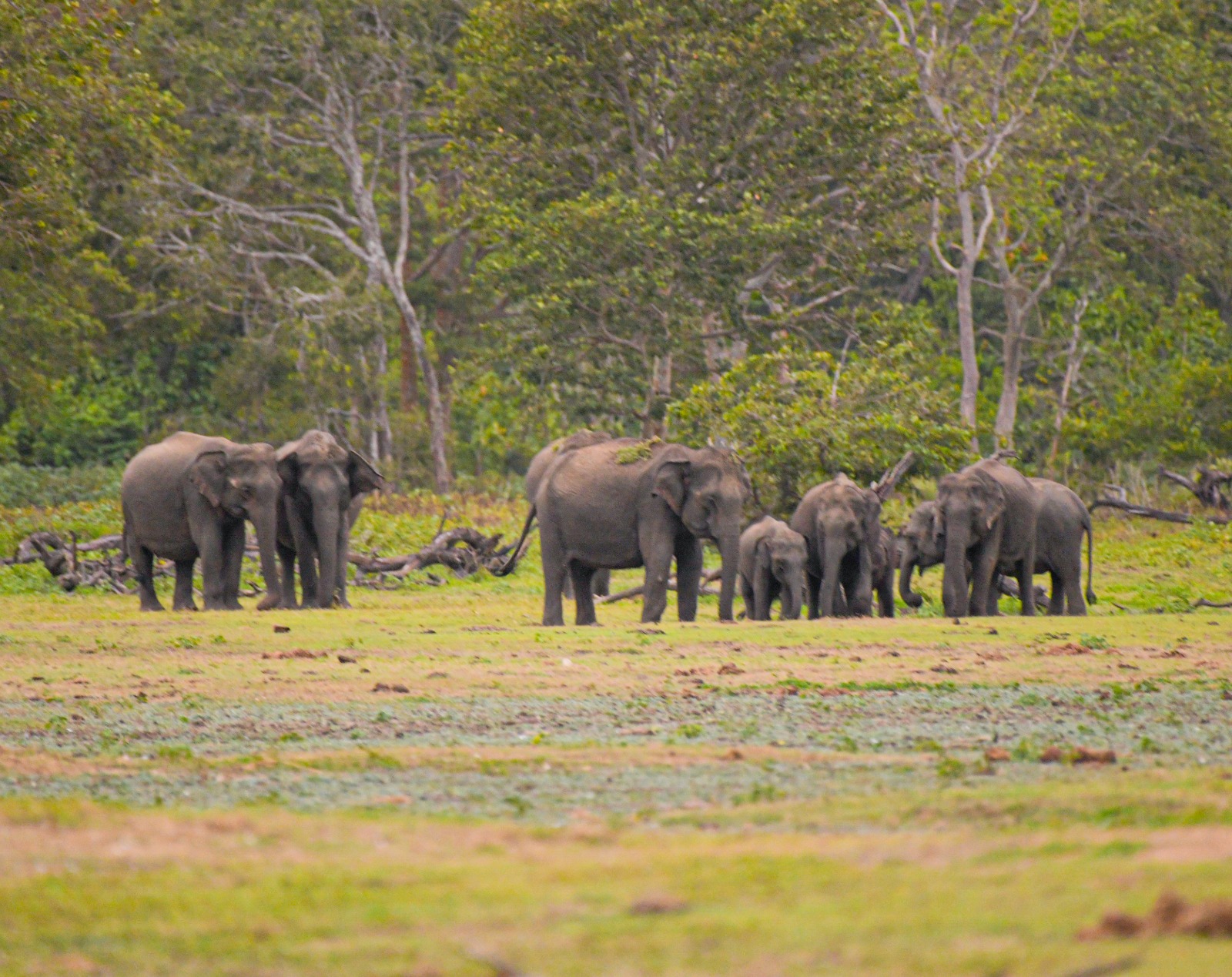
As part of the new government’s initiative to formulate scientifically grounded, long-term solutions to the human-elephant conflict, a programme aimed at sustainably fulfilling the natural food and water requirements of wild elephants within forest ecosystems is being successfully implemented.
Spearheaded by the Ministers of Environment, guided by the Secretary to the Ministry of Environment, and supported by all affiliated institutions, this initiative transforms tanks (reservoirs) and forest tracts in high-conflict areas into enriched zones for wild elephants.
To facilitate this forest enrichment drive, 113 forests have already been declared protected reserves under the Vanaspathi National Programme. The initial phase of establishing tank enrichment zones was launched around the Kala Wewa and Thabbowa reservoirs.
Accordingly, the Ministry of Environment and ‘Clean Sri Lanka’ jointly carried out an initiative to develop these reservoir
catchments into designated enrichment zones.
A year ago, an operation to eradicate invasive plant species that posed a severe environmental threat to the Thabbowa reservoir precinct was conducted with the comprehensive labour and
technical support of government officials, environmental scientists, the tri-forces, and residents.
Since the new government’s policy of “A Sustainable Biosphere, An Evergreen Life” is practically implemented at the ground level, officials from the Department of Wildlife Conservation and the Department of Forest Conservation have been continuously monitoring the ongoing progress and
field conditions of this collaborative project under ministerial directives.
During these field reviews, it was observed that following the removal of invasive flora, the tendency of wild elephants to wander into villages searching for sustenance has notably declined; instead, they increasingly frequent the naturally regenerated grasslands along the reservoir fringes.
Having proven this ecological model’s success through trials at Thabbowa and Kala Wewa, the Ministry of Environment has finalized all necessary blueprints to swiftly replicate it across other sensitive wetland systems and reserve zones where human-elephant conflict is prevalent.
By enriching wildlife habitats, this sustainable, eco-friendly, and scientific strategy protects human lives and cultivated farmlands while securing space for wild elephants in their native habitats, continuing to show promising results across high-conflict regions.

Navy Commander attends Trans-Regional Seapower Symposium in Italy

Heavy showers about (100-150) mm are likely at some places in the Central, Sabaragamuwa, Uva and Southern provinces

Elephant enrichment programme centred on the Thabbowa Reservoir proves successful
Showers above 75 mm are likely at some places in the Western, Sabaragamuwa, Central, Southern, Uva and North-Western provinces and in Anuradhapura and Mannar districts.

New prison regulations for monks serving jail terms soon: President’s Office

CP alleges NPP has taken the blame for illegal US sanctions on Iranian vessels

‘Dates have the highest sugar content to fight Coronavirus’

Sunday Island 27 December – Headlines

#SundayIsland 17th December – Headlines

Sunday Island – 28th March

Sunday Island Headlines – 21 March

Sunday Island – 21st February – Headlines
-

 Features5 days ago
The Sri Lankan who made Scottish history
-

 Features7 days ago
Preventing grievances from becoming communal
-

 Sports5 days ago
Nissanka absence opens door for Sri Lanka’s young guns
-

 News6 days ago
Gnansara Thera to be assigned to prison printing section: Officials
-

 News4 days ago
NDB fraud Rs 60mn more than reported
-

 News4 days ago
Removing monk’s robes matter for Sangha to decide: Mahanayake Theras
-

 Features5 days ago
Future of Sri Lanka’s state university system: Should it be shut down and reopened?
-
 News6 days ago
OIC of FCID summoned before Maligakanda Magistrate