
Opinion
Death of English medium in schools


There have been several articles on the deterioration of the English education in the country. My friend Dr. Weeraratne has pointed out some relevant facts about the need to improve English Education ( The Island, 14/11/2022) but it also has some factual errors. English medium in the sciences was abolished in the early 1970s and not in1957. This was due to an ill-conceived action taken by Mrs. Bandaranaike with the help of the then minister of education, Baduideen Mohomad. Almost overnight English medium was abolished and this had an enormous impact on the science education of this country. It is true that some students who followed science courses in the swabasha medium have excelled in their relevant fields. However, those who could not enter the universities lost the golden opportunity of learning English in the schools which would enable to those left out of universities to have better job prospects, specially, in the private sector.
During the time when I was a student in the 1960s, there was a gradual shift to the English medium from about grade 7. At that time Science and Mathematics were taught in the English medium and from grade 7 and from grade 9 onwards, all subjects in the sciences were taught in the English medium. I learned my English because of the English medium and not because English was spoken in our homes. All the students in the class were able to speak, read and write in English when they completed school education. Abolition of the English medium from schools resulted in an entire student population losing the golden opportunity of developing competency in English.
Education in the English medium has distinct advantages to enhance social harmony between Sinhala, Tamil and Muslim students when they sit in the same classroom. During the 1950s, Ananda College had Tamil and Muslim students who studied along with the Sinhala students. Although politicians talk about national harmony, the role of a common link language in the classroom has largely been ignored.
English is the language of science. When we had to shift to the English medium, we did not find any difficulties since the technical words in English involved words which we used in everyday parlance. On the other hand, learning science in swabasha involved Pali and Sanskrit words which we never use in our day to day lives. For example, anyone with even a rudimentary knowledge of English understands words like acceleration and the technical word used for this is thwaranaya which we never use in our day to day lives. Hence understanding science in English has its distinct advantages.
English was later reintroduced as a medium of instruction in schools in the late 1990s and at that time several cabinet ministers spoke against it believing that this is an unwise move. Ironically these minsters have sent their children to international schools where the medium of instruction is English. These selfish ministers never thought of the advantage of the English medium for children in Government schools. The biggest hurdle for its successful implementation was the lack of competent teachers. Government at that time took some meaningful steps to train the teachers but with the change of Government all these efforts were forgotten. Years of neglect of the English language in schools resulted in difficulties in recruiting teachers competent to teach in the English language. Even now, English medium is not so widespread in our school system due to a dearth of competent teachers and the lukewarm attitude of our politicians. Meanwhile, International schools registered with the BOI mushroomed from about 100 in 1998 to about 500 today. The initial attempt at introducing the English medium in schools from the GCE ordinary level was a failure because students were hesitant to change the vernacular to an entirely new medium.
Lack of competency in English made it impossible for Sri Lankans to share the global knowledge through the world-wide web. This has also prevented those who studied in the vernacular in obtaining better employment from both local and foreign companies where only those who attended international schools had the advantage. Politicians believed that English was a symbol of western imperialism which made them resist its widespread use as a medium of instruction in schools. They do not realise that it is a tool for furthering their job opportunities and succeed at an international level.
An interesting anecdote is the attitude of Pandit Jawaharlal Nehru towards the English medium. When one of his advisors suggested that, now that we have received independence, we should change the medium of instruction in the universities and schools to Hindi, he paused for a moment and said, I will think about it 60 years from now. Such was the vision of this great politician since he saw the advantage of retaining English which exposes Indian students to the International world. We often see on television, the excellent English spoken by cricketers and actors/actresses from India compared to those from Sri Lanka. Nehru never used ultra-nationalism to win popular votes like in Sri Lanka, where our politicians promoted Sinhala only policies just to win votes at elections. The Official Language Act, commonly referred to as the Sinhala Only Act, was an act passed in the Parliament of Ceylon in June 1956. This act replaced English with Sinhala as the sole official language and this was the beginning of our neglect of English further aggravated by the abolition of the English medium from schools in the early 1970s.
We can learn an invaluable lesson from Singapore, where its founder Lee Kuan Yew changed the medium of instruction in schools almost overnight to English. He was educated at Cambridge and wanted to give similar opportunities to ordinary Singaporeans unlike our Bandaranaike, who was educated at Oxford but did not want to give that opportunity to the ordinary people of Sri Lanka. During the National Day celebrations in Singapore the master of ceremonies conducted the proceedings in English and Lee Kuan Yew claimed that he was a proud man that day. The success of Singapore as a nation is largely due to a particular reason, it is built on a solid foundation of education with emphasis on English. We just have to get out of this shell of ultra-nationalism if we ever have to develop our country in an increasingly globalised world.
Prof. O. A. Ileperuma






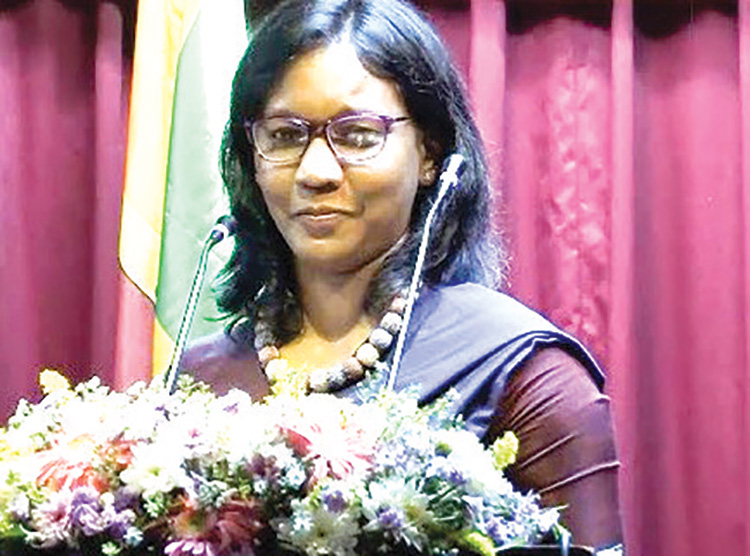
Constitutional Conversations:
We gather here today to celebrate yet another publication of a prolific writer on public law in Sri Lanka. Congratulations, Dr Wickramaratne, and thank you for this valuable contribution to our knowledge and for the opportunity to offer my assessment of this book with this distinguished audience.
In the next 15 mins or so, based on my reading of Constitutional Conversations, I will speak on the following five points. First, I will provide a brief overview of the book; second, I will speak to the significance of this book to knowledge, theory and practice of constitutional law; third, I will offer reactions to some of the ideas that are presented; and fourth, I will comment on the genre of this book. Fifth and finally, I will offer some suggestions for Dr Wickramaratne to consider for any future publications that he might have in mind.
Overview
The book comprises 11 chapters on constitutional governance in Sri Lanka and deals with relevant issues and developments up to the end of 2025. Anyone who is familiar with Dr Wickramaratne’s professional life and public service would immediately recognise that its chapterisation closely follows his contributions to constitutional governance in Sri Lanka in the last two to three decades. The eleven chapters cover, broadly, the executive, the checks and balances between the executive and parliament, Sri Lanka’s experiences with constitutional reforms in the last two decades and two thematic issues in the law – terrorism and noise pollution.
Significance
I think Constitutional Conversations is a significant contribution not only to public law in Sri Lanka but also at the global level for several reasons. Almost all the chapters are written from an insider perspective and therefore provides information, insights and explanations on significant recent constitutional developments that have hitherto only been available anecdotally. Dr Wickramaratne has been, what is described in literature on constitutional law as, a constitutional actor. Over the last two decades he has served as an expert on drafting committees, as an advisor to the President and as a Member of Parliament. Importantly, this book does not come across as an attempt to justify or further explain a constitutional actor’s past work. It is transparent, dispassionate, and presented in an argumentative mode making it clear that the author’s objective is to convince rather than to assert. The title, Constitutional Conversations, aptly reflects this spirit of the book. This book is also significant in that it complements the more academic work on these recent developments. Dr Wickramaratne brings in a granular account of how and why some of these developments came about while the more academic work situates these developments in constitutional theory. To this extent, Constitutional Conversations fills a notable gap in the literature. Furthermore, this work is significant because, if I am not mistaken, for the first time, an argument has been presented as to why the constitutional provisions on the Executive Presidency and the direct election of the President may be amended without recourse to a referendum. I know these arguments have been made before Court but I do not think they have been systematically dealt with in any written work on the subject. My own writing on this issue has only dealt with the matter briefly.
A highly useful aspect of this book is that almost every chapter includes proposals for specific constitutional reforms. I will return to this point later in my remarks. Dr Wickramaratne’s work is inherently comparative. Most chapters offer discussions on a wide range of comparative examples that go beyond the usual suspects such as India, the US and UK and include examples from a wide range of countries including Finland, Uruguay, Portugal, Costa Rica and France. This comparative engagement reflects both Dr Wickramaratne’s knowledge of constitutional developments in the world as well as the work he has done as an expert in different jurisdictions.
Some reactions
Let me now offer some reactions to the ideas presented in Constitutional Conversations. I will first speak to two specific aspects and then to what I think is an overarching implicit theme of the book.
Chapter one of this book is titled, ‘Entrenched Constitutional Provisions’ Dr Wickramaratne makes the argument that the constitutional provisions on the office of the executive president and on the direct election of the president are not entrenched and therefore may be amended without seeking approval of the people at a referendum. As we all know, Justice Sharvananda, writing for the majority in the Thirteenth Amendment special determination of 1987 noted the drafting history of articles 3 and 4 of the Constitution and held that, the ‘agencies or instruments for the exercise of the sovereignty of the people’ may be amended, ‘provided such amendment has no prejudicial impact on the sovereignty of the People.’ However, in subsequent special determinations our Courts have held differently. Most recently, in the special determination on the 22nd Amendment (which was enacted as the 21st Amendment), Court proposed two tests – of delegation and alienation in determining whether a referendum will be required in relation to a proposed amendment that impacts Article 4. In his book, Dr Wickramaratne makes a dispassionate case as to why any proposed amendment to the Constitution that impacts Article 4 would not require a referendum and explains, with all due respect to Court, why he thinks that the majority reasoning in the special determination on the Thirteenth Amendment is the more accurate constitutional interpretation that ought to apply. I find Dr Wickramaratne’s argument to be persuasive. In fact, in my own work, I have argued that most certainly, in Sri Lanka’s political imagination and consciousness, the Executive Presidency is entrenched but that the argument for its constitutional entrenchment is weak. This political and cultural weight attached to the office of the Executive President, in my view, is at odds with the constitutional scheme because Article 83 does not include any of the provisions related to the Executive President, with the exception of any extension to the term of office. The case for this approach to interpreting Article 4 is supported on the basis of the drafting history, as well as the literal reading of the Constitution.
The second reaction is related and one in which I have had a vested interest in the recent past, which is the Constitutional Council. Dr Wickramaratne offers a useful account of how the Council came to be and the political negotiations that shaped the different versions of the Council we have had under the respective constitutional amendments. My reading of Dr Wickramaratne’s analysis is that he does not venture to analyse the type of power exercised by this Council. I wondered whether not going into this question about the constitutional nature of the Council more deeply was an opportunity missed.
I say this for the following reasons. Sri Lanka’s Constitutional Council is, from what I know, unique in the world. The Nepali Constitutional Council inspired it, but the two Councils have a fundamental difference, in that the Sri Lankan Council includes independent unelected members. Interestingly, the consensus seems to be that in Nepal, the Council has, by and large, been ineffective. While Sri Lanka’s Council too has had a chequered history, I think it’s fair to say that it has had some positive impact as well. It is clear that the Council acts as a check on the power of appointment by the Executive President to constitutional high offices and constitutional commissions. With regard to its identity and nature, notably in the special determination on the 18th Amendment Bill of 2002, the Court has held that the Council is part of the Executive. I, however, along with a few other academics who study independent constitutional institutions, am of the considered view that the power exercised by the Council is better described as a guarantor power, a power that has been hitherto mostly latent in our constitutional systems. I don’t want to get into the details of this argument here except to say that guarantor power is described as the power to guarantee non-self-enforcing constitutional norms, such as integrity of elections or judicial independence. The Council guarantees some of these norms as a meta-guarantor institution, through a multi-partisan and independent decision-making process. I am mindful of the counter-arguments to this position and think that this is a debate that this book could have taken on.
Now let me turn to what I think is one of the overarching implicit themes in this book. In his acknowledgements, Dr Wickramaratne notes, and I quote, ‘My aim is to show that constitutional law is not merely a matter of doctrine but a lived struggle for justice, equality and peace – one that demands both critical reflection and committed engagement.’ In the book, Dr Wickramaratne engages with the political developments of 2022, among others, and indeed, throughout his work, offers commentary on the dynamics between politics, constitutional governance and constitutional reform. And yet, in my reading, he only deals indirectly with the fundamental challenges that are presented to liberal constitutionalism by the political developments that he discusses. In fact, he, in my view, short sells his own contribution to the thickening of the ‘immutable republican principles’ that the preamble of our constitution refers to, notably, representative democracy, freedom, equality, justice, fundamental human rights and the independence of the judiciary. As we all know, a thin account of liberal constitutionalism concerns itself with supremacy of the constitution, negative protection for civil and political rights, judicial review of legislation, separation of powers and independence of the judiciary. However, Constitutional Conversations, documents the ways in which, several in Sri Lanka, including Dr Wickramaratne, have advocated for going beyond the liberal understanding of constitutionalism to also engage with the social justice questions of the day, such as equal citizenship for ethnic minorities, judicial protection for welfare through justiciability for economic and social rights and re-imagining the constitutional architecture of the state through the innovation of a Constitutional Council. Now, to some extent, my reading is that Dr Wickramaratne’s ideology lies somewhere between a left leaning commitment to state responsibility for minimum standards of living and therefore a strong state, and a commitment to the liberal idea of avoiding concentration of state power. I think these dual commitments undergird his treatment of the different topics in this book.
Genre
Now I would like to offer some reflections on the genre of Constitutional Conversations. This book is very different from Dr Wickramaratne’s most well-known work, Fundamental Rights in Sri Lanka which is now in its third edition. I understand that Fundamental Rights in Sri Lanka originated as a PhD thesis and has since then evolved into the only reference book on the subject. That book is a systematic discussion and analysis of constitutional text, doctrine and jurisprudence, which is woven in with a consistent engagement with foreign law and Sri Lanka’s obligations under international human rights law. In contrast, Constitutional Conversations, is written by a constitutional actor who is self-conscious of his professional experience, his ideological commitments and his academic insights and brings all of them to bear on his writing. Reflecting this mixed approach, I noticed how the writing style shifts across the different chapters. Some sections are more reflective of the style of writing we would use in writing opinions, some sections are written more in the style of advocacy and some other sections are written in a more academic style.
Not all forms of writing on constitutional law are the same, nor should they be the same. They could be more or less professional or academic or advocacy type in substance, form and style, or aspire to straddle all three. I read Constitutional Conversations as offering a predominantly professional account while including academic discussion and as including very useful and significant recommendations for constitutional reform. Such work can only be produced by the few members of our legal community who have straddled the professional, academic and advocacy dimensions of our work, and Dr Wickramaratne is certainly one of them.
This character of Constitutional Conversations gives added weight to the recommendations for constitutional reform that Dr Wickramaratne includes in most of his chapters. The set of recommendations that I found most interesting is found on p 198. He argues that responding to the demands of the Argalaya calls for an explicitly transformative constitution and not a reformist one and he identifies 4 features that should be included in such a transformative constitution.
= Dynamic constitutional interpretation that would advance justice and equality
= A social justice orientation including the dismantling of systemic discrimination
= A commitment to participatory democracy
= A constitution that is evolutionary in character and a living document
I hope we can consider these recommendations as points of departure in our next cycle of constitutional reform. Unlike Nepal and Bangladesh, Sri Lanka managed to stay within the constitutional framework in its recent experience of mass mobilisation in 2022. The developments since then confirm to us that while it is not easy for a set of political ideas and demands to become a social movement which leads to mass mobilisation, it is hard to ensure that the demands of such a movement are translated into actual decisions by those in power and even harder to bring about the long-term institutional, policy, legislative and constitutional change that Sri Lanka is desperately in need of. This book can assist us in that difficult but essential constitutional journey.
Suggestions
Dr Wickramaratne, reading Constitutional Conversations in preparation for this launch, I had two thoughts which I am going to repurpose as suggestions for future work that you might think of producing. The first is to consider adding an introduction and conclusion to future work of this genre. The introduction could bring together the themes that run across the different chapters and speak more directly to your experiences as a constitutional actor in each of these developments. A conclusion could underscore for the reader the main insights you offer. The addition of an introduction and conclusion would make this work more accessible to law students as well as to a regional and or international readership. Constitutional developments in Sri Lanka have always attracted professional and scholarly interest and I know work of this nature has much to offer in that regard.
The second suggestion is a substantive one. Implicit across the eleven chapters of Constitutional Conversations is the role Dr Wickramaratne played in the relevant constitutional developments and related political negotiations. Occasionally, you modestly refer to yourself as ‘the author’ who was involved. It is clear to the reader that through these experiences, you have developed acumen on the prospects for progressive constitutional change, constitutional governance and constitutional politics in Sri Lanka. It is clear that you have your own ‘theory of change’ and that you also have an understanding of what constitutional actors ought to do, when their efforts seem to fail or are being rejected. I do think that writing more intentionally about your experiences as a constitutional actor would be very useful for the field, in Sri Lanka and beyond. I hope this is a project that you will consider worth pursuing in the future.
Conclusion
And now, in conclusion – For the curious student, committed professional and discerning citizen Constitutional Conversations provides the foundation that they need to more fully understand the constitutional challenges of our time, here in Sri Lanka, through the experience of a constitutional actor but presented dispassionately and with reason. Reading this book, I could see the ways in which Dr Wickramaratne’s professional and political choices enabled him to make a significant contribution to the advancement of constitutional governance in Sri Lanka. He has been able to combine his professional work with the academic and advocated politically to bring about the change he believed in. This book is a fitting testament to that life of service. Congratulations Dr Wickramaratne and I thank all of you for your patient listening.
Speech made by
Prof. Dinesha Samararatne
at the launch of “Constitutional Conversations” authored by Jayampathy Wickramaratne
on 16 July 2026
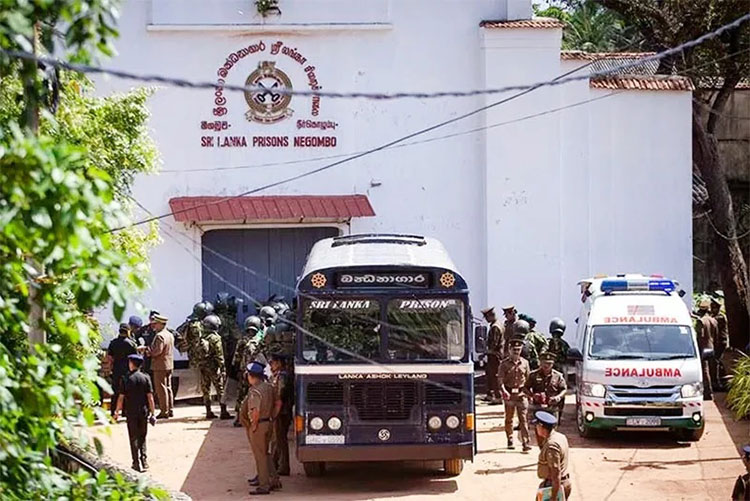
I watched the Negombo Prison riots on news channels from London, and the tragic deaths of the prisoners, and the prison officers, who were killed during the riots. Ten prison officials and 21 prisoners died in the two days of fighting between two groups of inmates at the prison.
Some mainstream media in Sri Lanka always exaggerate the cruelty of the prisoners, while ignoring the circumstances of the ill-fated prisoners and their poor relatives. The government came to power promising to eradicate poverty but their priority became eradicating the drugs. By launching the aggressive war on drugs, the government arested a large number of suspects without a comprehensive plan to accommodate them in remand prisons. There were complaints and reports about how some police officers had abused their power to arrest and detain some individuals, on false drug charges
The number of inmates in Sri Lankan prisons is reported to be 4,000, but in their NPP election manifesto (2024) placed the figure at 138,581 in 2022. How would the government explain this discrepancy? Did the NPP exaggerate the true figure for political gains? (Reference: https://www.scribd.com/document/766722056/NPP-Presidential-Election-Manifesto-2024)
(See page 115-116)
Negombo Prison, with a capacity for about 650 inmates, held around 2,400 at the time of the riot.
In the National People’s Power (NPP) election manifesto, ‘A Thriving Nation, A Beautiful Life’, it recognises the increase in the remand prisoner population as a major cause of overcrowding due to the long time it takes to complete the legal proceedings.
This shows that President Anura Kumara Dissanayake was well aware of the critical issues in the prisons and the judicial system, and resolving them should have been a top priority of this government. The judicial process has been adversely affected by backlogs of cases. The situation seems to have taken a turn for the worse under the current government.
The following attractive pledges were made in the (NPP) manifesto to improve the conditions of the prisons and the life of the prisoners;
=Preventing all forms of torture inside prisons
=Analysing the nature, mental status and other qualities of the prisoners and categorising and placing of prisoners accordingly.
=Expanding the facilities, within the prisons, including special facilities, according to international standards.
=Ensuring the quality of food given to the prisoners. (pages 115-116)
But, according to the reports and the prisoners’ experience, appalling conditions in the prisons had gone from bad to worse since the NPP government came to power.
President Anura Dissanayake has been in power since 2024 and the government had sufficient time to address the issues, at least the major issues. Had he taken a genuine interest to resolve the critical issues, in consultations with the prisoners, and the relevant parties, this tragedy could have been prevented. Although the Minister of Justice Harsana Nanayakkara has taken responsibility for the tragedy, President Dissanayake himself is also responsible for the bloodshed, as the Minister of Defence. The government always boasts of having so many professors in key positions. Did they advise the President and the minister/s about the remedies for the prison issues?
Although sycophants misled him, President Dissanayake should have heeded the voice of the media. It is said that some of our great kings, in the history, went from village to village, incognito, to ascertain public opinion. Reams have been written to educate the government to address the critical national issues, proposing viable solutions to them, such as human-elephant conflict, deforestation, human-monkey conflict, and invasive foreign fish which destroyed the biodiversity in our fresh water lakes. But many issues still remain unsolved because of lack of political will. For example, deforestation continues, largely aggravating the human-elephant conflict; invasive fish released to the freshwater lakes, by The National Aquaculture Development Authority, continue to destroy the biodiversity in our freshwater lakes, including traditional fish, such as ‘Lula’, and lotus, and the waterweed. Did the government take serious interest in the disasters?
President Dissanayake tells the public fairy tales. Do people really believe him, the way they did in the past? Farmers are protesting against the import of massive quantities of rice from India and China when Sri Lanka has stocks of paddy to meet the needs of the rice consumers. ‘Recent farmer unrest in Sri Lanka was heavily exacerbated when over 160,000 tonnes of imported Indian and Chinese rice flooded the domestic market immediately before the local harvesting season, crashing paddy prices.’
Last week, by launching a Japanese-funded safe drinking water project in Anuradhapura, President Dissanayake said, “We imported rice for foreign tourists, they don’t like to eat Sri Lankan rice.” This is a totally misleading picture. When tourists go to any country, they like to enjoy the traditional foods of the country. They do so in Sri Lanka and they relish rice and curry.
The government has clearly failed to deliver its promises yet, as they pledged. Paddy farmers’ protests against the government demanding a reasonable price for paddy, demonstrate widespread anger and the frustration of the farming community. The harsh blows on the faces of the effigies of the Minister Lal Kantha and Deputy Minister Namal Karunarathna demonstrate the frustration of farmers. The dengue epidemic is another example of the failure of the government’s ‘Clean Sri Lanka’ programme; even the Beira Lake, next to the Presidential Secretariat, is not clean.
The controlled price for rice is also not working. Although the maximum retail price of rice per kilo is Rs 260, people always have to pay more than Rs.360 per kilo for some varieties of rice. One of the aims of the government’s digitalisation programme was to improve efficiency in the government departments and minimise delays in serving the public. However, when you send emails to government officials, including to the permanent secretaries, they never bother to even acknowledge the receipt of the email, thus forcing the public to visit their offices, physically, if they need to.
After the Negombo Prison riots, the Minister of Justice Harsana Nanayakkara announced that the Bogambara Prison would be used to accommodate the prisoners. It is a wise decision, although some politicians and NGOs are critical about the move. As it has been purpose built and is the second largest, it can be improved and developed within a short period of time to accommodate more than 2,000 inmates. In my view, it should be preserved and continued as a prison for the benefit of the prisoners. The critics should understand the priorities. Since the closure of the prison in 2014, the conditions of the buildings have deteriorated. The prison will provide foreign tourists of a glimpse of our colonial legacy.
by Rajasinghe Bandara
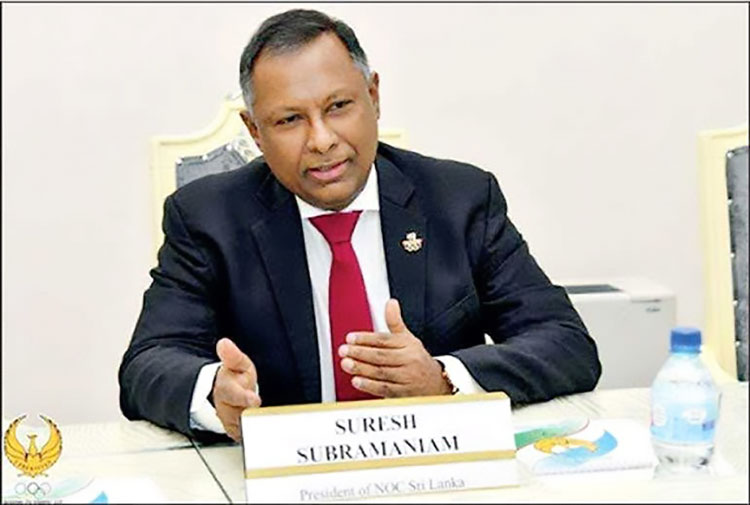
It was with unbearable grief and a total lack of understanding that we got to know of the demise of Mr Suresh Subramanium on Wednesday, the 15th of July 2026, after a brief illness. It was a departure from an absolutely remarkable and fruitful life on Mother Earth, which spanned just 65 years, 10 months, and 27 days.
We do not merely mourn the passing of an extraordinary man, but celebrate a life defined by an unyielding spirit, a towering intellect, and absolute integrity. When a friend of such magnitude leaves us, the silence they leave behind in our hearts is profound. He was a man who operated in three distinct universes: the competitive arena of tennis, the intricate domain of engineering, and the highly charged world of sports administration. In each of them, he left an indelible and permanent imprint. To the world, he was a strategist, a builder, and a leader. But to those of us who had the privilege of walking alongside him, he was simply a man of resolute drive, a loyal friend, and a beacon of principal strength when the winds of adversity blew the hardest.
I got to know the young tennis player Suresh when I was posted as the Consultant Paediatrician to General Hospital Badulla in 1979 at age 31. I had taken up playing tennis at that age, having never played the game before. I believe it was in the very early 1980s that Suresh played in the Uva Club Ranking Tennis Tournament. He and his partner had reached the Semi-Finals of the Men’s Doubles, and someone brought him to me in the Uva Club, quite ill with a tummy upset. Suresh was more concerned about letting his partner down. I treated him with some of the latest medicines. He miraculously recovered and went on to win the Semi-Finals and the Finals. After receiving the Championship Trophy at the Awards Ceremony, he came running and handed it to me. He did everything on his own, but he thought I was his saviour. We became very close friends over the next several decades and never missed an opportunity to share the kind of camaraderie that was ever so precious.
Long before he held sway over Boardrooms of Administrators or international delegates, he mastered the quiet discipline of engineering. It is a side of him that the general public may not be quite familiar with, yet it was the bedrock of everything he accomplished. Engineering is not just a profession; it is a way of looking at the world. It is the art of seeing structural vulnerabilities and figuring out how to reinforce them. It is about precision, physics, and solving problems that others deem impossible.
He brought that exact analytical rigour to every facet of his life. When he looked at a tennis court, he did not just see a game of baseline rallies; he saw geometry, angles, and systemic endurance. When he looked at sport’s governing bodies later in life, he did not just see committees; he saw complex frameworks that needed optimisation, modernisation, and structural integrity. He had an extraordinary capacity to dissect a chaotic situation, strip away the emotional noise, and present a logical, elegant solution. His mind was a finely tuned instrument, and he used it tirelessly for the betterment of everyone around him.
On the tennis court, his drive was legendary. Those who watched him play in his prime remember a competitor who refused to give an inch. He possessed a fierce, burning desire to win, but never at the expense of sportsmanship. His baseline play was a reflection of his character: disciplined, relentless, and deeply principled. He understood that tennis, at its core, is a solitary battle against one’s own limitations. The long hours of training, the blistering heat, the mental fatigue: he absorbed it all because he respected the game too much to give it anything less than absolute devotion.
What many do not realise is how his early years on the international and national circuits shaped his later philosophy on administrative leadership. He knew what it felt like to be an athlete out on the court with no one in the stands, fighting for the pride of a community. He knew the sacrifices, the injuries, and the profound loneliness that often accompanies high-level competition. This firsthand experiential knowledge meant that when he transitioned into administration, he was not just a bureaucrat in a suit; he was a former warrior looking out for the next generation of fighters.
It was perhaps in the realm of sports administration that his resolute drive faced its greatest tests and achieved its most significant victories. Taking the reins of sports governing bodies is often a thankless task. It requires navigating shifting political tides, managing conflicting egos, and balancing tight budgets. Yet, he stepped into these roles not for accolades, but out of a deep sense of duty.
He took local sports out of the shadows and pushed them onto the global stage. He pioneered grassroots initiatives, quietly funding equipment and coaching for young athletes who came from backgrounds where a tennis racket or a pair of proper running shoes was an unimaginable luxury. He brought international coaches to our shores, upgraded decaying infrastructure, and implemented data-driven training regimens that mirrored the high standards of his engineering background.
He didn’t build temporary programmes; he built systems designed to outlast him. He was a man who looked twenty years into the future, planting trees under whose shade he knew he might never sit.
You cannot bring about profound change without disrupting the status quo, ruffling a few feathers, and in that sense, our friend certainly shook the foundations of complacency. Because he refused to compromise on his principles and demanded transparency and efficiency, he occasionally drew the ire of those who preferred the old, comfortable ways of doing things. As is unfortunately common in the upper echelons of public life, there were moments when whispers and allegations were levelled against him. In a world quick to judge and slow to look at the facts, these could have broken a lesser man. But he stood like an iron pillar in a storm. He knew who he was. He knew the clean ledgers of his conscience.
True to his character, he never stooped to public mudslinging or bitter retaliations. Instead, he let his work, his transparency, and the eventual, absolute lack of proof speak for themselves. He understood that integrity isn’t the absence of criticism; it is the ability to walk through a firestorm and emerge on the other side with your head held high and your hands clean. He showed us that truth does not need to shout; it merely needs to stand. Of course, stand he did, proving his detractors wrong not with venom, but with an unassailable record of service.
While the public will remember the titles, the tournaments, and the executive boardrooms, those of us closer to him will remember the quiet moments. There is data about him that will never make the newspapers, actions that he purposefully hid from the spotlight.
I remember the times he quietly stepped in to pay the travel expenses for a promising young junior player whose family had hit hard times, strictly commanding that his name never be mentioned to the press. I remember him spending late nights reviewing architectural plans for new sports complexes, offering his engineering expertise entirely pro bono, simply because he wanted to ensure the concrete poured was as solid as the promises made to our youth.
He was a man who possessed a sharp, sometimes demanding exterior, a byproduct of his relentless drive, but underneath it beat a fiercely loyal and generous heart. If you were his friend, you had an ally for life. He would pick up the phone in the middle of the night, offer balanced, clear-headed counsel, and expect absolutely nothing in return.
His passing leaves a void that will be felt across multiple disciplines. The engineering community has lost a brilliant analyst. The sporting world has lost one of its most capable, fiercely protective architects. All of us, his friends, have lost an irreplaceable companion.
But as we look at the legacy he leaves behind – the tennis courts alive with the sounds of playing children, the robust sports frameworks that now run seamlessly, and the lives of the countless athletes he directly impacted – we realise that he is not truly gone. His blueprint remains. Yet for all that, our hearts go out to his immediate family. I know many of them, and I know for sure how much they are going through.
To my dear friend: You played the match of life with every ounce of your strength. You engineered bridges where others saw divides. You protected the integrity of the game when it was hard, and you ran your race until the very final second. I do regret that, due to circumstances entirely beyond my control, I was not in a position to join you in your final journey
Rest in peace, dear Suresh; your drive will continue to inspire us, and your integrity will remain our guiding light.
(The writer, Dr. Perera, is a former nationally ranked tennis player.)
By Dr B. J. C. Perera ✍️

Charted Computer Institute of Sri Lanka to be established
Drug Dependent Persons (Treatment and Rehabilitation) Act No 54 of 2007 to be amendmend
Mrs. O. T. M. I. Thilakarathne appointed to the Post of Surveyor General
Purchase of 600 buses for intercity / long distance services of the Sri Lanka Transport Board
Protection of Historical, Cultural, and Traditional Intellectual Property related to the Kandy Esala Perahera
Development of roads which are not under the Road Development Authority

‘Dates have the highest sugar content to fight Coronavirus’

Sunday Island 27 December – Headlines

#SundayIsland 17th December – Headlines

Sunday Island – 28th March

Sunday Island Headlines – 21 March

Sunday Island – 21st February – Headlines
-
 Business3 days ago
‘Giving up was never an option’: The fisherman who fought back after losing millions in SL
-
 Features3 days ago
Two memorable excerpts from a former SLAF commander’s memoir
-
 Latest News3 days ago
Davis cup Asia/Oceania Group IV 2026 to be held in Colombo from 20th to 25th July
-
 Features3 days ago
Erdoğan’s New Republic
-
 Life style3 days ago
Taste of the Swiss Alps comes to Colombo
-
 Features7 days ago
Dirty Money
-
 News4 days ago
Dengue outbreak gallops ahead: Infections surpasses 73,455, leaving 50 dead
-
 News4 days ago
Evidence recorded in money laundering case against Yoshitha Rajapaksa