
Sports
David Murray, West Indies’ unforgiven wicketkeeper, dies aged 72

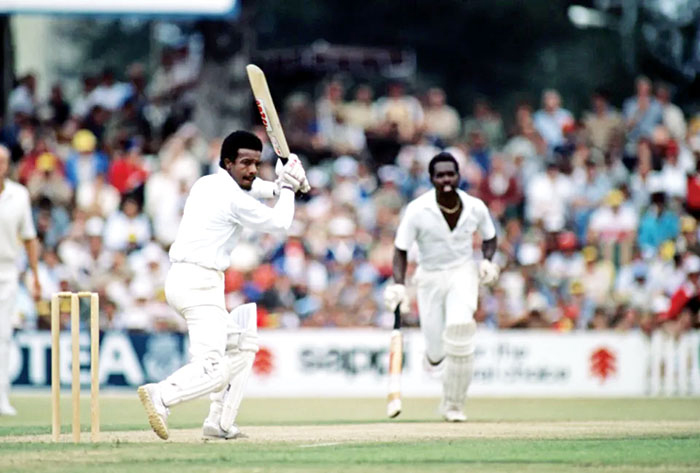
David Murray, the former West Indies wicketkeeper whose life and career was ruined by his fateful decision to join the rebel tours of South Africa in the 1980s, has died in his native Barbados at the age of 72.Murray, son of the legendary Sir Everton Weekes, played a total of 19 Tests and ten ODIs for West Indies between 1973 and 1982, and was hailed by the great fast bowlers of his era – Malcolm Marshall and Michael Holding among them – as the finest gloveman that they had played with.
It was Murray’s misfortune that his career ended up being bookended by two of the most legendary Caribbean wicketkeepers of them all – his namesake (but no relation) Deryck Murray, who kept him out of the Test team for much of his pomp, and then at the start of the 1980s, his younger rival Jeff Dujon, who once admitted that Murray’s silky skills made his own glovework look like “Dolly Parton”, but whose superior batting brooked no argument with the selectors.
Ultimately, however, Murray’s predilection for marijuana – a habit that he had begun aged 13 – was the catalyst for his downfall, first as an international cricketer and then, after his fateful decision to accept US$125,000 to tour Apartheid South Africa in the winter of 1983, as a member of society too. His final decades were spent in poverty in his native Barbados, selling drugs to tourists in Bridgetown, and trading on his infamy.
In the early part of his career, while the quality of his glovework was earning plaudits, and with the fast-tracking that came from being the son of a West Indies great, Murray had been adamant that his drug use was beneficial to his cricket. “It gives you good meditation… concentration you know,” he told ESPNcricinfo’s Siddhartha Vaidyanathan back in 2006. “Not that you did it to enhance your performance … never in the breaks – you can’t do that.”
Within the West Indies set-up, however, Murray could never shake the suspicion that his face did not fit, particularly while Deryck – Cambridge-educated and a key lieutenant to Clive Lloyd – was the favoured wicketkeeper. And when, after nearly a decade as the squad’s understudy, he did finally made his Test debut, against Australia in March 1978, it was due in large part to Deryck’s decision to join Kerry Packer’s World Series Cricket. It was a source of much frustration – and arguably a factor in his subsequent South Africa decision – that he lost his place again the following year, when the Packer players were reinstated.
In his brief time as the Test No.1, Murray still managed to score three half-centuries, with a best of 84 against India in Bombay in 1978-79, as well as a first-class double-hundred in Jamshedpur on the same tour.However, Murray had already been in trouble with the team management for his off-field antics, notably on the 1975-76 tour of Australia, when it took the intervention of Lance Gibbs to spare him an early flight home. And matters came to a head on West Indies’ return to Australia in 1981-82, where the emergence of Dujon gave the selectors a reason to dispense of a talented but increasingly erratic player.
Bad luck played a major part in Murray’s downfall, too. Early on the tour, he had broken his middle finger while attempting to catch a drive off Lloyd in the nets, but having played through the pain with supreme skill – taking a West Indies’ record nine catches in the first Test at Melbourne – he was rested for the subsequent one-dayers, allowing Dujon to make his case for a permanent berth with a match-winning fifty at the MCG.
Murray reacted badly to Dujon’s promotion. With his drug use now causing him to sleep through team meetings, he turned up for 12th-man duties at the subsequent Adelaide Test without his equipment, and was expelled from the tour by manager Steve Camacho after refusing to take the water cart onto the field.The die was cast for Murray’s recruitment on the South Africa rebel tour. The previous winter, a 12-man party of England cricketers, led by Graham Gooch, had flown into Johannesburg for a month-long tour that contravened the 1977 Gleneagles Agreement discouraging sporting relations with the Apartheid regime.
Compared to the mild censure (and swift forgiveness) that would come to the England players, however, the opprobrium heaped upon the West Indies tourists would be something else entirely. Murray’s tour fee, which he would quickly squander on “jeeps, new cars and partying out”, would be of no lasting benefit in the years to come.
“I f***ed up,” Murray told Ashley Gray, author of the award-winning Unforgiven, which recounted the tale of the West Indian rebels. His first on-field act in South Africa had been to take a catch off Sylvester Clarke in a tour match against Border, but that, as he told Gray, had been a crushing moment in itself. “Lawrence Rowe said to me as a joke, ‘You can’t play for West Indies anymore.’ Only one delivery. It felt bad.”
Murray’s personal life was upended by the South Africa decision, too. In the latter weeks of the Australian tour, he had married his fiancée Kerry McAteer in a private ceremony in Adelaide, but after initially being refused re-entry to the country due to a visa ban implemented by the anti-Apartheid prime minister, Malcolm Fraser, an ill-judged affair cemented his estrangement from his wife and new-born child, and left him rootless and ostracised back in his native Barbados.
He returned home to a “vibe” of rejection, Murray related in Unforgiven. “‘He sold his birthright’. They don’t forget. They are narrow-minded. I still cop it. ‘He is a traitor’. I have no regrets.”
His response was to turn to harder drugs, including cocaine, which in turn deepened his estrangement from his father, who feared he would steal from him to subsidise his habit. For the final decades of his life, Murray was skeletal-thin with matted dreadlocks framing his increasingly gaunt features.
Nevertheless, in 1989, the West Indies Cricket Board rescinded its lifetime ban on the South Africa rebels, and to the extent that forgiveness was achieved in the Caribbean, it was available in Barbados. One of Murray’s fellow rebels, Ezra Moseley, went on to play Test cricket – famously breaking Gooch’s hand in the Trinidad Test in 1990, while Murray’s own son, Ricky Hoyte, was Barbados wicketkeeper in the 1990s, and might have broken into the Test team too had he not shared some of his father’s wayward (if less self-destructive) traits.
Murray himself, however, remained a self-imposed outcast to the end.
(cricinfo)


by Rex Clementine
England legend Sir Ian Botham’s famous quip that Pakistan is the sort of place to send your mother-in-law on an all expenses paid holiday was rather unkind. Touch down in Pakistan and you are greeted instead by warmth and affection, with people going out of their way to make you feel at home. Tell them you are from Sri Lanka and more often than not, the conversation quickly begins with one word ‘brother’.
That same hospitality greets you even at the Pakistan High Commission on Buller’s Lane when you turn up for a visa. The first question is not about the purpose of your visit or how long you intend to stay. It is much simpler: tea or coffee?
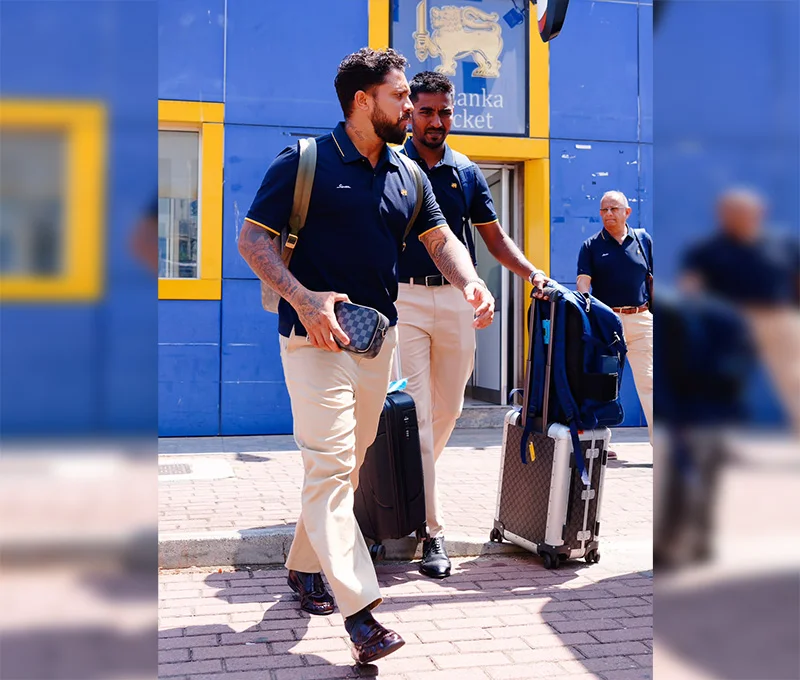
The Sri Lankan team that flew out to Pakistan on Sunday will experience plenty of that warmth during what promises to be a lengthy stay. It is one of the longest tours undertaken by the national side in recent years, with those involved in all three formats, along with the coaching staff, spending up to 50 days in Pakistan.
The tour comprises three T20Is, a tri-nation ODI series with England as the third participant and two Test matches. There is also a three day warm up game in Islamabad ahead of the Tests.
The current crop of selectors have been largely conventional in their approach, but some of their choices for the white ball squads suggest they are prepared to bare their teeth when required.
The boldest call has been to leave out star leg-spinner Wanindu Hasaranga, until recently one of the first names on the team sheet. The writing had been on the wall for Hasaranga for some time and it has now emerged that his omission has little to do with injury or form. Instead, the message from those running the show appears fairly straightforward: get your act together.
Pathum Nissanka was overlooked for the T20Is but has been named in the ODI squad subject to fitness. Charith Asalanka has been left out of both formats following a poor run of form, while a couple of youngsters have forced their way in on the back of impressive returns in domestic cricket.
More changes are in store for the two match Test series. ‘The Island’ learns that Dhananjaya de Silva is set to lose the Test captaincy following an unimpressive stint at the helm during the recent home series against India.
Kusal Mendis is expected to take over the Test side on an interim basis, giving him leadership responsibilities across formats, before the selectors settle on a long term choice.

by Reemus Fernando
St. Joseph’s College, Darley Road commenced their campaign with a crushing 124 runs win over Gurukula College, Kelaniya while St. Sebastian’s College Moratuwa scored vital eight wickets win over Maris Stella College Negombo to keep alive their hopes in the Under-19 Division I Tier A Limited Overs Tournament.
The Joes posted a competitive 208 for eight in their allotted 50 overs, before Vigneswaran Akash, Vishwa Peiris and Nushan Perera joined to rattle Gurukula for 84 runs.
For St.Joseph’s Aveesha Samash top-scored with 43 rune (off 74 balls) including four boundaries, while Dilpa Maduranga contributed 30 off 38 balls.
The innings gained momentum towards the latter stages, with Nimthaka Goonewardena striking a brisk 28 off just 22 deliveries, including three fours. Pamoda Dalpadado made 23 off 21 balls.
Gurukula’s bowlers were led by Shan Jumath, who claimed three wickets for 32 runs in his full 10-over spell.
Gurukula never threatened the target and were bowled out in the 31st over. Shan Jumath offered the only significant resistance with a top score of 41 from 67 balls.
Vigneswaran Akash was the pick of the bowlers, taking three wickets for just 12 runs from 7.2 overs. Vishwa Peiris also claimed three for 21, while Nushan Perera returned impressive figures of two for 11 from six overs.
St. Sebastian’s keep alive hopes
It was St. Sebastian’s third outing. They suffered two wickets defeat at the hands of Richmond in their first match. Then they bounced back to beat D.S. Senanayake in the second match. With only two teams advancing to knockout stage from the five-team group they came to yesterday’s match needing victory to keep alive their hopes. At the must win game they registeted an eight-wicket victory over Maris Stella, Negombo to make it two wins after three outings.
Maris Stella were bowled out for 145 in 38.4 overs after struggling to build substantial partnerships. Kavith de Silva top-scored with 35 off 57 balls, including three fours and two sixes, while Ameesha Fernando struck a brisk 31 off 31 balls with three sixes. Sathmira Silva added 22 and Gaveesha Induwara made 21.
St. Sebastian’s bowlers shared the workload effectively, with Risinu Prabesh, Thejan Bandara, Lashen Fernando and Chamath Wellalage claiming two wickets each. Prabesh was particularly economical, conceding just 12 runs in six overs.
The hosts made light work of the modest target, reaching 147 for two in just 21.4 overs. Lashen Fernando led the successful chase with a blistering unbeaten 61 off 38 balls, hitting seven fours and two sixes at a strike rate of 160.53.
Hirusha Perera remained unbeaten on 37 off 42 balls, while Meshone Ferdinando and Thivanka Fernando contributed 25 and 24 respectively.
They will now meet Sri Sumangala Panadura in their last group match. A victory there is likely to guarantee Sebs a place in the knockout stage.
All Island Schools Games-Badminton
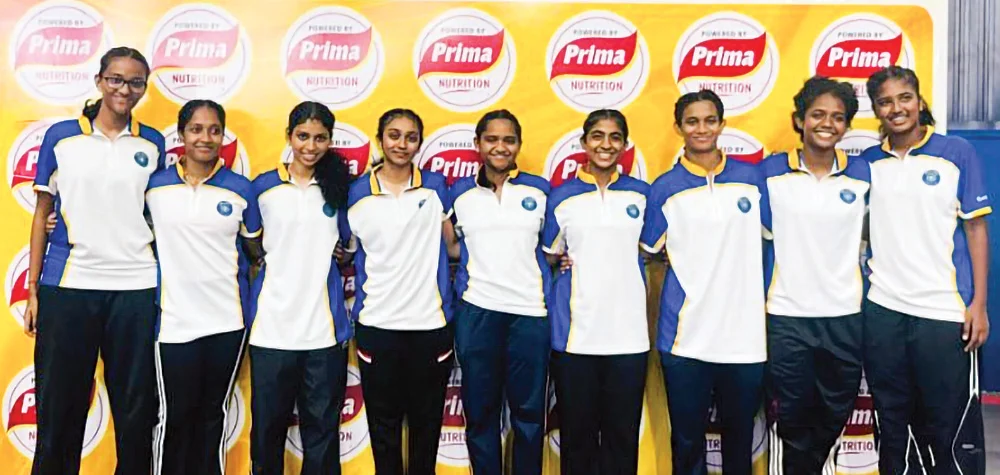
Musaeus College, Colombo, accomplished a remarkable achievement capturing all three girls’ team titles in the Under-16, Under-18 and Under-20 categories at the 40th All-Island Schools Games Badminton Championship 2026.
Conducted by the Ministry of Education, the championship was held from October 2 to 4 at the Hormus Indoor Stadium in Malabe, with 150 teams representing all nine provinces.
Musaeus dominated the girls’ competition, winning ahead of Sujatha Vidyalaya, Matara, and Southlands College, Galle, to win the Under-16 title. They continued their winning run in the Under-18 category, with Sirimavo Bandaranaike Vidyalaya, Colombo, finishing runners-up and Anula Vidyalaya, Nugegoda, third.
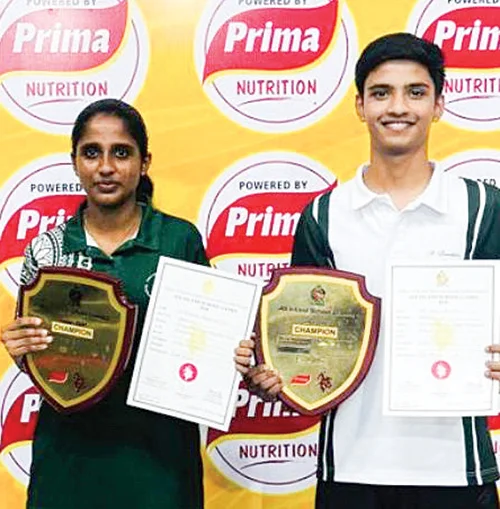
Thidasa Weragoda of St. Benedict’s College and Thenuki Ayansa de Silva of Sanghamitta Balika Vidyalaya, Galle were adjudged the best players of the Badminton 2026.
The Colombo school completed its unprecedented clean sweep by securing the Under-20 crown ahead of Viharamahadevi Balika Vidyalaya, Badulla, while Sujatha Vidyalaya took third place.
In the boys’ events, St. Joseph’s College, Colombo, won the Under-16 title, Dharmaraja College, Kandy, emerged Under-18 champions, while Ananda College, Colombo, claimed the Under-20 crown.
W. M. Thidasa Weragoda of St. Benedict’s College and M. G. Thenuki Ayansa de Silva of Sanghamitta Balika Vidyalaya, Galle, were adjudged the best schools badminton players of 2026 based on their performances in the Under 20 age category. (RF)
New Chancellor appointed to General Sir John Kotelawala Defence University

Yemen government forces claim recapturing Mocha from Houthis

Showers above 75 mm are likely at some places in the Western, Sabaragamuwa, Central, and Southern provinces after 1.00 pm

Govt. urged to halt ‘illegal’ presidential pardons

GL urges cautious handling of Saudi death row case, blasts govt. over BRICS affair

Shiranthi files anticipatory bail application

‘Dates have the highest sugar content to fight Coronavirus’

Sunday Island 27 December – Headlines

#SundayIsland 17th December – Headlines

Sunday Island – 28th March

Sunday Island Headlines – 21 March

Sunday Island – 21st February – Headlines
-

 Latest News6 days ago
Gold winner Tharanga gets brand-new Honda Vezel from SLAAJ
-

 Features6 days ago
Why Sri Lanka needs an Inclusive Civic Nationalism – urgently
-

 News5 days ago
US-assisted ‘Ice’ detection: NPC to examine IGP’s move to transfer drug-busting team
-

 Editorial4 days ago
Colombo Port drug bust: The plot thickens
-

 News6 days ago
Civil society activist accuses govt. of favouring Ven. Gnanasara
-

 Editorial6 days ago
When crime bosses rise above law and shrines
-
 Midweek Review6 days ago
Dappula’s Easter Sunday ‘grand conspiracy’ claim demolished
-
Editorial5 days ago
Drug busting, transfers and trust deficit