
News
Cyclone Ditwah recovery: IOM assists 4,000 families

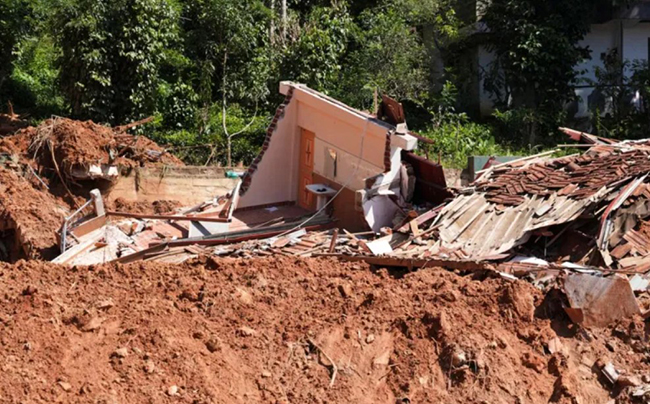
As Sri Lanka continues to recover from the devastating impacts of Cyclone Ditwah in 2025, the International Organisation for Migration (IOM) provided cash assistance to affected families in seven districts.
An IOM release said: With support from the United Nations Central Emergency Relief Fund (CERF), in coordination with the Government of Sri Lanka and implemented in partnership with the Sri Lanka Red Cross, IOM formally concluded its cash-based intervention (CBI) at a closing ceremony in the Puttalam District, in the presence of district officials, UN and IOM representatives, community leaders and community members.
The cash assistance was provided to over 4,000 families in Puttalam, Badulla, Jaffna, Batticaloa, Nuwara Eliya, Kegalle and Kandy districts, aimed at supporting them to conduct home repairs and purchase essential household items. This followed key selection criteria, targeting those whose homes were damaged by the cyclone. The assistance is part of broader support extended through the UN Humanitarian Priorities Plan (HPP), with cash-based assistance and distribution of over 4,700 essential non-food items (NFIs) to families in 60 locations.
“This cash-based intervention is one important component of the multi-sectoral response set out in the Humanitarian Priorities Plan, through which the UN and its partners are supporting recovery across shelter, food security, health, protection and beyond,” said Marc-André Franche, United Nations Resident Coordinator in Sri Lanka. “As climate-related hazards grow in frequency and intensity, this kind of coordinated action is essential to saving lives and building resilience.”
Cyclone Ditwah made landfall on 28 November last year, triggering some of the most severe flooding and landslides experienced in Sri Lanka in the past two decades. The disaster affected nearly 2.2 million people across all 25 districts, forcing many families to evacuate to safety centres due to extensive damage to their homes and disruption to their daily lives. According to IOM’s Displacement Tracking Matrix (DTM), nearly 290,000 individuals were displaced at the peak of the disaster.
In response to the disaster, IOM immediately worked with the Government of Sri Lanka to assist families by distributing essential household items, deployed IOM’s Displacement Tracking Matrix, and is in the process of supporting the construction of transitional shelters. IOM also co-leads the Shelter, Land and Site Coordination (SLSC) Cluster, alongside the International Federation for Red Cross (IFRC), to coordinate safe camp management.
“IOM is pleased to help affected families meet their most urgent needs,” said Kristin Parco, IOM Chief of Mission for Sri Lanka and the Maldives, at the closing ceremony. “This support empowers families with the flexibility and dignity to spend according to their priorities as they rebuild their homes and lives.”
As Sri Lanka faces climate change-related hazards with increasing intensity and frequency, IOM remains committed to supporting communities to respond, recover and build preparedness.
Working in partnership with the Government of Sri Lanka, IOM continues to implement programmes aimed at reducing vulnerability, mitigating risks, enhancing evidence-based responses, and strengthening community resilience to future disasters.

International Monetary Fund (IMF) Mission Chief for Sri Lanka, Evan Papageorgiou, yesterday said Sri Lanka’s current monetary policy stance remains “broadly appropriate,” despite the Central Bank of Sri Lanka’s (CBSL) recent 100-basis point policy rate hike.
Addressing the media, virtually, from Washington, he said the country’s macroeconomic recovery remained on track, supported by stabilising prices, improving foreign reserves, and continued economic momentum.
He expressed confidence that Sri Lanka still has strong potential to achieve the IMF’s 3% growth projection.
“We think that there are good, very strong factors in the economy that continue to push economic growth forward,” Papageorgiou said.
His remarks came a day after the IMF approved the combined Fifth and Sixth Reviews under Sri Lanka’s four-year Extended Fund Facility (EFF) programme, unlocking around $ 700 million in financing and marking another key milestone in the country’s post-crisis recovery programme.
Despite the policy tightening move, Papageorgiou said the IMF still expected inflation to remain broadly aligned with the CBSL’s 5% target, both this year and over the medium term.
“Now, with prices stabilised and foreign reserves continuing to grow as we have in the projection, we do not see any evidence of destabilising monetary expansion,” he added.
Papageorgiou highlighted the significant progress achieved under Sri Lanka’s IMF-supported reform programme, noting that inflation, which surged to nearly 60%-70% during the peak of the 2022 economic crisis, had now fallen to low single-digit levels, despite a temporary increase last month, linked to external shocks stemming from the Middle East conflict.
He stressed that one of the key reforms, under the IMF programme, had been ending monetary financing of the fiscal deficit by the CBSL.
According to Papageorgiou, the CBSL is no longer printing money to finance Government expenditure, while policy interest rates are being maintained in line with the inflation-targeting framework designed to preserve price stability.
He also defended Sri Lanka’s more flexible exchange rate regime, describing the rupee as an important “shock absorber” against external disruptions.
“In practical terms, allowing the exchange rate to adjust to global developments helps absorb part of the economic pressure from events such as rising global oil prices and geopolitical instability, rather than forcing the burden entirely onto foreign reserves or abrupt policy interventions,” he explained.
Papageorgiou insisted on the importance of maintaining a prudent and rules-based approach to both monetary policy and exchange rate management.
He noted that Sri Lanka’s foreign reserve position continued to improve, although the pace of reserve accumulation had moderated recently as the CBSL intervened selectively to smooth excessive currency volatility linked to the Middle East crisis.
Even so, he said the broader policy direction remained fully consistent with the reform path agreed between Sri Lanka and the IMF. “We do not see any evidence of destabilising monetary expansion,” Papageorgiou reiterated.
He also pointed out that the rupee should serve as the first line of defence against external shocks, particularly when the economy is hit by real sector disruptions, such as higher global energy prices.
“In such cases, some adjustment has to happen through the real sector and the currency, rather than trying to hold the exchange rate fixed and risking bigger problems later,” he said.
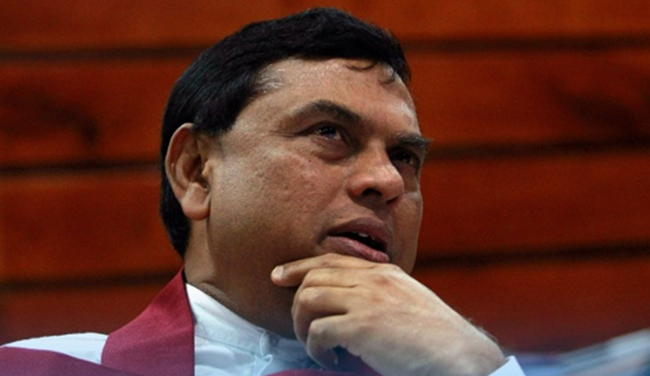
The Colombo Fort Magistrate’s Court yesterday ordered the arrest of former Minister Basil Rajapaksa, Tourism Promotion Bureau Chairman Bhashwara Gunaratne, Managing Director Rumi Jauffer and several others in connection with the alleged misuse of Rs. 7.8 million belonging to the Tourism Promotion Authority during the 2014 Uva Provincial Council election campaign.
Magistrate Pasan Amarasena directed the Criminal Investigation Department (CID) to arrest and produce the suspects before court, after it was submitted that they would be named under the Public Property Act on the advice of the Attorney General.
The CID informed court that attempts to take the suspects into custody from their residences had been unsuccessful as they were not present.
The Magistrate also imposed an overseas travel ban on the suspects and ordered that the Controller of Immigration and Emigration be notified.
Investigations have reportedly revealed that the funds in question were used to print 12,000 T-shirts, bearing an image of former President Mahinda Rajapaksa on one side and the name of a political party on the other.
According to the CID, the T-shirts were later distributed at a political event held in the Monaragala District.
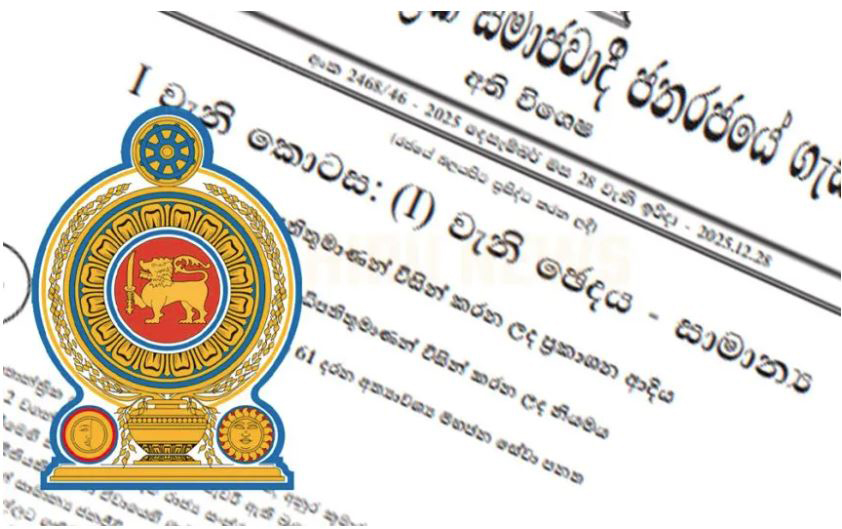
An Extraordinary Gazette Notification has been issued extending the state of emergency in Sri Lanka, official sources said.
The notification was issued under the powers vested in President Anura Kumara Dissanayake in terms of the Public Security Ordinance and came into effect from May 28.
The extension allows the continuation of emergency regulations, currently in force across the country, enabling authorities to take measures relating to public security, public order and the maintenance of essential services.
However, details regarding the duration of the extension and specific provisions have not yet been officially announced.

IMF urges Lanka not to meddle with exchange rate

Court orders arrest of Basil in Rs. 7.8m poll funds case

State of emergency extended

Fort Magistrate to announce whether to summon Arsecularatne PC to testify at Kapila’s inquest

Possible fuel price hike: CPC still undecided

Tip-off leads Baduraliya police to over three kilos of ICE

‘Dates have the highest sugar content to fight Coronavirus’

Sunday Island 27 December – Headlines

#SundayIsland 17th December – Headlines

Sunday Island – 28th March

Sunday Island Headlines – 21 March

Sunday Island – 21st February – Headlines
-

 News6 days ago
All-New GRAVITE launches at LKR 6.99 Mn
-

 Features6 days ago
The NPP’s pivot to the past
-
 News5 days ago
Police probe underway to ascertain links between criminals deported from UAE and local politicians
-
 News4 days ago
Easter Sunday carnage: Court told Maulana’s statement cannot be accepted without cross-examination
-
 Features6 days ago
End of Peacekeeping
-
 Opinion4 days ago
Undermining the democratic political framework
-

 News4 days ago
UK passport holder hiding here wants to have deportation order rescinded to leave without blemish
-

 News5 days ago
Dickoya double murder suspect arrested