
Business
‘CSE has bounced back, spurred by positives’

By Hiran H.Senewiratne
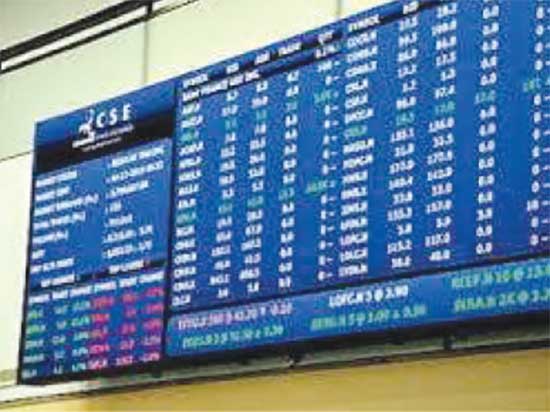
CSE has bounced back, encouraged by the positives and future upside, State Minister of Money and Capital Market and State Enterprise Reforms Ajith Nivard Cabraal said.
“The CSE has so much value as stocks are grossly under-priced. While it is true that foreign investors have sold out to the tune of over Rs. 30 billion, Sri Lankans have reinforced confidence by buying foreign holdings and it reflected the actual depth of the local investor base, “Cabraal told an investor forum titled “Twenty 21 and Beyond” organised by Softlogic Stockbrokers on Tuesday. He told capital market players that if they can succeed in securing 1 percent of a Rs. 10 trillion deposit base of banks and finance companies, the CSE will benefit by Rs. 100 billion in captive funds. “This is the true potential of the CSE, and stakeholders must harness it,” he said. Cabraal also recalled that even in its best effort, state funds such as the EPF, invested only Rs. 70 billion.
Amid those developments the CSE was bullish yesterday with heavy trading in the market. However, Expolanka which traded heavily during the last few days saw a price drop following its announcement they have no undisclosed price sensitive information in relation to Expolanka. Therefore, its stock price dropped by 30 cents during the day, sources said.
However, both CSE indices moved upwards; i.e, the All Share Price Index was up by 51.71 points and S and P SL20 up by 24.15. Turnover stood at Rs. 3.53 billion with six crossings.
Those crossings were reported in HNB, which crossed 26 million shares to the tune of Rs. 318 million, its share price trading at Rs. 123, CCS 126,000 shares crossed for Rs. 81.9 million, per share value Rs. 650.10, JKH 414,000 shares crossed for Rs. 56.3 million, per share value being Rs. 136, Central Finance 371,000 shares crossed for Rs. 29.3 million, per share value standing at Rs. 79, Melstacorp 700,000 shares crossed for Rs. 23.5 million at a per share value of Rs. 33.50 and DFCC 294,000 shares crossed for Rs. 20 million, per share value being Rs. 68.
In the retail market top five companies that mainly contributed to the day’s turnover were; Expolanka Rs. 465 (49 million shares traded), Tokyo Cement Rs. 165 million (3.3 million shares traded), Melstacorp Rs. 156.5 million (4.7 million shares traded), ACL Cables Rs. 154 million (three million shares traded) and JKH Rs. 151.6 million (1.1 million shares traded). During the day 85.1 million share volumes changed hands in 27759 transactions.
During the day several companies, Tokyo Cement, Lanka IOC, Melstacorp, LMF and ACL Cables witnessed more than 9 percent gain in their respective shares. During the day 169 companies’ shares prices moved up and only 55 companies’ prices depreciated.
Chevron Lubricants Lanka PLC has appointed Muhammad Najam Shamsuddin as their new Managing Director & CEO with effect from October 1, 2020, stock market sources said.

Business
Indian business leader urges SL entrepreneurs to tap into India’s rapidly expanding consumer market


By Sanath Nanayakkare
Speaking at the Sri Lanka Economic and Investment Summit 2026, T. Krishnakumar, Chief Executive Officer of Reliance Consumer Products Ltd (RCPL), emphasised that local enterprises can unlock substantial economic benefits by strategically aligning with India’s booming consumer base.
Addressing business leaders and policymakers at the Shangri-La Hotel in Colombo, Krishnakumar highlighted that geographical proximity and rich cultural ties provide a natural foundation for deeper commercial collaboration.
He noted that instead of viewing bilateral trade narrowly, regional partnerships should act as conduits to build robust, scalable enterprises capable of plugging into wide-reaching regional value chains.
“For Sri Lankan exporters dealing in traditional staples as well as value-added goods, accessing India’s rising middle class presents a phenomenal growth window,” he said.
Drawing insights from Reliance Consumer Products’ rapid expansion – which scaled efficiently to thousands of employees and multi-billion-dollar metrics – Krishnakumar stressed that modern corporate success relies on disciplined execution, localised consumer understanding, and smart technology integration.
Furthermore, he underscored that while rapid growth is critical, businesses must consistently anchor their models in affordability and consumer trust.
Concluding his address at the summit, the RCPL chief noted that pairing regional trade integration with resilient business practices and predictable regulatory frameworks will be vital as Sri Lanka transitions firmly toward accelerated economic development.
Addressing the Summit during a subsequent fireside chat, President Anura Kumara Dissanayake underscored that a core concern currently being targeted by the government is developing a critical mass of local entrepreneurs equipped to engage with international enterprise counterparts.
Business
SriLankan Airlines wins prestigious SATA 2026 Visitors’ Choice Award for Leading International Airline

SriLankan Airlines has once again been honoured with the prestigious Visitors’ Choice Award for Leading International Airline at the South Asian Travel Awards (SATA) 2026, reaffirming its continued recognition in the regional travel and tourism industry. The airline, which has received this award in previous years, was the only international airline to be recognised in this category at this year’s event. The 10th anniversary edition of the awards ceremony was held earlier this month at Hotel Barcelo Nasandhura in Male, Maldives.
Recognised as one of the key events on the Maldivian tourism and travel industry calendar, SATA celebrated its 10th anniversary on a grand scale, bringing together prominent industry stakeholders, including Government Ministers, distinguished dignitaries, diplomats and senior representatives from leading airlines and their respective head offices.
Commenting on the achievement, Dimuthu Tennakoon, Head of Commercial, SriLankan Airlines, stated, “We are honoured to receive this recognition at the South Asian Travel Awards 2026. Being named the Leading International Airline in the Visitors’ Choice Awards once again is a meaningful acknowledgement of our commitment to serving our passengers and strengthening our presence in the region. This award inspires us to continue enhancing the travel experience we offer and to build stronger connections with the markets and communities we serve.”
Complementing its commitment to service excellence, SriLankan Airlines offers an extensive flight network with convenient connections to destinations across the globe. In South Asia, the airline operates nearly 130 flights each week to 15 destinations across India, Pakistan, the Maldives, Nepal, and Bangladesh. With schedules thoughtfully designed to suit the needs of travellers, SriLankan Airlines provides seamless connectivity for those visiting Colombo for business or leisure, as well as passengers travelling onwards to destinations worldwide.
Business
JXG enters LMD’s Most Respected Entities in Sri Lanka 2026 for the first time, securing a place among the first 50

JXG (Janashakthi Group), Sri Lanka’s leading financial conglomerate, has been ranked 44th in LMD’s Most Respected Entities in Sri Lanka 2026, marking the Group’s first appearance in the prestigious listing. The recognition places JXG among Sri Lanka’s most respected companies and marks an important milestone in the Group’s master-brand journey.
As the holding company, JXG was also recognised across key attributes including Aspirational Workplace, Business Expansion, Business Innovation, Corporate Culture, Corporate Dynamism, Crisis Management, Employee Wellbeing, Honesty and Integrity, and Leadership Profile. The recognition reflects the growing strength of the JXG brand and the collective contribution of its businesses and people in building trust and confidence among its stakeholders.
JXG’s subsidiaries, including Janashakthi Life and First Capital, have also been recognised in the main table of LMD’s Most Respected Entities 2026 rankings, while Janashakthi Finance has been recognised under the Business Expansion attribute, reflecting the strength of the Group’s individual businesses alongside its growing master brand.
Conceptualised and commissioned by LMD and conducted by PepperCube Research Consultants, the Most Respected Entities special edition recognises companies based on an independent survey of Sri Lanka’s business community.
Commenting on the recognition, Gamika de Silva, Group Chief Marketing Officer at JXG, said, “This is a proud moment for all of us at JXG. We set out to build a Group brand that is not just seen but lived by our people and reflected in everything we do. Ultimately, the true testament to any brand lies in its people, and the credit for this recognition goes to everyone across JXG who brings our values to life every day. This recognition is an encouraging milestone for us, while also reminding us to keep raising the bar and earning the respect of our stakeholders through what we do.”
JXG’s approach to building trust is anchored in its core values of Integrity, Collaboration, Respect, Performance Driven and Innovation. These values guide how its businesses operate, how its people engage with one another and how the Group serves its customers and wider stakeholders.
As JXG continues to expand its businesses, the Group remains focused on strengthening its market presence, creating long-term value and contributing to the growth of Sri Lanka’s financial services sector, guided by its purpose, Breaking Barriers, Forging Futures.

Showers in the Western, Southern, Central, Sabaragamuwa, North-Western and Northern provinces and in the Anuradhapura District

SJB: Govt. trying to reappoint Jayakody, who resigned from Cabinet amidst coal scam

India busts Pakistani salt smuggling via Sri Lanka

Monks brave heavy rains to press for Gnanasara Thera’s release

Naval officer testifies Yoshitha received Rs. 5.15 mn in salaries during SLN service

TISL tells govt. to withdraw Protection of State from Terrorism Bill, citing its draconian provisions

‘Dates have the highest sugar content to fight Coronavirus’

Sunday Island 27 December – Headlines

#SundayIsland 17th December – Headlines

Sunday Island – 28th March

Sunday Island Headlines – 21 March

Sunday Island – 21st February – Headlines
-

 News5 days ago
Sri Lanka escalates anti-graft drive with Shiranthi’s jailing
-

 News6 days ago
NPP govt. reminded of its responsibilities as US warship leaves Colombo
-
 Latest News6 days ago
Farhan, Sadaqat help Pakistan ace 183 chase to go 1-0 up
-

 Latest News4 days ago
Farhan and Sadaqat help Pakistan seal series in style
-

 News5 days ago
Iranian ships stranded, Lanka fears US sanctions
-

 Latest News3 days ago
Nissanka’s return headlines Sri Lanka’s Test squad against Pakistan
-

 News6 days ago
Interdicted top House official Kularatne receives special recognition in Mexican Parliament
-

 Features4 days ago
Intake 16: 45 years of duty and honour