
Foreign News
Criminal probe launched into Venezuela opposition leaders

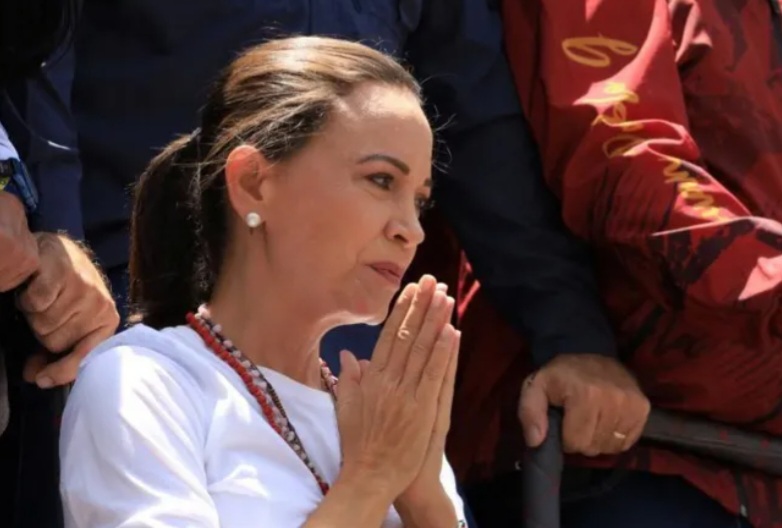
The Venezuelan attorney general, a close ally of President Nicolás Maduro, has announced he is investigating opposition leaders María Corina Machado and Edmundo González for alleged “incitement to insurrection”.
The opposition leaders had earlier called on the security forces to “side with the people” and ignore any orders to repress anti-government protests.
Tension has been running high since the electoral authority, which is closely aligned with the government, declared Mr Maduro the winner without making detailed voting tallies public.
The opposition has uploaded copies of the voting tallies as evidence that it was Mr González and not President Maduro who won the election.

On Sunday, the Washington Post said it reviewed more than 23,000 of the tally sheets collected by the opposition – which amounts to 80% of voting machines across Venezuela.
The Post concluded that Mr González had “likely received more than twice as many votes as President Nicolás Maduro”.
On Monday, the opposition published a statement on X stating that Mr González had won 67% of the vote compared to Mr Maduro’s 30%.
The statement, signed by both Mr González and Ms Machado, said the opposition had achieved an “overwhelming victory”.
It is at odds with the result announced by the government-dominated CNE, which declared Mr Maduro the winner with 52% of the vote against 43% for Mr González.
The opposition statement elicited an immediate response from Attorney General Tarek William Saab, who accused the pair of “falsely announcing an election winner different to the one proclaimed by the National Electoral Council (CNE)”.
He said the statement also “openly incited officials from the police and military to disobey the laws”.
Mr Saab added that he had decided to open a criminal investigation against both opposition leaders.
Mr González and Ms Machado have been in hiding since last week after a leading government figure said they should be jailed.
Ms Machado emerged briefly from hiding on Saturday to address a mass Oppositiom rally in the capital Caracas telling them that the Maduro government had “lost all legitimacy”.
Her supporters greeted her with shouts of “freedom, freedom”.
Reacting to Mr Saab’s statement, the European Union urged Venezuela on Tuesday to cease intimidating the opposition.
“This needs to stop. We are calling on the authorities to stop this, this campaign of intimidation of the opposition and judicial intimidation,” and EU spokesman said.
The EU had earlier called “on Venezuelan authorities to put an end to arbitrary detentions, repression and violent rhetoric against members of the opposition and civil society, and to release all political prisoners”.
(BBC)


A court in Malta has acquitted businessman Yorgen Fenech of masterminding the murder of prominent anti-corruption journalist Daphne Caruana Galizia.
Fenech, 44, was acquitted on Wednesday at the end of a jury trial. He had been tried on charges of complicity to murder and for the lesser charge of criminal association to commit murder.
If found guilty, Fenech could have faced life in prison.
Caruana Galizia’s family were seen weeping in the packed courtroom in Valletta after the businessman was cleared of both counts by an 8-1 margin following eight hours of deliberation by the jury.
“Nine years after Daphne’s brutal assassination, the institutional failures that enabled her murder remain unaddressed and unreformed,” the slain reporter’s family said in a statement.
“Lasting justice means no person should ever face the same risks again. Our country failed to protect Daphne’s life. It owes it to her to prevent other lives being lost.”
Fenech’s family members were seen celebrating the jury’s decision.
The killing of Caruana Galizia in October 2017 shocked Europe’s journalist community and set off a political firestorm in Malta, focusing international attention on its police and judiciary.
Dubbed a “one-woman WikiLeaks”, Caruana Galizia had exposed corruption at the highest level in the Mediterranean island country, shining a spotlight on links between Malta’s business and political elites. She was 53 when she was killed.
Prosecutors argued that Fenech had wanted Caruana Galizia killed because she was about to reveal information about him.
Fenech has denied the accusations. His defence instead pointed fingers at his one-time friend Keith Schembri, the former chief of staff of then-Prime Minister Joseph Muscat and a target of Caruana Galizia’s blogs.
Muscat, who was never linked to the murder, stepped down in January 2020 due to the political fallout from the assassination.
Police told the court that Schembri had never been a suspect. He has denied any role in the murder.
An independent inquiry in 2021 found that officials in Malta had failed to protect Caruana Galizia from threats to her life before her death.
[Aljazeera]
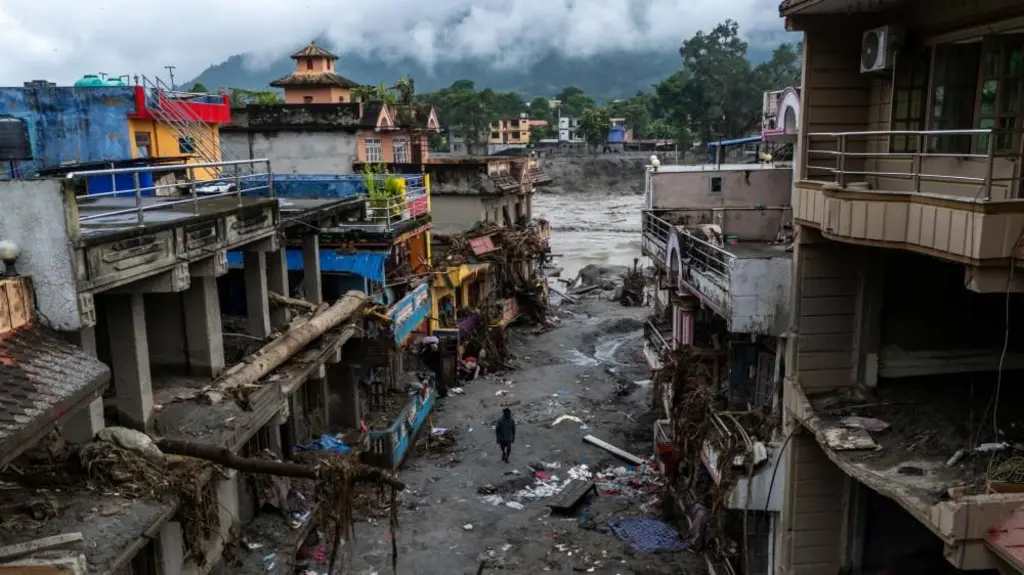
A head teacher’s quick decision to evacuate his school saved 900 pupils from deadly flash floods along the Nepal-Tibet border
Rajendra Dawadi tells the BBC he was tipped off about incoming flood waters and moved students to higher ground with just minutes to spare. One pupil says she and her friends survived by just 10 seconds and watched as a nearby bazaar was swept away
Wednesday’s disaster has killed at least 794 people and more than 2,500 people are missing in Nepal, local officials say
In Tibet, the official death toll is 16, with 546 reported to be missing, according to Chinese state media –
[BBC]

A ferry carrying around 260 people has capsized off the coast of northern Cyprus with a search underway for survivors, according to local media.
The catamaran-style boat was travelling from the port of Kyrenia, also known as Girne, and started sinking a few kilometres off the coast of the island state on Sunday.
There were no immediate reports of casualties.
[Aljazeera]

Sun directly overhead Madampe, Thorayaya, Thotagamuwa, Rattota and Kalavanchikudy about 12.09 noon today (03)

Afternoon thundershowers in the Northern, North-central, Eastern and Uva provinces in next few days, starting from today (03).

22A: SC urged to suspend hearing, appoint full bench

Govt. seeks NATO assistance

Recent ‘Ice’ detection at the Colombo Port made on US intelligence – Embassy

Sri Lanka launches National Food Safety Policy with support from FAO and EU

‘Dates have the highest sugar content to fight Coronavirus’

Sunday Island 27 December – Headlines

#SundayIsland 17th December – Headlines

Sunday Island – 28th March

Sunday Island Headlines – 21 March

Sunday Island – 21st February – Headlines
-

 News6 days ago
Eight politicians in drug kingpin probe
-

 Features4 days ago
“Wrap Me Up in My Blazer”— A Gentlemanly Bradby Reminiscence
-

 Business6 days ago
Sri Lanka opens up: A new season of direct connectivity
-

 Features3 days ago
When Sri Lankan stories find their own voice
-
 Latest News7 days ago
Nepal-Tibet floods: What happened, what caused them and who is missing?
-

 Features6 days ago
Redefining ageing in Sri Lanka
-

 Editorial6 days ago
The toxic legacy of two lakes
-
 Business6 days ago
Jaffna Teaching Hospital secures lifeline water supply via ADB-funded Thalaiyadi sea water desalination plant