
Sports
Cricket-nomics: Can sports support economic recovery in Sri Lanka?

by Ranmalee Nanayakkara and Thisuri Ekanayaka
In June 2022, Sri Lanka was thrust into the international spotlight during the tour of the Australian cricket team which coincided with the recent political and economic crisis in the country. The public’s reaction to the tournament was mixed; some criticized the shift in focus towards a sporting event while citizens were experiencing extreme difficulties in their daily lives, while several others focused on the tournament’s potential positive impacts. A similar debate was raised once again with the recent decision by Sri Lanka Cricket (SLC) to shift the Asia Cup to the UAE from its initial venue in Sri Lanka. This then begs the question of whether or not hosting international sporting events such as cricket tournaments during this sensitive period is beneficial for the country and how it may be done if at all possible.
Sports for Economic Recovery
According to analysts, the current economic adversities are a result of the lack of both foreign currency earnings and government revenue to meet the necessary expenses due to a variety of underlying causes. Tourism which has remained among the top three foreign exchange earners of Sri Lanka in particular has suffered from multiple crises since the Easter attacks in 2019. In such a situation, hosting an international sporting event can be helpful to boost the sector by encouraging visitors. Sports tourism is in fact recognized by the World Tourism Organization as a rapidly growing area. Since tourist arrivals are influenced by the perceptions of the destination, an international sporting competition can not only attract fans for that specific event but also provide positive branding to promote the country for future visitors, which is useful since the number of spectators is limited by the capacity of the venue. Aside from attracting foreign exchange to the country, such a sporting event can provide much needed income for local businesses in the vicinity and support them in improving their financial position and retaining employees. This in turn would translate into higher tax income for the government and less reliance on welfare payments.
Beyond tourism and ticket sales, international sporting events also generate income through the sale of broadcasting rights and sponsorships. Currently Sony Pictures Networks India (SPN) has been awarded the Global Media Rights for Sri Lanka Cricket’s Inbound Tours for 2020-2023. According to one source, it’s estimated that the initial bid was around US$ 22.5 million. Although such deals might not have a major impact on the wider economy, they are an important source of revenue for a sporting body allowing them to fund their operations including welfare activities. Since the value generated through such transactions depend on the performance and popularity of the team, it is also important to create opportunities to showcase the skills of the players. Beyond these financial benefits, sporting competitions are known to have numerous psychological benefits such as providing fans with an opportunity to relax, fostering a sense of solidarity with fellow citizens and building stronger ties between countries.
Why Cricket?
Hosting international tournaments is undoubtedly a costly process, which include expenses on operating the venue, employing staff, and providing facilities such as lodging, food and transport for the teams and other personnel. The unique advantage in the case of cricket is that Sri Lanka already possesses the basic infrastructure and experience required to host large scale competitions. The country currently owns multiple international cricket stadiums. In the 1970s-80s the major venues for international matches were within Colombo with the Kandy Asgiriya and Galle stadiums being the two exceptions. The High-end neighborhoods of Colombo were home to stadiums such as the Sinhalese Sports Club and the Colombo Cricket Club while other stadiums renovated to meet the international level included the Khettarama Stadium (later named the R. Premadasa Stadium) and the Paikiasothy Saravanamuththu (P Sara) stadium. The first of the two is one of the largest in the country with a seating capacity of 35,000 while the second has a capacity of 15,000. Construction of large-scale stadiums beyond Colombo began in the 2000’s and consist of the Rangiri Dambulla International Stadium with a capacity of 30,000 as well as the Pallekele and the Sooriyawewa Stadiums (later named the Mahinda Rajapaksa International Stadium) with a capacity of 35,000 each. Yet, whether these resources have been put to their best use is debatable.
For instance, in October 2016, former Sports Minister Dayasiri Jayasekara revealed in a Tweet that the cricket stadium that was built spending Rs. 4.2 billion in Hambantota is being hired for wedding receptions in order to generate revenues. According to Jayasekara, the opening and closing ceremonies of the 2018 Commonwealth Games were supposed to be hosted at the stadium. However, Sri Lanka lost the bid. The Sooriyawawa Mahinda Rajapaksa Stadium has hosted only six international matches suggesting that this is yet another white-elephant project completed under poor guidance.
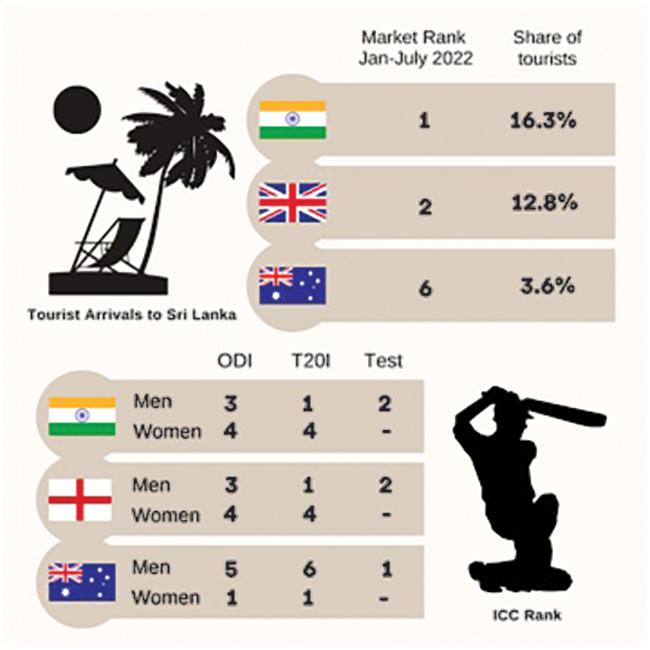
On the other hand, this also indicates that there is untapped potential in promoting cricket-tourism in the country. For instance, India, the United Kingdom and Australia boasting internationally renowned cricket teams have also consistently been among the top 10 sources of tourists to Sri Lanka. As such, focusing on competitions that involve these teams could have a positive impact on the economy.
Opportunities Amid Challenges
Having said that, there are certainly challenges that need to be addressed. Although Sri Lanka has achieved some stability recently, continued shortages of certain goods, disruptions in power and limitations in fuel supplies can raise concerns among potential visitors. In this context, it’s unclear whether organizing a large-scale international competition involving multiple teams is within the country’s capacity at the moment, as was the professed case for the Asia Cup. Along with this, there is also the issue of public perception shaped by fears of political unrest due to the sensationalized international headlines during the preceding months. Finally, at a global level too, we are at a critical point in time where travel restrictions have been eased since the pandemic on one hand, but a global recession is looming in the horizon on the other.
This being the case, it’s necessary to identify strategic opportunities and make use of existing resources in a timely manner to promote sports-tourism in Sri Lanka. Indeed, as a cricket playing nation and also a reputed tourist destination that has attracted spectators and visitors from far and wide, Sri Lanka now has the potential to navigate through these trying times by remaining proactive.
Real Madrid, Vinicius Junior condemn racist criticism of goal celebration
Real Madrid have condemned racist comments made about their forward Vinicius Junior as the Brazilian star said in a video statement that he won’t change his celebration and the critics are bothered by a “victorious black Brazilian in Europe.”
While appearing as a panellist on a Spanish soccer show Friday, leading agent Pedro Bravo said Vinicius was not respecting his opponents with his celebrations, comparing his behaviour to that of a monkey — which immediately sparked backlash on social media. Vinicius, 22, said that Bravo’s criticism was not the first time he had been targeted by racist remarks about his celebrations, while mentioning other players who showcase similar dances after scoring.
“They say that happiness bothers,” Vinicius said in a video posted to social media. “The happiness of a victorious black Brazilian in Europe bothers much more.
“But my desire to win, my smile and the sparkle in my eyes are much bigger than that. You can’t even imagine it. I was a victim of a xenophobic and racist comment. But none of that started yesterday.”
“Weeks ago they began to criminalize my dances. Dances that are not mine.
“They belong to Ronaldinho, Neymar, [Lucas] Paqueta, [Antoine] Griezmann, Joao Felix, Matheus Cunha… they belong to Brazilian funk and samba artists, reggaeton singers, and black Americans. Those are dances to celebrate the cultural diversity of the world. Accept it, respect it. I’m not going to stop.”
In their own statement, Real Madrid threatened legal action against anyone who makes racist remarks about their players.
“Real Madrid CF rejects all kinds of racist and xenophobic expressions and behaviors in the field of football, sport and life in general, such as the regrettable and unfortunate comments made in recent hours against our player Vinicius Junior,” Real Madrid said in a statement.
“Real Madrid wants to show all its love and support for Vinicius Junior, a player who understands football as an attitude towards life based on joy, respect and sportsmanship.
“Football, which is the most global sport that exists, must be an example of values ??and coexistence. The club has instructed its legal services to take legal action against anyone who uses racist expressions towards our players.”
Bravo, who is the president of the Association of Spanish Agents, later took to Twitter to issue a clarification, saying he used the “monkey” expression to say Vinicius was “doing stupid things.”
“I want to clarify that the expression ‘playing the monkey’ that I have misused to qualify Vinicius’ goal celebration dance was done metaphorically,” he said.
“Since my intention was not to offend anyone, I sincerely apologize. I am sorry!”
But his comments were also condemned by Brazilian great Pele and Brazil’s football federation, which came out in defense of Vinicius.
“Football is joy. It is dancing. It is truly a party. Despite the fact that racism still exists, we will not allow it to stop us from continuing to smile,” Pele wrote. “And we will continue to fight racism in this way, fighting for the right to be happy.”
The Brazil federation also used the hashtag #DanceViniJr. and wrote: “There will be dancing, dribbling, but above all, respect. On Thursday night (15), our athlete @vinijr was the target of racist statements. The CBF stands in solidarity and supports: #BailaViniJr.”
Paris Saint-Germain forward Neymar, meanwhile, has encouraged his national teammate Vinicius to continue dancing after scoring.
Neymar, who was left angry after he was booked for his goal celebration in PSG’s 3-1 win at Maccabi Haifa in the Champions League, tweeted: “DANCE VINI Jr.”
The Brazil star had further words of advice for Vinicius, writing in an Instagram post “Dribble, dance and be you. Happy just the way you are. Keep it up my boy, next goal we dance.”
Vinicius responded to Neymar’s comments on Twitter with the word “Always” and a picture of the pair dancing when playing for Brazil.Speaking earlier Friday, Atletico Madrid captain Koke said Vinicius can expect “trouble” in the Sunday derby against Real Madrid if he performs his trademark dancing celebration after scoring.
Asked if he would understand the reaction of Atletico fans at the Wanda Metropolitano if Vinicius celebrated in his usual way, Koke said: “There would be trouble, for sure, [that is] to be expected.”
But Koke said Vinicius, like any other player, is free to celebrate goals how he wishes.
“If in the end he scores and decides to dance, well, it’s what he wants to do,” Koke said.
“Would I understand it or not? Everyone has their own way of being and of celebrating goals as they please.”
Real Madrid coach Carlo Ancelotti has said he does not understand the controversy surrounding Vinicius’ goal celebration.
“He is a Brazilian, he dances very well, and I don’t think it bothers anyone,” Ancelotti said.
“He doesn’t need to change anything regarding his attitude because he respects his rivals and the referee a lot.
“He is a special player because of how he plays, although at times, because of his way of playing, rivals might get angry.”
Atletico head into the league showdown Sunday five points behind LaLiga leaders Real Madrid after five games played.
(ESPN)


by Rex Clementine
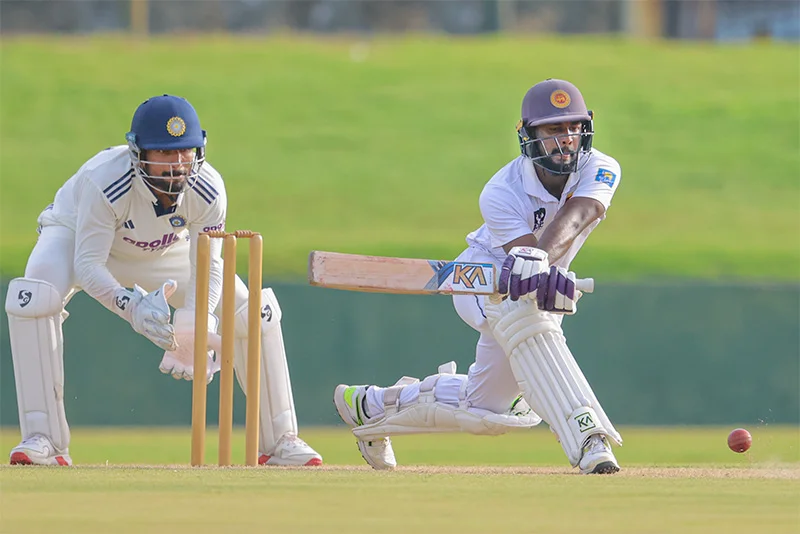
The Niroshan Dickwella experiment has proved short lived, with the national selectors deciding to move on and handing a maiden Test call up to 22-year-old Anjala Bandara, who is expected to take over the wicketkeeping duties for the two match Test series against Pakistan.
Dickwella’s recall after more than three years in the wilderness had raised quite a few eyebrows. The selectors defended their decision, arguing that he remained the finest wicketkeeper in the country. Few disputed that claim. The concerns, however, were never about his glovework but rather his ability to shut out the noise, keep his emotions in check and maintain discipline off the field. True to form, India’s fielders managed to get under his skin in the second innings of the Galle Test and the left-hander duly lost patience and threw his wicket away.
A fellow left-hander, Bandara’s journey to the national side has been anything but conventional. He first emerged from the little known Sirimavo Bandaranaike Vidyalaya in Matale before being snapped up by St. Anthony’s College, Katugastota. He eventually found his way to Mahanama College for his Under-19 cricket and now turns out for Colombo Cricket Club.
While Bandara has been prolific with the bat, boasting a formidable First Class average of 65, his work behind the stumps remains a work in progress. The selectors, however, believe he has made sufficient strides to be thrown into the deep end of Test cricket.
“We had a special programme for Anjala. In fact, we sent him to Mahesh Gunathilaka, one of the finest wicketkeepers produced by the country. He has worked on a few areas and we feel he is ready for Test match cricket,” Chairman of Selectors Kapila Wijegunawardene told The Island.
Wijegunawardene also confirmed that Pasindu Sooriyabandara would open the batting in Pakistan.
The former Royal College batter made his Test debut as a concussion substitute against India in Galle after Dinesh Chandimal was injured, but his introduction to the highest level was hardly a fairytale as he departed for a first ball duck. He made amends in the second Test, however, with impressive knocks of 80 and 92, showing that his baptism by fire had done little to dent his confidence.
Although Pathum Nissanka has been included in the squad, his availability remains subject to fitness. The prolific opener had been expected to return for the tri-nation series in Pakistan beginning later this week, but his recovery from the hamstring strain that ruled him out of the T20 series has taken longer than anticipated.
The Pakistan series will also mark Kusal Mendis’ first assignment as Test captain. His predecessor, Dhananjaya de Silva, who stepped down from the leadership, retains his place in the squad, although whether he makes the playing XI is another matter.
With competition for middle order places heating up, the former captain could find himself in a straight shootout with Kamindu Mendis for one of the remaining berths. It is an intriguing selection headache, particularly given that Dhananjaya was leading the side only a few weeks ago.
Another interesting inclusion is Eshan Malinga, who has largely been regarded as a white ball specialist. The selectors have now opened the door for him in the longest format, offering the young quick an opportunity to prove that his skills extend beyond the limited overs game.
by Reemus Fernando
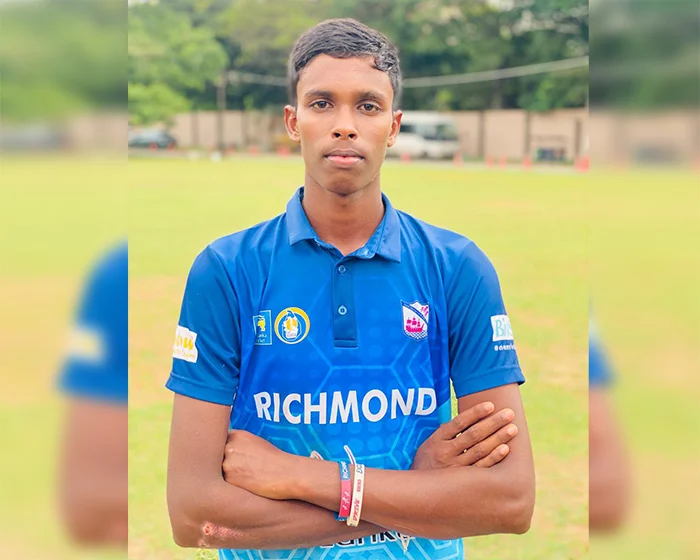
Richmond College are all but through to the quarter-finals of the Under-19 Division I Tier A Limited Overs Tournament after a nine-run win over Maris Stella College, Negombo, under the Duckworth-Lewis-Stern (DLS) method at the Army Grounds in Karandeniya on Monday.
It was Richmond’s third straight victory, and it puts them at the top of Group ‘B’ with one match remaining.
Batting first, Richmond posted 171 for nine in their allotted 50 overs, with Bevin Jayawardana top-scoring with a patient 55 off 88 balls. Punal Hansajith contributed 24 off 39 deliveries, while Risinu Rupasinghe made 22 and Ravinu Randinu added 18.
Maris Stella’s Malan Kadigamuwa led the bowling effort with three wickets for 37 runs in nine overs, while Rosel Perera claimed two wickets for 31 runs in his 10-over spell.
In reply, Maris Stella reached 127 for six in 42 overs against a revised DLS target of 136. Richmond therefore secured victory by nine runs under the method.
Punal Hansajith and Tenusha Nimsara claimed two wickets each to keep the Maris Stella batting line-up in check. Hansajith conceded just 20 runs in nine overs, while Nimsara gave away 14 runs in seven overs, with both bowlers maintaining tight control.
For Maris Stella Kavith de Silva scored 29 off 46 balls, while Gaveesha Induwara remained unbeaten on 24 off 38 deliveries. Manuja Nayanajith added 23 off 55 balls, and Yumeth Sathmira contributed 16.
In their previous encounters bowlers domnated for Richmond to beat Sri Sumangala College Panadura and St. Sebastian’s College Moratuwa comfortably.
Sri Sumangala were dismissed for 106 runs with Hiruk Akalanka, Tenusha Nimsara and Punal Hansajith claiming two wickets apiece. Akalanka returned figures of 2 for 21 in six overs, while Nimsara took 2 for 21 in five overs, including one maiden. Hansajith also claimed two wickets, conceding 24 runs in 5.3 overs. Hiruka Akalanka then lead the chase with a knock of 45run (in 46 balls with5fours and 2 sixes) to seal a six wickets win.
The match against St. Sebastian’s saw Tenusha Nimsara hog the limelight, taking a five-wicket haul to restrict the Moratuwa outfit to 115 runs.
Richmond had a few anxious moments in reply but got home with two wickets in hand.
In Group ‘A’ the contest is still open with S. Thomas’ College Mount Lavinia slightly ahead of others after Jaden Amaraweera scored a cracking 76 off 75 balls (7x4s, 4x6s) to lead them to six wickets win over Prince of Wales College, Moratuwa (153/8 in 50 overs) on Monday. S. Thomas’ (200/9 in 50 overs) had a DLS tie against Trinity (126?4 in 36) and their other match ended in a no decision.
While Mahinda were leading Group ‘C’ by Monday, Nalanda completed their quota of first round matches unbeaten in Group ‘D’.
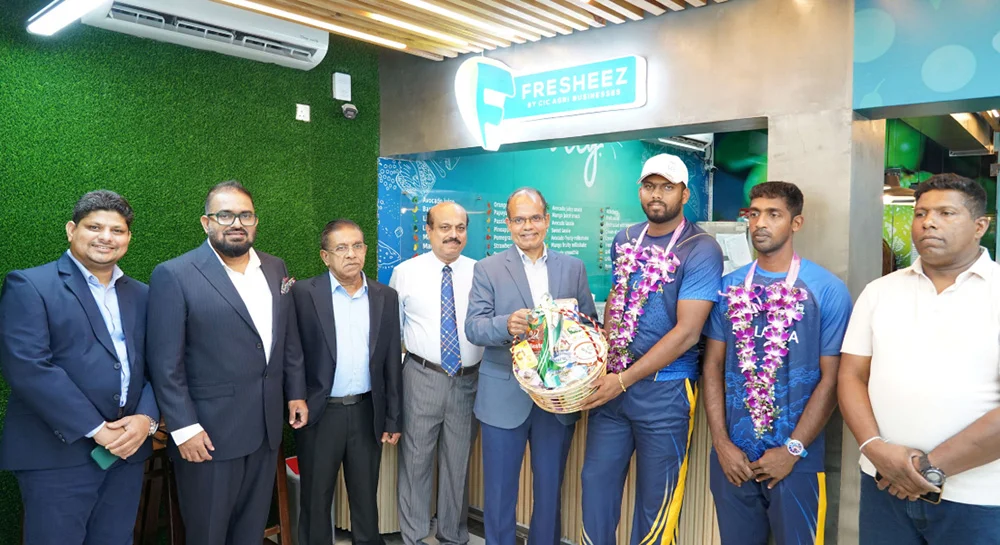
Diversified conglomerate CIC Holdings PLC (CSE: CIC) has partnered with Sri Lankan national athlete Rumesh Tharanga Pathirage as his Official Nutritional & Wellness Partner, supporting his journey towards the 2028 Olympic Games and his ambition to bring home Sri Lanka’s first ever Olympic gold medal.
The partnership reflects a shared commitment that extends beyond conventional sports sponsorship, with CIC standing alongside Rumesh through the years of preparation.
Rumesh Tharanga has established himself among the world’s leading javelin throwers following a landmark 2026 season. He set a Sri Lankan national record of 92.62 metres in Rome, claimed the Commonwealth Games title and became Sri Lanka’s first Diamond League champion. He strengthened his position as the world’s No. 1 ranked men’s javelin thrower by winning gold at the inaugural World Athletics Ultimate Championship in Budapest with a 91.09 metre final round throw. Most recently, he won Sri Lanka’s only gold medal at the Asian Games 2026 by winning the men’s javelin throw
For more than six decades, CIC has been part of the lives of Sri Lankans through its presence across agriculture, healthcare and wellness, personal care and other sectors. The partnership extends this longstanding role of nurturing Sri Lankan lives to supporting the journey of an athlete pursuing an ambition with significance for the entire nation.

Heavy showers above 100 mm are likely at some places in the Western, Sabaragamuwa, Southern, Central, and North-western provinces and in Anuradhapura district.

Sri Lanka, India caught in US-Iran ship crisis

Namal further remanded

IMF projects Lankan economic growth to moderate amidst mounting global uncertainties

Major Gen Pushpakumara assumes command of 56 Infantry Division

Dickwella axed, Bandara earns maiden Test call up

‘Dates have the highest sugar content to fight Coronavirus’

Sunday Island 27 December – Headlines

#SundayIsland 17th December – Headlines

Sunday Island – 28th March

Sunday Island Headlines – 21 March

Sunday Island – 21st February – Headlines
-

 Features6 days ago
The Sri Lankan who made Scottish history
-

 Sports6 days ago
Nissanka absence opens door for Sri Lanka’s young guns
-

 News5 days ago
NDB fraud Rs 60mn more than reported
-

 News5 days ago
Removing monk’s robes matter for Sangha to decide: Mahanayake Theras
-
 News6 days ago
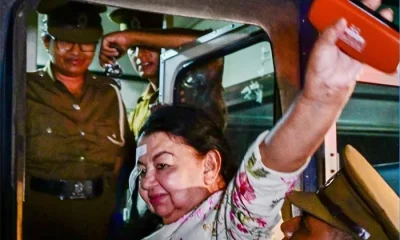
Shiranthi R remanded until 13 Oct.
-

 Features6 days ago
Future of Sri Lanka’s state university system: Should it be shut down and reopened?
-

 News3 days ago
Sri Lanka escalates anti-graft drive with Shiranthi’s jailing
-

 News4 days ago
NPP govt. reminded of its responsibilities as US warship leaves Colombo