
Business
Cracking the Code: Why women’s innovations are lagging behind in Sri Lanka


 By Dilani Hirimuthugodage
“I do not intend to get a patent right for my invention as I do not want to disclose my research findings and methodologies to the public domain”, stated a female researcher who has discovered a solution for dengue fever.
Like her, many female innovators are unwilling to obtain Intellectual Property (IP) protection and commercialise their innovations for various reasons. One of the significant issues is the insufficient understanding of Intellectual Property Rights (IPRs) and their application. Given that this year’s World IP Day, observed on April 26, focuses on “Women and IP: Accelerating Innovation and Creativity”, it is timely to explore the state of women’s innovations in Sri Lanka and consider possible strategies to promote better IP protection for women’s creativity and innovations.
Women in Innovations
The number of patent applications issued to women is a crucial and commonly used indicator to determine their involvement in innovation. However, Sri Lanka does not have gender-specific patent application data. Based on approximate calculations, the number of individual female patent applications fluctuated between 2010 and 2022, averaging nearly 25 patent applications per year in the last five years (Infographic 1). This represents only 8% of the total patent applications during that period.
Globally, women’s patent applications are less than men’s; in 2020, nearly 16.5% of international patent applications were filed by women. Sri Lankan women appear to do poorly, especially compared to their Asian counterparts, where women’s applications represent 17.7% of total applications, with China and India leading the way.
Infographic 1:
Gender Disparity in Sri Lanka’s Patent Applications (2010-2022)
Why are Women’s Innovations Low in Sri Lanka?
Women’s involvement in research and development (R&D) activities, one of the key components of innovations, is at a satisfactory level in Sri Lanka. According to the National R&D survey conducted by the National Science Foundation (NSF) in 2020, nearly 50% of researchers in the country are females. This figure is the highest percentage when compared with other South Asian countries. However, in total, the output indicators of R&D, such as the number of patents, journal publications, commercialisation, etc., are low in Sri Lanka. Further, the low number of female patents reveals that most women are involved in less patent-intensive fields, such as natural sciences, social sciences and humanities. Moreover, female researchers are uninterested in commercialising their inventions or using them for commercial purposes. There could be several reasons for this, such as a lack of awareness of IPRs and their importance, lack of incentives and institutional support for research commercialisation, and lack of targeted programmes to promote women’s innovations.
Science, technology, engineering, and mathematics (STEM) are the core fields of innovation. Female STEM education in Sri Lanka is relatively good. According to the University Grant Commission (UGC) statistics, in 2017, women comprised 49% of undergraduate enrolments in STEM subjects in local universities. Yet very few women work or lead in STEM-related fields. This could be attributed to negative stereotypes surrounding girls’ competencies in subjects like mathematics, engineering, and information technology, as well as social, cultural, and gender norms.
Moreover, women’s participation in Sri Lanka’s creative industry sector is nearly 36%, with significant contributions in the product, graphic and fashion design and craft sectors. Nonetheless, the Creative and Cultural Industries in Sri Lanka report reveals that women’s awareness of IPRs, even within the creative industry sector, is very minimal.
What Needs to be Done?
IPRs play a major role in encouraging innovation and creativity as they help to turn an idea/solution into a commercial opportunity. In Sri Lanka, there is clearly a need to encourage more female participation in patent-intensive R&D fields (such as medical sciences, engineering and technologies) and commercialisation. ‘Technology Transfer and Commercialization Units’ in universities and research institutes should collaborate effectively with key stakeholder organisations such as the National Intellectual Property Office (NIPO), World Intellectual Property Office (WIPO), and the National Innovation Agency (NIA) to create awareness amongst women innovators and to support them in managing IP related commercial activities. Furthermore, Sri Lanka can promote gender-inclusive innovation policies by introducing special programmes encouraging women’s participation in R&D activities and commercialisation, including national awards and incentive schemes in universities and research institutes.
Women’s participation in STEM fields and careers should be promoted by providing scholarships and introducing mentoring and development-oriented programmes. Furthermore, the importance of IPRs should be taught in secondary school and university curricula. This fact was highlighted by a young female inventor with more than 60 patent rights in Sri Lanka. She noted that “an inquisitive mind and a thirst for knowledge from school age have encouraged me to innovate. Creativity should be encouraged at the school level”.
It is of utmost importance to raise awareness and strengthen knowledge on access to IPRs amongst women innovators in Sri Lanka. This could be done by establishing women-focused support networking systems, collaborations, learnings through selected role models, mentorship and funding programmes. Countries such as India (Women Scientists Scheme (WOS) by the Department of Science and Technology (DST)), Singapore (Women in Science (SgWIS) organisation), China, and South Korea have programmes and organisations tailored explicitly for women innovators.
Lastly, it is crucial to maintain an accurate and current database of women’s patent applications at individual and group levels at the national database system of NIPO. Simple modifications to patent applications could facilitate this process. In addition, having such a database would be valuable in developing policies specific to women’s innovations.
Link to the full Talking Economics blog: https://www.ips.lk/talkingeconomics/2023/04/26/cracking-the-code-why-womens-innovations-are-lagging-behind-in-sri-lanka/
Dilani Hirimuthugodage is a Research Economist at IPS with research interests in Agriculture and Agribusiness Development, Environment, Natural Resources and Climate Change, and Intellectual Property. She holds a BA in Economics with a Second Class (Upper) and Masters in Economics (Distinction Pass) from the University of Colombo. In addition, she is a part-qualified candidate of CIMA-UK. (Talk with Dilani: dilani@ips.lk).

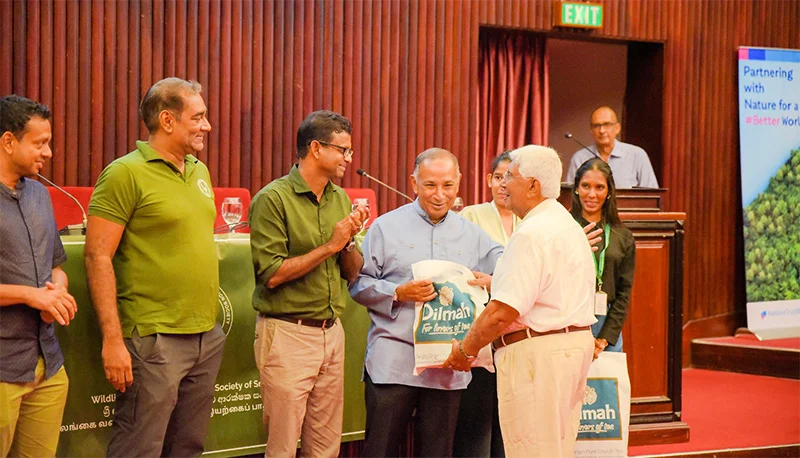
Environmental crises in Sri Lanka are no longer merely conservation issues but constitute an economic and corporate survival challenge that directly threatens the country’s water security, agriculture, exports and long-term business sustainability, speakers at the latest monthly lecture of the Wildlife and Nature Protection Society of Sri Lanka (WNPS) warned on Thursday.
At a time when climate shocks, biodiversity collapse and environmental degradation are beginning to impact supply chains, tourism, food production and investor confidence, the lecture titled “Conservation in Action: Driving Impact – Hill Country to Courtrooms: Science, Community and the Next Generation in Action” highlighted how conservation is increasingly becoming intertwined with economics, corporate governance and national resilience.
Held at the Bandaranaike Memorial International Conference Hall with support from Nations Trust Bank, the event drew leading corporate executives, conservationists, lawyers, architects, researchers and youth leaders.
Corporate leader and conservation advocate Sriyan de Silva Wijeyeratne delivered one of the strongest messages of the evening, stressing that Sri Lanka’s montane ecosystems were effectively the economic backbone of the nation.
“You block up the montane region, we lose our water, our agriculture and our exports, he said.
His remarks reflected a growing global shift where environmental protection is increasingly viewed not as philanthropy, but as a strategic investment linked directly to economic continuity and climate resilience.
Wijeyeratne explained how the WNPS-led “Plant” initiative has rapidly evolved into one of Sri Lanka’s most ambitious privately supported ecological restoration programmes, demonstrating how businesses can move beyond traditional corporate social responsibility into measurable environmental investment.
Within just five years, the initiative has begun restoring around 200 acres of degraded landscapes while establishing approximately 30 kilometres of ecological corridors in the central highlands.
Importantly, he said, the programme was designed not to centralise conservation under a single organisation but to create a scalable model for wider private-sector adoption.
“We are not trying to become the answer. Plant is meant to prove that private-sector-led restoration is possible and that businesses can actively participate in rebuilding ecosystems, he said.
The initiative already involves partnerships with multiple private-sector stakeholders investing in ecological restoration in the hill country — an area critical to tea, hydropower, water resources and downstream agriculture.
One of the clearest examples discussed during the lecture was the growing collaboration between conservationists and Sri Lanka’s architectural and urban planning sectors.
Following discussions initiated at the Geoffrey Bawa Trust, the prestigious Geoffrey Bawa architectural awards were restructured into the “Monamal Award,” recognising projects that integrate biodiversity, ecosystem restoration and environmentally sensitive design.
“This is about redefining what good development means, Wijeyeratne said.
“The future gold standard of architecture must be buildings and landscapes that embrace ecosystems rather than destroy them.”
The lecture also explored how climate change is reshaping social vulnerability and labour resilience — key concerns for businesses operating in agriculture, plantations and rural economies.
Wildlife photographer and conservationist Riaz Cader highlighted another emerging business concern — the growing interaction between wildlife and human-dominated production landscapes.
Supported by LOLC Holdings, the WNPS leopard conservation initiative has established research stations in Belihuloya and Kotagala to study leopards living within tea plantation regions.
Using community-based data collection, camera trap technology and local informer networks, researchers are mapping leopard movement, conflict zones and habitat fragmentation across estate landscapes.
Cader noted that increasing human pressure had altered leopard behaviour significantly.
“We have effectively pushed many of these leopards into nocturnal behaviour because of constant human activity, he said.
The research has major implications for plantation management, land-use planning and biodiversity compliance standards increasingly demanded by global markets and sustainability certification bodies.
Cader also pointed to encouraging signs emerging from restored habitats such as Budunwala, where camera traps recorded a mother leopard and cub moving freely during daylight hours — behaviour rarely observed in heavily disturbed environments.
Researchers have additionally documented elusive rusty-spotted cats and pangolins at restoration sites, reinforcing the ecological value of reconnecting fragmented landscapes.
Beyond biodiversity outcomes, the restoration programmes are generating direct socio-economic benefits.
The lecture further revealed how conservation organisations are increasingly engaging with law enforcement and governance systems to combat environmental crime — another growing risk area with economic implications.
WNPS recently launched a specialised police training programme at the Rodella Hill Club aimed at strengthening enforcement against illegal wildlife trade, snaring and poaching in the hill country.
Speakers warned that organised wildlife crime, habitat destruction and illegal exploitation of natural resources continue to undermine both biodiversity and sustainable economic development.
Questions from the audience also broadened the discussion into marine ecosystems and blue economy concerns, including the lingering environmental and economic fallout from the X-Press Pearl Disaster.
WNPS officials said their marine subcommittee was actively engaged in mangrove restoration, blue carbon ecosystem protection and marine conservation initiatives.
They noted that Sri Lanka’s mangrove restoration efforts had already received international recognition through UN-backed environmental awards.
Throughout the evening, speakers repeatedly stressed that conservation is no longer the exclusive responsibility of scientists or environmental activists.
By Ifham Nizam
Sri Lanka’s apparel exports recorded a softer performance in April 2026, with total exports declining by 4.72% to US$ 328.15 million, compared to US$ 344.40 million in April 2025. The decline was mainly seen across key traditional markets, with exports to the UK down 16.91%, the EU down 8.78%, and the USA down 3.46%. However, the 12.61% growth in other markets during April shows that there is still room to build momentum through greater market diversification.
For the period from January to April 2026, total apparel exports declined by 7.47% to US$ 1.53 billion, reflecting continued pressure across major export destinations. While this performance reflects challenging global demand conditions, it also reinforces the need for Sri Lanka to sharpen its competitiveness, improve cost structures, strengthen market access, and move faster into higher-value opportunities.
JAAF believes the industry’s long-term strength remains intact, but the path forward requires a more focused national effort. To move beyond current export levels and work towards breaking the US$ 5 billion barrier, Sri Lanka must support the sector with policy consistency, energy cost reforms, trade facilitation, skills development, and stronger positioning in both traditional and emerging markets. The apparel industry continues to be one of Sri Lanka’s most important foreign exchange earners, and its ability to recover and grow will be critical to the country’s broader export economy.

Recurring revenues reach 74% of total; Normalized EBITDA margin expands 17 percentage points
hSenid Business Solutions PLC (hSenidBiz) announced its financial results for the fourth quarter and full year ended 31 March 2026, delivering a significant turnaround in operational profitability, materially improving earnings quality, and achieving a key strategic milestone.
In the fourth quarter, total revenue reached LKR 522.2 million, up 5 percent year-on-year (YoY). The PeoplesHR Cloud segment delivered LKR 380 million, representing 20 percent YoY growth in LKR terms and 12 percent growth in USD constant currency terms, with subscription revenues comprising 87 percent of segment revenue. New deal closures recovered strongly to USD 843,395. The Company sustained profitability at the Profit Before Tax (PBT) level with LKR 7 million and a normalized EBITDA margin of 11 percent, while continuing to generate positive free cash flow.
For the full year, the Company delivered a substantial financial turnaround. Revenue grew 13 percent YoY to LKR 2.1 billion. Normalized EBITDA turned positive at LKR 200 million, with the margin expanding 17 percentage points to 10 percent. Profit Before Tax improved by LKR 313 million year-on-year, significantly reducing the loss from LKR 321 million in FY2025 to LKR 8 million. The Company also generated positive free cash flow for the year, a sharp reversal from negative free cash flow in the prior year and an annual improvement of over LKR 350 million. Exit Annualized Recurring Revenue (ARR) reached USD 5.5 million, growing 32 percent YoY, while recurring revenues strengthened to 77 percent of total revenue in the fourth quarter, underscoring the quality and resilience of the Company’s SaaS-led business model.
Dinesh Saparamadu, Founder and Chairman of hSenidBiz, commented: “FY2026 marks a clear inflection point for hSenidBiz. We have materially strengthened the quality and predictability of our revenue base while delivering meaningful operating leverage. These outcomes validate the scalability of our SaaS-led model and position the Company well for the next phase of disciplined, high-quality growth.”
Sampath Jayasundara, Chief Executive Officer, added: “The operational momentum achieved in FY2026 provides a strong foundation as we enter the next phase of growth. Our priorities for FY2027 are to accelerate customer acquisition in key markets, drive execution excellence across the sales organisation, and rapidly advance our AI-driven capabilities, particularly through Lexi Insights to deliver even greater value to enterprise customers across our markets.”

US military launches strikes on southern Iran amid talks in Qatar

Pope says AI must be ‘disarmed’ to prevent domination, exclusion, and death

Showers will occur at times in the Western, Sabaragamuwa and North-western provinces and in Galle, Matara, Kandy and Nuwara-Eliya districts.

Election monitors flay JVP for postponing PC polls

SL exports exceed USD 5.7 bn in first four months of 2026

Easter Sunday carnage: Court told Maulana’s statement cannot be accepted without cross-examination

‘Dates have the highest sugar content to fight Coronavirus’

Sunday Island 27 December – Headlines

#SundayIsland 17th December – Headlines

Sunday Island – 28th March

Sunday Island Headlines – 21 March

Sunday Island – 21st February – Headlines
-

 Features6 days ago
Octopus, Leech, and Snake: How Sri Lanka’s banks feast while the nation starves
-
 Sports6 days ago
Sri Lanka women’s volleyball team ready for Central Asian challenge
-
 Opinion5 days ago
Murder of Ehelepola family, Bogambara Wewa and Sightings of Wangediya
-
 News5 days ago
Steps underway to safeguard Sri Lanka’s maritime heritage
-

 Business4 days ago
Historic launch of CCWE Fashion Week & International Summit 2026
-

 Features2 days ago
The NPP’s pivot to the past
-

 News1 day ago
Police probe underway to ascertain links between criminals deported from UAE and local politicians
-

 Editorial5 days ago
A play without its protagonist