
Business
COYLE urges government to engage business leaders in policy-making process for fair, sustainable, and economically sound decisions

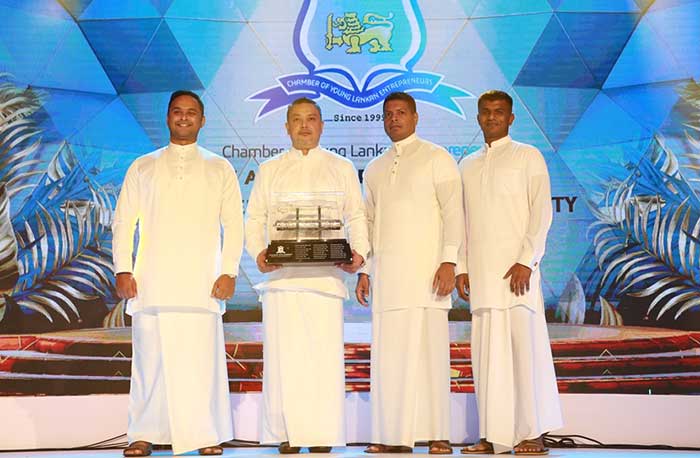
The Chamber of Young Lankan Entrepreneurs (COYLE) held its 24th Anniversary Celebrations on 10th March 2023, at Shangri-La Hotel, Colombo. The event was attended by the chief guest, Prime Minister, Dinesh Gunawardena; the guest of honour, U. S. Ambassador, Julie Chung; former President of Sri Lanka, Maithripala Sirisena; Chief of the Defense Staff, General Shavendra Silva; cabinet and state ministers; parliamentarians; commanders of the Sri Lanka Armed Forces; government officials, and business leaders.
The Chamber of Young Lankan Entrepreneurs (COYLE) comprises more than 116 prominent individuals who serve as Chairmen and Controlling Shareholders of some of the most influential companies in Sri Lanka.
It has over 500 member organizations and is affiliated with nearly 50 business chambers in the country. The organization is managed and controlled by young entrepreneurs but also boasts a number of senior and respected business leaders who joined the organization during its formative years to help shape COYLE into what it is today.
The Chamber actively promotes entrepreneurship, the development of rural communities, and thought leadership. In adherence to the organization’s strongly held principles and as a mandatory service to the community, COYLE engages in countless CSR initiatives through its member companies around the country. The Chamber provides leadership, learning, and development for its members and stakeholders, and over the years, it has grown into a vehicle for business growth in Sri Lanka via its many local and global networks.
The past year was an exceptionally challenging one for all parties in the Sri Lankan economy. Remarking on this, the Outgoing Chairman of COYLE, Mr. Dimuth Chankama Silva, stated during his address, “This year was the greatest test of our mettle. Even diamonds are born out of pressure. This year gave us the opportunity to shine through pressures from all directions. I believe we shone. We are here alive and kicking, our businesses are growing, we are conquering international markets and territories, and COYLE has grown in leaps and bounds.”
A notable emphasis was given to the introduction of the COYLE theme for the year 2023/24, EVOLUTION: #Resilience, #Agility, and #Transformation. The incoming Chairman, Mr. Rasith Wickramasingha, stated, “Evolution is to upscale capability, enhance skills and increase creativity, innovate at a time of chaos, and re-imagine a new business environment. Evolution requires change: change in mindset, attitude, self-awareness, and acumen of the surrounding environment as well as culture.”
He went on to note that in today’s environment, every five years constitutes a generational gap and emphasized the need for COYLE to evolve as a chamber in order to be relevant and sustainable for the future. He further mentioned that decades of ill-conceived, politically driven policies based on the advocacy of a few, rather than consultative decision-making with recognized business chambers, have led to the current crisis. Elaborating on this point, Mr. Rasith Wickramasingha said, “Policy formulation should be done based on sound economic principles and business acumen. Businesses rely on stable policies so that they may plan ahead. Ad hoc policies which bring no economic benefit have led to losses in the private sector and leakage of foreign exchange from the country.”
He emphasized that it is heartbreaking to see that the individuals who strive continuously for the betterment of the country and persistently do the right thing get penalized while those engaging in unethical practices to avoid taxation are rarely held accountable. COYLE hopes for more genuine dialogue from policymakers regarding these issues and affirms that the organization’s globally exposed and experienced members could be a great value addition to any actions taken to revive the economy. What sets COYLE apart from the rest is that its members are made up of business owners and decision-makers who are passionate about doing something good for the country, who are genuinely aligned with this cause, and willing to embrace the future without diluting our national and cultural heritage.
The 24th Anniversary Celebration of COYLE closely reflected in its overarching tone the state of the country following the Easter Bombings, the pandemic, and the economic and political crisis. The event also honored and recognized the Chamber’s numerous members who weathered the storm by building resilience, being agile, and transforming their businesses. It also highlighted the many CSR initiatives undertaken by COYLE member organizations, many of which were carried out quietly, purely as a service to the country.
These initiatives focus on communities most affected by the calamities of the past years and were chosen regardless of race, religion, or creed. With a host of esteemed and influential guests attending the celebrations, COYLE made this event a platform to convey a strong message calling for sociopolitical change in the country. COYLE believes that the hardline decisions taken by President Ranil Wickremesinghe and the Governor of the Central Bank, Dr. Nandalal Weerasinghe, were tough but necessary considering the state of affairs. The Chamber also notes that as a result of these decisions, gradual change for the better is apparent in the economy. Considering the massive pool of collective experience, expertise, and connections held by COYLE, it is capable of providing significant value and insight for economic reform. Hence, COYLE urges the government to actively engage and work together with the Chamber to expedite economic revival.


The Ceylon Chamber of Women Entrepreneurs (CCWE) officially announced the CCWE Fashion Week & International Summit 2026 at a press conference held in Colombo, unveiling a historic national initiative that will mark the first-ever fashion week in Sri Lanka and the South Asian region dedicated exclusively to women entrepreneurs.
Held under the theme “Threads of Inclusion Woven from Every Walk of Life,” the event is scheduled to take place from 16th to 20th July 2026 at Cinnamon Life, Colombo, positioning Sri Lanka at the forefront of inclusive and sustainable fashion while creating a powerful platform for economic and social transformation.
This landmark initiative goes beyond fashion to deliver meaningful value to society by empowering women entrepreneurs across diverse communities, industries, and regions. By bringing together designers, artisans, SMEs, policymakers, investors, and international stakeholders, the event aims to create new market opportunities, strengthen financial inclusion, and promote sustainable livelihoods. It will serve as a catalyst for economic growth by supporting women-led businesses, enhancing export potential, encouraging youth participation in creative industries, and fostering regional collaboration across South Asia.
Supported by a strong network of corporate partners, the initiative is led by HNB as the Title Sponsor, reflecting a collective commitment to empowering women economically and driving more inclusive national progress.
Speaking at the press conference, Dr. Ayanthi Gurusinghe, President of CCWE and Chairman of the Fashion Week, stated, “Today we are announcing more than an event—we are introducing a national movement that will transform the way we view women entrepreneurs in Sri Lanka. This platform is designed to open doors for women from every walk of life, enabling them to convert talent into enterprise, gain access to markets, and contribute meaningfully to the economy. Through this initiative, Sri Lanka has the opportunity to lead the region in building a future where inclusion meets opportunity and equality.”
HNB, MD/ CEO, Damith Pallewatte, added, “For over 135 years, HNB has stood as a partner in progress to all Sri Lankans, and supporting women entrepreneurs is central to how we continue that legacy. This initiative creates a platform where women can access markets, build sustainable businesses, and contribute meaningfully to national economic development.
When women are empowered with the right access and support, the impact extends to families, communities, and the broader economy. Our decision to serve as Title Sponsor is driven by our commitment to enabling that access and supporting pathways for long-term growth through financial inclusion and enterprise development.”
Extending regional support, Mrs. Premila Acharya, President of the South Asian Women Development Forum (SAWDF), shared her support online, “The CCWE Fashion Week & International Summit 2026 is a landmark initiative that reflects the strength and potential of women entrepreneurs across our region. It is inspiring to see Sri Lanka take the lead in creating a platform where inclusion, opportunity, and equality come together. SAWDF is proud to stand in partnership with CCWE in empowering women through collaboration and shared progress.”
Highlighting achievements The United Nations Economic and Social Commission for Asia and the Pacific Subregional Office for South and South-West (ESCAP-SSWA) as Knowledge Partner Ms. Mikiko Tanaka, Head and Director noted “ESCAP is pleased to serve as a knowledge partner for the CCWE Fashion Week & International Summit 2026. This initiative reflects our shared commitment to enhance women entrepreneurs’ access to markets, finance and digital networks. Connecting women-led businesses to regional networks can further unlock opportunities outside Sri Lanka. We commend CCWE’s leadership in creating an enabling environment for women from diverse backgrounds to innovate, participate and contribute to inclusive and sustainable economic development.”

The Colombo Stock Exchange (CSE) announces that Sri Lanka’s capital market has received international recognition for the quality and innovation of its Green, Social, Sustainability and Sustainability-Linked (GSS+) bond issuances at the 2026 Sustainable Debt Awards hosted by Environmental Finance. This milestone reflects the continued strengthening of Sri Lanka’s sustainable finance landscape and its growing alignment with international capital markets.
This achievement builds on a sustained collaboration with the EU-funded Green Recovery Facility, implemented by Expertise France, which has supported the development and international positioning of Sri Lanka’s GSS+ bond market. Advisory and coordination support has been provided in close collaboration with the CSE, alongside technical inputs from the contracted consultancy team Baastel led by Jason Taylor.
Since supporting the operationalisation of Sri Lanka’s Green Bond Framework in 2023, this engagement has evolved into a broader effort to develop the country’s GSS+ bond market. Through strengthened policy alignment, market development, and stakeholder engagement, this partnership has contributed to corporate GSS+ bond issuances aligned with international standards.
Collectively, recent GSS+ bond issuances in Sri Lanka have mobilised approximately LKR 82 billion (around EUR 216 million) across green, blue, social, sustainability, and sustainability-linked instruments, financing priority sectors such as renewable energy, energy efficiency, water and coastal resilience, and inclusive social infrastructure. These issuances have been oversubscribed, reflecting growing investor confidence in Sri Lanka’s sustainable finance framework.
This progress has been supported by the introduction of Sri Lanka’s GSS+ Bonds Regulatory Framework in 2025, aligned with international principles, further strengthening market credibility and investor confidence.
The awards recognise the following Sri Lankan institutions:
DFCC Bank – Award for Innovation: Use of Proceeds (Green Bond, APAC)
Bank of Ceylon – Award for Innovation: Sustainability Bond Structure (APAC)
Commercial Bank of Ceylon – Green Bond of the Year (Financial Institution, APAC)
Thimal Perera, Director/Chief Executive Officer, DFCC Bank PLC said, “This recognition reflects the progress Sri Lanka’s capital markets are making in aligning with international sustainable finance standards and strengthening credibility with global investors. We are honoured to receive recognition in the area of innovation in use of proceeds, which highlights the growing ability of Sri Lankan institutions to structure financing solutions with transparency, measurable impact, and long-term relevance. We remain grateful to the regulators, market participants, technical partners, and investors whose continued support is helping advance Sri Lanka’s sustainable finance ecosystem.”
“We are honoured to receive the Environmental Finance’s Sustainable Debt Award for Innovation – Sustainability Bond Structure (APAC) for the Bank of Ceylon’s inaugural LKR 20 billion Basel III compliant Tier 2 Sustainability Bond – the largest sustainability bond issuance in Sri Lanka and the first of its kind. This alignment addressed both BOC’s capital adequacy requirements and commitment to aligning sustainable finance with national development priorities while advancing resilient and inclusive economic growth in Sri Lanka. As the first Sri Lankan bank to secure this prestigious global award, we wish to thank the Colombo Stock Exchange for their proactive coordination and encouragement. We also extend our sincere appreciation to all stakeholders who partnered with us in this trailblazing endeavor.” said Mr. G. A. Jayashantha, Acting Senior Deputy General Manager/ Head of Global Markets, Bank of Ceylon.
Remarking upon the award Sanath Manatunge, Managing Director / Chief Executive Officer of Commercial Bank of Ceylon said “Winning the ‘Green Bond of the Year’ award is a significant milestone for Commercial Bank and a strong endorsement of our commitment to sustainable finance and responsible banking. As the largest private bank in Sri Lanka, we recognise our responsibility to support investments that drive long-term environmental and economic resilience, particularly in the renewable energy sector. This recognition reflects the Bank’s strategic focus on advancing sustainable financing solutions that contribute meaningfully to the country’s climate goals and broader sustainable development agenda.”
These recognitions are particularly significant in the context of Sri Lanka’s ongoing economic recovery and debt restructuring process. As the country works to restore macroeconomic stability and rebuild investor confidence, the ability of Sri Lankan financial institutions to successfully issue GSS+ bonds aligned with rigorous international standards sends a strong signal to global capital markets.

Uber, Sri Lanka’s most loved ridesharing platform, today announced the launch of Hybrid Subscriptions for Moto and Tuk drivers in the country. This includes a new ‘earn first, pay later’ model that gives drivers greater flexibility by allowing them to start earning on the platform without upfront payments. Drivers will continue to benefit from 0% commission on trips, allowing them to keep all of their earnings while paying a subscription fee separately.
With hybrid subscriptions, drivers can choose a model that works best for their driving patterns, making it easier for both full-time and part-time drivers to access trips and earn on Uber. The launch is aimed at improving the overall experience for drivers while continuing to offer reliable mobility for riders.
Flexibility and earning potential remain key priorities for drivers across Sri Lanka’s two- and three-wheeler ecosystem. The new model addresses this by giving drivers more control over how they engage with the platform and how they structure their earnings. By offering both time-based and earning-based subscription options, Uber provides drivers greater flexibility. While time-based subscriptions are ideal for full-time drivers, earning-based subscriptions work well for part-time drivers.
Commenting on the launch, Kaushalya Gunaratne, Country Manager – Mobility, Uber Sri Lanka, said, “”Drivers are at the heart of everything we do. We were among the first to introduce subscription models for Moto and Tuk drivers in Sri Lanka, and with hybrid subscriptions, we’re taking it further – giving drivers the benefits of zero commissions and the flexibility to choose what works best for them.”

Tennessee execution called off after failed lethal injection

Landslide early warnings issued to the Districts of Colombo, Gampaha, Kalutara, Kegalle, Nuwara Eliya and Ratnapura

Minor flood situation likely to occur within the next few hours in the low-lying floodplain areas of the Kalu River
Flood warning issued to low lying areas of the Aththanagalu Oya and Uruwal Oya valleys
Flood warning issued to low lying areas of the Kelani River valley

Landslide early warnings issued to the Districts of Gampaha, Kalutara and Ratnapura

‘Dates have the highest sugar content to fight Coronavirus’

Sunday Island 27 December – Headlines

#SundayIsland 17th December – Headlines

Sunday Island – 28th March

Sunday Island Headlines – 21 March

Sunday Island – 21st February – Headlines
-

 Features5 days ago
Sri Lankan Airlines Airbus Scandal and the Death of Kapila Chandrasena and my Brother Rajeewa
-
 News6 days ago
Lanka’s eligibility to draw next IMF tranche of USD 700 mn hinges on ‘restoration of cost-recovery pricing for electricity and fuel’
-

 News5 days ago
Kapila Chandrasena case: GN phone records under court scrutiny
-

 News5 days ago
Rupee slide rekindles 2022 crisis fears as inflation risks mount
-
 Features2 days ago
Octopus, Leech, and Snake: How Sri Lanka’s banks feast while the nation starves
-
 Business5 days ago
Expansion of PayPal services in Sri Lanka officially announced
-
 News1 day ago
Steps underway to safeguard Sri Lanka’s maritime heritage
-

 News5 days ago
Court orders further arrests in alleged USD 42 Mn NDB fraud case