
News
COVID-19 fallout, economic turmoil, and import disruptions impact poultry sector

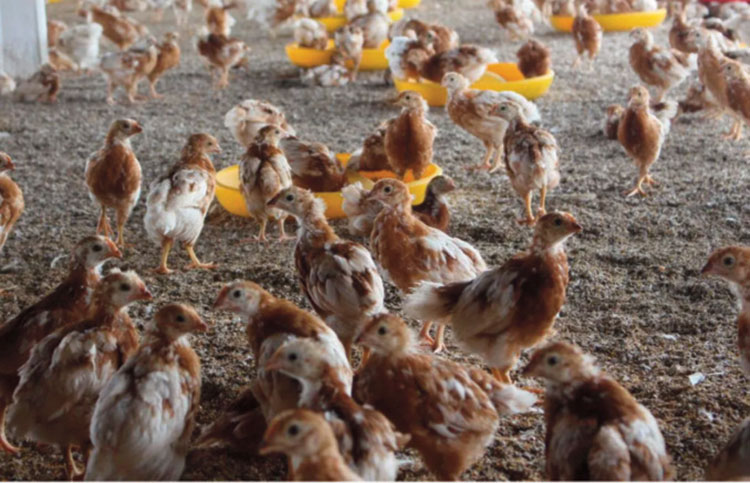
Sri Lanka’s Egg Price Crisis
The genesis of recent fluctuations in egg prices can be traced back to the COVID-19 pandemic, but the crisis was exacerbated by the mechanisms of the Ranil Wickremesinghe administration, Zahrah Imtiaz, Managing Editor of Singapore-based media organization, Asian Agribiz, which covers the Asian animal protein industry, has said in a recent article.
COVID created chaos in the poultry sector as farmers faced significant challenges in transporting their livestock, eggs, feed, and workers. With the distribution network in disarray and fewer buyers visiting farms, prices plummeted. At one point, farmers resorted to selling eggs at roadside stalls for as low as Rs 10 each, she said in an article for Project Footnotes, a web-based multimedia organization.
“As the pandemic continued, the poultry industry began to feel its full effects. The costs of imported raw materials, such as soybeans, vaccines, and other imported inputs skyrocketed due to rising shipping expenses. Compounding this, the Sri Lankan rupee depreciated, leading to a foreign exchange crisis that made imports increasingly difficult. The layer industry, which produces eggs, was slower to respond than the broiler meat sector, and the consequences became evident in 2022. By December 2022, egg prices had surged from Rs 22 per egg in January to Rs 70,” the article read.
Given below are excerpts of the article: “Several factors contributed to this dramatic increase. First, feed costs, which account for nearly 75 percent of production expenses, rose significantly. Small to medium-sized farmers, who dominate the layer industry, were hit hardest by the economic downturn and struggled to sustain their operations at such high costs. It’s estimated that over half of the egg farmers exited the industry during this period, resulting in a substantial supply shortage.
“In 2023, the industry faced another crisis: Avian Influenza (AI) was spreading rapidly in the countries where Sri Lanka imports its parent stock. These imported birds are raised locally to produce hatching eggs, then distributed to local layer farmers. Since it takes about five months for hens to mature and start laying eggs, the timing of these disruptions was critical. With the outbreak of AI globally, Sri Lanka found it challenging to replenish its stocks.
“In May 2023, the Government relaxed AI regulations to allow hatching eggs from AI-free areas, which helped inject much-needed stock into the industry. However, the long production cycle meant that it would take time for local farmers to recover. The high local egg prices at the time encouraged farmers to restart their operations.
“Amid these challenges, the previous regime imported eggs, disrupting the local market. In February 2023, for the first time, Sri Lanka opened its doors to egg imports from India, initially allowing them only for the bakery and hotel sectors under strict guidelines. This move was risky, as India had frequent AI outbreaks that could have potentially threatened Sri Lanka’s poultry industry, which had thus far remained free from the disease. Most layer farmers in Sri Lanka have small to medium farms, with open-cages.
“As imports began to flow and expanded to the retail market, they brought lower prices due to India’s cheaper production costs. However, the imported eggs were smaller than the larger, brown eggs that Sri Lankans typically prefer, and issues with cold chain transportation raised concerns about spoilage.
“The unpredictable nature of these imports introduced volatility in the local egg market, making it difficult for farmers to plan their production cycles amid sudden influxes of imported eggs.
“Fortunately, global feed prices began to stabilise by late last year, and shipping costs decreased. Feed prices have been more manageable this year, and production has steadily increased. By April, the Government declared that local production had become sufficient, halting imports. However, demand dropped in August, leading to a surplus and subsequent price crash.
“The primary concern for farmers at this stage is whether the revenue from egg sales will cover their feed and rearing costs. As the festive season approaches in November, demand is expected to rise again, but many farmers are not expecting much.
There were still a lot of eggs in the market, enough for the country’s daily consumption of seven million eggs. A lot of farmers are hoping current prices would hold, cautiously optimistic about how this eventful year will end.”


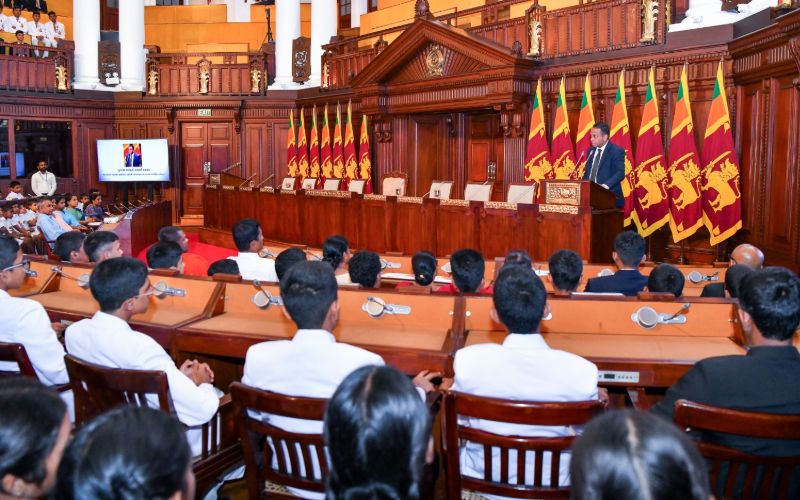
Marking the completion of two years of the ‘Vision’ Programme, students from Pinnawala Central College and Matale Siri Seevali College were given an opportunity on Thursday (24) to visit the Presidential Secretariat.
The ‘Vision’ Programme was launched for schoolchildren jointly by the Presidential Secretariat, the Ministry of Education and the Department of Communication of the Parliament of Sri Lanka.
Following a visit to the former Parliament building at the Presidential Secretariat, the students were also briefed on the history of Parliament.
The role of the President’s Fund and its importance to schoolchildren were explained by Senior Additional Secretary to the President Roshan Gamage.
The ‘Vision’ commemorative book, featuring the two-year journey of the ‘Vision’ Programme and its special activities, was also presented to the participating schools.
As part of the programme, valuable plants were also presented to the schools as a symbolic gesture underscoring the importance of environmental conservation.
Director General of Public Relations Dharmasiri Gamage, the Director and Assistant Director of the Tri-Services Security Coordination Unit, the principals and teaching staff of Pinnawala Central College and Matale Siri Seevali College, and students were among those present on the occasion.
President’s Media Division (PMD)
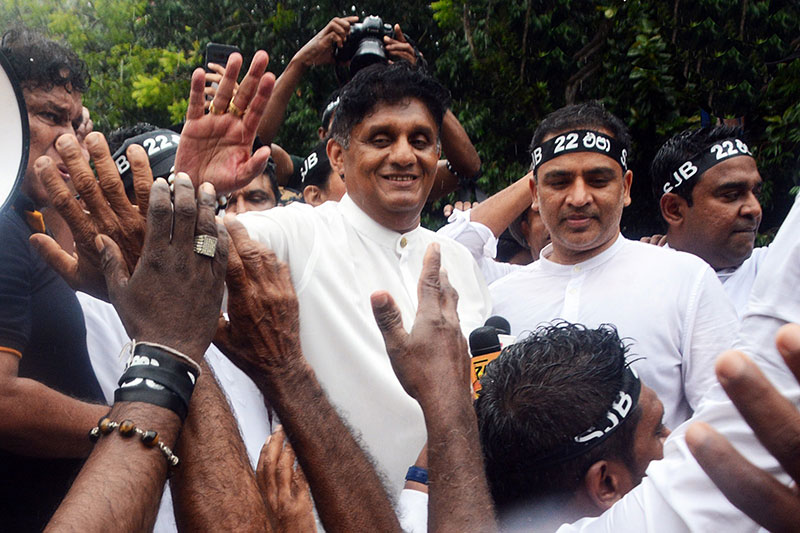
Opposition and SJB Leader Sajith Premadasa yesterday vowed that an SJB government would repeal the 22nd Amendment (22A) to the Constitution.Premadasa made the pledge while addressing thousands of SJB supporters who gathered near Parliament to protest against 22A.
Addressing the rally at Polduwa Junction, Battaramulla, Premadasa said the proposed constitutional amendment would undermine democracy and judicial independence and enable the concentration of political power in the Executive.
“Even if they pass it, under an SJB government we will scrap it,” Premadasa told the gathering, claiming that 22A was aimed at paving the way for a one-party state and placing the State under the control of a single political party.
Braving the rain, Premadasa said they had gathered there peacefully and had no intention of resorting to violence.
“We have gathered here to protect democracy,” he said, challenging the government to hold Provincial Council elections if it was confident of facing the people.
Premadasa said the SJB was prepared to work with any democratic and clean political force committed to the country’s progress and public welfare, amid ongoing discussions on cooperation among Opposition parties, including the United National Party.
Premadasa also accused groups aligned with the government of attempting to discourage people from attending the protest through statements and other measures.
SJB General Secretary Ranjith Madduma Bandara said the protest had been organised against the proposed amendment, which the party had opposed on the grounds that it could pave the way for authoritarianism.
The demonstration began around 9 a.m. at Polduwa Junction and coincided with Parliament taking up the proposed 22nd Amendment for debate. Proceedings on the Bill are scheduled to continue today (25).
The Supreme Court has determined that the proposed amendment does not require approval at a referendum and could be passed with a special majority in Parliament.
Meanwhile, traffic congestion was reported on roads surrounding Parliament and Polduwa Junction following the demonstration.
Security was also tightened in and around the Parliamentary complex, with a heavy police presence observed at Polduwa Junction and near the main entrance to Parliament.

Two retired female Navy petty officers were ordered to be remanded until October 5 over their alleged involvement in the abduction and disappearance of two women in Trincomalee during the war.
Trincomalee Chief Magistrate M.S.M. Samsudeen yesterday ordered that the two suspects be remanded and directed that they be produced for an identification parade on October 5.
The suspects, residents of Chilaw and Haputale, were arrested after appearing before the CID in connection with another court case. They were subsequently produced before the Trincomalee Magistrate’s Court.
The court was informed that the investigation concerned the alleged abduction of Sasikumar Thenmoli and Mary Delsia, residents of Paalaiyootru, Trincomalee, on or around May 13, 2008.
The CID told court that information uncovered during its investigations indicated that the two women had allegedly been detained at an underground location known as the “Gun Site” at the Trincomalee Naval Base while the two suspects were serving in the Navy. The women were subsequently reported missing.
Further investigations into the alleged abduction and disappearance of the two women are continuing.

‘Vision’ Programme Marks Two Years

Costa Rica minister fired for unapproved meeting with Trump in US

At least 41 die as boat capsizes in DRC’s Lake Tanganyika

Showers will occur at times in the Western, Sabaragamuwa, Southern, Central and North-western provinces

Sajith vows to scrap 22A under future govt.

Two retired female Navy officers remanded over disappearance of two women during war

‘Dates have the highest sugar content to fight Coronavirus’

Sunday Island 27 December – Headlines

#SundayIsland 17th December – Headlines

Sunday Island – 28th March

Sunday Island Headlines – 21 March

Sunday Island – 21st February – Headlines
-

 News6 days ago
Shanakiyan urges urgent action over reported death sentence for Lankan in Saudi Arabia
-

 News5 days ago
Namal Rajapaksa Buddhist gambit fails, bail denied
-

 Features5 days ago
Why the spelling Sri Lankan names in English vary
-

 Features5 days ago
Three bands, a new identity: Sri Lankan wolf snake recognised as distinct species
-

 Business5 days ago
SLIIT holds largest-ever convocation
-

 News5 days ago
Vehicle prices drop by up to Rs. 1 mn, says importers’ body
-

 News5 days ago
Govt monitors reported Saudi death sentence – Foreign Ministry
-

 Business5 days ago
All-new Bolero MaXX Pik-Up unveiled in Lanka