
News
CORRECT COLLECTIVE ACTION ESSENTIAL TO SAVE SRI LANKA FROM SEVERE CRISIS

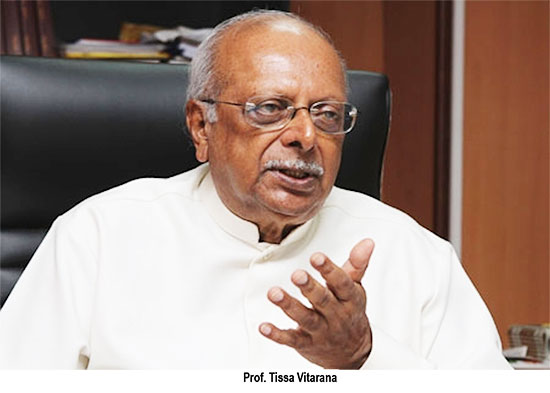
by PROF. TISSA VITARANA
Sri Lanka is facing multiple crises, worst of all a severe economic crisis that can end in bankruptcy. But some Government policy makers are acting as if this is just a hiccup that will pass away and needs no properly targeted drastic action.
For some strange reason the people have not been informed of the gravity of the situation and that a period of austerity with belt- tightening by the whole nation is necessary. Nearly all countries, rich and poor, big and small are faced with this situation. So it is nothing to be ashamed off.
In fact the obtaining of the country’s requirement of vaccines, amid severe competition, was an achievement (though I would have been happier if the mRNA vaccines like Pfizer were left out).The Government policy seems to rely almost entirely on the vaccination programme.
It would appear that the expectation is that if nearly everybody is vaccinated the spread of the disease will also end. But this is not the case as those vaccinated can acquire the infection and also transmitted to others. The vaccination only prevents severe disease and death of the vaccinated individual.
Therefore it is essential that the government strictly enforces the observance of the epidemiological health rules (constant wearing of a good mask, the observance of social distancing, the constant washing of hands well with soap and water if anyone touches an object handled by any other person, and the avoidance of crowds by all. This may need the setting up of Covid-19 committees at village level which can acquire the necessary know how and see that the rules are enforced.
A clear plan of action to address this entire situation and which rallies the whole nation is required. The enforcement of the health rules should be given equal or higher priority in the total program.
Since 1977, after nearly 44 years of a neoliberal economy (where the regulation is by market forces which increase imports and the profit of the super-rich, without providing the basic needs of the people) is the main cause of the crisis.
The cost of imports far outstrips the income from exports, leading to a huge foreign trade imbalance. The drop of dollar income from tourism and expatriate labour due to the Covid-19 pandemic has aggravated the situation. The country has been brought into a situation where our foreign reserves are down to less than one billion US dollars (USD), from an earlier average of USD 7 to 8 billion.
This is not enough to buy our needs from abroad for even one month, nor to repay the accumulated loans acquired mainly after 1977 which amounts to about USD 6 billion per year. The internationally recognized Fitch rating has brought their assessment of our economy down to CC (in a scale that extends from AAA to single C).
Thus as we are rated as being close to bankruptcy and no foreign investors can be expected to come here due to the high risk. Therefore we are forced to borrow short term loans at high interest, specially swaps. Sri Lanka is caught in a foreign “debt trap” and is fast running out of USD to buy even essentials like food and medicines from abroad. The lack of dollars will lead to a severe shortage of essentials. The result will be racketeering and high prices – a black market. This will send prices up further.
Within the country the economic situation is extremely bad and specially people in the villages and the urban slums are suffering terribly. Within Sri Lanka 60% of our population is living in poverty. Hunger is widespread and many live on one meal a day. The malnutrition level has gone up to 18.3% (which means that out of five children who are five years of age one is suffering from malnutrition). Not only will the body and mental development of these malnourished children be badly affected, it can have some adverse impact on the entire future generation.
A significant section of the future generation will be mentally deficient, in addition to being short and thin and may behave abnormally. There may be an increase of crime and misbehavior. This trend has already appeared among a significant section of the present younger generation (who have lost their jobs, and become drug addicts as well as part of the underworld).
It is sad to see intelligent and skilled youth queuing up to obtain passports and visas to go abroad, at a time when we need their skills and energy to develop our country. We can ill-afford this brain drain. My fear is that if the economic and social situation deteriorates further, employed professionals too may join this queue.
How do we prevent or minimize these unfortunate trends? The question asked is how long will this Covid-19 pandemic last. On the basis of experience with past pandemics and epidemics, which have generally existed in epidemic form for two or three years, they have then become milder routine infections like the common cold, or influenza. The appearance and increase of herd immunity contributes to the above change. It is my hope that with Covid -19 too this will be the case.
With regard to the repayment of our loans as a country which has been badly hit by the Covid-19 pandemic as well as the global economic crisis we are entitled to re-negotiate and restructure the repayment of our sovereign debt. Accordingly we should ask for a period (say about five years) where we do not re pay our debt to the creditors. This is to enable us to bring about the requisite changes of the policies that will result in sustainable development. During this period we can ensure that our people obtain their essential needs and their suffering be minimized.
The welfare state (free health, free education, allowances to the needy etc.) must not only be properly implemented during this period but also be sustained in the future. Our dependence on loans can be minimized by ensuring that the haves also take a significant part of the burden. The tax rate in Sri Lanka, both personal (14%) and corporate (18%) is one of the lowest in the world. This must be increased to well above the upper limit of tax charged in countries of Europe (35-40%).


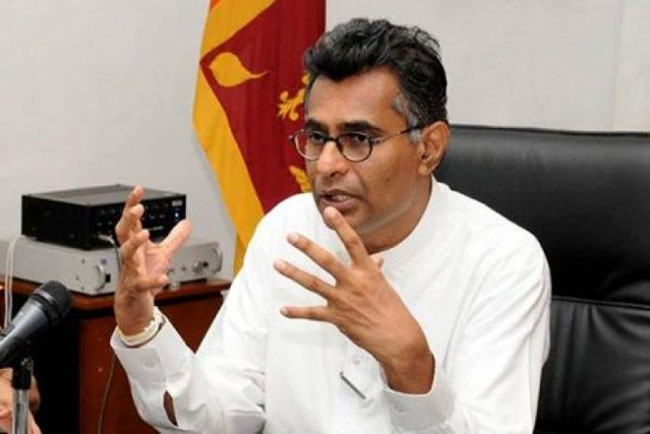
CIABOC urged to deal with NPP the way it dealt with Mahindananda, Nalin
Declaring that large-scale premeditated coal import fraud had caused massive losses, ex-Minister Patali Champika Ranawaka has urged the CIABOC (Commission to Investigate Allegations of Bribery or Corruption) to deal with it, the way former Ministers Mahindananda Aluthgamage and Nalin Fernando were dealt with.
The Colombo High Court Trial-at-Bar sentenced Aluthgamage and former Sathosa Chairman Fernando on 29th May, 2025, for 20 and 25 years RI, respectively, for committing the offence of corruption by procuring 14,000 carrom boards and 11,000 checkers boards, through Sathosa, to distribute to schools and sports clubs selected by the Sports Ministry, and distributing them to party offices of the government during the 2015 Presidential Election, thus causing a loss of over Rs. 53 mn to the government.
Ranawaka, in a statement posted over the weekend on social media, based on documents furnished to Parliament by the CEB recently, declared that the procurement of substandard coal through an Indian company, faulted for money laundering, has so far resulted in a staggering loss of Rs 1,759 mn.
According to the former Colombo District lawmaker, the losses had been brought down to Rs 1,759 mn after the supplier compensated the government to the tune of Rs 1,037. Pointing out that the losses had been estimated at Rs. 2,796 before the supplier was fined, Ranawaka emphasised that the losses mentioned in CEB documents pertained to four shipments of inferior quality coal.
Ranawaka who had been at the forefront of anti-corruption campaigns over the years said that the government reached an agreement with the controversial supplier and so far only six of the 25 coal shipments were received. Based on the losses so far accrued due to the use of inferior quality coal at the Norochcholai Lakvijaya coal-fired power plant, Ranawaka pointed out gravity of the situation.
Commenting on the penalties imposed on the supplier, Ranawaka said that as he had secured shipments at a much lower cost-perhaps USD 30 to 40 per ton less than the usual rate, paying compensation wouldn’t have been an issue.
The former parliamentarian flayed the CIABOC for its failure to investigate the coal fraud in spite of several complaints lodged with it. Ranawaka warned that the country would have to face the consequences of using what he called low-grade coal. The damages to the plant would have to be estimated later, Ranawaka said, while underscoring the importance of using coal aligned with the plant design.
The Island received a copy of letter CEB General Manager Engineer K.S.I. Kumara sent to the Secretary to the Energy Ministry that exposed the procurement of low-quality coal.
Alleging that President Anura Kumara Dissanayake and the entire cabinet of ministers should be held responsible for the procurement of low-quality products knowing the consequences, Ranawaka underscored the need to identify all those who benefited from the coal deal. The ex-lawmaker questioned the possibility of the coal deal being part of a money laundering project.
Ranawaka said that the powers that be wanted 7.5 mn electricity consumers to bear the losses resulting from the corrupt deal. Having repeatedly promised to slash electricity tariffs substantially, the government was now aiming to crease tariffs by 13.5 percent. Hapless Sri Lankans were charged higher rates at a time crude oil and gas were low in the international market, he claimed.
Ranawaka urged the public to protest while calling for an organized campaign to highlight the corruption at the highest levels of the incumbent dispensation. Ranawaka said that slapping of fines proved that coal shipments hadn’t met the stipulated specifications and all attempts by the current dispensation to shield those responsible failed.
At the onset of his statement, Ranawaka said that the government entered into this corrupt coal deal in spite of the Attorney General’s Office advising them to do away with slack procedures in place during the economic crisis.
Following a recent visit to the power stations, former UNP Deputy Minister Ajith P. Perera, who is also a member of the Constitutional Council eclared that the coal scam had been confirmed. “The biggest tender under the NPP government is corrupt,” the attorney-at-law alleged.
By Shamindra Ferdinando
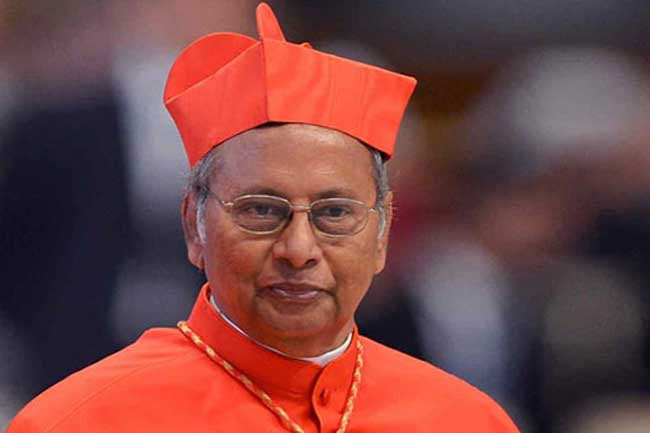
The Archbishop of Colombo, Malcolm Cardinal Ranjith, has voiced concern over what he describes as the growing disintegration of family structures in Sri Lanka, warning that the erosion of marriage poses a serious threat to society.
Addressing devotees at the annual feast of Our Lady of Lourdes Church, in Kalutara, on Saturday, the Cardinal said the collapse of family life in the country was spreading “like a dangerous epidemic.”
Emphasising that the family was the smallest unit of society, he noted that the strength of the broader community depends on the stability of the home.
“The greatest destruction of our time is the systematic breakdown of family life,” Cardinal Ranjith said. “In Sri Lanka today, this has spread like a dangerous epidemic. Many young couples enter marriage driven only by emotions, appearances, attraction, or momentary happiness, and soon abandon it without meaning. Marital life has become a game for many, devoid of any real purpose.”
The prelate stressed that marriage forms the foundation of society and that a successful marital relationship leads to a stable and thriving family. According to the teachings of the Catholic Church, he added, a strong and faithful family life was essential not only for a healthy society but also for the Church to function as a spiritually vibrant institution.
Three main suspects have been taken into custody in connection with the shooting and murder of lawyer Buddhika Mallawarachchi and his wife Nisansala Mallawarachchi in front of a supermarket at Akuregoda, in Thalangama, police said.
The suspects allegedly supplied the T-56 rifle and pistol used in the attack to the hired killers, reportedly under the coordination of the brother of the underworld figure known as Modara Nipun.
Police discovered the vehicle, used by the assassins, set ablaze on Saturday night (14) at Agaliyamulkada, in Baddegama. Ten police teams, including the CID and special task force, are conducting investigations into this high-profile double murder.
Preliminary inquiries indicate that the killing was orchestrated by an organised gang under the direction of underworld leader Karandeniye Sudda, also known as Jayalath de Silva. The lawyer, who had represented several cases on behalf of Karandeniye Sudda and reportedly provided information to a rival known as Lokupeti, is believed to have been targeted for this reason.
The attack occurred on 13 February around 5:00 pm. The couple had returned to their vehicle after visiting the supermarket when a group of hired assassins blocked their car from another vehicle and opened fire. Two gunmen fired approximately 15 shots from a T-56 rifle and a pistol, killing the lawyer and his wife instantly before fleeing. Investigators say the assailants escaped via Homagama, Pothuarawa, Athurugiriya, Kottawa, and Makumbura.
Buddhika Mallawarachchi, a resident of Pitigala, Galle, lived with his wife in the Poré area of Athurugiriya. Investigations reveal that he had represented several underworld figures, including on the day of the attack for a case linked to the Club Wasantha murder incident.
Police reports indicate that Karandeniye Sudda, a fugitive from both law enforcement and the military, remains abroad while allegedly continuing to direct criminal operations in Sri Lanka.
The Bar Association has issued a statement strongly condemning the murders and said it is discussing next steps to address the incident.
The ongoing investigation is under the direct supervision of IGP Priyantha Weerasuriya, with oversight from Western Province Senior DIG Sanjeewa Madawatta, DIG Samantha Wijesekara, and SSP Mangala Dehideniya.
by Norman Palihawadana and Hemantha Randunu

Winless Afghanistan look to keep slim hopes alive against upbeat UAE

Showers expected in the Central, Western, Sabaragamuwa, Southern and Uva provinces and in Ampara and Batticaloa districts

Patali: Four out of 25 low-quality coal shipments caused Rs. 1,759 mn loss

Cardinal warns of ‘epidemic’ breakdown of family life in Lanka

Three suspects arrested in double murder of lawyer and wife in Thalangama

UK Labour campaigner for sanctions against ex-military chiefs due tomorrow

‘Dates have the highest sugar content to fight Coronavirus’

Sunday Island 27 December – Headlines

#SundayIsland 17th December – Headlines

Sunday Island – 28th March

Sunday Island Headlines – 21 March

Sunday Island – 21st February – Headlines
-
 Life style1 day ago
Marriot new GM Suranga
-

 Business5 days ago
Autodoc 360 relocates to reinforce commitment to premium auto care
-

 Midweek Review5 days ago
A question of national pride
-
 Opinion4 days ago
Will computers ever be intelligent?
-

 Features1 day ago
Monks’ march, in America and Sri Lanka
-

 Features1 day ago
The Rise of Takaichi
-

 Features1 day ago
Wetlands of Sri Lanka:
-
 Midweek Review5 days ago
Theatre and Anthropocentrism in the age of Climate Emergency