
News
Coronavirus far more prevalent than indicated by PCR testing statistics

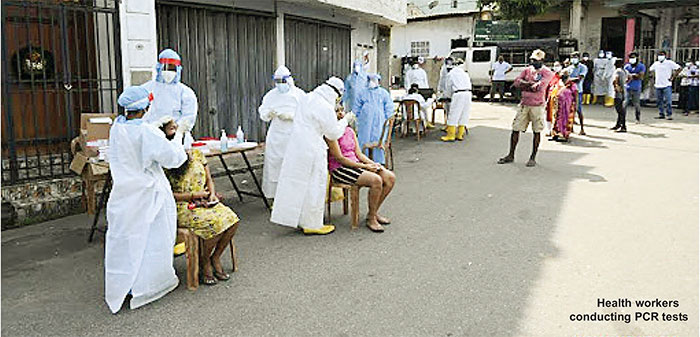
A seroprevalence rate of 24.5% was seen in all age groups in the CMC in the end of January 2021, a research carried by Sri Lankan and British researchers has revealed. This is a much higher number than what the PCR tests indicated.
The research was carried out in the Colombo city, which experienced the highest number of coronavirus cases until the end of January 2021, the researchers have said. Although Sri Lanka had successfully contained the pandemic until the end of September, with no locally detected cases from August to September 2020, an explosive spread began during early October, which rapidly spread across the country.
“However, as Colombo is the commercial capital of the country, and also due to extremely overcrowded living conditions, 32,346/89,817 (36.01%) locally detected cases by the end of March 2021, were from Colombo. Of the cases in the Colombo District, 14,416 (44.6%) were identified within the city. We carried out a serosurvey prior to initiation of the vaccination programme to understand the extent of the SARS-CoV-2 outbreak”, they said.
The researchers added that although the seropositivity rate was highest in the 10–20 age group (34.03%), the PCR positivity rate was 9.80%. Therefore, the PCR positivity rates appear to underestimate the true extent of the outbreak and the age groups which were infected. They said that in many countries, the reported number of cases did not necessarily reflect the extent of the outbreak, age groups infected and groups at risk, as the majority of infections were asymptomatic and limitations in carrying out quantitative real-time PCR for SARS-CoV2. It has been estimated that surveillance of SARS- CoV2 with qRT-PCR alone may underestimate the true prevalence by tenfold.
“Differences in the PCR positivity rates and seropositivity rates were also seen in 60–70-year-olds (8.90 vs 30.4%) and in individuals 70 years (4.10 vs. 1.20%). The seropositivity rate of the females was 29.70% (290/976), which was significantly higher than in males 21.2% (333/1,571), the researchers said.
It is important to carry out serosurveillance studies to understand the true extent of an outbreak in order to understand the future outbreaks that may occur in a particular area and to further understand transmission dynamics and duration of immunity, the researchers have said.
“Based on the seropositivity rates of 24.46%, 138,276 individuals are likely to have been infected, compared to the reported PCR positive cases of 14,416. Therefore, infection detection rates by PCR appeared to have underestimated the actual number of infections by 9.59-fold, which is not surprising as the random PCRs were mainly carried out in the working population and less frequently in those who were confined to their houses.” They claimed that as samples for PCR were obtained on only certain days of the week when the team visited the housing complexes and residential areas, the population who underwent PCRs on most days mainly represented the working population. Blood samples were obtained from these participants at the same time when samples were taken from them for these routine random PCR testing for SARS-CoV-2. None of the participants had any symptoms at the time of obtaining blood samples and were not previously diagnosed as been infected with the SARS-CoV-2 virus.
The researchers further claimed that the Colombo city was divided into six districts: namely D1, D2A, D2B, D3, D4, and D5. Although the overall seroprevalence was 24.46%, certain districts in the CMC (D2A, D2B, and D3) had higher seroprevalence rates (26.2–39%) compared to D4 which only had a seroprevalence rate of 3.33%. These overall differences between the districts reflected the population density and the housing conditions in these districts, with the districts with high seroprevalence having more overcrowded areas, with poor housing conditions. The differences in the seroprevalence rates in different districts could also be due to differences in the control measured adopted. For instance, in D1, although the seroprevalence was 14.76%, certain areas in this district had a very high infection rate as determined by PCR positivity. Due to early detection of SARS-CoV-2 infection in certain areas in this district, these areas were isolated very early, and therefore, it would have curtailed the spread to the rest of the D1 district resulting in fewer infections. Such similar differences have been observed in many states in India, where the slum areas reported seroprevalence rates between 52.6 to 58.7% compared to 12–17.9% in non-slum areas Although the overall seroprevalence rates in the CMC was less than urban areas in India, it was higher than many areas in Europe (Spain, Sweden, Switzerland, and Germany), which reported a seroprevalence between 5 to 13.6% and Iran (22.16%), which reported higher infection rates (14–17). However, the use of different antibody assays, which had a varying degree of sensitivity and specificities in these different studies could result in such differences.
Chandima Jeewandara, Dinuka Guruge, Inoka Sepali Abyrathna, Saubhagya Danasekara, Banuri Gunasekera, Pradeep Darshana Pushpakumara, Deshan Madhusanka, Deshni Jayathilaka, Thushali Ranasinghe, Gayasha Somathilake, Shyrar Tanussiya, Tibutius Tanesh Jayadas, Heshan Kuruppu, Nimasha Thashmi, Michael Harvie, Ruwan Wijayamuni, Lisa Schimanski, T. K. Tan, Pramila Rijal, Julie Xiao, Graham S. Ogg, Alain Townsend and Gathsaurie Neelika Malavige were the researchers involved. (RK)


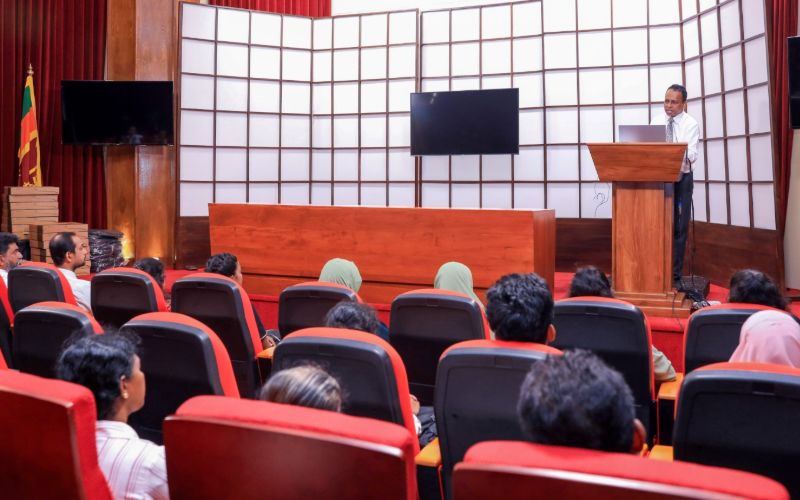
A programme to provide educational equipment to selected university students was held on Thursday (18) morning at the Head Office of the President’s Fund.
During the event, laptop computers were distributed to 14 students selected from applications received through Divisional Secretariat offices across the island. The President’s Fund has allocated Rs. 5.8 million for this initiative.
Accordingly, the President’s Fund has provided educational equipment to approximately 30 university students in 2025 and 2026. More than Rs. 9.8 million has been spent on this programme to date.
The event was attended by Secretary to the President’s Fund and Senior Additional Secretary to the President, Roshan Gamage, along with senior officials of the President’s Fund, parents, and other invitees.
(PMD)


Amidst ongoing accusations that the theft of USD 2.5 mn (nearly 1 bn Rupees) from the Treasury hadn’t been properly investigated, The Island learns that the relevant payments had been made to the actual creditor on the instructions of the Finance Ministry.
Confirming the inquiries made by us, authoritative sources said that payments had been made to several accounts through the US banks. Earlier, Sri Lanka released funds to fake foreign accounts in spite of warnings regarding the suspicions about the process.
The funds were part of a bilateral debt repayment to Australia with a settlement due in September 2025. The payment was part of a $ 22.9 million debt settlement.
The lapses occurred in the wake of far reaching changes regarding the debt management functions. In terms of a particular condition of the International Monetary Fund (IMF), Sri Lanka’s debt management functions that had been previously handled by the Central Bank were transferred to a new institution established under the General Treasury—the Public Debt Management Office (PDMO).
Sources said that regardless of the loss of USD 2.5 mn, Sri Lanka couldn’t have defaulted and therefore payments had been made.
Sources who closely followed the issue said that the government owed an explanation and public apology regarding the loss of USD 2.5 mn and how fresh payments were made.
Sources said that the USD 2.5 mn paid to fake accounts had been lost and could never be traced. CoPF Chairman Dr. Harsha de Silva has said that the NPP government has told the IMF that stolen USD 2.5 mn would be recovered from the public by introducing an amendment to the budget.
By Shamindra Ferdinando
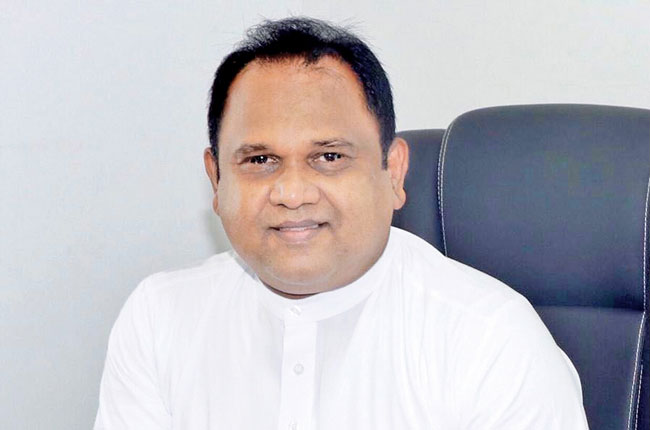
The Court of Appeal yesterday (18) postponed until June 25 the hearing of a petition filed by former Minister Nalin Fernando seeking the dismissal of an indictment brought against him by the Attorney General in connection with the controversial ‘Carrom Boards’ case.
The petition was taken up before a bench comprising Justices P. Kumararatnam and Pradeep Hettiarachchi.
Appearing for the petitioner, President’s Counsel Ali Sabry, instructed by Attorney-at-Law Ramzi Bacha, informed court that Fernando had already been convicted and sentenced to 30 years rigorous imprisonment in a case instituted by the Commission to Investigate Allegations of Bribery or Corruption (CIABOC) arising from the same incident.
Counsel argued that the Attorney General had subsequently filed a separate case based on the same set of charges and maintained that subjecting an accused person to a second prosecution for the same offence was contrary to law.
He submitted that preliminary objections on the issue had been raised before the Colombo High Court but were dismissed by the trial judge.
The petitioner has therefore sought a declaration from the Court of Appeal that the indictment filed by the Attorney General is unlawful and requested that the charges be set aside.
The court directed that the matter be called again on June 25, when the Attorney General is expected to present submissions on the petition.
The case stems from allegations that during the 2015 presidential election campaign, 14,000 carrom boards and 11,000 checkers boards were imported and distributed through Lanka Sathosa outlets for allocation to political offices of former President Mahinda Rajapaksa, resulting in an estimated loss of Rs. 39 million to the State.
Based on those allegations, the Attorney General has instituted proceedings against Fernando before the Colombo High Court under the Public Property Act.

Asia’s richest man Ambani announces what could be India’s biggest share sale

Educational equipment Provided to University Students through the President’s Fund

Fears for US-Iran deal as talks delayed by Israeli strikes on Lebanon

BCCI secretary hints at early start to IPL 2027

Cricket journalist and broadcast legend Qamar Ahmed dies aged 88

Stafanie Taylor, spinners help West Indies overcome Scotland threat

‘Dates have the highest sugar content to fight Coronavirus’

Sunday Island 27 December – Headlines

#SundayIsland 17th December – Headlines

Sunday Island – 28th March

Sunday Island Headlines – 21 March

Sunday Island – 21st February – Headlines
-

 News5 days ago
Release of 2025 O/L results likely to be delayed
-

 Sports5 days ago
Tharanga set for high-profile javelin clash in Ostrava
-

 Features6 days ago
Politics of protected species
-

 News4 days ago
Beijing Capital Airlines to resume flights to Colombo signalling boost to tourism
-

 News5 days ago
Theft of USD 2.5 mn from Treasury: CoPF accused of complicity in NPP cover-up
-

 News7 days ago
Commonwealth lawyers urge Lanka to uphold rule of law
-

 Opinion5 days ago
Decoding Trump’s 12.5% “Forced Labor Tariff” on Sri Lanka
-

 Features3 days ago
Killing of Colombo’s ancient trees — a warning on UN’s World Desertification Day – 17 June