
Latest News
Context is king as Pakistan and New Zealand open pre-Champions Trophy tri-series

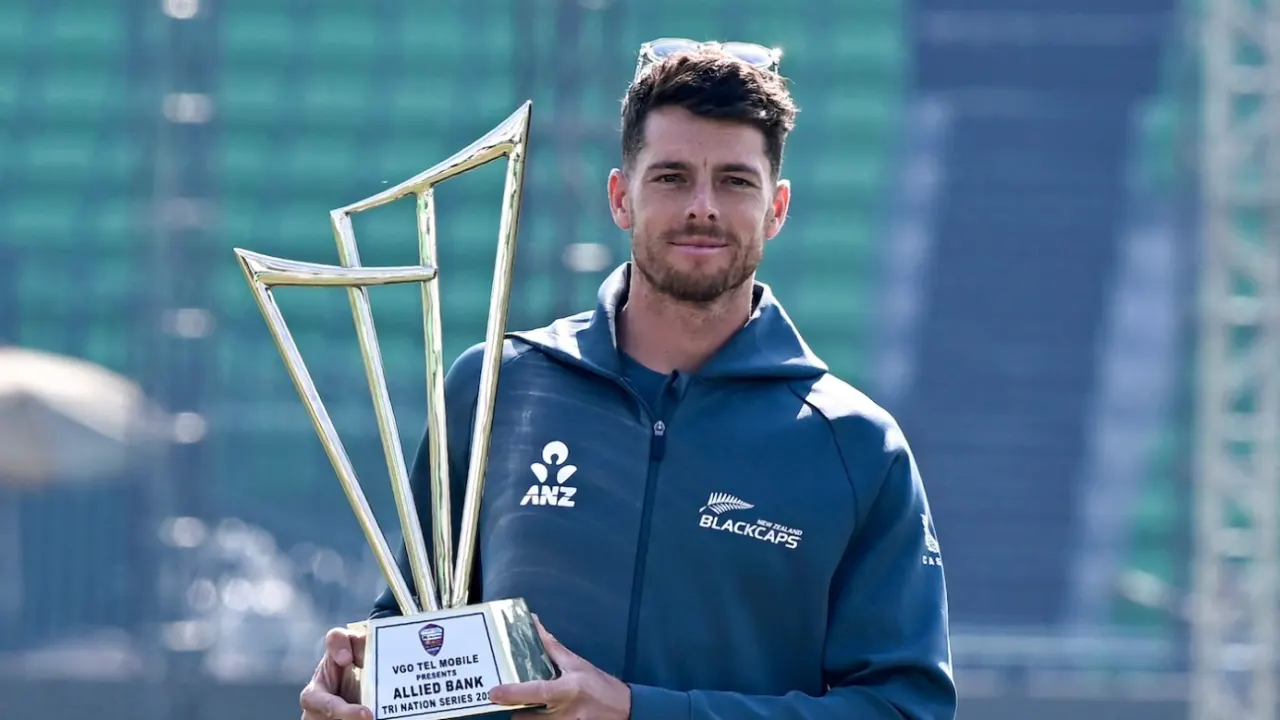
A triangular ODI series is something of a curiosity that belongs in a museum more than it does in 2025. Pakistan last hostedone in 2004, and there have been none in the ODI format anywhere since 2019. When this particular series was announced not long ago, it stood out – it is the only ODI tri series in the current FTP.
Pakistan, New Zealand and South Africa will play a truncated version of the classic tri-series, with just one round of matches followed by a final. The schedule was likely squeezed by the SA20 at one end and the Champions Trophy at the other, and it is that upcoming ICC event – the first hosted by Pakistan in nearly three decades – which gives the series context.
While South Africa’s squad is weakened by player commitments at the SA20 and injuries, Pakistan and New Zealand, who take each other on in the opener, have pretty much full-strength sides. Both have named near-identical squads for this series and the Champions Trophy, and had two practice sessions at the rebuilt Gaddafi Stadium, which will officially be inaugurated on Friday, on the eve of the first game.
For each side, it offers the opportunity for precious match practice in conditions where the Champions Trophy will be held in the main (with India’s matches in Dubai). Pakistan and New Zealand will also open the marquee tournament, though that game will take place in Karachi and not Lahore. Both have played exactly nine ODIs each since the end of the 2023 World Cup, and all in very different conditions to this. While Pakistan won each of their three recent ODI series, New Zealand fell short in the one they played in the subcontinent, a 2-0 reversal against Sri Lanka.
However, it’s not as if they are short of match practice in this country. Since December 2022, they have played two Tests, eight ODIs and ten T20Is in Pakistan across four series. On most of those occasions, though, multiple factors meant New Zealand sent in weakened squads, with larger context to build up to. This time, however, there is a multi-team trophy on the line, all while preparing for the second-biggest title in ODI cricket.
It offers the visitors a chance to trial what appears a healthy balance between seam and spin in Pakistan. Captain Mitchell Santner will have Rachin Ravindra, Michael Bracewell and Glenn Phillips for slow bowling company, while they also have a battery of fast bowlers – no fewer than six – in their tri-series squad.
Pakistan appear to have shown their hand slightly more, with just one full-time spinner alongside Salman Ali Agha, their most plausible part-time spin option. There is a bit of tinkering required at the top, where it appears Fakhar Zaman, back in from the cold, will open with Babar Azam, an experiment the PCB are testing ahead of the Champions Trophy. With this their only game before the deadline to make changes to the squad on February 11, there is more riding on it for them than just the eventual outcome of the contest.
Babar Azam is always in the spotlight, but things are different this time. With Saim Ayub’s injury and Abdullah Shafique’s loss of form, ESPNcricinfo understands Pakistan’s former captain is expected to be called upon to open the batting to provide stability up top. He has, with polarising effect, performed this role in T20 cricket for several years, and more recently stood in as Test opener in Cape Town, scoring a half-century in each innings. In ODIs, however, all but 14 of his innings have come at three, and as he looks to navigate his way out of a difficult run of form, a change of position in his most prolific format will guarantee all eyes on him.
Lockie Ferguson has not played ODI cricket since the tail-end of 2023, but with Pakistan also naming four seamers in their squad, this may be a series where express pace is a factor. Fresh off a respectable showing in the ILT20, where he places among the top-ten wicket-takers, the 33-year-old Ferguson is the oldest fast bowler across all three sides this tri-series, but also the quickest. Against a makeshift Pakistan opening pair and, in Saud Shakeel and Mohammad Rizwan, middle-order players more accomplished against spin than high pace, Ferguson’s extra heat presents a locus of vulnerability for Pakistan, and a point of difference for New Zealand.
Ayub, recovering from an ankle injury, is out of the series and the Champions Trophy. Pakistan are expected to open with Fakhar and Babar, with three premier seam bowlers and Abrar Ahmed as lone frontline spinner. The middle order will see some rotation over the series.
Pakistan (likely) Fakhar Zaman, Babar Azam, Kamran Ghulam, Mohammad Rizwan (capt, wk), Tayyab Tahir/Saud Shakeel, Salman Agha, Khushdil Shah, Shaheen Afridi, Naseem Shah, Haris Rauf, Abrar Ahmed
New Zealand have two opportunities to work out their best side here before the deadline for the Champions Trophy squads shuts. The conditions would suggest three fast bowlers at a minimum. With all of New Zealand’s spinners also handy batters, balance of the side is not much of an issue.
New Zealand (possible) Devon Conway, Will Young, Rachin Ravindra, Kane Williamson, Daryl Mitchell, Tom Latham (wk), Glenn Phillips/Michael Bracewell, Mitchell Santner (capt), Lockie Ferguson, Matt Henry, Will O’Rourke

Latest News
Heavy showers above 100 mm are likely at some places in the Western, Sabaragamuwa, Southern, Central, and North-western provinces and in Anuradhapura district.

WEATHER FORECAST FOR 14 OCTOBER 2026
Issued at 05.30 a.m. on 14 October 2026 by the Department of Meteorology
Due to a low-level atmospheric disturbance persisting in the Bay of Bengal near Sri Lanka, cloudy skies and increased rainfall are expected to continue over the island.
Misty conditions can be expected at some places in the Sabaragamuwa, Central and Uva provinces during the early hours of the morning.
Showers or thundershowers will occur at times in the Northern, Eastern, Southern and Western provinces. Showers or thundershowers will occur in other parts of the island after 1.00 p.m.
Heavy showers above 100 mm are likely at some places in the Western, Sabaragamuwa, Southern, Central, and North-western provinces and in Anuradhapura district while fairly heavy showers above 75 mm are likely at some places in other areas of the island.
The general public is kindly requested to take adequate precautions to minimize damage caused by temporary localized strong winds and lightning during thundershowers.
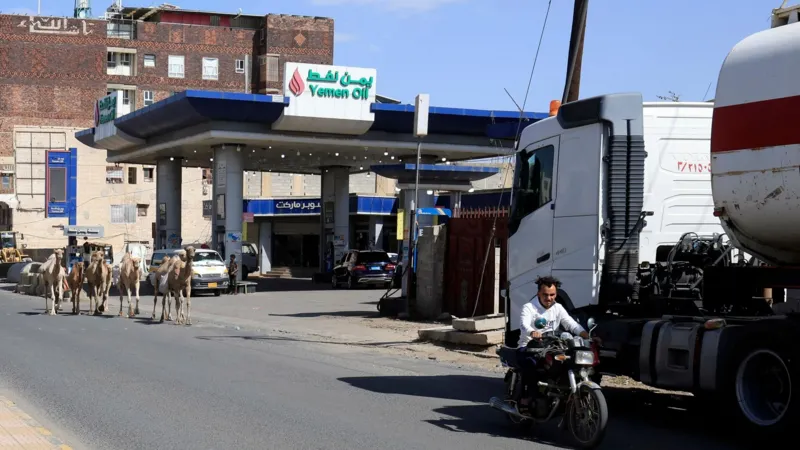
Missiles and drones have been intercepted over Riyadh after the Saudi-led coalition fighting in Yemen struck a fuel depot near the Houthi-controlled capital, Sanaa, its spokesperson says.
Maj Gen Turki al-Maliki said several projectiles targeting the Saudi capital and other cities were intercepted after the coalition carried out a strike on the Yemen Petroleum Company’s al-Sabaha facility on Tuesday night.
The Houthis warned they would target the airport and Aramco refinery in Saudi Arabia’s capital, Riyadh, and Aramco’s headquarters in the eastern city of Dammam.
Al-Maliki later said missiles targeting cities including Dammam had been intercepted, while shrapnel had fallen in a residential area in Dhahran.
It came as the Saudi cabinet, chaired by Crown Prince Mohammed bin Salman, said the Iran-backed group would “bear the consequences” of its recent deadly attacks on the kingdom.
Thirteen people were killed when a missile hit King Khalid International Airport in Riyadh on Saturday, while another person was killed in a similar attack there the following day.
On Tuesday, the coalition said its forces had destroyed three drones north of Riyadh.
The Houthis have said they are targeting airports, oil and gas facilities, and military bases in Saudi Arabia with missiles and drones in response to deadly Saudi strikes on territory that they control in western Yemen, including Sanaa.
The Saudi-led coalition has been providing air support for Yemeni pro-government forces mounting an offensive on Yemen’s Red Sea coast and several other front lines.

A correspondent for AFP news agency reported that queues formed at petrol stations in Sanaa on Tuesday afternoon following the coalition’s warning of an impending operation against the al-Sabaha oil facility, with many residents worried about shortages.
The Yemen Petroleum Company, which is run by the Houthis, issued a statement that sought to reassure them, saying the facility “does not contain any stock of petroleum products”.
The company also said it had “taken all necessary precautionary measures to address any emergency, ensuring the stability of the supply situation and the continued meeting of citizens’ needs in a normal manner”.
After al-Maliki confirmed the strike, first reported by Houthi media, explosions were heard over Riyadh and other Saudi cities, with al-Maliki reporting four missiles and two drones had been intercepted near the capital.
Yemen has been devastated by a civil war that began in 2014, when the Houthis ousted the internationally-recognised government from Sanaa. The conflict escalated in 2015, after the Saudi-led coalition of Arab states intervened in an attempt to restore the government’s rule.
A four-year-old informal ceasefire began to unravel in July, when the Houthis announced a “maritime embargo” against Saudi Arabia and began missile and drone attacks on Saudi airports, oil facilities and tankers in the Red Sea.
The Houthis said they were retaliating for what they call a Saudi blockade of their territory, as well as an air strike on Sanaa airport that they blamed on the kingdom.
The conflict escalated in September after the Houthis seized part of Yemen’s south-western Red Sea coast near the Bab al-Mandab Strait, a chokepoint for global shipping. Their advance contributed to a rise in oil prices following six months of war between the US, Israel and Iran.
US President Donald Trump said on Truth Social on Tuesday the Houthis were “behaving very badly… and purposefully trying to drive up Oil Prices”.
Speaking to reporters, he did not answer a question on whether he’d made a decision to help the Saudis retaliate against them, but said he “might” ask Turkish President Tayyip Erdogan to intervene.
Last week, pro-government forces said they had regained control of territory overlooking Bab al-Mandab after launching a major counter-offensive with the support of Saudi air strikes.
Hundreds of people have reportedly been killed in Yemen since August. The UN’s human rights office says they include at least 54 civilians, half of them children.
More than 216,000 people have also been displaced across the country, and suspected cholera cases have tripled in three weeks, rising from 217 to 647, according to the UN.
[BBC]
Pope Leo XIV has been diagnosed with lung cancer but had successful surgery to remove a lower lobe of his right lung, the Vatican has said in a medical bulletin.
The 71-year-old underwent a 90 minute surgery on Tuesday at Rome’s Gemelli Hospital and was subsequently diagnosed with lung adenocarcinoma.
“After the operation, the Pope awoke normally and returned after a brief period of observation to his room on the 10th floor,” the Vatican said in a statement.
The lump was first detected during what the Vatican has described as “routine checks”.
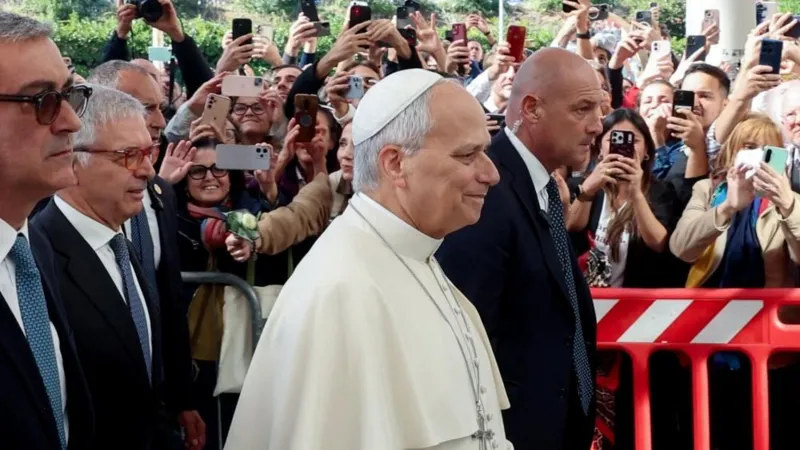
Earlier, large crowds gathered outside the hospital to greet the Pope, with some waiting for several hours.
They cheered greetings and well wishes as he passed, while he waved and smiled back through the lowered back window of his car.
He was then met by staff on the hospital steps. “I’m sorry,” one of them commiserated, to which the Pope gave a smile and a shrug. “We’re here for you,” he was assured.
In its statement, the Vatican said the whole lower lobe of the Pope’s right lung was removed “to ensure the procedure was radical”.
A Vatican source told Agence France-Presse news agency further tests were being carried out to see if there was any sign the cancer had spread.
It was Leo XIV himself who on Sunday announced news of his operation to the world, speaking from the balcony in St Peter’s Square after delivering the traditional Angelus blessing.
He said the nodule, or growth, on his lung was “contained” and had been found “at a very early stage”, but that doctors had advised him to have it removed.
Gemelli’s thoracic surgery team operated on the Pope, whose schedule has already been cleared until 20 October to give him time to recover.
Nodules are quite common and not necessarily cancerous, but after it was examined the medical team confirmed it was pulmonary adenocarcinoma, “as suspected by pre-operative tests”, the Vatican said.
The Vatican has stressed that the pontiff, who is generally thought to be fit, had no symptoms of infection or illness.

Cardinal Kikuchi Tarcisio Isao of Tokyo wrote on social media that he’d had an audience with Pope Leo on Monday, and said the pontiff felt “nothing wrong” physically.
He said the Pope had decided to check in for surgery as soon as possible because he was due to travel to Latin America in early November, and was keen to stick to that plan.
The trip is particularly significant because it includes a visit to Peru, where the pontiff was a missionary and then a Bishop for many years.
Despite all the reassurances, the news has shaken Catholics all over the world.
“Am I worried? Yes, because I certainly wasn’t expecting anything like this,” Vatican Secretary of State Cardinal Parolin told journalists on Tuesday.
He agreed that the news was like a “bolt from the blue”, but said the cardinals had been struck by the Pope’s “serenity” and were confident in his recovery.
Outside Gemelli Hospital, which has treated several popes and is home to a large statue of John Paul II, a few Catholics lingered after the pontiff was admitted.
Carla had come specially, wanting to be close.
“He seems calm, so we are calm too – even though illness is always unpleasant,” she told the BBC. “We will wait here and pray.”
[BBC]

Heavy showers above 100 mm are likely at some places in the Western, Sabaragamuwa, Southern, Central, and North-western provinces and in Anuradhapura district.

Sri Lanka, India caught in US-Iran ship crisis

Namal further remanded

IMF projects Lankan economic growth to moderate amidst mounting global uncertainties

Major Gen Pushpakumara assumes command of 56 Infantry Division

Dickwella axed, Bandara earns maiden Test call up

‘Dates have the highest sugar content to fight Coronavirus’

Sunday Island 27 December – Headlines

#SundayIsland 17th December – Headlines

Sunday Island – 28th March

Sunday Island Headlines – 21 March

Sunday Island – 21st February – Headlines
-

 Features7 days ago
The Sri Lankan who made Scottish history
-

 Sports7 days ago
Nissanka absence opens door for Sri Lanka’s young guns
-

 News6 days ago
NDB fraud Rs 60mn more than reported
-

 News6 days ago
Removing monk’s robes matter for Sangha to decide: Mahanayake Theras
-
 News7 days ago
Shiranthi R remanded until 13 Oct.
-

 News4 days ago
Sri Lanka escalates anti-graft drive with Shiranthi’s jailing
-

 Features7 days ago
Future of Sri Lanka’s state university system: Should it be shut down and reopened?
-
 News5 days ago
NPP govt. reminded of its responsibilities as US warship leaves Colombo