
Latest News
Context is king as Pakistan and New Zealand open pre-Champions Trophy tri-series


A triangular ODI series is something of a curiosity that belongs in a museum more than it does in 2025. Pakistan last hostedone in 2004, and there have been none in the ODI format anywhere since 2019. When this particular series was announced not long ago, it stood out – it is the only ODI tri series in the current FTP.
Pakistan, New Zealand and South Africa will play a truncated version of the classic tri-series, with just one round of matches followed by a final. The schedule was likely squeezed by the SA20 at one end and the Champions Trophy at the other, and it is that upcoming ICC event – the first hosted by Pakistan in nearly three decades – which gives the series context.
While South Africa’s squad is weakened by player commitments at the SA20 and injuries, Pakistan and New Zealand, who take each other on in the opener, have pretty much full-strength sides. Both have named near-identical squads for this series and the Champions Trophy, and had two practice sessions at the rebuilt Gaddafi Stadium, which will officially be inaugurated on Friday, on the eve of the first game.
For each side, it offers the opportunity for precious match practice in conditions where the Champions Trophy will be held in the main (with India’s matches in Dubai). Pakistan and New Zealand will also open the marquee tournament, though that game will take place in Karachi and not Lahore. Both have played exactly nine ODIs each since the end of the 2023 World Cup, and all in very different conditions to this. While Pakistan won each of their three recent ODI series, New Zealand fell short in the one they played in the subcontinent, a 2-0 reversal against Sri Lanka.
However, it’s not as if they are short of match practice in this country. Since December 2022, they have played two Tests, eight ODIs and ten T20Is in Pakistan across four series. On most of those occasions, though, multiple factors meant New Zealand sent in weakened squads, with larger context to build up to. This time, however, there is a multi-team trophy on the line, all while preparing for the second-biggest title in ODI cricket.
It offers the visitors a chance to trial what appears a healthy balance between seam and spin in Pakistan. Captain Mitchell Santner will have Rachin Ravindra, Michael Bracewell and Glenn Phillips for slow bowling company, while they also have a battery of fast bowlers – no fewer than six – in their tri-series squad.
Pakistan appear to have shown their hand slightly more, with just one full-time spinner alongside Salman Ali Agha, their most plausible part-time spin option. There is a bit of tinkering required at the top, where it appears Fakhar Zaman, back in from the cold, will open with Babar Azam, an experiment the PCB are testing ahead of the Champions Trophy. With this their only game before the deadline to make changes to the squad on February 11, there is more riding on it for them than just the eventual outcome of the contest.
Babar Azam is always in the spotlight, but things are different this time. With Saim Ayub’s injury and Abdullah Shafique’s loss of form, ESPNcricinfo understands Pakistan’s former captain is expected to be called upon to open the batting to provide stability up top. He has, with polarising effect, performed this role in T20 cricket for several years, and more recently stood in as Test opener in Cape Town, scoring a half-century in each innings. In ODIs, however, all but 14 of his innings have come at three, and as he looks to navigate his way out of a difficult run of form, a change of position in his most prolific format will guarantee all eyes on him.
Lockie Ferguson has not played ODI cricket since the tail-end of 2023, but with Pakistan also naming four seamers in their squad, this may be a series where express pace is a factor. Fresh off a respectable showing in the ILT20, where he places among the top-ten wicket-takers, the 33-year-old Ferguson is the oldest fast bowler across all three sides this tri-series, but also the quickest. Against a makeshift Pakistan opening pair and, in Saud Shakeel and Mohammad Rizwan, middle-order players more accomplished against spin than high pace, Ferguson’s extra heat presents a locus of vulnerability for Pakistan, and a point of difference for New Zealand.
Ayub, recovering from an ankle injury, is out of the series and the Champions Trophy. Pakistan are expected to open with Fakhar and Babar, with three premier seam bowlers and Abrar Ahmed as lone frontline spinner. The middle order will see some rotation over the series.
Pakistan (likely) Fakhar Zaman, Babar Azam, Kamran Ghulam, Mohammad Rizwan (capt, wk), Tayyab Tahir/Saud Shakeel, Salman Agha, Khushdil Shah, Shaheen Afridi, Naseem Shah, Haris Rauf, Abrar Ahmed
New Zealand have two opportunities to work out their best side here before the deadline for the Champions Trophy squads shuts. The conditions would suggest three fast bowlers at a minimum. With all of New Zealand’s spinners also handy batters, balance of the side is not much of an issue.
New Zealand (possible) Devon Conway, Will Young, Rachin Ravindra, Kane Williamson, Daryl Mitchell, Tom Latham (wk), Glenn Phillips/Michael Bracewell, Mitchell Santner (capt), Lockie Ferguson, Matt Henry, Will O’Rourke


The UK government will charter a flight from Dubai early next week for British nationals wanting to leave the region.
It comes as the United Arab Emirates (UAE) continues to be affected by the conflict.
On Saturday, a resident was killed by falling shrapnel from a “aerial interception” officials said, and a drone strike was also caught on camera near the city’s international airport.
Iran’s President Masoud Pezeshkian said earlier that Iran would not attack neighbours “unless attacked first”.
Qatar also reported missile and drone attacks on Saturday.
The government’s commercial flight will be available for a charge. British nationals, their spouse or partner and children under the age of 18 are eligible to register.
Two government-chartered flights so far have returned British citizens from Muscat, Oman.
The first landed at Stansted airport on Friday, the second at Gatwick airport on Saturday. A third flight will leave Muscat on Sunday.
The Foreign Office said the Dubai flight will be in addition to commercial routes operating out of the UAE and will leave early next week.
The government says all passengers must hold a valid travel document and non-British dependants will require a valid visa or permission to enter or remain that was granted for more than six months.
The Foreign Office will contact people directly to issue them a ticket and will prioritise those who are vulnerable, such as those with urgent medical needs.
More than 160,000 people have registered their presence in the region with the Foreign Office.
Air travel via Dubai, one of the world’s busiest airports, has been severely disrupted since Iran began launching retaliatory strikes at Gulf nations in response to the US and Israel’s offensive.
Last week, Emirates briefly suspended all flights from Dubai, which is a popular tourist destination for UK nationals.
On Saturday, footage verified by the BBC showed what appeared to be a drone striking within the perimeter of Dubai International Airport.
The footage, filmed from an industrial area just south of the airport, captured an explosion close to a terminal building.
The UAE government has not commented on the incident.
Throughout the week, British people who have been stranded in the region have told the BBC about their experiences.
On 28 February, Victoria Cameron, from Larkhall in Scotland, was queuing to get into her Dubai hotel when the first Iranian missiles struck the city.
“Then the staff said ‘run, run, leave your suitcases’. They rushed us all to the side of the hotel.
“Our phones were going off, saying ’emergency, emergency’. We were crying, we were shaking.”
Cameron arrived back in Edinburgh on Wednesday on an Emirates airline flight.
Stuart Carson was staying at Fairmont The Palm Hotel in Dubai on Saturday when it was struck, causing his “whole room to completely shake”.
“Once dawn broke, we started to feel a bit more comfortable with the situation and just gathered our thoughts and had breakfast in the hotel,” he said.
He arrived back home in Northern Ireland on Tuesday, after a number of earlier flights he had booked were cancelled by airlines.
[BBC]
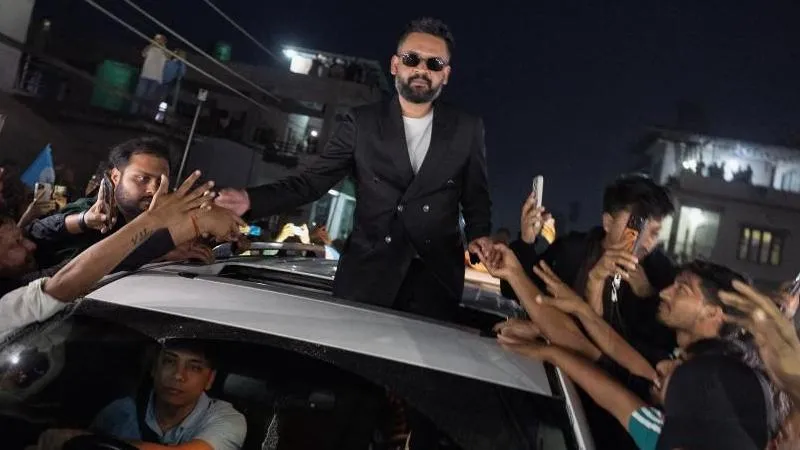
Rapper Balendra Shah has defeated the former Nepalese Prime Minister Sharma KP Oli in his parliamentary constituency, as he takes a step closer to becoming Nepal’s next prime minister.
Nepal’s Election Commission confirmed on Saturday that Shah, 35, received 68,348 votes compared to Oli’s 18,734 to unseat the former leader in his constituency.
Thursday’s general election – the first since violent youth-led protests toppled the government in September – pitted the establishment against a new generation of politicians advocating for angry, young Gen Z voters hungry for change.
Shah’s Rastriya Swatantra Party (RSP) is now seemingly on course to win the general election.
The party has a majority in directly elected seats in the general election counted so far, according to partial official results on Sunday, and could be heading for a landslide, official trends suggest.
The 35-year-old is also leading in the proportional representation vote count so far, according to the election commission.
For more than two decades, Nepal has seen a revolving door of coalition governments, largely dominated by three parties, two of them communist.
Ahead of this election, it looked set to test whether Gen Z voters had succeeded in convincing the rest of the country that it is time for a new, untested generation to shape their future, or whether veteran heavyweights – who have dominated for decades – would keep hold of power.
The country’s youth included 800,000 first-time voters, making them a key voter bloc.
Shah, who is popularly known as Balen, has been a member of the Nepali hip hop scene for several years, with one of his songs “Balidan” about sacrifice in the Nepali language cultivating millions of YouTube views.
In September 2025 unrest erupted in Nepal with so-called Gen Z demonstrations, triggered by Oli’s banning of social media platforms.
The demonstrations escalated with protesters criticising Nepal’s political system and the symbolism of class inequality “nepo babies” – children of the country’s politicians.
A total of 77 were killed during the protests, and a BBC investigation revealed the country’s police chief issued an order of lethal fire against thousands of unarmed protesters.
Shah spoke in support of the protesters and at one stage called Oli a “terrorist” who had betrayed his country.
The rapper typically shuns the media, but told the Financial Times while he was on the campaign trail he would be “the candidate for all of Nepal”.
Shah’s RSP released its manifesto in February which vowed to create 1.2 million jobs and reduce forced migration, in an effort to tap into frustration over unemployment and low wages that has pushed millions of Nepalis to move overseas.
The party has also pledged that within five years it would raise Nepal’s per capital income from $1,447 to $3,000, more than double the country’s economy to $100 billion GDP and provide safety nets such as healthcare insurance for the population.
[BBC]
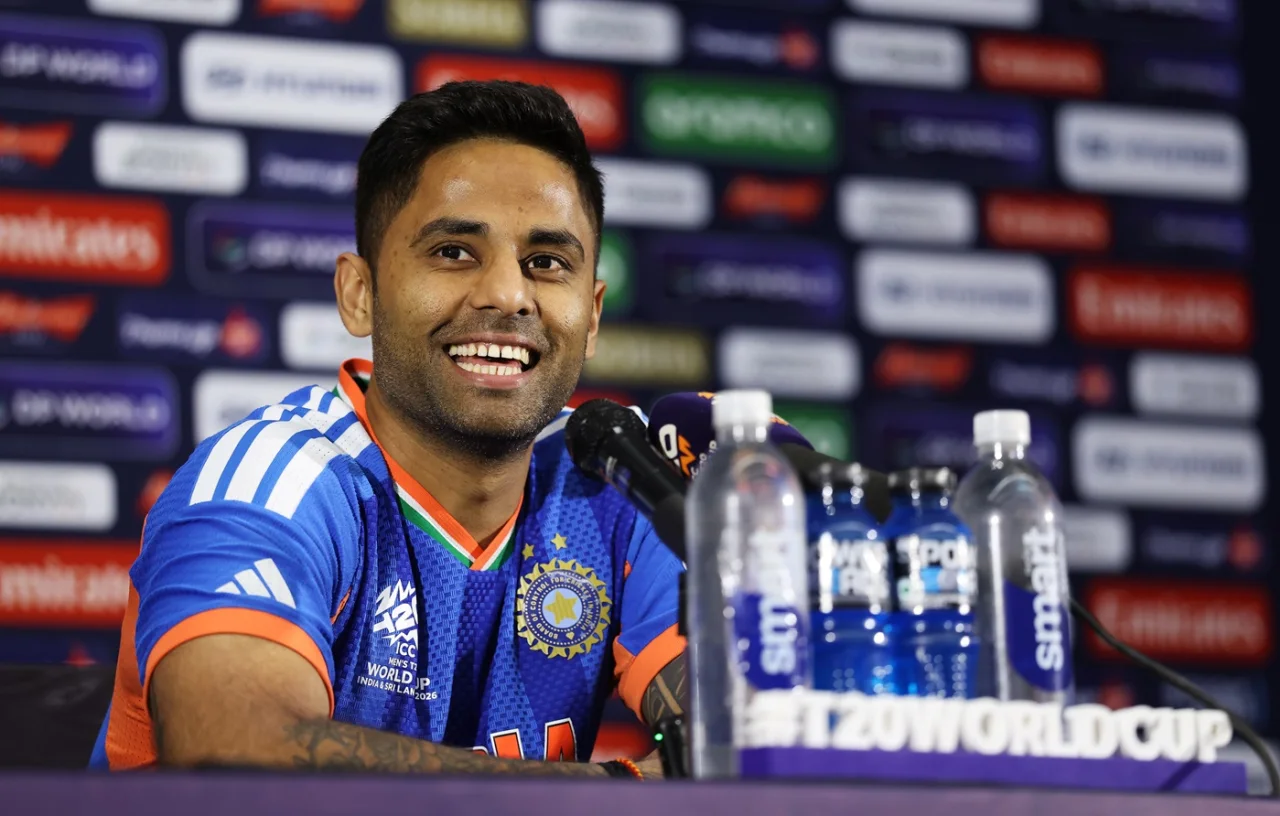
Call it beauty, call it cruelty, but this is the reality.
This Indian T20I unit is a GOAT team. They last lost a series or tournament in August 2023. Since the start of the previous T20 World Cup, they have won seven matches for every one they have lost. To the group that won the trophy in 2024 they have added Abhishek Sharma, Tilak Varma, Varun Chakravarthy and loads of intent.
India are so good that they have pivoted twice – first from Shubman Gill to Ishan Kishan just before this tournament began, then to bring back Sanju Samson during the tournament – and the pieces have seamlessly fallen in place.
Yet they won’t be viewed as the GOAT if they don’t win in Ahmedabad on Sunday. We don’t make the rules. This is how cricket works. Anything that involves more than two teams in cricket – even all the “leagues” – are a hybrid of league and knockout.
When you do that in the most fickle format of the sport, where it is the most difficult to establish an association between process and outcome, you can end up having the cagey campaign India have had. They are so good that they only have everything to lose in this tournament.
Kipling’s two impostors are more different for India than any other team. This is not to justify a lack of scientific temperament but there’s been an element of the obsessiveness to India’s journey through the T20 World Cup: regular visits to temples, avoiding training during a lunar eclipse, possible changing of hotels for the final. There aren’t enough controllables in this format, so you start trying to control whatever you can.
On the field, India have still done enough – though not at their absolute best – to make the final. Sanju Samson has found the form of his life, Jasprit Bumrah is still being “played out” even in chases of 254, and Hardik Pandya is the closest you get to two players in one.
Still, India don’t want to be anything less than their best against an opponent whose DNA is to care a lot but play like they don’t care at all. New Zealand don’t have mystery spin, they don’t have a Bumrah like genie , but they are dangerous because they can treat the two impostors almost the same. In India, November 19 is a day of mourning; for New Zealand, whatever happens on March 8 might not dominate conversation the following week.
Like India, New Zealand have also had to pivot, calling in a 34 year old mid-tournament, giving him the new ball, having him take out two dangerous left-hand batters and then not have him do anything for the rest of the semi-final. Since 2019, no team has made more ICC semi-finals than New Zealand’s six. Only India have made more finals than their four. Their best players don’t even want their national contracts; they encourage such a healthy workspace, let them play elsewhere most of the time, but put the band together for the big time.
New Zealand will not make the mistakes England’s bowlers made against India in the semi-final. They will have researched every batter and put plans in place, ready to execute. Now India could still be good enough to beat them, but they will not be fed.
Sunday will be tactical, it will be emotional, it will be full of skill and some luck, and by the end of the night, both teams will have to make peace with whatever impostor they draw. That is the reality of the game.
India have won every match except for the Super Eight contest against South Africa, after which they won the must-win games against Zimbabwe and West Indies, and then beat England in a high-scoring thriller in the semi-final.
New Zealand only barely made it to the semi-final, losing comprehensively to South Africa in the first round and to England in the Super Eight, but then they thrashed the unbeaten South Africans in the semi-final.
He didn’t end up as the Player of the Match in either of them, but Jasprit Bumrah repeated in the semi-final the work he did in the final two years ago. England had brought a chase of 254 down to 69 off the last five, but Bumrah bowled two of those overs for just 14 runs. If he can again put in a performance where New Zealand only take what is on offer, India should win.
Daryl Mitchell has had a quiet tournament. He hardly got to bat in the group stage and then had an ordinary Super Eight round on slower pitches in Sri Lanka. Having steered New Zealand to their first ODI series win in India in January, Mitchell will be vital to his team because he has scored at two a ball against Bumrah in internationals, and 10.18 per over overall. If he can impose on Bumrah a normal day at the T20 office, he will have gone a long way to helping New Zealand’s cause.
Abhishek will not be touched, but India have a Varun Chakravarthy problem. Eight of his leakiest spells in T20Is have come in the last two and a half months. Current form has higher weightage in T20 cricket than in other formats and Varun’s current form is 11.6 per over and four wickets since the start of the Super Eight round. The three alternatives are Kuldeep Yadav, Mohammed Siraj and Washington Sundar in that order of likelihood because India won’t want to diminish their striking ability.
India (probable): Abhishek Sharma, Sanju Samson (wk), Ishan Kishan, Tilak Varma, Suryakumar Yadav (capt), Hardik Pandya, Shivam Dube, Axar Patel, Arshdeep Singh, Jasprit Bumrah, Varun Chakravarthy/Kuldeep Yadav/Mohammed Siraj
For New Zealand, the question is more about structure. They made do against South Africa with just three specialist bowlers, and James Neesham carded at No. 9. With the ball, Neesham went for 42 in three overs, and New Zealand were rescued by Rachin Ravindra’s four overs for 29 runs and two wickets, including that of David Miller, who mishit a slot ball and still got caught only just inside the boundary. You won’t always have such luck. Can New Zealand afford to play with the same structure against India? Jacob Duffy is a choice. Ish Sodhi might not be because the pitch in Ahmedabad is more suited to hit-the-deck bowlers than spinners.
New Zealand (probable): Tim Seifert (wk), Finn Allen, Rachin Ravindra, Glenn Phillips, Mark Chapman, Daryl Mitchell, Mitchell Santner (capt), Cole McConchie, Jimmy Neesham/Jacob Duffy, Matt Henry, Lockie Ferguson
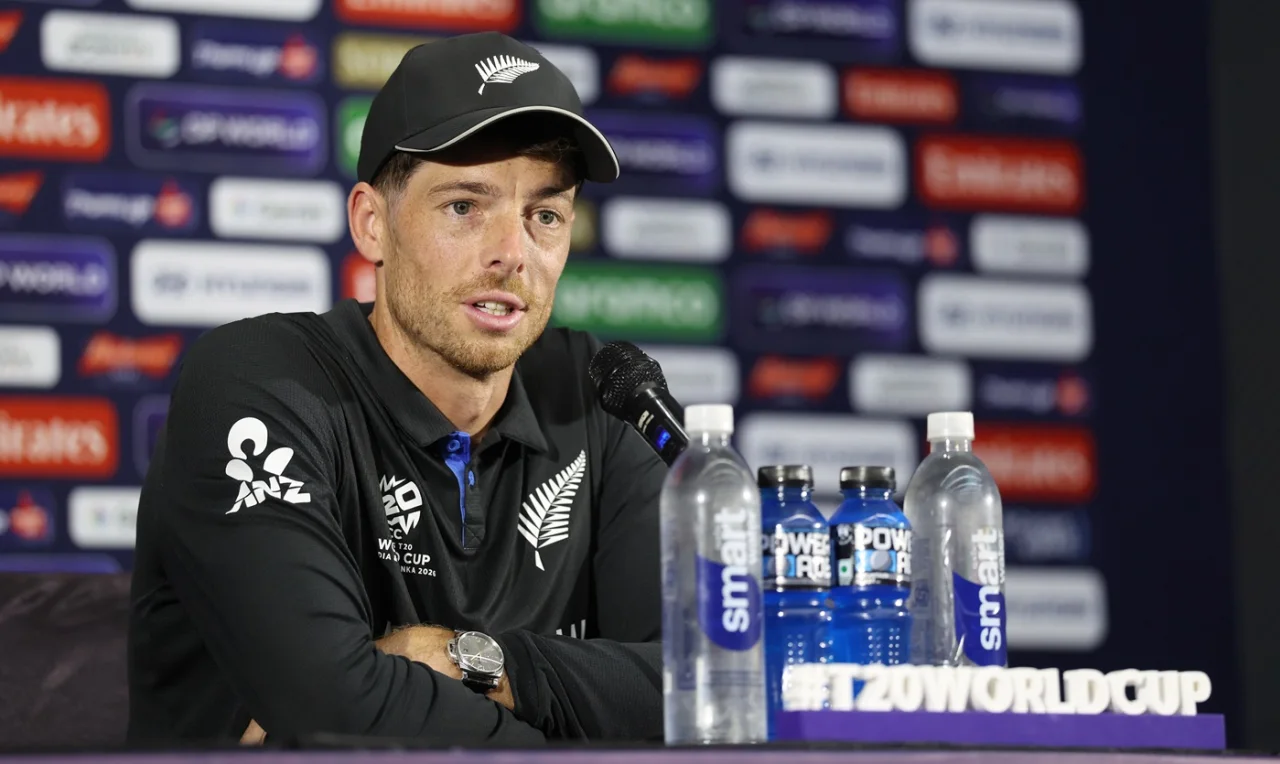
Mitchell Santner addresses the media before the T20 World Cup final [Cricinfo]
[Cricinfo]

UK to charter flight for British nationals out of Dubai

Heavy rains and flooding kills at least 23 in Nairobi

Rapper-politician Balendra Shah unseats Nepal’s ex-PM as he heads for victory

Triumph and disaster: India, New Zealand and a trophy for one

Sutherland’s sublime century and Hamilton’s night-time burst flatten India

Trump says US does not need UK aircraft carriers for Iran war

‘Dates have the highest sugar content to fight Coronavirus’

Sunday Island 27 December – Headlines

#SundayIsland 17th December – Headlines

Sunday Island – 28th March

Sunday Island Headlines – 21 March

Sunday Island – 21st February – Headlines
-

 Features6 days ago
Brilliant Navy officer no more
-

 News2 days ago
University of Wolverhampton confirms Ranil was officially invited
-

 Opinion6 days ago
Sri Lanka – world’s worst facilities for cricket fans
-

 News3 days ago
Legal experts decry move to demolish STC dining hall
-

 Features6 days ago
A life in colour and song: Rajika Gamage’s new bird guide captures Sri Lanka’s avian soul
-

 News2 days ago
Female lawyer given 12 years RI for preparing forged deeds for Borella land
-

 Business4 days ago
Cabinet nod for the removal of Cess tax imposed on imported good
-

 News1 day ago
Wife raises alarm over Sallay’s detention under PTA