
Opinion
Constitution-making should be Open, Public and Transparent

We, the undersigned, issue this public statement to urge the Government to adopt a transparent and consultative approach to its ongoing constitutional reform process. We make this request in light of the following:
1.In September 2020, the Cabinet of Ministers appointed a committee of experts to draft a new constitution. This committee received submissions from the public for several months and is presumably now drafting a new constitution. The President has indicated that a new constitution will be adopted in 2022. However, there is no information in the public domain as to the process that is being followed by the committee at the present moment, in developing its draft. The principles that should guide the content of the proposed constitution have not been made public either. Moreover, it is yet unknown whether the draft will be made available for public discussion before being presented to Parliament.
2.We recognise that previous attempts at amending the Sri Lankan Constitution and previous efforts to adopt a new Constitution have almost always been problematic. They have been unsatisfactory, in terms of process as well as substance. However, we would like to note that we all should strive to learn the lessons that a critical study of past experiences in constitution-making teach us and aspire to improve.
3. Constitution-making is a challenging task. Ensuring effective public participation and consultation that goes beyond a box ticking exercise is challenging, yet necessary. Some aspects of constitutional reform will be the subject of contentious political negotiation and bargaining. Even the best of efforts, made in good faith, often yield unsatisfactory results. Nevertheless, elected representatives of the people are duty bound to consult the public who give them a mandate to draft and authorise a new constitution and therefore engage them in this process to ensure that their views are also counted. In any event, a process that involves no consultation or transparency is not acceptable within a democratic society.
4. Despite the importance of the task of drafting a new constitution for Sri Lanka, the public is disengaged from the process. Other reform processes, including reforming the electoral system, are underway. Meanwhile, the recently announced proposal for a ‘One Country, One Law’ initiative gives cause for concern. It has the potential to create much anxiety among the ethnic minorities. The committee appointed for it fails to inspire confidence due to the lack of representativeness in its composition. Moreover, these processes seem to run parallel to the drafting of a constitution which is the supreme law of the land. It is not clear as to how these parallel initiatives will align with the constitutional reform exercise.
5. We also express our deep concern about the long-term negative consequences of the very idea of ‘One country, One Law’ for a multi-ethnic society. Sri Lanka’s national unity requires the recognition of pluralism within a framework of democratic constitution and a Bill of Rights.
Therefore, we urge the Government:
1. To ensure that a strong degree of accountability and transparency is maintained in the ongoing constitutional reform process. This could be ensured through regular reporting by the Committee to the Parliament and to the public.
2. To make the draft available to the public in all three languages, to accompany its distribution by a meaningful and effective constitutional literacy programme aimed at supporting the Sri Lankan citizens to engage with the draft, and to ensure that adequate time will be afforded for public debate and discussion on the draft.
3. To design a process whereby the public will get an opportunity to respond to the draft and provide inputs.
4. The constitution which is in force requires that a new constitution be approved with 2/3 majority in Parliament and by the People at a referendum. Such a referendum must be carried out in a context where Sri Lankan citizens can exercise their vote in an informed, critical and responsible manner.
Signatories
1. Prof Abeysinghe Navaratne Bandara
2. Geoffrey Alagaratnam PC
3. Dr Lionel Bopage
4. Dr Visakesa Chandrasekaram
5. Dr Radhika Coomaraswamy
6. Dr Priyan Dias
7. Rohan Edrisinha
8. Ameer Faaiz
9. Marshal Fernando
10. Dr Mario Gomez
11. Dr Kumaravadivel Guruparan
12. Tissa Jayatilaka
13. K W Janaranjana
14. Dr Sakuntala Kadiragamar
15. P Muthulingam
16. Prof Arjuna Parakrama
17. Prof Harshana Rambukwella
18. Sanjayan Rajasingham
19. Dr. Ramesh Ramasamy
20. Shreen Abdul Saroor
21. Dr Dinesha Samararatne
22. Kumudini Samuel
23. Dr Kalana Senaratne
24. Dr Pakiasothy Saravanamuttu
25. Prof Sumathy Sivamohan
26. Emeritus Prof Jayadeva Uyangoda
27. Dr Asanga Welikala
28. Dr Jayampathy Wickramaratne PC

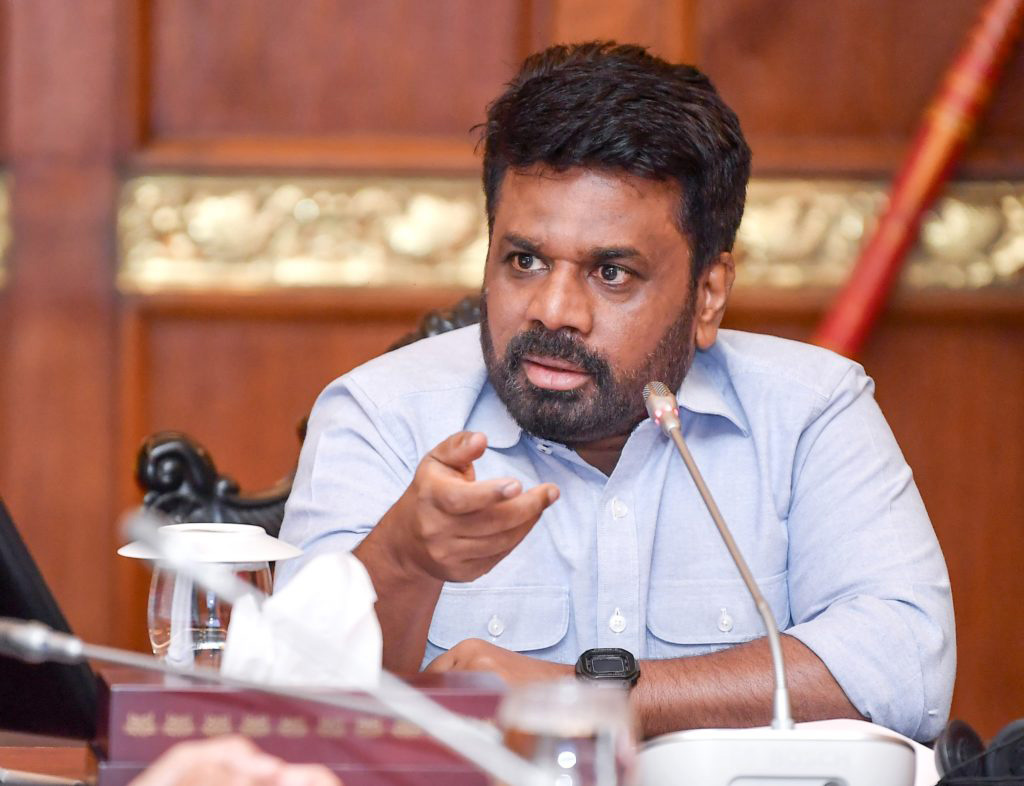
President Anura Kumara Dissanayake should listen at least to the views of the Mothers’ Front on proposed educational reforms.
I was listening to the apolitical views expressed by the mothers’ front criticising the proposed educational reforms of the government and I found that their views were addressing some of the core questionable issues relevant to the schoolchildren, and their parents, too.
They were critical of the way the educational reforms were formulated. The absence of any consultation with the stakeholders or any accredited professional organisation about the terms and the scope of education was one of the key criticisms of the Mothers’ Front and it is critically important to comprehend the validity of their opposition to the proposed reforms. Further, the proposals do include ideas and designs borrowed from some of the foreign countries which they are now re-evaluating in view of the various shortcomings which they themselves have encountered. On the subject, History, it is indeed unfortunate that it has been included as an optional, whereas in many developed countries it is a compulsory subject; further, in the module the subject is practically limited to pre-historic periods whereas Sri Lanka can proudly claim a longer recorded history which is important to be studied for the students to understand what happened in the past and comprehend the present.
Another important criticism of the Mothers’ Front was the attempted promotion of sexuality in place of sex education. Further there is a visible effort to promote trans-gender concepts as an example when considering the module on family unit which is drawn with two males and a child and two females and a child which are nor representative of Sri Lankan family unit.
Ranjith Soysa
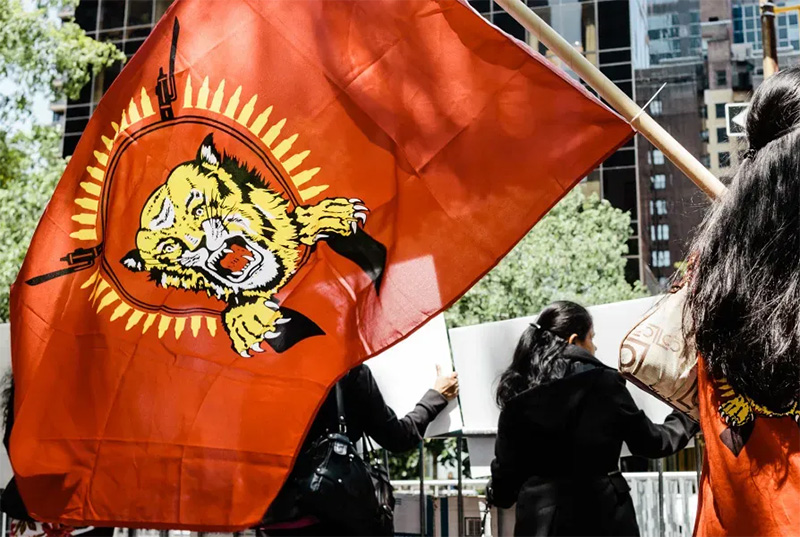
When the LTTE massacred people, mostly Sinhalese Buddhists, government leaders never claimed that the Tamil community, which the LTTE claimed to represent, was driven by hatred. That restraint mattered. That is why it was outrageous to hear President Anura Kumara Dissanayake tell Tamils that Buddhists visiting the North to worship were doing so out of spite. If reports are accurate, the President also declared that we needed a prosperous nation free of racism and united in spirit. Yet, in the same breath he sowed seeds of division recklessly.
Had he spoken in Tamil or English, some might have dismissed it as a slip of the tongue. But in Sinhala, the words carried unmistakable intent. Who could have expected such divisive rhetoric to come from the head of a nation now enjoying fragile coexistence, after enduring a 30‑year war and two insurrections that devastated the economy?
A Ratnayake
The Island editorial, dated 22 January, 2026, under the title ‘Conspiracy to subvert constitutional order,’ is an eye-opener to those who supported the so-called Äragalaya in July 2022 and those who voted to bring the current regime into power with various positive expectations, including ‘ a system change’. ( https://island.lk/conspiracy-to-subvert-constitutional-order/ )
The editorial highlighted, with irrefutable evidence, how a foreign diplomat and a group of Sri Lankans, consisting of some religious leaders (a Buddhist monk, some Catholic priests) and a trade unionist, made a blatantly illegal bid to pressure the then Speaker Mahinda Yapa Abeywardena to take over the executive presidency in violation of the Constitution. The intention of the intimidator tactics was said to be to create in Sri Lanka a situation similar to that in Libya.
The editorial also mentioned how Minister K.D. Lal Kantha and his JVP attempted to lead the Aragalaya protestors to capture Parliament, but without success. Addressing a public rally, under the title ‘Let’s read Lenin’, a few days ago, Minister Lal Kantha has revealed that their planning was to follow what Lenin had said and done during the Russian revolution. Minister Lal Kantha said: “We do not have the power of the State although we managed to obtain the power of the Government. Hence, we are now engaged in the struggle to win the power of the State’’.
In a democratic society, there is a need to ensure maintaining Law and Order without any state interference. It looks like the intention of the Minister is to bring the Police, Armed Forces and the Judiciary, including all the State Services, under direct control of the ruling party, by filling those positions with JVP loyalists to suppress the opponents of the government.
There is also an attempt by the JVP-led forces to remove the Attorney General by making unsubstantiated allegations against him. As per a latest news item in The Island, under the title “Opposition slams sitting HC judge’s appointment as Justice Ministry additional Secretary”, is alleging President Anura Kumara Dissanayake of trying to control the judiciary by appointing a sitting High Court judge as Additional Secretary to the Justice and National Integration Ministry. (https://island.lk/opposition-slams-sitting-hc-judges-appointment-as-justice-ministry-additional-secretary/)
On the other hand, the ruling party is trying to appoint one of their cronies as Auditor General, possibly, to cover up a number of questionable deals made during the year they ruled and to ensure achieving the so-called power of the State.
Unless the people, especially those who naively dreamt of ‘a system change’, have a clear understanding of the ultimate goal and motives of the ongoing changes and take appropriate actions to protect their own democratic rights, they will be left with no other alternative but to live under a repressive government.
Sangadasa Akurugoda

Nipah virus outbreak in India triggers Asia airport screenings

India and EU announce landmark trade deal

Sri Lanka women to tour West Indies for ODI and T20I series in February-March 2026

Scotland bank on ICC assurances over Sharif visa after naming T20 World Cup squad

England bat, Sri Lanka bring back Wanindu Hasaranga

Don Bradman baggy green sold for AU$460,000

‘Dates have the highest sugar content to fight Coronavirus’

Sunday Island 27 December – Headlines

#SundayIsland 17th December – Headlines

Sunday Island – 28th March

Sunday Island Headlines – 21 March

Sunday Island – 21st February – Headlines
-
 Business2 days ago
ComBank, UnionPay launch SplendorPlus Card for travelers to China
-
 Business3 days ago
ComBank advances ForwardTogether agenda with event on sustainable business transformation
-
 Opinion6 days ago
Remembering Cedric, who helped neutralise LTTE terrorism
-
 Business6 days ago
CORALL Conservation Trust Fund – a historic first for SL
-
 Opinion3 days ago
Conference “Microfinance and Credit Regulatory Authority Bill: Neither Here, Nor There”
-
 Opinion5 days ago
A puppet show?
-
 Opinion2 days ago
Luck knocks at your door every day
-
 Features7 days ago
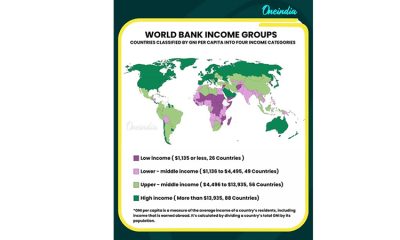
The middle-class money trap: Why looking rich keeps Sri Lankans poor