
Sports
Concussion in rugby: Players with worrying brain scans ‘should be forced to retire’

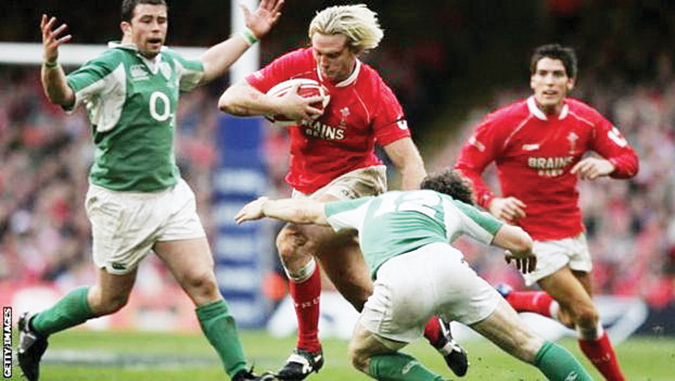
Players showing signs of serious brain injury should be forced to retire, former Wales forward Alix Popham says.Popham, who retired in 2011, was diagnosed with early onset dementia and probable chronic traumatic encephalopathy in 2019.He says he regularly speaks to current players about their own conditions.
“I’ve had them in my kitchen, they’ve had brain scans and they aren’t great,” Popham, 42, told the Sports Desk Podcast.
Popham added: “I’m not a doctor but if it was me I would take it the decision of continuing to play from them and it shouldn’t be their decision.”
Lawyers representing more than 185 former rugby union players, including Popham, have begun legal proceedings against governing bodies the Rugby Football Union, the Welsh Rugby Union and World Rugby over brain damage suffered by their clients. The group of players, represented by law firm Rylands Legal, are suing for negligence, claiming that playing the sport caused brain damage.
Popham and former England World Cup winner Steve Thompson were among six other former players who first started the process of a claim in December 2020.When the legal action was launched, the sport’s authorities stressed they “care deeply about all our players” and “never stand still when it comes to welfare”.
They have also highlighted their safeguarding strategies designed “to prevent, identify and manage head injuries”.
However, a World Rugby spokesperson told BBC Sport: “We have not yet been served with the details of the claims against us and as such it is not possible for us to comment further at this time.”
In the week the domestic professional rugby union season started, Popham also told BBC Sport about his ongoing conversations with ex-players.
“It’s quite tough sometimes when I have phone calls from players I used to play with and against and they’re in a really dark place,” he added on the podcast.
“There have been a few where we’ve had to get professional help to their house on a Sunday evening.
“This is the real coalface that we’re dealing with with some of these players. If I help one person, I know we have helped – but there’s a lot more out there.
“And that’s why we are doing this. We need to draw a line in the sand, realise the mistakes that were made and move forward, because otherwise the sport is going to die.”
World Rugby defended its record on concussion and pointed to new protocols reacting to ongoing research, including this season’s roll-out of smart mouthguards that can measure the frequency and nature of head contact and accelerations, in matches and training.
Players do not regularly have brain scans, but World Rugby’s chief medical officer Dr Eanna Falvey said if a player had “decreasing neurological function” doctors would be “obliged to investigate”.
He added: “If you have somebody who has defined evidence of decreasing neurological function they would not be continuing to play. Absolutely not.”
The governing body’s current protocols in place to try to limit head injuries include:
= head injury assessments used during matches to see if a player is fit to continue
= rest weeks introduced for internationals to limit their game time
= concussed players have a minimum period of 12 days out of action after new rules were brought in this summer
The new protocols follow the latest rugby-specific research by World Rugby’s independent concussion working group.
Dr Falvey said: “Am I convinced that we are doing as much as we can right now? I absolutely am.
“With the data that we’ve got, we’re acting on all the information that we have. Not only that, we’re creating our own data. We’re the only sport that has done this type of work with instrumented mouthguards.
“We have offered instrumented mouthguards to all the teams in the Premiership, all the teams in the women’s top tier AP15. We’ll be doing the same in the Currie Cup and the Farah Palmer Cup next year.
(BBC Sport)








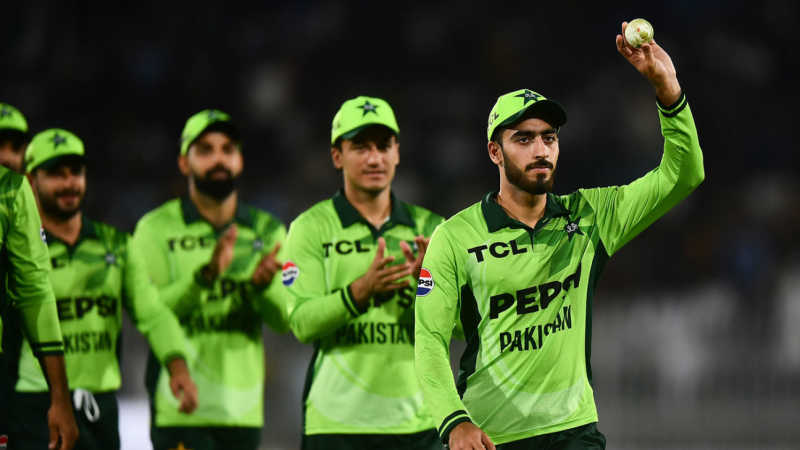
Sri Lanka’s men begin this match having won an international in the past week. This is more significant than it sounds. Their 2026 has been abysmal, with the team losing 22 matches to the 10 they have won. New captain Kusal Mendis had carried his team to that victory with his 87 not out off 48 balls, after Sri Lanka’s seamers had also had an encouraging outing.
But the game was only a dead rubber, Pakistan having sewn up the T20I series already. Pakistan have hardly been lighting up 2026 either, but they have had substantially more success than Sri Lanka. They had won their most recent ODI series, against Australia, 2-1. In that series, Pakistan may even have discovered a bright young all-round talent, left-arm spinner and lower-order batter Arafat Minhas, who claimed the Player of the Series award for his seven wickets at an average of 12.28. He has been in penetrative form in the past 10 days as well, having claimed five wickets across the three T20Is against Sri Lanka. Against Australia, Pakistan had also had excellent performances from Shaheen Afridi and legspinner Abrar Ahmed. It had, in fact, been Pakistan’s bowlers who dominated in a low-scoring series.
The tri-series is important for all three sides because there is now officially less than 12 months before the World Cup, which is set to begin on October 2 next year. Sri Lanka still have plenty to figure out – their white-ball squads having been in serious flux this year, as a new set of selectors searches (often fruitlessly) for a winning combination. Pakistan have players and stratetgies to trial as well.
In the series against Australia, Babar Azam had top-scored for Pakistan, hitting 40, 16, and 69 to average 41.66 across the matches. No one will call it a return to his heyday, but it was an encouraging sign following a modest run in 2025, in which he averaged 34 across 17 innings. Sri Lanka has been one of his favoured opponents over the years, Babar having struck four of his 20 centuries against them, averaging 58.33. The tracks in Rawalpindi at least are expected to be good for batting. Can he build up some form in the one format he now plays?
Lahiru Udara has reason to feel miffed at the selectors, many think. Having hit 188 against West Indies three Tests ago, he was left out of the squad entirely for the forthcoming Test series. But with Pathum Nissanka having been ruled out of the ODIs through an ongoing hamstring problem, Udara has surged into ODI contention on the back of a good T20I innings last week. At age 32, he knows his chances at this level are numbered. With the World Cup on the horizon, there is perhaps no better format to impress in right now than ODIs.
With neither Sahibzada Farhan nor Maaz Sadaqat in the ODI squad, Saim Ayub and Fakhar Zaman may open.
Pakistan (possible): Saim Ayub, Fakhar Zaman, Hasan Nawaz, Babar Azam, Salman Ali Agha, Shadab Khan, Ghazi Ghouri (wk), Minhas Arafat, Shaheen Afridi (capt.), Haris Rauf, Naseem Shah
Sri Lanka may bring Avishka Fernando straight into the XI, with Kamil Mishara having had a run of modest scores. Sri Lanka also have some decisions to make on the spin-bowling front, although they are likely to favour Maheesh Theekshana over legspinner Sachindu Colombage.
Sri Lanka (possible): Lahiru Udara, Avishka Fernando, Kusal Mendis (capt, wk), Kamindu Mendis, Sahan Arachchige/Pavan Rathnayake, Janith Liyanage, Dasun Shanaka, Dunith Wellalage, Dushmantha Chameera, Eshan Malinga, Maheesh Theekshana, Asitha Fernando
(Cricinfo)
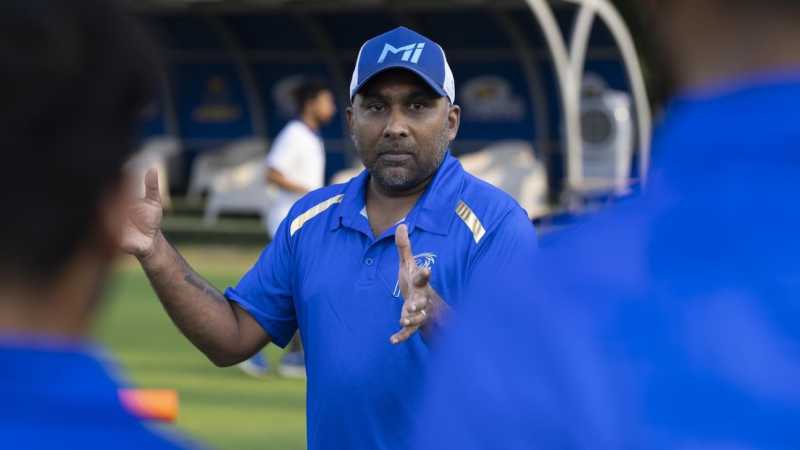
Mumbai Indians and their IPL head coach Mahela Jayawardene have parted ways ahead of the 2027 auction. Jayawardene was the MI head coach for the last two seasons, in his second stint with the franchise in that position. He had previously served in that role from 2017 to 2022.
“Mumbai Indians has been a very special part of my journey for over a decade now,” Jayawardene said in an MI statement. “The players, coaching team, the incredible support of the #OneFamily and above all the fans have made this an experience I will always treasure. Together, we have shared some unforgettable moments, overcome challenges and built something we can all be proud of. I want to sincerely thank Mrs. Nita Ambani and Akash Ambani for their unwavering trust, support and friendship over the years. I leave with immense pride in what we have achieved together and will always carry a special place in my heart for MI. I wish the team every success in the years ahead.”
Cricinfo has learned that the question of a possible change in coaching staff came up during the 2026 season review in August, when both the player leadership group and the franchise agreed they needed to look for a change. It is understood Jayawardene, too, agreed with the viewpoint of bringing in younger coaches to bring in fresh perspectives.
The new coach will have the choice of taking a call on the rest of the existing MI coaching staff which includes Kieron Pollard (assistant coach) and Paras Mhambrey (bowling coach).
Jayawardene’ departure leaves MI’s team management in a tricky position, with captain Hardik Pandya also under the spotlight after their second-from-bottom finish in IPL 2026. Not long after MI finished with just four wins from 14 games, rumours of a Hardik trade began circulating in reports and social media. Hardik’s individual performance also didn’t inspire much confidence: he took just four wickets in 10 games and scored 206 runs from 10 innings, striking at 138.25 with a high score of 40.
Jayawardene took over as the MI head coach before IPL 2025, replacing Mark Boucher. Before that, Jayawardene had served as their global head of performance from 2022 to 2024. In that position, Jayawardene had also overseen MI’s three other franchises – MI Emirates in the ILT20, MI New York in MLC and MI Cape Town in SA20.
In his first stint as head coach, Jayawardene won three IPL titles. The second one was less successful, with MI finishing fourth on the league table in 2025 before losing in Qualifier 2, and ninth in 2026.
“Mahela has made a significant contribution to Mumbai Indians over the years,” MI owner Nita Ambani said, “His calm leadership, integrity and deep love for the game have meant so much to us. On behalf of the entire MI family, I want to thank Mahela for his immense contribution and unwavering commitment over the years. We will always cherish the journey we have shared and the memories we have created together. Mahela will always be a part of our #OneFamily, and we wish him every happiness and success in the journey ahead.”
MI now need to look for a head coach with under a month left for the IPL retention deadline – November 15. The IPL auction is expected to take place around a month later in Goa.
MI last won the IPL in 2020 when they became the first team to successfully defend their title. Both trophy wins came under Jayawardene.
(Cricinfo)

The Rose Bowl, which has been awarded to the winner of ODI series between the women’s teams of Australia and New Zealand since 1985, has now been expanded to include T20Is as well.
New Zealand’s three match T20I tour of Australia, which begins on Sunday at the North Sydney Oval, will be the first T20I edition of the Rose Bowl. The teams will get to face off again for the trophy in March 2027 when they meet again for three ODIs, also in Australia.
For Rose Bowl series that include matches in both white-ball formats, the trophy will go to the team with the most wins overall. In case of a drawn series, the current holder will retain the trophy.
“The Rose Bowl is a prestigious trophy that holds a lot of meaning to current and past players, and it’s a series we’ve always taken a lot of pride in competing in,”Catherine Campbell, NZC’s chief cricket operations officer and a former New Zealand player, said. “With so much T20I cricket now being played, this is a brilliant opportunity to keep the Rose Bowl relevant and to build on the history between us and our Australian rivals.”
New Zealand captain Melie Kerr was excited by the broadening of opportunities to compete for the Rose Bowl.
“We’re all aware of what the Rose Bowl represents and the importance it holds in the White Ferns whakapapa [genealogy],” said Kerr. “Great players and teams have fought for it over the years and we’d love the opportunity to claim our own piece of that history.”
Australia have held the Rose Bowl continuously since wresting it back from New Zealand in 2000. Since that 3-0 win, Australia have won 18 times with one series – in 2008-09 – shared 2-2. Overall, Australia have won 26 of the 31 ODI series played for the Rose Bowl, with New Zealand winning three times and three series drawn.
North Sydney will host all three T20Is of the upcoming Rose Bowl series, on October 18, 20 and 22.
[Cricinfo]

Pakistan, Sri Lanka look to find the right mix as World Cup countdown begins

Mumbai Indians and head coach Mahela Jayawardene part ways

Review of progress in reforms and modernisation of key state revenue-collecting institutions

Rose Bowl expanded to include Australia vs New Zealand T20Is

Trump claims US Navy blockade stops Iranian ships in Hormuz

Showers above 75 mm are likely at some places in the Western, Sabaragamuwa, Central and North-central provinces and in Trincomalee and Mullaitivu districts

‘Dates have the highest sugar content to fight Coronavirus’

Sunday Island 27 December – Headlines

#SundayIsland 17th December – Headlines

Sunday Island – 28th March

Sunday Island Headlines – 21 March

Sunday Island – 21st February – Headlines
-

 News7 days ago
Sri Lanka escalates anti-graft drive with Shiranthi’s jailing
-

 News7 days ago
Iranian ships stranded, Lanka fears US sanctions
-

 Latest News6 days ago
Farhan and Sadaqat help Pakistan seal series in style
-

 Latest News4 days ago
Nissanka’s return headlines Sri Lanka’s Test squad against Pakistan
-
 Features6 days ago
Intake 16: 45 years of duty and honour
-
 News6 days ago
Malwathu Chapter issues statement on talks with President over Gnanasara Thera’s robes
-

 News7 days ago
Navi Pillay’s Lankan affairs in focus as she wins 2026 Nobel Peace Prize
-
 News6 days ago
CP alleges NPP has taken the blame for illegal US sanctions on Iranian vessels