
Sports
Only if Buultjens knew that teams have pulled out of rugby sevens!

By A Special Sports Correspondent
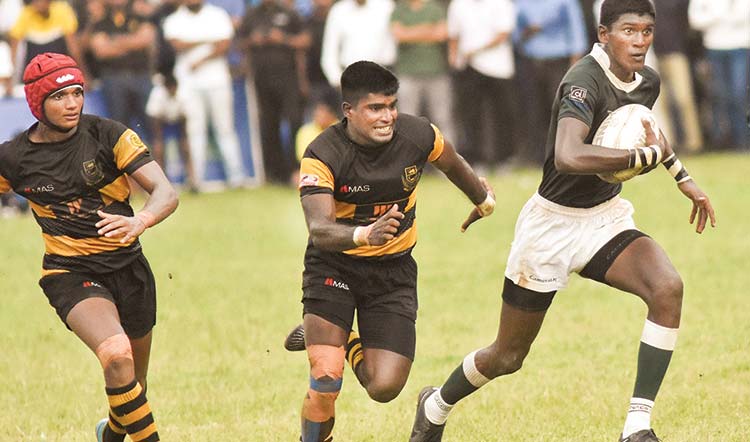
There is trouble brewing for the Sri Lanka Schools Rugby Football Association (SLSRFA) ahead of the much looked forward to under 19 ‘Elite’ Schools Rugby Sevens because several schools are reported to make themselves unavailable for the two- day competition.
There are several pros and cons to this issue of non-availability of teams. But what should be underscored is that all schools must remember one valuable dictum that even those participating at The Olympics honour; which is ‘participating is more important than winning’. At the time of writing as many as 10 schools have given enough signs that they’ll not be taking part in the competition citing the upcoming O’ Level Exam and also injuries to key players.
One must remember that those who pull out of the competition will be labeled as spoilers. This attitude of pulling out or boycotting a tournament, when at school level, sparks the attitude in individuals to go against a system or be selfish. Are these schools which are struggling to field their best team for the schools rugby sevens giving the message that they don’t have a second-string outfit or junior team in their ranks and are bankrupt for players?
The good news for rugby fans is that the top teams which dazzled at the recently concluded Zahira Centenary Sevens have made themselves available for the tournament which will be worked off at the Royal Sports Complex and CR&FC, according to media reports. St. Peter’s, which won the Cup Championship at the Zahira Sevens, are slotted in with Maliyadeva Kurunegala in group ‘H’ while Isipatana College, which finished as runners-up in that tournament, are pooled in group ‘A’ with St. Benedict’s College. Royal College which won the Plate Championship at the Zahira Sevens are slotted in with Carey and Nalanda in group ‘D’. If some of the popular rugby playing schools opt to pull out then it would leave the doors open for lesser-known rugby playing schools to fill the voids and ensure that the ‘tournament goes on’.
One little error in calculation that is troubling this tournament is the scheduling of the Zahira Sevens too close to the Elite schools rugby sevens. You cannot possibly ask schools to play back-to-back sevens tournaments with just a few days of rest between tournaments. Injuries to players are a key concern for school rugby teams and don’t forget that there is a league tournament – where the stakes are so high- also on the cards and scheduled to commence in June this year. This writer can say so because the Zahira Sevens was conducted with the blessings of the SLSRFA; the rugby authority that draws up the school rugby calendar for the year. The Zahira Sevens was conducted on March 2 and 3 in Colombo with the participation of the best 16 schools teams in the island. There is a school of thought that having two fiercely competitive school rugby sevens tournaments too close to each other is not a good idea and will drain the players of their energies.
Much money and time are invested on school rugby and to prepare the players for traditional and tournament matches. Also, one must remember that the schools 15-a-side season has two tournaments which is followed by trials to select a team for the junior Asian Championship. Schoolboys have to also balance their education with sports. All that must be achieved while in school; before these boys reach the age 21. There are also schoolboys who take part in more than one sport and also dabble in activities outside sports. Some also have dreams of entering university and a handful have to satisfy goals of parents; individuals who want to live their dreams through their children. Hence the pressure on children who do sports and studies can build up to reach breaking point in an individual.
School rugby is so commercialized these days. Just look at the attire of a school rugby player and observe the number of logos of various sponsors stitched to the playing garment. Then there must be the expectations of sponsors too!
This flooding of sponsors to school rugby can throw out existing traditions. No one talks about the Philip Buultjens Trophy which was on offer for the schools rugby sevens winners. Do the school authorities still keep this trophy on display at this tournament and award it to the winners? So many companies engaged in the communication business are involved in rugby and they have their own trophies which they wish to see been given away to winners at the podium. For the record the Philip Buultjens Trophy was first on offer at the schools rugby tournament in 1975 and Trinity led by Rohan Sourjah won that tournament beating Royal 18-16 in the final. Just to talk about endurancein players of those days, the Trinity side was represented by the same seven players during the entire tournament; meaning the reserves were never used. (This information was taken from NeilWijeratne’s well compiled book titled ‘Sevens Saga’).
School rugby at present is thriving thanks to the support of old boys and sponsors. The SLSRFA must be thankful for that. This is because the schools section of Sri Lanka Rugby (SLR) is neither known to have the acumen to handle a complicated sport like rugby nor has it the connections to raise much needed funds for the game.
Many years ago, when the SLSRFA was run by able men like Lal Kumarasinghe (President) and Mohammed Zainudeen (Secretary) the schools tournaments were run with the precision of Swiss watches. Kumarasinghe would handle the tournament desk at schools tournaments by himself. He passed away in 1999. Those were the years of schools rugby and trouble makers were punished then and there with no favors granted because of school or family ties. But still there were politics involved in school rugby even then; especially when the SLR got involved in school rugby on occasions when a national team had to be selected for an overseas tournament.
In the year 1988 SLR received an invitation to compile a school side to contest the Roslyn Park Sevens in England. The team from Sri Lanka comprised Lasitha Guneratne (Captain), Sudesh. Abeysinghe, Asoka Jayasena, Rizwi Suhyb, Bindu Dandeniya, Thakshila Hettiarachchi, M.Thaam, Ruwan Ranasinghe, Hilmy Saheed and Rohan Ranarajah. The selection trials for this tour were conducted in March 1988 and there were disputes regarding who should be coach. After that tour, the inter-school rugby sevens, worked out in August that year, produced an invincible champion side in Kingswood. Sadly, none of the players from the champion Kingswood team got the opportunity to be included in this tour; hence their potential remained untapped from the perspective of being members of the junior national sevens team.
Times have changed and when a tournament uses the name ‘Elite’ sevens one cannot possibly expected a person like Philip Buultjens (A versatile sportsman produced by St. Anthony’s Katugastota) to be remembered in rugby these days. The same can be said about Noel Gratiaen; in whose name the Gratiaen Cup was awarded to the winners of the game between Colombo Schools and Outstation Schools. Gratiaen was a lawyer and also held post of President of SLR in the years 1948 and 1950. People with authority prefer to associate names of mobile phone companies with sports events of today and conveniently forget about our rugby legends.
Coming back to the upcoming Schools Elite sevens the rugby fraternity hopes that most of the team’s that are experiencing the unavailability of players will put their ‘houses’ in order and live up to the spirit of sportsmanship. This April is the time for both the New Year and annual traditional games. A well- conducted rugby event can add to the glamour of the festive season.








Pathum Nissanka’s return to the red-ball fold provides a downtrodden Sri Lanka with a timely boost, while debuts are also in the offing for wicketkeeper Anjala Bandara and seamer Eshan Malinga after both were named in Sri Lanka’s 15-man squad for the upcoming two-Test series against Pakistan.
The 22-year-old Bandara is tipped to make the playing XI following Kusal Mendis’ promotion to captain, with the longtime Test keeper now likely to play solely as a specialist batter. Malinga’s inclusion is less certain, with Asitha Fernando, Lahiru Kumara, Milan Rathnayake and Dilshan Madushanka – who returns to the squad having been omitted from the one named for the second Test against India – all in line to make up Sri Lanka’s pace contingent. Dinesh Chandimal, who missed the second India Test with an injury, is also in the squad.
Making way are Kamil Mishara and Sahan Arachchige – both of whom had drafted in for the second Test against India – as well as Lahiru Udara, Niroshan Dickwella and Vishwa Fernando.
Malinga’s inclusion comes as Sri Lanka’s red-ball fast-bowling stocks had been waning. Former skipper Dhananjaya, who has been retained in the squad, had been vocal during the India tour of Sri Lanka’s need for more express seamers in the playing XI – aside from Lahiru Kumara, who is capable of clocking speeds in the 140kph range, most other options tend to veer around the low 130s. Malinga is certainly capable of matching Kumara on the speed gun, and that could point towards a potential first Test cap.
Bandara has been a player of genuine promise since making his debut in 2022, with his 31 first-class matches fetching 2239 runs at an average 65.85. There had been a clamour among fans for The Colombo CC keeper to be included in the squad to face India, but that spot was eventually taken by Dickwella.
The rest of the squad pans out as expected, with Nissanka’s return the headline. Pasindu Sooriyabandara, who made his debut earlier this year against India, retains his place ahead of the more experienced Udara. However if Bandara does take up wicketkeeping duties as expected, it Dhananjaya could be the odd man out, with Chandimal, Kamindu Mendis, Sonal Dinusha and Kusal Mendis all assured a spot in the playing XI. Sri Lanka have two spin bowling options in Prabath Jayasuriya and Keshara Nuwantha.
The first Test will take place in Rawalpindi on November 9.
Sri Lanka squad for Pakistan Tests
Pathum Nissanka, Pasindu Sooriyabandara, Dinesh Chandimal, Kamindu Mendis, Sonal Dinusha, Kusal Mendis (capt), Dhananjaya De Silva, Anjala Bandara, Keshara Nuwantha, Prabath Jayasuriya, Milan Rathnayaka, Lahiru Kumara, Asitha Fernando, Dilshan Madushanka, Eshan Malinga
[Cricinfo]
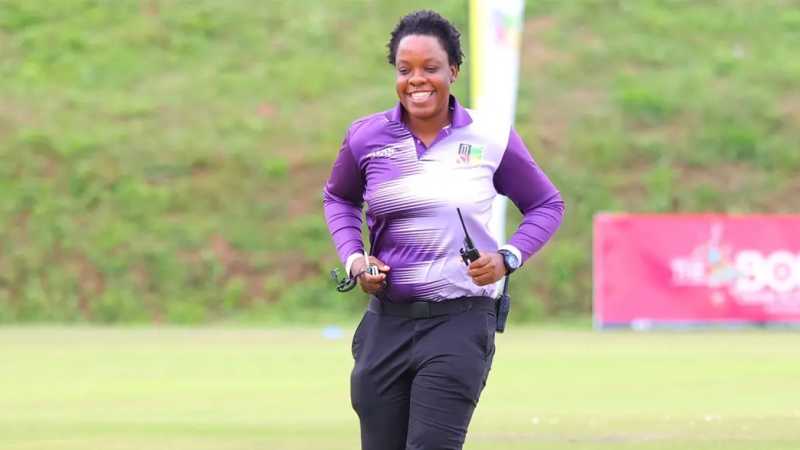
Former Zimbabwe fast bowler and umpire Sarah Dambanevana passed away in Harare on Monday. She was 36.
A Zimbabwe Cricket release said Dambanevana was in hospital receiving care since undergoing a medical procedure in March.
Her senior international umpiring career began on 2 September 2023, and she went on to officiate at the Women’s T20 World Cup 2024 in the UAE and the Women’s ODI World Cup 2025 in India and Sri Lanka, where she was part of the tournament’s historic all-female panel of match officials.
Prior to that, Dambanevana officiated in the final between India and England at the 2023 Under-19 Women’s T20 World Cup in South Africa, becoming the first Zimbabwean woman to umpire a World Cup final.
Overall, she officiated in 63 senior internationals, comprising 42 women’s T20Is, 11 women’s ODIs and 10 men’s T20Is, alongside her assignments in domestic cricket and global youth tournaments.
Dambanevana also represented Zimbabwe as a player between 2009 and 2014, including at the World Cup Qualifier in 2011. She joined the ICC development panel of umpires in 2022.
“Sarah served Zimbabwe with distinction, first as a player and then as an umpire whose ability earned her a place on the world stage,” ZC chairman Tavengwa Mukuhlani said. “Watching her stand in a World Cup final was a moment of immense pride for our cricket community and our country. She showed young Zimbabwean women that they belong at the highest levels of the game, including in roles where opportunities had long been limited.
“Through her achievements, she opened doors and gave others the confidence to pursue their own ambitions. We will remember her dedication, her professionalism and her willingness to help others grow. Her passing leaves a painful void in our cricket family, but the example she set will continue to inspire those who follow in her footsteps.”
(Cricinfo)
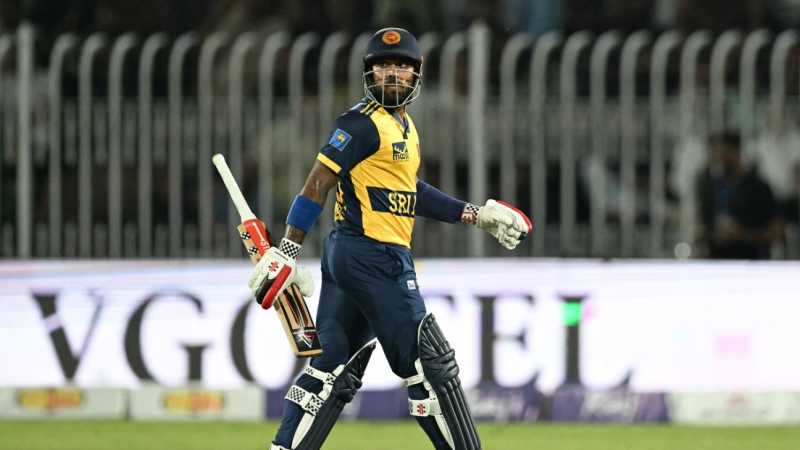
Even counting the win against Bangladesh at the Asian Games Sri Lanka have lost 12 T20Is to the two they have won since their win against Australia in the 2026 T20 World Cup. There have been significant personnel changes in that period. Captains have changed. There is a new head coach. Various batting orders have been trialled. But on Sunday’s evidence, they are deeply outmatched by even this Pakistan side, who themselves are hardly world-beaters at the moment, having not made the World Cup semi-finals this year.
With as highly-rated a coach in Gary Kirsten and a new captain in Kusal Mendis still searching desperately for a stronger combination, expect Sri Lanka to be in flux for this match as well. In game two, spinner Maheesh Theekshana was taken apart, while the seamers struggled to threaten Pakistan’s batters on a flat Rawalpindi deck. The decks don’t look like they are going to be any better for bowling. Sri Lanka’s attack will have to find new gears.
Pakistan are in the rare position of being utterly dominant in a white-ball series against an opponent who even in their previous low ebbs have challenged them. Having sewn up the trophy 2-0, Pakistan are in a position to rest key players. But it is so rare that their batters get to dine out across a whole series, management will be mighty tempted to keep this tuneful band together.
Even if Sri Lanka’s bowlers get through the Pakistan top order this time, the middle order could do with a decent workout.
So far in this series, Maaz Sadaqat has thumped 50 off 29 balls, and 96 off 51, showcasing not only power against spin, but touch against pace when the ball has demanded it. Sri Lanka are going seam-heavy in this series, but Sadaqat has found ways to take down even the little spin he has come up against, particularly in the second T20I. Sri Lanka are likely to switch up their attack a little for the last match, so he may have new problems to solve on Tuesday.
A long-term performer in Sri Lanka’s domestic cricket, Lahiru Udara has finally made a mark in white-ball internationals, hitting 91 off 55 balls in the first match of this series. A good bouncer from Salman Mirza prevented him from making a similar impact in the second match. But at age 32, Udara will know he doesn’t have many chances to convert an excellent domestic record into a long run in the national side. Anotherood score in match three will shore up his place.
Rawalpindi surfaces have tended to be batting friendly, and the track for the third T20I will likely have plenty of runs in it. The weather on Tuesday evening is expected to be fine, with temperatures in the low 20s celsius.
As legspinner Abrar Ahmed has had a couple of modest outings in this series, Pakistan may bring in left-arm wristspinner Sufyan Moqim, whose T20I stats so far in a 21-match career are encouraging.
Pakistan XI (probable): Sahibzada Farhan (capt), Fakhar Zaman, Maaz Sadaqat, Hasan Nawaz, Saim Ayub, Khawaja Nafay (wk), Shadab Khan, Mohammad Imran, Naseem Shah, Salman Mirza, Sufyan Moqim
Sri Lanka’s misfiring top order could do with a tweak or two, but there are not many spare batters on this tour. They could potentially bring back Kamil Mishara in place of an allrounder, however. With Maheesh Theekshana having been taken down on Sunday, Sri Lanka will also be tempted to try out legspinner V Viyaskanth. Dushmantha Chameera could also come back if he is fit.
Sri Lanka XI (probable): Lahiru Udara, Sineth Jayawardena, Kusal Mendis (capt, wk), Kamindu Mendis, Sahan Arachchige, Dasun Shanaka, Chamindu Wickramasinghe, Maheesh Theekshana/V Viyaskanth, Eshan Malinga, Dushmantha Chameera/Binura Fernando, Nuwan Thushara

Cabinet approves redrafting of State Assets Management Act
Cooperative Employees Commission Act No. 12 of 1972 to be amended
Dilki Wathsala Marambage appointed as Director General of the Department of Technical Education and Training
Declaration of Naakolagane Sanctuary under the Fauna and Flora Protection Ordinance
Cabinet approves transfer and maintenance of selected roads presently under PC’s and Local Authorities to the RDA
Obtaining financial facilities for the Water Supply and Sanitation Improvement Program (Sub-program 2) from the ADB

‘Dates have the highest sugar content to fight Coronavirus’

Sunday Island 27 December – Headlines

#SundayIsland 17th December – Headlines

Sunday Island – 28th March

Sunday Island Headlines – 21 March

Sunday Island – 21st February – Headlines
-

 Features6 days ago
The Sri Lankan who made Scottish history
-

 Sports6 days ago
Nissanka absence opens door for Sri Lanka’s young guns
-

 News5 days ago
NDB fraud Rs 60mn more than reported
-

 News7 days ago
Gnansara Thera to be assigned to prison printing section: Officials
-

 News5 days ago
Removing monk’s robes matter for Sangha to decide: Mahanayake Theras
-

 News7 days ago
OIC of FCID summoned before Maligakanda Magistrate
-

 Features6 days ago
Future of Sri Lanka’s state university system: Should it be shut down and reopened?
-

 News6 days ago
Shiranthi R remanded until 13 Oct.