
News
Climate change, biggest security threat in Indian Ocean

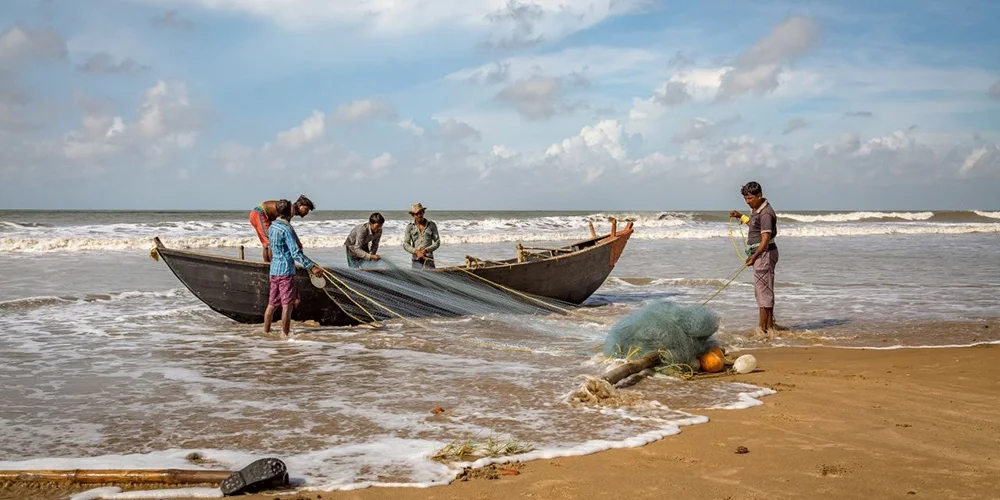
Climate change is fast emerging as the most formidable security challenge in the Indian Ocean Region (IOR), reshaping its strategic and humanitarian landscape, said a report published yesterday by Toda Peace Institute in Tokyo.
The report titled ‘The Case for a Climate-First Maritime Reframing of the Indian Ocean Region’ said that rising sea levels, intensifying storms, and shifting monsoon patterns are already displacing communities, damaging infrastructure, and threatening livelihoods across one of the world’s most vital maritime zones.
The Indian Ocean, which links major economies across Asia, Africa and the Middle East, carries nearly 80 per cent of global seaborne oil trade. Home to close to three billion people — including 340 million in high-risk coastal zones — the region is also among the fastest-warming oceans on the planet. Scientists warn it could face near-permanent marine heatwaves in the coming decades, with far-reaching consequences for security and stability.
Governments around the IOR are beginning to recognise that climate and security are inseparable. Many have adopted national adaptation plans and pledged net-zero targets. Small Island Developing States such as the Maldives and Seychelles are on the front line, where rising seas, coral bleaching, and changing fish stocks have turned the climate threat into a daily reality.
Larger players, too, are shifting their focus. India’s SAGAR vision — “Security and Growth for All in the Region” — now includes environmental resilience, while Australia’s 2024 Defence Net Zero Strategy acknowledges climate change as a direct national security concern. Yet analysts say both countries, along with others in the region, have more work to do to fully integrate climate risk into their naval and maritime strategies.
Experts stress that climate security in the IOR must be viewed through a human-security lens — one that measures impact not just by state vulnerability, but by the safety and wellbeing of communities. Floods, rising seas, and heatwaves are displacing families, threatening food supplies, and worsening inequality. Women and marginalised groups, they note, bear the brunt of these disasters, facing higher livelihood losses and limited access to aid.
Analysts recommend three steps to better align climate and maritime security.
First, states should embed climate monitoring into maritime domain awareness — as seen in the Quad’s Indo-Pacific MDA initiative — but tailored to Indian Ocean realities.
Second, cooperation should move beyond slow-moving forums like the Indian Ocean Rim Association, focusing instead on flexible frameworks such as the Blue Economy.
Third, traditional security actors — including navies — must play a larger role in climate adaptation and disaster response.
The 2004 Indian Ocean tsunami, which spurred regional cooperation and even the early formation of the Quad, remains a reminder that crises can catalyse collective action. As experts warn, the Indian Ocean’s future security will depend not just on power balances and trade routes, but on how nations confront a shared and escalating climate threat.

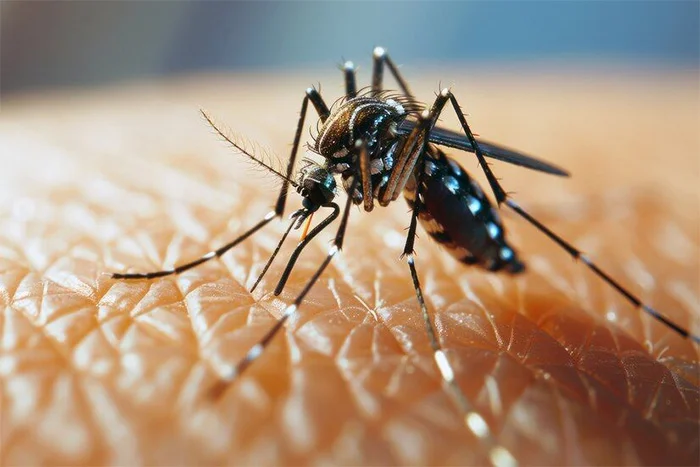
Sri Lanka has recorded 1,069 dengue cases, within a 24-hour period, marking the first time daily infections have exceeded 1,000, according to Acting Director of the National Dengue Control Unit Dr. Kapila Kannangara.
The latest figures, recorded from 6 a.m. on Sunday to 6 a.m. yesterday (22), have pushed the total number of dengue cases, reported in the country this year, to 47,179, with 28 deaths.
Dr. Kannangara said that during periods when dengue was not at epidemic levels, Sri Lanka typically recorded between 150 and 200 cases a day.
However, with the country currently facing a high-risk situation, daily infections had recently increased to between 600 and 650 cases before reaching the latest record level.
Health authorities have expressed concern over the rapid rise in dengue infections and urged the public to take necessary precautions to prevent the spread of the disease, particularly by eliminating mosquito breeding sites.
Health authorities have warned that if the number of dengue patients continue to increase at the current rate, hospitals will be overwhelmed.
by Chaminda Silva
News
Climate forum warns of threats to Lanka’s marine and amphibian biodiversity from El Niño, La Niña

The Parliamentary Climate Forum has drawn attention to the growing challenges faced in protecting Sri Lanka’s marine biodiversity and amphibian ecosystems from the impacts of El Niño and La Niña climate phenomena.
The issue was discussed at a recent meeting of the forum held at Parliament, under the chairmanship of its co-chairpersons, Opposition Leader Sajith Premadasa and MP Prof. L.M. Abeywickrama.
Officials and experts attending the meeting highlighted the adverse effects of climate change, particularly El Niño conditions, on Sri Lanka’s marine ecosystems, coastal areas, biodiversity, and the livelihoods of coastal communities.
They pointed out that rising sea temperatures could lead to coral bleaching, changes in fish migration patterns, harmful algal blooms, the emergence of oxygen-depleted “dead zones”, and increased instability in aquatic ecosystems.
The forum was also informed of the threats posed by prolonged drought conditions, including falling river water levels and seawater intrusion into freshwater systems, which could affect drinking water supplies. The possible economic impact on the fisheries and tourism sectors due to these environmental changes was also discussed.
The meeting reviewed the role of key institutions, including the National Aquatic Resources Research and Development Agency (NARA), the Department of Wildlife Conservation, and the Marine Environment Protection Authority (MEPA), in safeguarding Sri Lanka’s marine resources.
The forum emphasised the need for stronger coordination among relevant agencies and called for measures to strengthen ocean monitoring systems, introduce ecosystem restoration programmes, promote science-based policy decisions, and develop an integrated national ocean management plan to address future climate challenges.
Attention was also focused on the vulnerability of amphibian species to climate change. Officials warned that changes in rainfall patterns, prolonged droughts, and rising temperatures could threaten the habitats, breeding cycles, and survival of amphibians, including frogs, thereby affecting the ecological balance of natural ecosystems.
The meeting was attended by Members of Parliament, officials from environmental agencies, researchers, and representatives of civil society organisations.

(Constructiononline) The Embassy of Sri Lanka in the United Arab Emirates and the Consulate General of Sri Lanka in Dubai and the Northern Emirates, in collaboration with Colombo Port City Economic Commission and CHEC Port City Colombo Pvt. Ltd., hosted Globalisation and the Sri Lankan Opportunity – From Recovery to Relevance: Sri Lanka’s Moment in the Evolving Global and Regional Economy, an invitation-only diplomatic and investment engagement at The Ritz-Carlton, Dubai International Financial Centre.
The forum brought together approximately 200 senior leaders from across UAE corporates and business chambers alongside Sri Lanka’s most senior diplomatic and investment representatives – among them senior executives from Sobha Realty, Binghatti, Oracle, Emirates Airlines, First Abu Dhabi Bank, JLL, Cushman & Wakefield, CBRE, IFS, Danube and Samana Developers – reflecting the depth of interest from the UAE’s leading industries in Sri Lanka’s evolving economic proposition.
Opening the forum, Prof. Arusha Cooray, Ambassador of Sri Lanka to the United Arab Emirates, set the tone for a morning of substantive dialogue, speaking to the depth and durability of the UAE–Sri Lanka partnership, one built on decades of trade, people, and shared economic ambition, and affirming Sri Lanka’s commitment to taking that relationship into a new chapter defined by what Sri Lanka can offer UAE businesses seeking to grow their presence across South Asia.
The keynote address was delivered by Ghanim Al Falasi, CEO of Falak Tayyeb Platinum and Senior Vice President/Director General’s Office for of Dubai Silicon Oasis (DSO), who drew on over a decade of senior leadership experience in the UAE’s innovation and technology ecosystem to frame the question of what South Asia’s emerging platforms offer to forward-looking UAE businesses. He noted that while Dubai provides global access to capital and logistics, Colombo offers strategic access to South Asia, and that together the two cities can function as complementary platforms serving different but mutually reinforcing roles in the regional economy.
Hanif Yusoof, Presidential Special Envoy for Foreign Investment of Sri Lanka, delivered strategic perspectives on Sri Lanka’s investment vision, underscoring the President and Government’s commitment to Port City Colombo as the flagship vehicle for the country’s long-term economic transformation. Yusoof positioned Sri Lanka firmly as a transformation story rather than a recovery story, emphasising that Sri Lanka today offers UAE businesses something rare in South Asia – a jurisdiction that combines regional proximity with genuine institutional credibility, anchored in a platform that is operational, investable, and ready. He invited UAE businesses to see Port City Colombo and Sri Lanka as a gateway to South Asia in the same way that Dubai serves as a gateway to the Middle East and North Africa, enabling businesses already established in the Gulf to expand their regional footprint without starting from scratch.
Harsha Amarasekera PC, Chairman of the Colombo Port City Economic Commission, provided a detailed overview of Port City Colombo’s current commercial momentum, the strong investment interest that has crystallised in the last 12-18 months resulting in significant visible progress. The Chairman emphasised that the project is designed as a complementary, supportive, and collaborative platform – one that offers UAE companies a footprint from which to expand into South Asia, rather than a competing proposition to the Gulf’s established business ecosystem.
Revan Wickramasuriya, Director General of the Commission, elaborated on the governance architecture underpinning Port City Colombo, highlighting the investor protection mechanisms, long-term tax incentives, and rules-based regulatory environment that distinguish the SEZ, noting that the framework was designed from inception to meet the expectations of internationally mobile capital.
The centrepiece of the forum was a moderated panel discussion that drew all these threads together, exploring the global reconfiguration of business operating models, the deepening relationship between the Gulf and South Asia, and Sri Lanka’s specific role within that emerging picture. Moderated by Kris Wadia, the panel featured experts in their respective industries – Aaron Russell-Davison, Skandan ‘Ramesh’ Mahalingam, Bapsy Dastur and Thulci Aluwihare – whose combined perspectives across international capital markets, legal and governance advisory, UAE business development, and real estate produced a substantive and wide-ranging conversation that resonated strongly with the audience.
With the aim of deepening investment ties in the Gulf region, the forum also marked the ceremonial onboarding of Mujtaba Shaikhani, Founder and Principal of MH Investments and Managing Director of Gulf O Flex, as a Strategic Partner and Director for GCC and Pakistan of CHEC Port City Colombo (Pvt) Ltd. With operations spanning the UAE, Saudi Arabia, and Sri Lanka, and recognised on the HVAC Power 30 list and as CEO of the Year by CBN Middle East.
The formal programme concluded with a vote of thanks delivered by Hon. Alexi Gunasekera, Consul General of Sri Lanka in Dubai and the Northern Emirates, who spoke to the significant potential he sees in UAE–Sri Lanka trade and his efforts to broaden interest across the Middle East and UAE in what Sri Lanka has to offer. He underscored that Sri Lanka had not come to Dubai to tell a story of the past, but to extend an invitation to be part of the story being written now – one in which UAE businesses and investors have a defining role to play.
Xiong Hongfeng, Managing Director of CHEC Port City Colombo (Pvt) Ltd, reflected on the significance of the forum for Port City Colombo’s regional outreach. “The interest we have seen at this forum from some of the UAE’s most significant businesses and investors is a reflection of what Port City Colombo represents: not just a development in Sri Lanka, but a platform for South Asia; one that offers the regulatory clarity, physical quality, and regional connectivity that globally mobile businesses and capital have been looking for.”
The forum marks a significant step in Sri Lanka’s structured engagement with the Gulf investment community, and reinforces Port City Colombo’s positioning as the institutional platform through which South Asia’s next chapter of growth becomes accessible to UAE businesses and investors. The event was the culmination of close coordination between the Consulate General of Sri Lanka to Dubai and the Northern Emirates and Port City Colombo, with the Consulate General’s office playing an instrumental role in ensuring the successful delivery of an engagement that reflected the depth and ambition of the bilateral relationship.

Lionel Messi scores brace as Argentina beat Austria 2–0 at World Cup 2026

Egypt denied flight to Seattle ahead of final World Cup group match

Mbappe leads France to win over Iraq in lightning-delayed World Cup game

US partially lifts Iran oil sanctions amid ‘encouraging’ talks

England lose 12 WTC points for slow over rate at The Oval

Showers expected in the Western, Sabaragamuwa and North-western provinces and in Galle, Matara, Kandy and Nuwara-Eliya districts.

‘Dates have the highest sugar content to fight Coronavirus’

Sunday Island 27 December – Headlines

#SundayIsland 17th December – Headlines

Sunday Island – 28th March

Sunday Island Headlines – 21 March

Sunday Island – 21st February – Headlines
-

 Features6 days ago
Killing of Colombo’s ancient trees — a warning on UN’s World Desertification Day – 17 June
-

 News4 days ago
Creditor receives USD 2.5 mn as Lankan public bears loss from theft of Treasury funds
-

 News3 days ago
Creditor not yet paid
-
 News3 days ago
Consumers bearing 22% tax burden despite 18% VAT claim: Dr. Harsha de Silva
-

 Opinion5 days ago
Beyond diagnosis: A strategic design for 7% growth by 2029 (Part I)
-
 News6 days ago
India provides military stores worth USD 5.5 mn to SL
-

 Opinion4 days ago
SriLankan Airbus struck by lightning
-

 Editorial2 days ago
Fuel crisis: Beyond price debate