
News
Climate Action Symposium 2025 launches Sri Lanka’s climate-resilient future

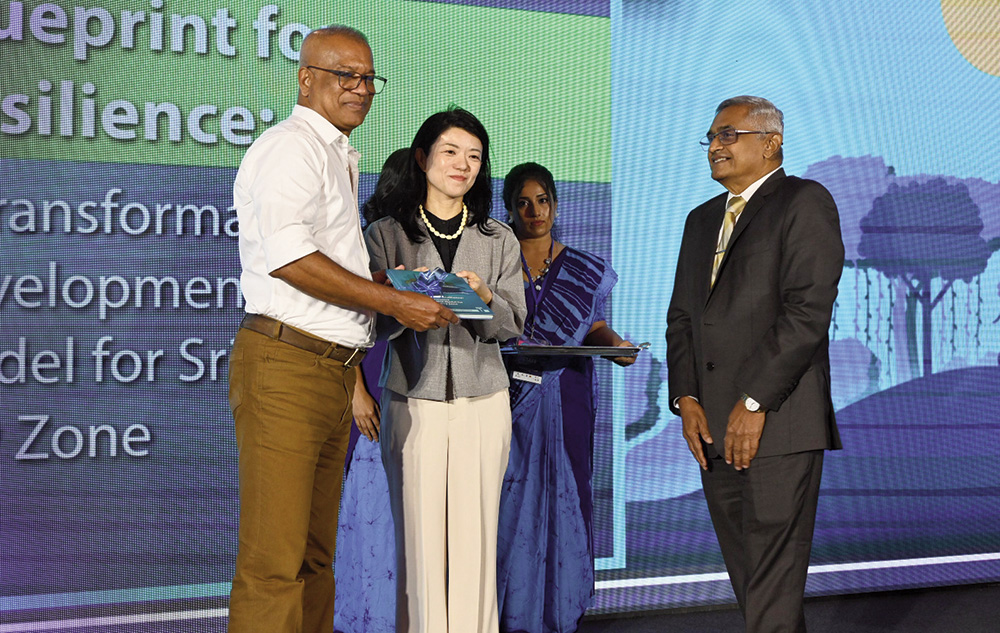
Sri Lanka, on Tuesday, marked a monumental step forward in its climate resilience journey with the inauguration of the Climate Action Symposium 2025, a landmark event bringing together over 250 policymakers, experts, and international academia, practitioners, and local government and community leaders from across the nation, and beyond. The two-day symposium, convened as the Green Climate Fund (GCF) financed Climate Resilient Integrated Water Management Project (CRIWMP), is set to drive the momentum for sustainable, climate-adaptive development well into the future.
The two-day symposium seeks to harness momentum for far-reaching, climate-adaptive transformation. Organised by the Ministry of Agriculture, Livestock, Land, and Irrigation, in collaboration with the United Nations Development Programme (UNDP) in Sri Lanka, and academic partner, the University of Peradeniya, the event concluded on 01 October 2025, with the attendance of Prime Minister Dr. Harini Amarasuriya.
The inauguration ceremony welcomed distinguished guests, including K.D. Lal Kantha, Minister of Agriculture, Livestock, Land & Irrigation (MoALL&I), Dr. Dammika Patabendi, Minister of Environment; Dr. Susil Ranasinghe, Deputy Minister of Land and Irrigation; Dr. Nandalal Weerasinghe, Governor of the Central Bank of Sri Lanka; Mr. D. P. Wickremasinghe, Secretary to the MoALL&I; Mr. Sampath Manthrinayake, Secretary to the Ministry of Rural Development, Social Security & Community Empowerment; K. R. Uduwawala, Secretary to the Ministry of Environment; Azusa Kubota, Resident Representative for UNDP in Sri Lanka; Hemant Mandal, Director of the Green Climate Fund’s Department of the Asia and the Pacific Region; high-level representatives from development partners; and senior representatives from academic and government circles.
Reflecting on the Government of Sri Lanka’s commitment, D. P. Wickremasinghe, Secretary, Ministry of Agriculture, Livestock, Land, and Irrigation stated, “As we inaugurate the Climate Action Symposium, we are not simply reflecting on past achievements, we are charting a bold path forward for all Sri Lankans. The success of the CRIWMP has shown us that climate resilience is possible when communities, policymakers, and partners unite around shared goals. This symposium is an invitation to continue that journey together, ensuring a safer and more sustainable future for generations to come.”
At the heart of the symposium lies a clear mission: to consolidate and share the transformative lessons, best practices, and innovations pioneered by CRIWMP over the past seven transformative years, ensuring they can be replicated to benefit more communities, both within Sri Lanka and globally. The event features a dynamic programme of discussions, knowledge-sharing sessions, and collaborative workshops designed to empower stakeholders and catalyze lasting partnerships.
Highlighting UNDPs thought leadership and support, Azusa Kubota, Resident Representative, UNDP in Sri Lanka, emphasised, “The Climate Action Symposium aims to take stock of rich experiences and impactful practices from the country’s first GCF funded project, CRIWMP, from the past seven years. The model that has been made possible through multi-sectoral partnerships will continue to help uplift the lives of rural communities while adapting to climate change. The project has empowered stakeholders with new knowledge and tools, and the stories must be told as a powerful example for climate adaptation worldwide. UNDP is proud to have contributed to Sri Lanka’s national ambitions in building resilient communities through inclusive, locally-driven solutions.”
The Director of the Green Climate Fund’s Department of the Asia and the Pacific Region, Hemant Mandal, said, “This project has transformed water resource management and climate-resilient agriculture in Sri Lanka’s Dry Zone, setting a benchmark for integrated, climate-smart development. The Green Climate Fund is pleased to celebrate the success of its first project in Sri Lanka. I congratulate the Ministry of Agriculture, Livestock, Land & Irrigation and UNDP for their dedication and collaboration on this landmark initiative.”
The CRIWMP’s impact has extended far beyond its immediate achievements in Sri Lanka’s Dry Zone. By prioritising local ownership and community-driven approaches, the project has built a sustainable, grassroots foundation for climate resilience. The symposium will further distill these learnings into a comprehensive body of knowledge, providing actionable frameworks for climate-resilient water management and community empowerment. This project through GCF‘s supported intervention has fundamentally transformed water resource management and climate-resilient agriculture in Sri Lanka’s Dry Zone, setting a benchmark for integrated, climate-smart development.
The Climate Action Symposium proudly highlights a series of transformative achievements that underscore the tangible impacts of climate-resilient action across Sri Lanka’s dry zone. 1.2 million people, across the Mi, Malwathu and Yan Oya river basins, now thrive with greater water security. 15,000 hectares of farmland flourish with reliable irrigation, supporting climate-resilient agricultural livelihoods. Over 50,000 farmers have been trained in climate-smart agriculture, equipping them with the skills to adapt to climate impacts. This has led to the cropping intensity rising from around 0.9 to 1.6, enabling farmers to grow more, earn more, and break the cycles of poverty. Over 125,000 people have gained access to safe drinking water, improving health and quality of life. And, more than 500,000 people benefit from Sri Lanka’s first digital agro-meteorological advisory system, which disseminates climate information, turning their disaster risks into resilience. These collective successes reflect a holistic approach to climate adaptation, improving both environmental sustainability and quality of life for rural Sri Lankans.
Speaking on the knowledge leadership provided through this symposium, Prof. Terrence Madhujith, Vice Chancellor of the University of Peradeniya, noted, “The lessons emerging from CRIWMP have the potential to transform Sri Lanka’s agriculture sector significantly. The research and practical results presented here clearly demonstrate that this model is not only effective, but also highly replicable, offering a proven pathway not only to a sustainable agricultural transformation, but also rural resilience.”
The Climate Action Symposium underscores that the path to a climate-resilient future requires inclusive, collective action. By uniting a diverse array of stakeholders, the event aims to inspire a new era of climate innovation, collaboration, and local stewardship.


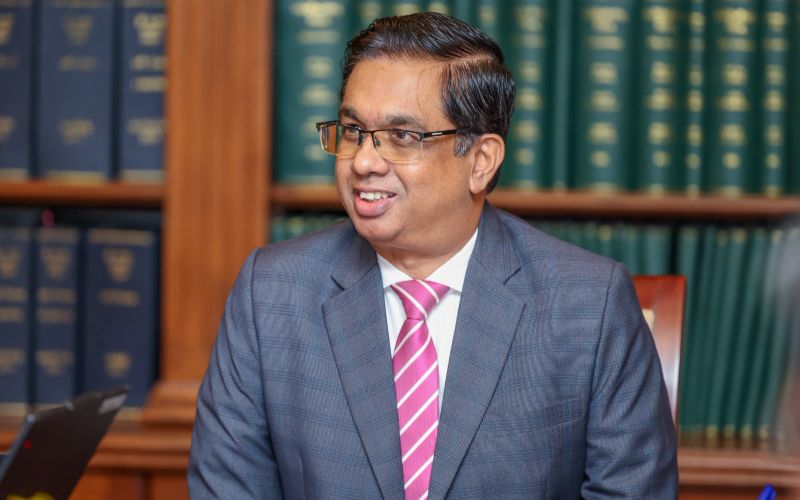
A progress review meeting on reforms and modernisation initiatives at Sri Lanka’s key state revenue-collecting institutions was held on Thursday (15) at the Presidential Secretariat, chaired by Secretary to the President Dr Nandika Sanath Kumanayake, with the participation of representatives of the International Monetary Fund (IMF) and officials of the Revenue Administration, Reform and Modernisation Bureau (RARMB) of the Presidential Secretariat.
At the meeting, the IMF representatives commended the revenue collection efficiency of the Department of Inland Revenue, Sri Lanka Customs and the Department of Excise, the country’s three leading state revenue-collecting institutions. Extensive discussions were also held on the progress of the reform and modernisation programmes being implemented at these institutions.
Secretary to the President Dr Nandika Sanath Kumanayake outlined the progress achieved by the three institutions to date and the reforms planned for implementation in the future.
The IMF representatives also highlighted the importance of strengthening risk management, developing human resources and ensuring the efficient operation of computer systems at the respective institutions.
Senior Additional Secretary to the President Seevali Arukgoda also attended the meeting. The IMF was represented by Cindy Negus, Senior Economist in Revenue Administration for the Asia and Pacific, Europe, Middle East and Central Asia regions; Alison Lister, Revenue Administration Adviser; and Gregory Toppin, Resident Revenue Adviser in Sri Lanka. A group of senior officials from the Revenue Administration, Reform and Modernisation Bureau of the Presidential Secretariat also participated.
(President’s Media Division)
By Anuradha Hiripitiyage
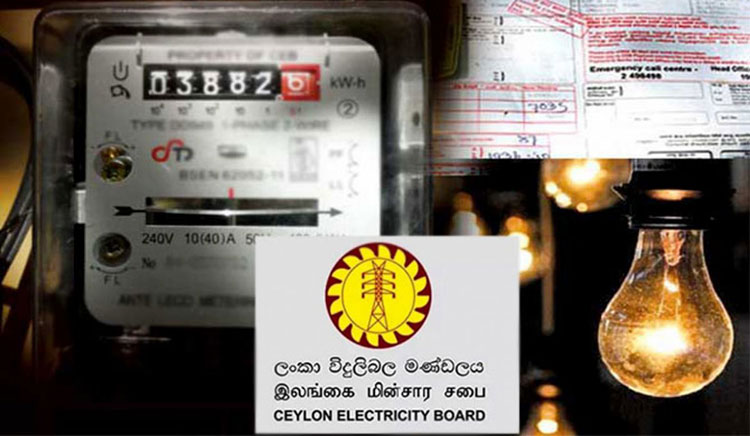
Electricity tariffs should be reduced by between 3 and 5 percent instead of being increased by 2.88 percent in the fourth quarter, as proposed by the National System Operator (NSO), Electricity Consumers’ Association Secretary Sanjeewa Dhammika said.
Addressing a media briefing in Maradagahamula, Divulapitiya, Gampaha, yesterday (16), Dhammika said a proper assessment of electricity generation costs, including the contribution of hydropower, could justify a reduction in tariffs.
He said the NSO had sought approval from the Public Utilities Commission of Sri Lanka (PUCSL) for a 2.88 percent tariff increase, which was expected to generate an additional Rs. 4,438 million.
However, the Commission had indicated that an increase of only 1.46 percent was warranted, amounting to Rs. 2,245 million, he said, adding that even this increase was unnecessary.
Dhammika alleged that the proposed revision sought to pass on to electricity consumers the financial burden arising from the non-arrival of five coal shipments and failed tenders.
“The Government had said that the burden of coal-related losses would not be passed on to the public. It is therefore unjust to make consumers bear these costs,” he said.
He pointed out that the PUCSL had forecast that hydropower would account for 32.34 percent of total electricity generation in the coming quarter, while the cost of such generation would represent only 3.45 percent of the overall cost of electricity production.
Consumers should benefit from the lower cost of hydropower generation rather than bear the burden of more expensive thermal power generation, he said.
Dhammika also questioned the inclusion of Rs. 669 million in capacity charges that had not been approved by the PUCSL, as well as a further Rs. 1,069 million to repay loans relating to incomplete projects.
Including such charges in the proposed tariff revision was unjustifiable, he said.
The PUCSL has given the public until October 30 to submit their views on the proposed tariff revision.
Dhammika said the possibility of increased hydropower generation in the coming weeks, as reservoir levels rise, should also be taken into account when determining electricity tariffs.
He maintained that tariffs could be reduced by 3 to 5 percent if hydropower generation was properly assessed and coal-related losses and unapproved charges were excluded from the calculations.
He further claimed that electricity tariffs could be reduced by as much as 10 percent through the promotion of renewable energy and the effective use of solar power and battery storage systems.
The Electricity Consumers’ Association urged the Government to withdraw the proposed tariff increase, insisting that consumers should not be made to bear costs arising from coal supply problems and other disputed charges.

By S.K. Samaranayake
Most Ven. Warakagoda Sri Gnanaratana Mahanayake Thera of the Asgiri Chapter has called for the immediate release of Ven. Galagodaaththe Gnanasara Thera, who is currently serving a prison sentence, following a court ruling.
The Asgiri Mahanayake made the appeal when a delegation of senior prison officials, including Assistant Commissioner of Prisons and Director of Operations Senaka Pallegedara, called on him on the 16th.
During the meeting, the prelate warned that the continued incarceration of Ven. Gnanasara Thera could lead to a volatile situation and cause public agitation.
Responding to the appeal, the prison officials informed the Mahanayake Thera that the authority to order the release of Ven. Gnanasara Thera did not rest with the Prisons Department but with the President.
Other senior prison officials, including Rajeev Srimal Silva, Sampath Warnakulasooriya and Mangala Welivita, were also present at the meeting.

Review of progress in reforms and modernisation of key state revenue-collecting institutions

Rose Bowl expanded to include Australia vs New Zealand T20Is

Trump claims US Navy blockade stops Iranian ships in Hormuz

Showers above 75 mm are likely at some places in the Western, Sabaragamuwa, Central and North-central provinces and in Trincomalee and Mullaitivu districts

Cut power bills by 3-5%, don’t hike them, consumers demand

Asgiri Mahanayake calls for immediate release of Gnanasara Thera

‘Dates have the highest sugar content to fight Coronavirus’

Sunday Island 27 December – Headlines

#SundayIsland 17th December – Headlines

Sunday Island – 28th March

Sunday Island Headlines – 21 March

Sunday Island – 21st February – Headlines
-

 News6 days ago
Sri Lanka escalates anti-graft drive with Shiranthi’s jailing
-

 News6 days ago
Iranian ships stranded, Lanka fears US sanctions
-

 Latest News5 days ago
Farhan and Sadaqat help Pakistan seal series in style
-

 Latest News4 days ago
Nissanka’s return headlines Sri Lanka’s Test squad against Pakistan
-

 Features5 days ago
Intake 16: 45 years of duty and honour
-

 News5 days ago
Malwathu Chapter issues statement on talks with President over Gnanasara Thera’s robes
-

 News6 days ago
Navi Pillay’s Lankan affairs in focus as she wins 2026 Nobel Peace Prize
-

 News5 days ago
CP alleges NPP has taken the blame for illegal US sanctions on Iranian vessels