
Opinion
Chira takes his ‘final flight west’

by Roger Thiedeman
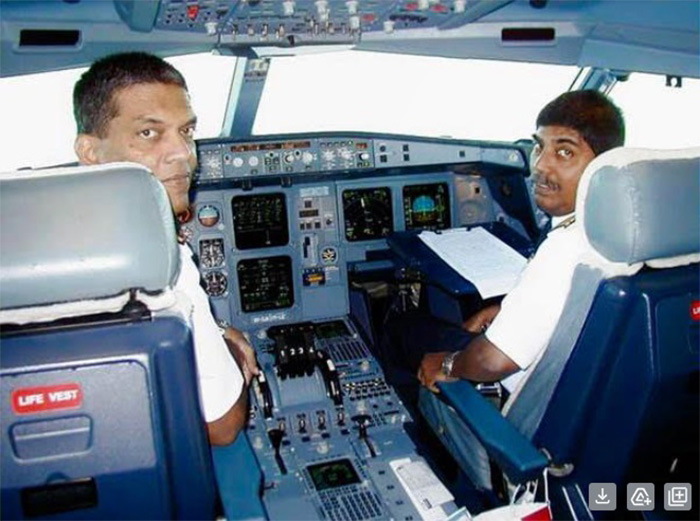
On Friday, September 27, 2024, Sri Lanka lost its longest-surviving, most versatile and experienced aviator. That was the day Capt. Chira Fernando, a former military, commercial and recreational pilot, took his ‘final flight west’ (to paraphrase an unknown aviation writer); a flight all pilots must take for their ‘final check’.
Hemendra Chirananda Fernando , better known as ‘Chira’ or ‘Captain Chira’, was born on October 22, 1946 to Hector Francis Campbell Fernando and his wife Merlyn Anne Catherine née Fonseka. He was the fourth of their five children. Hector was an optician of renown, while his wife taught in the Lower School at S. Thomas’ College, Mt. Lavinia.
Indeed, it was at S. Thomas’ College (STC), where Chira and his older and younger brothers, Eksith and Gihan, respectively, received their primary and secondary education.
The aviation bug bit Chira at an early age when his godfather presented him with a flimsy cardboard-and-balsa-wood Spitfire model powered by a wound-up rubber band. With encouragement from their father, the Fernando boys progressed to building and flying more sophisticated model airplanes with miniature working engines, some designed by Chira himself. They also enjoyed reading tales of aerial warfare in Air Ace Picture Library and ‘Battler Britton’ comic books. Most weekends saw Chira and a group of likeminded friends flying their homebuilt models at STC’s Small Club sports ground.
Although Eksith was caught up in the flying fervour with his two brothers, it was youngest sibling Gihan who became as single-mindedly enthusiastic as Chira about all things aeronautical. Almost inevitably ‘GAF’ followed his next older brother into life as a flyer, albeit via a different ‘flight path’, forging a long and successful career as an airline pilot until retirement as a senior Captain with SriLankan Airlines at the compulsory age of 65 in 2014.
Reverting to Chira, he passed his GCE Advanced Level examinations and had only just commenced a General Science course at the University of Colombo when he was selected to join the then Royal Ceylon Air Force (RCyAF) in 1965 for training as an Officer Cadet at the prestigious and historic Royal Air Force (RAF) Cranwell College in England.
But first he had to undergo the physical training challenges of parade ground drills, battle courses and night marches at the RCyAF’s primary ground combat training base in Diyatalawa. On completion of that rigorous programme Chira left for the UK by ship in February 1966.
During his RAF officer training, while participating in a two-week ‘escape and evasion’ training exercise at Gütersloh, Germany in September 1968, Chira fell and badly injured a knee. Following treatment, he was sent to RAF Headley Court at Loughborough, England for convalescence.
That unfortunate accident turned out be a life-changing blessing in disguise for Chira. Because he had missed six weeks of his officer cadet training course, Chira was informed by his Flight Commander that he would have to start afresh with the next intake of cadets. Alternatively, he could join the General Duties (Pilot) Branch for testing and selection as a trainee pilot. The decision was a no-brainer for flying fanatic Chira … and the rest is history.
He was sent to RAF Biggin Hill for a flying aptitude test, which he passed. Leaving Headley Court as a Flight Cadet in the 94th entry of RAF College Cranwell, Chira commenced training on the Hunting Percival Jet Provost.
Soloing for the first time in a Jet Provost Mk.4 on October 11, 1967, and following further training, Flight Cadet Chira Fernando was eventually awarded his pilot’s wings by the RAF on August 2, 1968; becoming, as it turned out, the last Ceylonese flight cadet to graduate from Cranwell College.
Returning to Ceylon, Chira was commissioned as a Pilot Officer in the RCyAF. He was posted to No. 4 Helicopter Flight of No. 2 Squadron, commencing ground and flight studies on the Westland (Sikorsky) WS-51 Dragonfly helicopter under the supervision of Flt. Lt. Milroy de Zoysa. This was Chira’s first introduction to rotary-wing aircraft, which would stand him in good stead as his air force career progressed through other helicopter types, as well as a wide variety of fixed-wing aeroplanes small, large, and everything in between.
On September 3, 1970, Chira was certified as a Qualified Flight Instructor (QFI) to conduct flying training at China Bay, Trincomalee on the British-built de Havilland Canada DHC-1 Chipmunk T.10 two-seat trainer. This appointment, at age 24, earned Chira a further distinction as the RCyAF’s youngest flight instructor at that time. A rating (endorsement to fly) on the de Havilland Heron four-engine transport followed.
When the JVP uprising began on April 5, 1971, Chira’s RCyAF flying duties shifted into high gear. In Bell 206 JetRangers and the Bell OH-13 Sioux, a British militarised and armed version of the famous US-built Bell 47G helicopter, Chira flew numerous sorties, not just for reconnaissance but on offensive missions too. Covering territory in such areas as Elpitiya, Anuradhapura, Potuhera and Kegalle he saw the ugly face of that bloody rebellion.
Another writer has said that “the gritty realism of the senseless struggle had a profound effect on Chira”, especially while on patrol in a JetRanger he watched helplessly as a Jet Provost flown by Sgt. Pilot Ranjith Wijetunga lost power on approach to China Bay and crashed on land near Thampalagamam Bay. Wijetunga failed to eject from the falling aircraft, so Chira immediately headed for the crash site and landed close to the wreckage. Pulling Wijetunga off the ejection seat, Chira dragged him out of the mangled Jet Provost and airlifted the gravely wounded airman to China Bay. But in vain, as Wijetunga soon succumbed to his injuries.
When the insurgency petered out, Chira returned to flight instructor duties at China Bay. On December 10, 1971, he added the de Havilland Dove, a twin-engine transport, to his growing list of type endorsements.
Ceylon achieved republic status in 1972 and the country’s name was changed to Sri Lanka. Concurrently the RCyAF became the Sri Lanka Air Force (SLAF). The same year six Cessna 150 and four Cessna 337 Skymaster airplanes were donated to the SLAF by the US government. With the 150s replacing the Chipmunk as the air force’s basic trainer at China Bay, the new Cessnas gave Chira the opportunity to add these types to his logbook while teaching new pilots to fly them.
In 1974 Chira was endorsed on the SLAF’s Soviet-built MiG-15 and MiG-17 jet fighters. Posted as Commanding Officer of No. 6 MiG Squadron at Katunayake – he was the youngest CO of a SLAF squadron at the time – Chira took every opportunity to fly alongside his fellow MiG pilots as often as the squadron’s meagre fuel allocation allowed. He even formed a MiG aerobatic team with Nihal Tudugalle, Shan Vadivel, Cecil Marambe and Fahir Wahab, for the primary purpose of maintaining their jet-flying skills.
With SLAF jet activity at a low ebb in 1975, Chira took advantage of the downtime to study for and pass the examination for the UK’s Airline Transport Pilots Licence (ATPL). To satisfy the practical component of that civil qualification he took his flight test in the SLAF’s Convair 440 twin-engine transport. That led to, at the instigation of SLAF Commander Air Vice-Marshal (AVM) ‘Paddy’ Mendis, Chira being seconded to fly the Air Maldives Convair 440 on commercial services between Colombo and Malé, a welcome diversion which lasted from 1975 to 1977.
During that period Chira converted to other types in the SLAF’s inventory, ranging from the SIAI-Marchetti SF.260, the venerable Douglas DC-3 Dakota (taken over from Air Ceylon), through to the Riley Heron (an upgraded version of the standard Heron). Various postings and promotions followed in 1977 and 1978 before Chira left the air force with the rank of Squadron Leader in June 1981, having qualified on 20 different fixed-wing and helicopter types during his 16 years of service as a pilot in the RAF and RCyAF/SLAF.
No longer a military flyer, in December 1981 Chira turned his attention to civil aviation and flight training. In partnership with another retired air force officer he founded a private flight training school, Air Taxi Ltd, at Ratmalana airport. A subsidiary of the Capital Maharaja Group, the company trained pilots on a variety of Cessna and Piper single- and twin-engine airplanes. Chira also found time to add to his logbook the Lake Buccaneer LA-4-200 single-engine amphibian, a type he flew to various parts of the island on behalf of its owner Consolidated Marine Engineering of Colombo.
A major move in Chira’s career occurred when he joined Air Lanka (precursor of SriLankan Airlines) in June 1982. Qualifying as a First Officer on the Lockheed L-1011 TriStar, after five years he was promoted to Captain and, later still, Line Training Captain and L-1011 ‘Synthetic’ Flight Instructor. Meanwhile he continued to train aspiring private pilots at Ratmalana in addition to serving as an examiner and consultant to the Civil Aviation Authority-Sri Lanka (CAASL).
In 1987, Chira and his future wife Asankthi (‘Ashi’), herself a pilot, bought a Piper PA-28 in Dubai for their flying school and ferried it to Sri Lanka via Oman, Pakistan and India. Chira’s published account of that epic journey makes interesting, sometimes nerve-wracking, and amusing reading – especially his description of how he and Ashi coped with answering the number one of nature’s two calls during their long hours aloft in the cramped confines of the Piper’s cockpit!
Another marathon ferry flight followed in October 1991 when Chira and David Pieris piloted the latter’s newly acquired Beechcraft Baron 55 from Lisbon to Sri Lanka with stops en route at Athens, Luxor, Bahrain, and Mumbai.
In December 1992, a year after Chira was appointed as Air Lanka’s Manager-Flight Operations (MFO), the airline acquired the first of its Airbus A320s, followed in 1994 by the larger A340. Chira had the honour of ferrying both new types from Toulouse to Colombo. Not only was Air Lanka the first airline in South Asia and Far East to take delivery of the A340, Chira and his co-pilot Ravi Thampapillai were the first pilots to fly the four-engine jetliner in those regions.
In 1997, after successfully introducing employment of women pilots by Air Lanka, Chira left the national airline to join Gulf Air, with occasional postings to Philippine Airlines who were wet-leasing A340s from the Bahrain-based carrier.
However, this phase was short-lived, because in 1998 Chira was hired by Singapore Airlines as Captain on the A340. He subsequently served as a line instructor on the company’s Boeing 777 fleet and participated in its Operation Safety Group – while acquiring a Master of Technology degree from Swinburne University, Australia – until retirement from airline flying in October 2006.
But Chira was not yet done with the airline industry. He spent the next three years as an A320 instructor at Boeing’s Alteon simulator training facility in Singapore, before ST Aerospace Aviation in Singapore recruited him as its Head of Training. During the ensuing ten-year tenure Chira was instrumental in developing Singapore’s Multi-crew Pilot Licence (MPL) in collaboration with various government and private aviation entities including Singapore-based Tigerair (later merged into Scoot).
So much for Chira Fernando the aviator. What of his life away from the cockpit? On July 30, 1971 he married Violet Maurine de Silva with whom he had two sons and a daughter: Kamal Mututantri; Anouk Mututantri; and Chira Fernando Jr.
Chira and Violet were divorced in 1989, and on March 7, 1990 he married Menaka ‘Ashi’.
Not surprisingly, Chira’s aeronautical DNA was inherited by his eldest son Kamal, who, after employment with Singapore’s former Tigerair, is now a Captain with Qatar Airways.
Throughout his stellar military and commercial career and even afterward, Chira was actively associated, often with Ashi, an experienced flyer in her own right as his able lieutenant, in general aviation, sport flying, ab initio and advanced training, and private and recreational flying of homebuilt experimental light ’planes and rotorcraft.
Chira was always happy to share his passion for the air with other aviation enthusiasts, even those like this writer who was never a pilot. For example, on the morning of May 24, 1995, while I was holidaying in Sri Lanka and Chira phoned to ask if I would like to accompany him, in a few hours’ time, in David Pieris’s Beech Baron while he checked out David for his Instrument Rating renewal.
My decision was another no-brainer – just as Chira’s was when his Cranwell commander asked whether he wished to transfer from the Officer Cadet course to be trained as a pilot. Soon, I was seated enthralled in the back of the Baron, next to David’s wife Esther, as we took off from Ratmalana and headed for Katunayake. There, mixing it with big jets arriving at and departing from BIA, David executed two or three ILS touch-and-go approaches under Chira’s watchful eye and the sound of his calm, reassuring but firm instructor’s ‘patter’.
Another time, in Singapore in May 2010, at Chira’s invitation I sat in the left seat of an A320 simulator while he taught me how to carry out a few basic manoeuvres ‘in the air’ with the aid of autopilot and side-stick controller, plus deployment of flaps, airbrakes, etc. After a trainee pilot in the right seat performed the approach and landing, Chira talked me through taxiing to the gate with clever tips on how to ‘follow the line’. Again, his natural gift as an instructor made me feel I was already a taxiing expert, if not a taxi or (Air)bus driver!
Chira’s death, a month short of what would have been his 78th birthday, was mourned by loved ones and the multitude of his friends and colleagues within and outside the world of aviation, including enthusiasts like me who were in awe of Chira’s talents as an aviator and grateful for his, and Ashi’s, friendship.
At the conclusion of Chira’s funerary rites on Tuesday, October 1, a solitary Piper Tomahawk trainer flew over the Kanatte precinct in Chira’s honour. The flypast was unavoidably both brief and a low-profile event. But as his brother ‘GAF’ said later: “In a way it was good … He wouldn’t have wanted too much fanfare anyway.”
As mourners watched the Tomahawk bidding a final farewell to Capt. Chira Fernando, along with those of us viewing a video clip from afar, the following excerpted words of Anglo-American aviator and poet John Gillespie Magee, Jr never seemed more appropriate: “[he] slipped the surly bonds of Earth and danced the skies on laughter-silvered wings; sunward he climbed, and joined the tumbling mirth of sun-split clouds – and did a hundred things others have not dreamed of – wheeled and soared and swung high in the sunlit silence … Up, up the long delirious burning blue he topped the wind-swept heights with easy grace where never lark or even eagle flew.”
Rest in Peace, Chira!
(With acknowledgment to https://everipedia.org/wiki/lang_en/captain-chira-fernando )

Review
by Colleen Figg, Editor
and Reviewer – Amazon, New Voices Publishing
“Fernando echoes Macbeth with the line, “There is judgment here.” It captures the question running through the novel: can anyone participate in corruption and remain untouched by it? Beneath this satire is a dark story about power and the danger of believing, that someone else will always pay the price.”
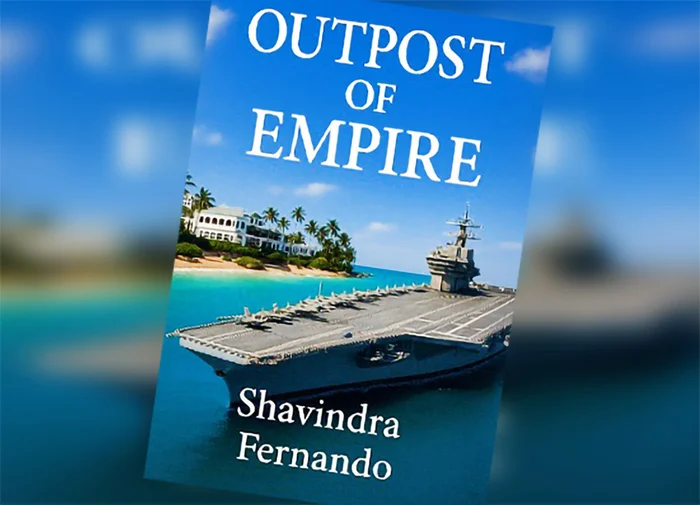
Shavindra Fernando’s Outpost of Empire is a political novel set in the fictional country of Lackadasia. At its heart is a strong idea: an exploration of world politics, terrorism and the ways in which powerful countries manipulate smaller ones. Fernando is clearly writing about political issues that matter deeply to him.
The names immediately establish the book’s satirical character. Lackadasia, Burgherbugaria and the various Klowns suggest a world in which the people and places are exaggerated, but the issues beneath the exaggeration are recognisable. The playful language allows Fernando to approach terrorism, religious conflict and political corruption from an unusual angle.
Henry Stockwell is a central character: an ambassador who arrives in Lackadasia presenting himself as a friend of the country. He believes he understands how power works and treats the country, its politicians and its people as pawns on his personal chessboard. In his arrogance, he never doubts that he controls events rather than being controlled by them. This confidence makes him a compelling figure and in him, we explore the workings of political influence and the potential traps contained therein.
As the story develops, Fernando reveals a political world where causes are adopted when they are useful, people are exploited and discarded, and the truth becomes whatever those in power need it to be. Ordinary people suffer the consequences of decisions made far beyond their reach or knowledge, while those making those decisions continue to justify their actions. Even the people who help keep this world running may not be as important or as safe as they imagine.
Stockwell brings this idea into focus. He recognises corruption in others and willingly takes part in it himself, yet he cannot see that he might also suffer its consequences. Ultimately, he thinks his position will keep him safe. He is intelligent enough to understand the game, but not insightful enough to grasp the limits of his place within it. This blindness gives the novel a strong sense of irony.
The satirical approach gives Fernando room to criticise political hypocrisy without turning the novel into a direct political argument. By using fictional countries and exaggerated names, he creates some distance from specific governments and events while still making the larger targets of the book clear. The humour does not take away from the seriousness of the subject; instead, it makes the cruelty and self-interest beneath the political performance stand out more sharply.
Near the end, Fernando echoes Macbeth with the line, “There is judgment here.” It captures the question running through the novel: can anyone participate in corruption and remain untouched by it? Beneath this satire is a dark story about power and the danger of believing that someone else will always pay the price.
I came away feeling that Outpost of Empire is a valuable and thought-provoking book, particularly in today’s political and social climate. It has a distinctive voice, and the questions it raises about power, responsibility and foreign interference remain relevant far beyond the fictional borders of Lackadasia.
About the Author
Shavindra Fernando has worked as a reporter. He read English & Classics at the University of Peradeniya in Sri Lanka, and took International Relations & Ethnic Politics as a Reuter Fellow at the University of Oxford in England. The Vague Poetess (1999)was his first novel.
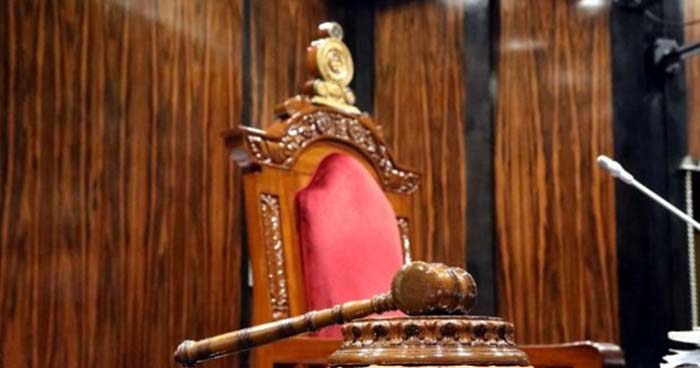
The Opposition, in its wisdom (or perhaps stupidity), has submitted yet another No-Confidence Motion (NCM) against the Speaker of Parliament. Perhaps it hopes to score some brownie points in the eyes of the public, which is hardly indifferent to such developments. Yet, knowing full well that the motion is unlikely to succeed, the exercise may well prove futile — akin to banging one’s head against a solid rock.
Nevertheless, the nearly fifty allegations levelled against the Speaker, whether justified or mere mudslinging, cannot simply be brushed aside. Such allegations may well have a bearing on the individual concerned, particularly where it matters most — his conscience — and few would dispute that possibility.
From a protocol standpoint, the Speaker occupies one of the highest positions in the country, ranking third in the hierarchy of state. He consequently belongs to the uppermost echelons of public life, with acquaintances and associates extending across a wide spectrum of society, including diplomats and other distinguished personalities. Such a position carries with it not merely prestige and privilege, but also an onerous responsibility to uphold the dignity and integrity of the office.
As the guardian of Parliament, the Speaker is expected to maintain standards of conduct, impartiality and discipline that are beyond reproach.
Whether the allegations are justifiable or not may be of little consequence to members of the ruling party, who will undoubtedly defend their colleague to the hilt. Nevertheless, the stigma arising from such allegations may prove difficult to erase, particularly in the eyes of his family, close associates and, ultimately, the voters who placed their trust in him. Of course, it is common knowledge that politics can be a dirty game and that, as Lord Acton famously observed, “power tends to corrupt, and absolute power corrupts absolutely.”
Yet, nothing could be more devastating than a person losing his own soul in the process. On the one hand, stepping down could be construed as an admission of responsibility for the allegations levelled against him. On the other, allowing the No-Confidence Motion (NCM) to proceed could expose him to further public scrutiny and potentially inflict lasting damage on his character, dignity and reputation. Thus, he finds himself caught between two unenviable choices, each carrying consequences that may extend far beyond the immediate political fallout.
The Speaker is therefore confronted with a classic Hobson’s choice, with neither option likely to be without consequences. After all, in politics, there are no permanent friends or enemies—only permanent interests.
WILLIAM


I write this with a sense of profound disappointment, rather than as a critic of the government or any individual public official. For several months, I have been drawing public attention to what I consider one of the most serious long-term challenges facing Sri Lanka—the country’s rapidly changing demographic structure, declining fertility, population ageing and the consequent contraction of the working-age population.
I have written several articles on this subject, believing that informed public discussion could encourage policymakers, academics and relevant institutions to examine the issue before its consequences become irreversible. I went a further step by addressing a detailed letter to the President on 28 August 2026, seeking consideration of a National Demographic Action Plan.
That letter was not merely an expression of concern. It contained practical proposals: long-term demographic projections, assessment of the consequences for labour supply and productivity, examination of declining fertility and delayed family formation, reassessment of education and employment policies, consideration of migration, and the establishment of continuous demographic monitoring.
I deliberately addressed the matter to the highest level because demographic change is not the responsibility of one ministry. It cuts across Finance and Planning, Education, Labour, Health, Higher Education, migration, social protection and national human-resource planning.
Yet, after sending that registered letter, I have not even received an acknowledgement.
This is what troubles me most. I fully appreciate that government has numerous urgent problems to address. Economic recovery, disaster management, employment, education and many other immediate concerns understandably demand attention. But demographic change is different. It operates slowly, almost silently, while steadily narrowing the choices available to future governments.
By the time the shortage of workers, accelerated ageing, increased dependency and the economic consequences of very low fertility become impossible to ignore, remedial action may be enormously more difficult and expensive. What is equally disappointing is the apparent silence of the institutions that should be at the centre of this discussion.
The latest Census has provided the country with an invaluable body of demographic evidence. My own published work has attempted to connect those findings with national development, productivity, education, employment and human-resource planning. On the top of these endeavours, I have seen voluminous articles written by Professor Manori Weerathunga, of the Population Department of the Colombo University, President Population Association of Sri Lanka, and Director Centre for Ageing Studies of University of Colombo. Yet I have seen little evidence of a visible national policy response from the relevant planning and statistical authorities.
Given the multiplicity of the roles and the credentials she possesses, I would strongly urge her to take the bull by the horns and formulate a draft national demographic policy with the expertise of the demographic scientists. This task cannot be delegated to the SLAS or Planning panjandrums. The government should seriously think why the thinktanks are abdicating their mandatory responsibilities and playing a passive role when the country is confronted with burning issues. Are there any sinister plans by disgruntled senior officers to derail the development plans is the question that begs an answer? Alternatively, the government should seriously enlist the support of the IMF or the World Bank, before the demographic bomb explodes!
Are we treating the Census merely as a statistical exercise, rather than as an early-warning the system for national planning? This question deserves a public answer.
I went even further by writing on “Educational Delays, Biological Clock and Sri Lanka’s Fertility Crisis.” My purpose was not to blame the education authorities. I sought to draw attention to the possibility that prolonged delays in university education, examinations, admissions and graduation may interact with delayed family formation and the biological realities of childbearing. I had hoped that this would stimulate examination by the Education sector and other relevant stakeholders.
Unfortunately, I have yet to see any meaningful response. My concern is therefore not whether my own articles have been acknowledged. That is completely irrelevant. The issue is whether the substantive national questions raised in those articles are being examined by anyone in authority.
A citizen who spends considerable time studying a national problem, writing about it publicly and then submitting a constructive proposal to Government should not necessarily expect agreement. But surely an acknowledgement—or better still, a response indicating that the matter is being examined—is not too much to expect.
There is also another dimension which I recently highlighted in discussing Sri Lanka’s transition from an “Age of Longevity” towards an “Age of Experience”. Sri Lanka is simultaneously facing a shrinking younger workforce and an expanding reservoir of older citizens possessing decades of professional and institutional experience.
The demographic challenge, therefore, should not be viewed only through the lenses of pensions, healthcare and elderly care. The country must also ask how the accumulated knowledge, expertise and institutional memory of its experienced citizens can be mobilised for national development.
This is precisely why I find the present silence so difficult to understand. I have no personal or political agenda. I have spent decades working in human resources, productivity and management specialist, and I have chosen in the later stage of my professional life to devote my writing to contemporary national issues which I believe deserve national attention.
Perhaps my concerns are misplaced. Perhaps the government already has a comprehensive demographic strategy under preparation. The relevant institutions have already initiated studies that are not yet public.
If that is the case, I would be delighted to be proved wrong. But if no such comprehensive process exists, then I respectfully ask: how much longer can Sri Lanka afford to remain silent?
The demographic clock does not stop while governments deliberate.
My appeal is therefore not for recognition of my efforts. It is for recognition of the problem. I hope the relevant authorities will prove that the silence I have encountered is not indifference, but merely the silence before meaningful action.
Sri Lanka cannot afford to discover, ten or twenty years from now, that the warnings were visible, the evidence was available, the proposals were made—and nobody acted.
The time to respond to the demographic crisis is now, while choices still remain.
Over to you, the President, the Prime Minister, the Minister of Finance and National Planning, Vice Chancellor of Colombo, Director General of Census and Statistics.
Athula Ranasinghe
Productivity Specialist and Management Consultant

HRCSL issues recommendation on seizure of four books by B. Piratheepan by Sri Lanka Customs

Former Zimbabwe player and umpire Sarah Dambanevana dies aged 36

Deflated Sri Lanka look to prevent whitewash against dominant Pakistan

Heavy showers (100-150) mm likely at some places in the Western, Sabaragamuwa, Central, Uva and Southern provinces showerss above 75 mm are likely in the other areas of the island.

Presidential pardons: Govt. studying Justice Thurairaja’s recommendations – Minister

Mahinda and Shiranthi hospitalised

‘Dates have the highest sugar content to fight Coronavirus’

Sunday Island 27 December – Headlines

#SundayIsland 17th December – Headlines

Sunday Island – 28th March

Sunday Island Headlines – 21 March

Sunday Island – 21st February – Headlines
-

 Features5 days ago
The Sri Lankan who made Scottish history
-

 Sports5 days ago
Nissanka absence opens door for Sri Lanka’s young guns
-

 News6 days ago
Gnansara Thera to be assigned to prison printing section: Officials
-

 News4 days ago
NDB fraud Rs 60mn more than reported
-

 News4 days ago
Removing monk’s robes matter for Sangha to decide: Mahanayake Theras
-

 Features5 days ago
Future of Sri Lanka’s state university system: Should it be shut down and reopened?
-
 News6 days ago
OIC of FCID summoned before Maligakanda Magistrate
-
 News5 days ago
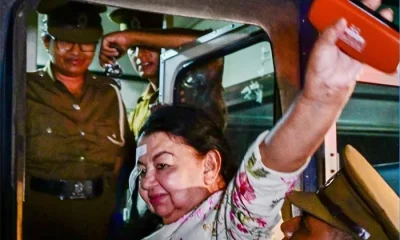
Shiranthi R remanded until 13 Oct.