
Features
Childhood and Growing Up


Excerpted from Memories that Linger by Padmani Mendis
(continued from last week)
Published in Sri Lanka by The Jam Fruit Tree Publications and is available as a Kindle eBook.
“For when the One Great Scorer comes
To mark against your name,
He writes not that you won or lost
But how you played the game”
Grantland Rice, 1941
This is what my mother would quote to us at regular intervals, lest we forget the values she wanted us to have.
My first memories are too hazy to share. Running barefoot up and down the never-ending patnas of Bandarawela with seemingly countless cousins. Ice-cold spring-baths at the peella at the foot hills below, every morning as a pre-lunch ritual. We were spending the years of World War II in Bandarawela, where many Colombo families had moved for protection from possible Japanese bombs and attacks.
And then my recall becomes clearer as it continues after we returned to Colombo to live at 11, Sunandarama Road, Kalubowila. This is where I spent a remarkable childhood. What made it so remarkable were the oodles and oodles of love that I was showered with. My mother had told me at some point in my childhood that the more love you are given now, the more you will be able to give later. It is a truism I believe in firmly. It influenced me when I chose to work with disabled people. It influences me now as an aunt and a grand-aunt to many in the next generations. Nalin and I do not have children of our own to shower my love on.
Growing up, I never had many bought toys to stimulate my development. My mother barely managed to feed her large household to be able to afford toys for me. There were always relatives living with us. Friends of Uncle Lyn (more of Uncle Lyn later) and of the siblings dropped in to visit daily, and they were welcomed warmly by my mother to share our meals.
A vivid image I have in my mind is that of a little brother and sister, perhaps of the ages of six and eight years, coming frequently to our home as dusk fell, clinging to each other perhaps with fear and apprehension. They would say something like “Mummy told to ask for a loaf of bread”. They always had a loaf and more – perhaps a couple of eggs to eat with the bread. We had plenty of those because Uncle Lyn also bred poultry on his farm. To help with the feeding of all of us and more. For this also her cousin Uncle Geoff was always there for my mother. The same Uncle Geoff who had registered my birth.
Uncle Geoff brought groceries for my mother from the Marketing Department Wholesale Store in Maradana. He would bring these in his blue Plymouth. Riding on the back seat with his legs stretched out in front to rest on the front seat. Driven by the ever-faithful Lionel. And a practice he would always adhere to was to display the purchases to my mother. He would set out what he had bought for her on the dining table. She would be sitting at the table adding up the costs which he said he had paid.
And we would love to stand by to watch this ritual being enacted. We all knew that Uncle Geoff always, always, understated the costs of the things he had bought, just to help her. She knew it. But through a mutual understanding between them his kindness was never put into words.
Of Santa, Dolls and Books
I got my first doll when I was about six or seven. My older brothers and my oldest sister had, by this time, passed the age of 21 and were entitled to a small monthly allowance from my father’s estate. They contributed to buy me my first doll. They did not disclose this to me at the time. The doll was in the pillow-case I had hung up that Christmas for Santa Claus; and, because my siblings told me, I had been a good girl. To me the doll was a living idol – in dresses that could be changed, she could open and close her eyes – what wonder! The younger of my sisters made dresses for her so I could not only bathe her but also wash her clothes regularly.
The next year that same Santa gave me a silver tea set. Who was to know or care that it was aluminum? I became the perfect hostess making real tea for any and all. With milk and sugar. With never a show of reluctance, all my guests actually drank my tea. Then I had to collect the used items, wash and dry them and have them ready for my next guests. I was eight or nine years old when, sadly, I learned the truth about Santa.
I got my first book when I was six years old. It was the prize I got in the middle kindergarten when Miss Freda Welikala was my class teacher. It was called “Thumper” and was about a rabbit. The next book I had was “The Water Babies” by Charles Kingsley. That too probably came in the annual pillowcase. It was about a chimney-sweep called Tom. I remember another character in it called “Mrs. Do-As-You-Would-Be-Done-By”. She had a significant impact on me. And only in my youth did I know that this book was a children’s classic written in 1863. I learned much from both. Both books had delightful illustrations, so attractive to a child of that age; both grew my mind with wonder and imagination.
Learning from Nature
But it was not these rare and expensive toys and books that first made my life joyful. Nor were they the toys that I learned my earliest lessons from. My earliest toys were from nature and the toys came free. We lived in a house with a very large garden, well over an acre of it or even two. Someone wise had lived there before us. This person had covered the land with trees – not just any trees, but those that would bear useful produce.
So coconut, that-was-a-plenty; and thambili, always ready to be plucked for guests or to quench a thirst. There were many different varieties of mango, jambu and guava; there was ambarella, lovi, and other fruit trees that many will not see now – huge masang and veralu trees among them. And then there was jak or kos and breadfruit or del. Always seemed to be available cooked for lunch or dinner or boiled or fried as chips at any time to satisfy a hunger.
My brother Shatra would often take me down the garden and show me how the seeds that fell to the ground germinated and grew into trees. He would show me buds burst into blossom from which fruits magically appeared. Always with catapult in hand he would shoot down luscious fruit which we would share. We would collect the bi-coloured red and black olinda seeds.
On a rainy day when we had to be indoors, we would play games using these seeds. They suited the playing of counting games. One game I recall was to throw them up with the palm of one’s hand then see how many one could catch with the back of the hand. With others to help me, I would make garlands and chains and bouquets for guests from flowers we collected from the garden.
Our front garden at No. 11 was covered with neat beds on which my young brothers would grow an array of different kinds of flowers. Seeds were available at not much cost – zenias, marigolds, cosmos, and there had to be the pretty little phlox. At Easter, parts of the back garden would be covered with orange Easter lilies. I would collect some bulbs and plant them in areas that that did not have them so that next year we would have more lilies. This is where my love of flowers blossomed. I have pots of these lilies even now on my balcony.
There was space in this garden of wonder for animals – goats, pigs and a small dairy which Uncle Lyn took care of. Uncle Lyn was more than a relative. My mother had married again and this was her husband “Llewellyn Adolphus Dalrymple Perera Abeyewardene. Although he was married to my mother, to us he was never considered a stepfather. He was always Uncle Lyn. That was our relationship. An amiable but distant uncle – and always there to drive us around and about. Besides, no one could replace our father. My siblings talked often about him and I would listen attentively. We still loved him hugely.
So here in this environment, nature provided my first remembrances of fun and of joy and of sadness, and of my first toys. It promoted my early learning and my early development. I loved especially playing with the baby kid goats of which there was always a steady supply. So much time I spent with them that my sister Nali would call me “Padi the Kid”. And that is how I came to be called “Padi”, then and to this day.
Theva
The dairy cattle were housed in a shed in one corner of the back garden. To care for them, and for the goats and pigs when we had them, was Theva from South India. I don’t recall that we had a bull full-time. I think Uncle Lyn got one down when he felt the cows needed a bull. When Theva required an assistant, he got down his son-in-law from South India. Ranga was a graduate from the University of Madras but had no job back home, and this solved the problem for both father and son-in-law.
Theva and I had a special relationship. I would stand by when I could while he bathed and then fed the cattle with poonac and with grass he cut from the grassland he had tended; while he milked the cows and bottled the milk; while he led the calves to their mothers for their feed. Theva explaining to me what he was doing and why, talking to me about the animals he cared for and about his home in South India and the family he had left behind. Me a keen listener, but full of questions which he had only to answer, helping him with fetching and carrying, and with other little tasks.
A vivid memory I have is of the toys Theva made for me. He would, for example, clean and then cut a dried fallen coconut branch into various sizes. Then he would shape them. The largest part of the branch would be made into a bull and later sections into cows and calves of various ages. Each had their nose and ears as well as a neck round which he would tie coconut string with which I could move them from tree to tree. I had to make sure they were tied firmly so they would not break loose. Then he would help me to tend to my own cattle, while he tended to his.
He also saw to it that I had my own little house. He had not heard of a doll’s house and neither had I. But this was the real thing. Walls and roof made of thatch using fresh coconut leaves. He also made dolls and carts and other toys for me using bits of cloth and paper and empty cans from the house, and sticks and leaves and string and I know not what, except that they were all from the house and garden. Theva, who had never been to school and was not able to read and write, taught me how to be innovative and stimulated creativity within me.
Pets and Other Living Things
In the house we had many dogs – the first I recall is an Alsatian called Marina. She was beautiful and ever so affectionate. I remember Marina allowing me to ride on her back, although when I think of that now, I am angry with myself for having done so.
Then there were the Cocker Spaniels, Chappie and Bessie. Each dog spent a lifetime with us and made us so sad when they left this earth and us. But they were soon replaced with other dogs.
We had two monkeys in the garden. To recall that they were always tied with chains to sturdy posts now makes me wonder how we could have done that. We had, at one end of the verandah, a green parrot who was the same age as my oldest brother, then in his twenties. She was called peththappu. At the other end, we had a white cockatoo Uncle Lyn brought from Anuradhapura where he had inherited paddy lands. Called Polly, she was a very polite cockatoo, and sociable, always ready to greet us in the morning and at other times, and greet also any visitor. She would love to have us sit down in front of her cage and converse with her. Uncle Lyn was a hunter, and on our walls hung leopard and deer skins and antlers of various sizes, and on the floor were bear skins.
Of Songs and Relatives
My mother had a beautiful voice and she had many favourite songs. Some that had been taught to her by her English Governess. My fondest memories of her are when she was relaxing on a sofa, singing. Equally happy singing when we would be traveling in a car with many of the children jostling together on the back seat. I would often be sitting on her lap in the front seat. No seat belt requirements then.
A routine weekly trip would be to Moratuwa because that is where my aunt Violet, my mother’s oldest sister, lived with her brood of eight. My mother had to see each of her sisters at least weekly. I recall those songs she sang often – “One day when we were young” and “After the Ball is over”. The favourite of all was however “Jerusalem”. I can sing those to this day even in my now ageing and crackling voice.
My mother also used to visit her surviving aunts and uncles regularly. So almost always, on the return trip from Moratuwa we would stop by to visit Eddie Seeya. This was her father’s brother, her uncle E.L.F. who lived in a “cottage” on his coconut plantation, situated in what is now Ratmalana. As we drove up the long straight drive, the cottage under the tall coconut trees came into view. It was painted in colours of green and gold.
E.L.F was a well-known horse-racing enthusiast – for several consecutive years, the winner of the Governor’s Cup with his horse called Orange William. His racing colours were green and gold. These are the colours worn by the jockeys who rode his horses. But it seemed to us children that to E.L.F., everything he owned had to be in green and gold. I recall clearly those green and gold flower pots at the end of the drive and surrounding the cottage.
One day Eddie Seeya gifted to me a toy Daschund pup. He told me I could call it Gypsy. She was my loving companion at Kalubowila for many long years.
With me hanging on to her sari pota there would be visits to Mary Archchi and to Willie Seeya in Colombo. There were also regular visits to other relatives in Moratuwa and Angulana where many of them still lived on their large coconut properties.
Anura, Summa and Shatra
The younger of my six brothers, Anura, Summa and Shatra, I came to know better than I did the older three who had already embarked on their post-secondary studies. And those three did tease me with tall stories. A favourite was that my mother had found me in the “kaanuwa” or drain at Kadugannawa, felt sorry for me and brought me home. They even had a rhyme that went with that story – “kalu, katha, kota ape nangee, Kadugannawa kaanuwen gedara genawe ape ammi”.
To the extent that sometimes I believed stories like this and that would have me in tears. But there were always loving sisters to admonish them and send them off to do something more productive. And comfort me with stories of me as a baby and of my father, and action songs I liked to hear. These would end with tickles and hugs and kisses.
One thing that I have not forgiven those three brothers for is that even after plea after plea, none of them ever taught me to ride a bike. And after that I could never do so, in spite of trying over and over again. It must have been a mental block.
Anura was the one who had the most number of interests and hobbies, was always looking for something creative to do. At one time, he produced a family newspaper, a replica of the real thing with current news of family members and sketches of their activities. At another time, he was an amateur photographer. He started with a Kodak box camera and then, when he saved up enough from the allowance he got as an accountancy apprentice, bought a real fancy one which had to be focused each time before taking a photograph. He developed his own films in a dark room he made, sectioning off a corner of the front room with dark curtains.
,I would love to join him there, smell the chemicals and watch his photographs as they came to life. With this he introduced me to elementary science, which I learned later was physics and chemistry.Anura and Summa were boxers at school. Shatra still has his trophies earned in his childhood from his prowess in athletics. They played rugger at school and later for the Havelock’s Sports Club. I had no interest in sports and, come to it, in any physical activity. At school, I would be standing at the back of the class when we had physical education hoping I would not be seen.
(To be continued)


by Jehan Perera
The NPP government is going after powerful figures from the past and present who have engaged in corruption, fraud and criminal activity in a way that no previous government in Sri Lanka has done. Former ministers, politicians and senior state officials are among those facing investigations and legal proceedings. The government has placed before Parliament a document listing 50 cases involving corruption, fraud and other crimes. These include not only financial offences but also cases relating to the Easter Sunday attacks, the killings of Lasantha Wickrematunge and Wasim Thajudeen, the disappearance of Prageeth Ekneligoda and attacks on journalists Keith Noyahr and Upali Tennakoon.
The significance of this effort is that it can demonstrate that nobody is above the law, regardless of political connections or social standing, which will help restore public confidence in institutions that have long been distrusted. It could also recover public resources, improve the investment climate and strengthen the foundations for a more prosperous and just Sri Lanka. When criticised for focusing on the past and not the present, the government position is that these investigations were initiated under earlier governments, particularly between 2015 and 2019, and that it is now allowing investigators to proceed to deal with the backlog without political interference.
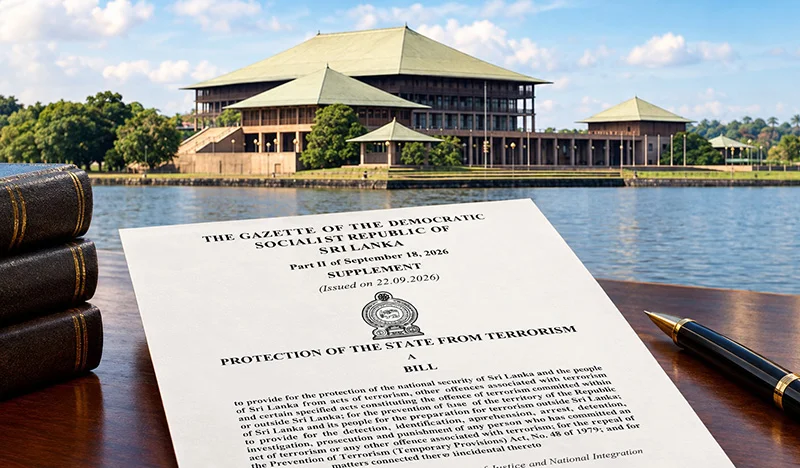
But there is an aspect of the government’s approach that is less justifiable. While pursuing past wrongdoing by powerful individuals, it is also advancing a triumvirate of draft laws that could give the state sweeping powers over citizens, organisations and dissent in the present and future. The draft Prevention of Terrorism legislation, the Prevention of Organised Crimes Bill and the NGO Registration and Supervision Bill raise serious questions about the over-centralisation of power. Each of these laws strengthens the powers of the state while weakening the rights and safeguards that protect people from their misuse and thus questions the basic rights of people in democracy where ‘the power of the people is vested in the government’. This is a recipe for future misrule rather than the rule of law. As the well-known saying goes, power corrupts and absolute power corrupts absolutely.
Proposed Laws
The real test of system change, for which the government obtained an overwhelming mandate, requires not only a government willing to hold others accountable, but one prepared to subject itself to the same principles of legality, transparency and restraint. The three proposed laws that are particularly important in this regard are the Protection of the State from Terrorism Bill, the Prevention of Organised Crimes Bill and the NGO Registration and Supervision Bill. Each of these draft laws has been presented as serving a legitimate purpose. Preventing terrorism, combating organised crime and ensuring that NGOs do not facilitate money laundering or terrorist financing are proper responsibilities of the state. Sri Lanka has international obligations in these areas, and no responsible government can disregard them. However, the existence of a legitimate objective does not justify every means adopted to achieve it.
The proposed Protection of the State from Terrorism Bill illustrates the problem. Although its definition of terrorism draws on a model developed by a former United Nations Special Rapporteur, the Human Rights Commission of Sri Lanka has warned that the definition of terrorism extends beyond the model and could bring legitimate political protest, trade union action and civil disobedience within the scope of counter-terrorism legislation. Its concerns also include prolonged detention, inadequate judicial oversight and restrictions on access to legal counsel. These are objections that go to the heart of the relationship between the citizen and the state. The government cannot credibly promise to protect democratic freedoms while creating powers that could be used to restrict them. It is necessary for the government to reassess the draft through transparent consultation and revise provisions that could criminalise legitimate dissent.
The Prevention of Organised Crimes Bill raises similar concerns. It is presented as giving effect to the United Nations Convention against Transnational Organised Crime, which Sri Lanka ratified in 2006. The Centre for Policy Alternatives (CPA) has argued that the convention does not require many of the bill’s provisions. The proposed law extends to a broad range of offences, permits detention orders lasting up to a year, makes confessions to police admissible for purposes of legal evidence, and introduces extensive surveillance powers. A law intended to dismantle criminal networks should not create a parallel system of exceptional powers that could be applied far beyond organised crime. Nor should safeguards developed through years of experience with abuses under the Prevention of Terrorism Act be weakened through legislation bearing a different name. The government should review whether or not existing laws could be used effectively to control these crimes or whether each exceptional power is necessary.
Civil Society
The proposed NGO Registration and Supervision Bill presents another test of the government’s intentions. The government may reasonably seek transparency in the finances of organisations receiving public or foreign funds, including measures to prevent money laundering and terrorist financing. It seeks to justify its overreach on the grounds of meeting the internationally mandated requirements of the Financial Action Task Force (FATF) for the Asia-Pacific region. But these objectives do not justify placing civil society and NGOs under excessive administrative control when even the FATF ranks them as low to medium risks. The draft bill would require registration and renewal, impose extensive obligations on organisations and empower authorities to suspend or deregister them on broadly framed grounds. It is important to redraft provisions that confer excessive discretion over registration, renewal, suspension and deregistration of NGOs.
Among the concerns raised by United Nations human rights special rapporteurs with regard to the draft NGO law are provisions requiring organisations to align with government policies and restrictions that could affect advocacy, dissent and freedom of association. The implications extend well beyond organisations that engage directly with the government. Community groups, human rights organisations, independent researchers and organisations working on reconciliation or accountability could find their activities constrained by uncertainty over how these provisions might be interpreted. Organisations that criticise government policies are not thereby working against the country. Their freedom to do so is part of what distinguishes a democracy from a system in which the government determines which opinions and activities are acceptable.
The government has generated considerable public goodwill through its pursuit of corruption and criminality. It should not assume that this goodwill gives it an unlimited mandate to strengthen the coercive powers of the state. The NPP knows from its own history that governments can treat dissent as a threat and use the machinery of the state against their opponents. There is still time to correct the drafts through transparent public consultation, narrow definitions of offences, meaningful judicial control over detention and surveillance, and effective remedies against arbitrary decisions. A government that pursues corruption while weakening safeguards against state abuse risks undermining its own achievements. Besides bringing to light the abuse of power by previous governments, the NPP government needs to build a system in which no future government can abuse power in the belief they can get away with it.

 By Ramya Kumar
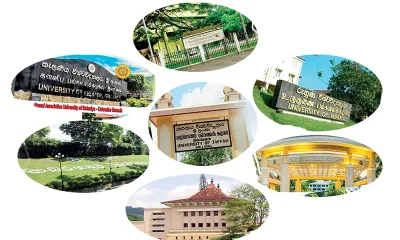
According to the Quality Assurance Council (QAC) of the University Grants Commission (UGC), quality assurance (QA) refers to “the means (i.e. the policies, attitudes, actions, procedures, etc.), by which an institution can guarantee with confidence and certainty, that the standards and quality of its educational provision are being maintained and enhanced”.
An expansive structure has been in place since 2005 to govern and implement QA processes within the state university system. The QAC is the focal point at the UGC that implements external reviews of state universities and institutes. Each university has its own Centre for Quality Assurance (CQA) tasked with performing QA in line with QAC directives. Faculties, in turn, have Internal Quality Assurance Cells (IQAC) performing their own QA; they are answerable to the CQA.
The big question is whether this all-encompassing top-down QA system, that in many ways undermines the internal dynamics of university governance, actually supports universities to enhance the quality of education. This article highlights some concerns.
Top-down check-box activities
The QAC conducts external reviews of universities and degree programmes. A review team appointed by the UGC (who may or may not have experience in the institution/programme in question) examines the self-evaluation report submitted by the said institution/programme. The team then conducts a site visit to verify the claims made in the university’s self-evaluation report, clarify issues identified during the desk review, and examine how QA procedures operate in practice. The team holds meetings with the university administration, members of the Council and Senate, Deans, Heads of Departments, academic and non-academic staff, students, and others. Following the visit, a draft report is submitted to the relevant institution/programme for comment before final publication. The reviewed institution/programme then prepares and publishes an action plan addressing the recommendations, with subsequent monitoring of progress.
There are some worthy QA initiatives under implementation, such as improving facilities for students with disabilities and strengthening mechanisms to address sexual- and gender-based violence. However, for the most part, QA activities have little to do with improving the quality of education. They are mostly preoccupied with monitoring faculty and department websites, digital transformation, student feedback, subject evaluation, course evaluation, peer evaluation, and, more recently, staff appraisal. These activities, which consume an inordinate amount of time—so precious at understaffed universities—have become check-box activities completed to generate evidence for the next review. Below is an excerpt of a conversation between two academics (1 and 2) that conveys how QA plays out at universities (reproduced with permission).
1: … .it’s like social media you know, like posting things on Facebook or twitter or Instagram. When people do a lot of social media, everything they do, they do thinking, “okay I’m going to post it in this way… this I have to put on my Instagram.” QA is a little like that… everything is considered in light of, “ah we can use this for the review, as evidence… for example very recently we were encouraged to have all the things that we do in our department in the faculty newsletter so then they can put in the review. Every little thing has to be noted down….
2: And with pictures and all…
1: At the very least it has to be written so that you have written evidence .. you can’t be doing something for the sake of doing something or because it is good for the department … and sometimes people tell me “oh yea that’s a good idea we can fit that under this x, y section of the review..”
2: Yea, and nobody really thinks about the actual outcome… whether it’s actually helping anyone..
1: I also find that a lot of the words that we used in different ways have now been co-opted to the QA discourse ..including quality.. I can’t actually say what I want as an “outcome”, for example, that the outcome of this workshop is that my students “think about” … then I am told “ah but no that’s not one of the Bloom’s taxonomy words, “think about”.…
2: And the worst part is these medical and agriculture people, these types of people go around spreading it like some kind of gospel!
1: Yea, this cookie cutter way of doing things, they think is the height of innovativeness or creativity, when actually it is so mundane … for me the most awful thing about it is like some fungus of mundanity has taken over through QA reviews.
2: yea, when you say QA, my mind closes off immediately and I stop listening…
Auditing everything but power
QA leaves out crucial aspects of university governance. For instance, there is no review or assessment of the “quality” of university administrations under Criterion 1 or the integrity of procedures governing the promotion of academic staff under Criterion 6 of the institutional reviews.
The majority in the Council—the university’s executive and governing body, which is responsible for selecting the Vice-Chancellor (VC)—are appointed in ad hoc fashion. Apart from the Ex-Officio members in the Council (VC, Deans, etc.), and the two members elected by the Senate, the remainder are appointed by the UGC with no formal consultation or vetting procedure. The VC appointment process described in UGC Circular No. 03/2023 exemplifies how an ostensibly technical process can become entangled in political sycophancy. The Registrar invites applications for the position of VC through advertisement. Applicants must submit a curriculum vitae, a statement of vision for the university and supporting documents. The University Council appoints a three-member Search Committee of senior academics to encourage “eminent persons” to apply, while the UGC appoints a former VC from another university to “observe” the selection process.
A Special Meeting of the University Council is convened. Candidates are interviewed and must make a presentation to the Council Members, followed by questions. Each Council member “gives marks” for seven prescribed criteria: strategic focus (20%), effective leadership (20%), holistic thinking/conceptual skills (10%), academic and research excellence (15%), personal integrity (10%), professional communication (10%) and managerial competence (15%). Marks are averaged, and the Council recommends three candidates to the UGC in rank order. The UGC-appointed observer separately submits a confidential report on the selection process.
This procedure is expected to guarantee quality, but does it? Applications are submitted to the Council Members, who have been appointed on questionable bases, and who are expected to review the applications and give scores, based on objective assessments. But, in reality, most Council Members are manipulated by VC candidates, who often have personal ties with them. The UGC-appointed observer usually has no genuine interest in the outcome. And there is no way for anyone to actually question the Council’s decision once it is made. Although the highest-ranked candidate may ultimately be appointed, the selection remains a political decision made by the President, who retains the discretion to appoint any one of the three.
External reviews also do not look into the promotions of academic staff, except to scrutinise whether there are policies and procedures in place to govern promotion. Academic staff may apply for promotion to Professor once they satisfy the prescribed eligibility requirements, which typically include the period of service, academic qualifications, research and publication achievements, teaching experience, and contributions to the university and wider community. Applications are evaluated against specified criteria, with research output and academic contributions assessed through documentary evidence and expert evaluation. Under the UGC’s scheme for Professors, two experts from outside the applicant’s institution assess specified aspects of research and knowledge dissemination. Again, beneath this technical process, which is externally evaluated, lies a problematic points-based scheme that can be manipulated and abused with impunity.
Rethinking university QA
Like the VC election process and the schemes of promotion for academic staff, QA reviews are open to manipulation. Before a review, there is a chaotic rush to complete evidence gathering and reporting. Academics leave all other work aside, including at times their teaching, to focus on completing documentation and preparing reports. The standardised criteria in the review manuals and scoring sheets often do not reflect differences in disciplines and institutional contexts. But this does not really matter because any serious problems experienced by institutions or programmes are hastily brushed under the carpet to conceal any evidence that could taint the review. The goal is to obtain an A or at least a B grade at whatever cost.
QA may result in positive change if it moves beyond top-down check-box activities towards internally designed and owned processes encompassing all aspects of university governance, led by departments and faculties, and supported by adequate resources. The current QA system needs to be dismantled and replaced by procedures that are accountable, not to the UGC, but to our students and the communities we serve.
(Ramya Kumar is attached to the Department of Community and Family Medicine, Faculty of Medicine, University of Jaffna)
. Kuppi is a politics and pedagogy happening on the margins of the lecture hall that parodies, subverts, and simultaneously reaffirms social hierarchies.
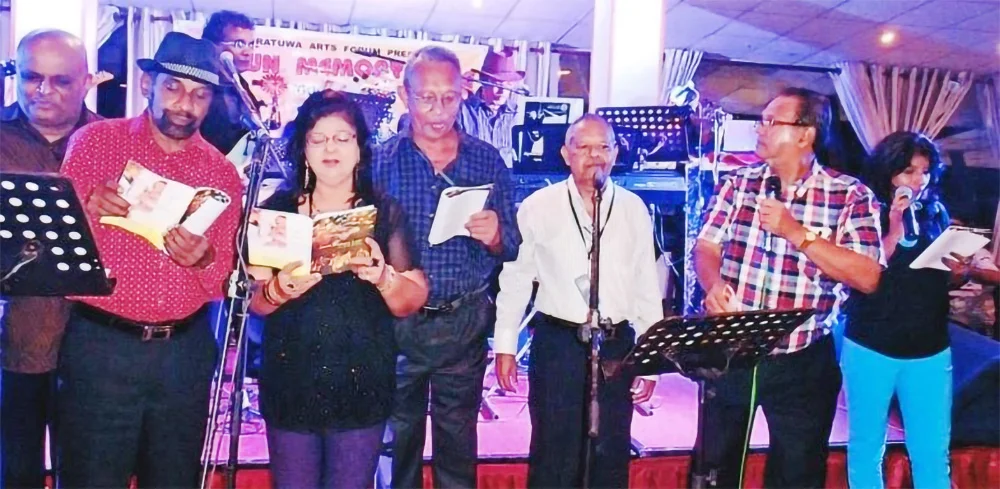
 Yes, Down Memory Lane, the beloved Sing-Along concert series that first struck a chord, way back in 1997, returns for its landmark 20th edition this Saturday, 17th October, at the beautiful Bolgoda Grand Resort, Moratuwa town centre.
Having celebrated its glorious 25th anniversary with the show in 2023, this milestone 20th concert promises to be even more special.
The organisers, the ever-popular Moratuwa Arts Forum, are pulling out all the stops to present yet another unforgettable evening, brimming with camaraderie, fellowship, and pure nostalgia.
Get ready for two-and-a-half hours of non-stop singing as veteran vocalists, from the Moratuwa Arts Forum, will take the stage to lead and inspire the happy audience to sing, sing and sing to their hearts’ content.
The repertoire? Absolutely magical, according to the organisers.
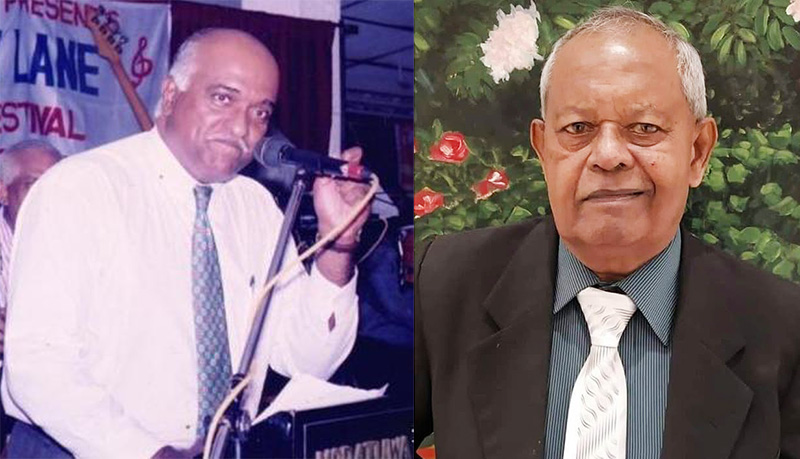
Veteran Arun Dias Bandaranaike: Will handle the evening’s proceedings / Priya Peiris: Event Conceptor
Around 40 golden oldies — from timeless English vintage evergreens and hits from the 50s to the 90s, to toe-tapping calypsos, soulful American plantation melodies, rousing cowboy and Dixieland favourites, aa well as cherished Sinhala standards. All to be sung with much gusto!
This year’s dedicated organising committee comprises Brian Coorey (Chairman), Priya Peiris (Event Conceptor), Hiran Fernando, Suranga Fernando, Viranjan Perera, Hemka Fernando and Neelesh Silva. Guidance and support comes from Moratuwa Arts Forum President Sarana Guneratne and Secretary Chandani Silva.
Adding his signature charm to the evening, as Master of Ceremonies, will be the veteran Arun Dias Bandaranaike.
Don’t miss this landmark celebration of music and memories!
For further details, contact Hiran Fernando on 0772636446 or WhatsApp 0783636446.

Delegation from Korean Volunteer Association meet Secretary to the President

Imran Khan’s PTI braces to fight federal takeover of Khyber Pakhtunkhwa

Nissanka’s return headlines Sri Lanka’s Test squad against Pakistan

HRCSL issues recommendation on seizure of four books by B. Piratheepan by Sri Lanka Customs

Former Zimbabwe player and umpire Sarah Dambanevana dies aged 36

Deflated Sri Lanka look to prevent whitewash against dominant Pakistan

‘Dates have the highest sugar content to fight Coronavirus’

Sunday Island 27 December – Headlines

#SundayIsland 17th December – Headlines

Sunday Island – 28th March

Sunday Island Headlines – 21 March

Sunday Island – 21st February – Headlines
-

 Features5 days ago
The Sri Lankan who made Scottish history
-

 Sports5 days ago
Nissanka absence opens door for Sri Lanka’s young guns
-

 News4 days ago
NDB fraud Rs 60mn more than reported
-

 News6 days ago
Gnansara Thera to be assigned to prison printing section: Officials
-

 News4 days ago
Removing monk’s robes matter for Sangha to decide: Mahanayake Theras
-
 News6 days ago
OIC of FCID summoned before Maligakanda Magistrate
-
 Features5 days ago
Future of Sri Lanka’s state university system: Should it be shut down and reopened?
-
 News5 days ago
Shiranthi R remanded until 13 Oct.