
Foreign News
Child sex abuse victim begs Elon Musk to remove links to her images


A victim of child sexual abuse has begged Elon Musk to stop links offering images of her abuse being posted on his social media platform X.
“Hearing that my abuse – and the abuse of so many others – is still being circulated and commodified here is infuriating,” says “Zora” (not her real name) who lives in the United States and was first abused more than 20 years ago.
“Every time someone sells or shares child abuse material, they directly fuel the original, horrific abuse.”
X says it has “zero tolerance for child sexual abuse material” and tackling those who exploit children remains “a top priority”.
The BBC found images of Zora while investigating the global trade of child sex abuse material, estimated to be worth billions of dollars by Childlight, the Global Child Safety Institute.
The material was among a cache of thousands of similar photos and videos being offered for sale on an X account. We got in contact with the trader through the messaging app Telegram, and this led us to a bank account linked to a person in Jakarta, Indonesia.
Zora was first abused by a family member. A collection of images of her abuse have become infamous among paedophiles who collect and trade such content. Many other victims face the same situation, as images of abuse continue to circulate today.
Zora is angered the trade continues to this day.
“My body is not a commodity. It never has been, and it never will be,” she says. “Those who distribute this material are not passive bystanders, they are complicit perpetrators.”
Images of Zora’s abuse were originally only available on the so-called dark web, but she now has to live with the reality that links are being openly promoted on X.
Social media platforms are trying to rid their platforms of illegal material, but the scale of the problem is enormous.
Last year the US National Center for Missing and Exploited Children (NCMEC), received more than 20 million mandatory reports from tech companies about incidents of child sexual abuse material (CSAM) – illegal images and videos on their platforms.
NCMEC attempts to identify victims and perpetrators, the organisation then contacts law enforcement.
We approached “hacktivist” group Anonymous, whose members are trying to combat the trade in child abuse images on X. One of them told us the situation was as bad as ever.
They tipped us off about a single account on X. It used a photo of the head and shoulders of a real child as its avatar. There was nothing obscene about it.
But the words and emojis in the account’s bio made it clear the owner was selling child sexual abuse material and there was a link to an account on the messaging app Telegram.

The trader appeared to be based in Indonesia and was offering “VIP packages”, collections of images and video files of abuse for sale to paedophiles around the world.
The Anonymous activist had been working to report this trader’s multiple accounts on X, so they could be removed by the platform’s moderation systems. But each time one account was removed, he told us, another new one would replace it.
The trader appeared to have been overseeing more than 100 almost-identical accounts. The activist told us that when he had contacted the trader directly using Telegram, the trader had replied saying he had thousands of videos and images for sale.
“I have baby. Kids young 7-12”, he wrote in messages to the activist seen by the BBC. He also explained that some of the content showed child rape.
We got in touch with the trader ourselves.
He provided links to samples of material, which we did not open or view. Instead, we contacted experts from the Canadian Centre for Child Protection (CCCP) in Winnipeg – who work alongside law enforcement and are legally permitted to view such content.
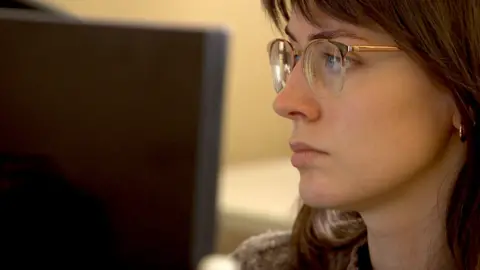
“The Telegram account was, for lack of a better term, a taster pack – essentially a collage of the material he had available of all the different victims,” explained Lloyd Richardson, the CCCP’s director of technology. “When we looked at all the different images in the collages, I would say there were thousands.”
Among the files were images of Zora.
Her abuser in the US was prosecuted and imprisoned many years ago, but not before footage of the abuse had already been shared and sold across the world.
Zora told us: “I have tried over the years to overcome my past and not let it determine my future, but perpetrators and stalkers still find a way to view this filth.”
As she grew older, stalkers uncovered Zora’s identity, contacting and threatening her online. She says she feels “bullied over a crime that robbed me of my childhood”.
Finding the trader
To identify the trader selling photos of Zora, we posed as a buyer.
The trader sent us his bank information and an online payment account, both had the same name listed as the account holder.
The Anonymous activist had discovered this name was also linked to two money transfers and another bank account.
We tracked down a man with the same name as that listed on the accounts, to an address on the outskirts of the Indonesian capital, Jakarta.
A producer working in the city for the BBC World Service went to visit the address and confronted a man on the premises who, when presented with the evidence, said he was shocked.
“I don’t know anything about this,” he said.
The man confirmed one of the bank accounts was his and stated it was created for a single mortgage-related transaction. He said he had not used the account since and that he would contact his bank to find out what had happened. He denied knowledge of the other bank account or the money transfers.
We cannot know for certain if, and to what extent, he may be involved and as a result we are not naming him.

The way Zora’s images were being marketed is a method used by hundreds of traders across the world, our investigation found.
Posts on X use different hashtags familiar to paedophiles. Images that appear on the platform are often taken from known child abuse images but can be cropped so they are not obscene.
Elon Musk said removing child sexual abuse material was his “top priority” when he took over X, then known as Twitter, in 2022.

Social media platforms in general, not just X, could do much more to prevent criminals posting repeatedly in this way, says Lloyd Richardson from the CCCP.
“It’s great that we can send a takedown notice [to social media platforms], and they remove the account, but that’s the bare minimum.”
The problem is that users can come back onto the platforms in a few days with a new account, he says.
X told us it has “zero tolerance” for child sexual exploitation. “We continually invest in advanced detection to enable us to take swift action against content and accounts that violate our rules,” said a spokesperson.
The platform told us it works “closely with the National Center for Missing and Exploited Children (NCMEC) and supports law enforcement efforts to prosecute these heinous crimes”.
Telegram said: “All channels are moderated, and more than 565,000 groups and channels related to the spread of CSAM have been banned so far in 2025.”
The platform said it has more than a thousand moderators working on the issue.
“Telegram proactively monitors public content across the platform and removes objectionable material before it can reach users or be reported,” a spokesperson said.
When we told Zora her photos were being traded using X, she had this message for the platform’s owner, Elon Musk: “Our abuse is being shared, traded, and sold on the app you own. If you would act without hesitation to protect your own children, I beg you to do the same for the rest of us. The time to act is now.”
[BBC]


The Philippine Coast Guard says it has recovered 41 bodies from the wreckage of a ferry that caught fire this week, bringing the total death toll to 76.
More than 130 people were on board the MV June Aster when the blaze erupted on Wednesday as it neared its destination at the tourist hotspot of Coron, after departing from Manila.
The coast guard said on Saturday the number of survivors remained 43, with many receiving treatment in hospital, but 13 people remain unaccounted for.
Recovery of bodies had been hampered due to toxic fumes and lingering heat, which meant authorities were unable to board until Friday.
Geronimo Tuvilla, an official for the Philippine Coast Guard, said the priority was identifying victims and determining the cause of the blaze.
Kristine Ablana, a tourism official in Coron, said relatives were being asked to help identify family members through personal items and DNA testing.
“Once someone is able to verify that this photo or these belongings are indeed those of their relative, they will be asked to provide a DNA sample,” she said.
Coast Guard spokesperson Commodore Noemie Cayabyab said the fire began in a cargo hold before spreading.
She said survivors had described hearing a loud explosion, “the appearance of smoke and then fire. It spread very quickly”. She added that those who had made it off the ship did not have time to put on lifejackets.
A survivor who was hauled to safety on a rescue boat told the BBC he had heard frantic cries onboard when the fire erupted, and was trampled by panicked people as he tried to escape.
The ferry, built in 2002, held valid safety certificates and passed an enforcement inspection in March, but investigators are looking into potential manifest discrepancies, cargo loading integrity, and crew emergency response protocols, the Palawan Daily reported.
The vessel was carrying 117 passengers and 17 crew members.
Atienza Interisland Ferries, the vessel’s operator, has pledged full co-operation with the inquiry.
[BBC]
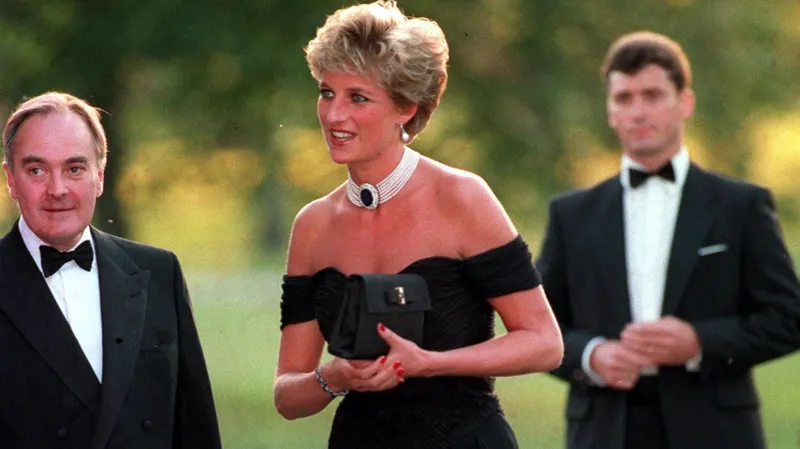
A dress worn by Princess Diana to a party in London hours after a documentary was televised in which the then-Prince Charles admitted to committing adultery during their marriage is going up for auction.
Her dramatic arrival at the Serpentine Gallery in 1994 in a custom-made black silk evening dress by designer Christina Stambolian became an iconic pop-culture moment.
The media dubbed her outfit the “revenge dress”.
Auction house Sotheby’s expects the dress to sell for up to £220,000 ($300,000) when it goes under the hammer on 9 December.
A press release from Sotheby’s said it is the first time the dress has been offered at auction since 1997, when the late princess sold 79 of her dresses to raise money for charities.
Morgane Halimi, Sotheby’s Global Head of Handbags and Fashion, said in a statement that Princess Diana “understood instinctively” that fashion can be a language in its own right.
“On her own terms, Princess Diana turned the dress into one of the most powerful messages she ever made, during one of the most scrutinised and emotionally charged episodes of her life,” Halimi said.
“She walked into a moment in which so much of her story was being told for her and, through what she chose to wear, reclaimed the narrative for herself.”

According to Sotheby’s, Anna Harvey, her stylist at the time, said Diana “wanted to look a million dollars”.
The princess made a last-minute wardrobe change for the fundraising dinner and chose the strapless evening dress by the Greek designer Christina Stambolian – which she accessorised with a royal jewel, a black clutch and black heels.
The vintage Jaguar XJ40 car that Diana arrived in at the event was sold at auction earlier this year for £66,250.
The revenge dress is expected to fetch a considerably higher price.
If it does, it will not be the first time an item from the princess’s wardrobe has sold for a significant sum.
Princess Diana’s sweater featuring a black sheep among rows of white ones was sold for £920,000 at an auction by Sotheby’s in New York in 2023.
[BBC]

A Pakistan Under-19 cricket team suddenly became the centre of focus when it was mistaken for a group of asylum seekers in Portsmouth. A group of protesters gathered outside the Marriott Hotel in Portsmouth after reports that asylum seekers were staying there. The situation had to be later diffused when it was ascertained that the hotel was hosting the Pakistan Under-19 team.
According to the Guardian, the situation became tense when a crowd gathered outside the Marriott hotel after reports that about 40 men who did not seem to be English arrived at the hotel. George Madgwick, a Reform councillor, called the hotel to mediate between the Pakistan Under-19 staff and the assembled crowd, following which the crowd dispersed.
“I spoke to the coach of the team, who was very understanding,” Madgwick told the Guardian. “I went out to the protesters and told them, ‘You’ve got it wrong guys, it’s a cricket club.’ They left within a couple of minutes. It was a massively unfortunate incident.
“From the perspective of the people of Portsmouth who are already on high alert, this was a coach from the same company which was turning up with about 40 foreign men.”
The ECB has been in touch with the Pakistan management following the incident and is reviewing security arrangements.
The Pakistan Under-19 team played a four-day game against England Under-19 in Arundel from September 2 to 5, which they lost by ten runs. The two teams faced off in a Youth ODI on September 9, with Pakistan winning by 177 runs. Pakistan’s senior men’s team are also playing the third and final Test against England at Edgbaston.
[Cricinfo]

Fast Attack Craft P 4447 recovered in successful salvage operation

Showers above 100 mm are likely at some places in the Western, Central, Sabaragamuwa, Southern, North-central and North-western provinces

Shafali, Mandhana power India to eighth Asia Cup title

Tharanga wins Ultimate Javelin title

CIABOC member’s appointment: Controversy over Speaker under probe heading selection process

GMOA: Countrywide cadre revision not done since 2015

‘Dates have the highest sugar content to fight Coronavirus’

Sunday Island 27 December – Headlines

#SundayIsland 17th December – Headlines

Sunday Island – 28th March

Sunday Island Headlines – 21 March

Sunday Island – 21st February – Headlines
-

 Sports4 days ago
DDS set to lose Test captaincy
-

 News7 days ago
Thailand shuts door on undesirables from Sri Lanka
-

 News4 days ago
Sri Lanka faces new grid challenge as rooftop solar surges: former CEB GM
-

 Latest News4 days ago
Shafali, Deepti power India into sixth T20 Asia Cup final
-

 Business7 days ago
CEB successor company breaks into top three in competitive BESS tender
-

 Opinion6 days ago
Navigating Sri Lanka’s Israeli Dilemma
-

 Latest News3 days ago
Sri Lanka thwart Fatima Sana challenge to secure Asia Cup final spot
-

 Features5 days ago
Lost for 90 years: Rare Goby resurfaces in Jaffna