
Foreign News
Tens of thousands march across world in support of Palestinians in Gaza


Tens of thousands of people have marched through Australia’s major cities and towns, organisers said, demanding action to save dying and starving Palestinians.
More than 40 protests took place across Australia on Sunday, the group Palestine Action said, including large turnouts in state capitals Sydney, Brisbane and Melbourne.
“We demand from our politicians more than just talk. We are long past this,” Remah Naji, one of the organisers of the protest in the eastern city of Brisbane, told Al Jazeera.
“Now, we demand actions in the same way we acted in times of genocide. We are signatories to the Genocide Convention, which means that we have an obligation to prevent and punish genocide when it occurs.”
Protests denouncing Israel’s war an starvation campaign were also held in several other countries on Sunday.
In Australia, where people rallied in cities of all sizes nationwide, protesters urged sanctions against Israel and an end to arms trade with the country, which has been accused of carrying out a genocide by leading rights groups.
Organisers estimate more than 300,000 people participated in the demonstrations.
In Sydney, organiser Josh Lees said Australians were out in force to “demand an end to this genocide in Gaza and to demand that our government sanction Israel” as rallygoers, many with Palestinian flags, chanted “free, free Palestine”.

In Melbourne, protesters congregated outside the State Library Victoria, chanting “sanction Israel now”.
Organiser Nour Salman said Australia’s plans to recognise Palestinian statehood must be accompanied by tougher sanctions on Israel.
“Enough is enough. There is no ifs, buts or maybes,” Salman said.
Thousands also gathered in the southwestern city of Perth.
“Our government cannot claim to support human rights while continuing to arm an apartheid regime,” Friends of Palestine Western Australia organiser Nick Everett was quoted as saying by WAToday newspaper. “Trade unions, civil society, and communities across the country are united in calling for action. Palestine can’t wait.”
The protests came after the world’s leading authority on food crises – the Integrated Food Security Phase Classification (IPC) – declared famine in Gaza City.
The warning has come as Israeli forces have intensified attacks and bombardments across Gaza, where nearly two million people have been displaced.
The IPC report said more than half a million people in Gaza – about a quarter of its population – face catastrophic levels of hunger, with many at risk of dying from malnutrition-related issues.
Protests in solidarity with Palestinians in Gaza were also held elsewhere around the globe on Sunday, including in Malaysia, Kenya, Belgium and Senegal. Over the weekend, demonstrations took place in the United Kingdom and Sweden.
A mass rally held in Malaysia’s capital, Kuala Lumpur, saw thousands of people demonstrate, answering a call by Prime Minister Anwar Ibrahim, who said the demonstration would act as a starting point to form a group of activists to take humanitarian aid to Gaza later this month.
In Senegal’s capital Dakar, demonstrators condemned Israeli attacks on Palestinians in the enclave, and called for humanitarian aid to be allowed into the famine-struck Gaza Strip.
In Nairobi, hundreds of bikers rallied, chanting: “Free Palestine”. Many decried the international community for its inability to stop Israel’s deadly assault.
Al Jazeera’s Catherine Soi, reporting from Nairobi, said protesters are standing in solidarity with Palestinians in Gaza.
“They have watched horrific images of children who are starving; they have seen parents being killed as they go to get food for their families,” Soi said. “Here, they are saying: ‘Enough is enough.’”
At least 62,263 Palestinians have been killed in the Israel-Palestine war since it started on October 7, 2023, according to Gaza’s Health Ministry.
The victims include at least 2,000 Palestinians who were attempting to secure meagre food parcels at the Israeli and US-backed GHF aid distribution sites, dubbed by Palestinian officials as “death traps”.
Last November, the International Criminal Court [ICC] issued arrest warrants for Israeli Prime Minister Benjamin Netanyahu and his former Defence Minister Yoav Gallant for war crimes in Gaza, including using starvation as a weapon of war.
[Aljazeera]


United States President Donald Trump said that Russia has agreed to supply 300,000 tonnes of diesel fuel to global markets amid discussions with Russian President Vladimir Putin.
“I have just concluded a highly successful discussion with President Vladimir Putin, of Russia, wherein it was agreed that Russia will immediately supply over 300,000 Tons of Diesel Fuel to the American and Global Marketplace, another 500,000 Tons during the month of November, and 1,000,000 Tons immediately thereafter,” Trump said in a post on his Truth Social platform.
The president added that Russia would deliver an additional 3 million tonnes of fuel “within a short period of time”. He said that the country would supply 500,000 tonnes in November.
An envoy for Russian President Vladimir Putin, Kirill Dmitriev, praised cooperation between Russia and the United States on diesel and energy in a post on X shortly after.
“Russia-US cooperation on diesel and energy will benefit the world,” Dmitriev wrote on X.
Petrol price pressures
The deal comes despite Ukrainian air strikes, which have taken more than half of the country’s oil refining capacity offline, according to claims made by Ukraine’s Ministry of Defence on Sunday.
The latest announcement comes a week after the G7 countries agreed to release 100 million barrels amid pressure from the White House.
Diesel prices have been elevated in recent months but have started to decline. The average price for a gallon is $6.27 ($1.66 per litre), according to the American Automobile Association (AAA), which tracks daily petrol prices. That’s down $0.10 from this time last week, but up $5.94 from this time one month ago.
[Aljazeera]
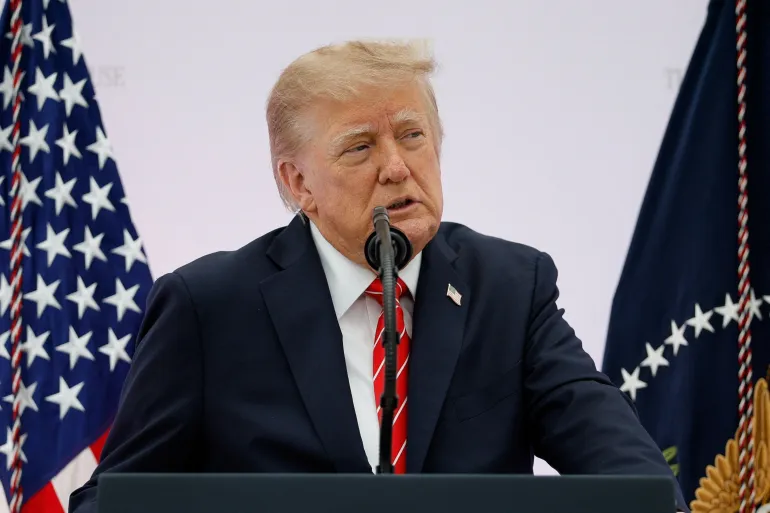
United States President Donald Trump has said the US will not attack Iran before the November 3 midterm elections.
The US president said late on Thursday: “we are having productive discussions with the Islamic Republic of Iran,” in a post on Truth Social. “We will not be attacking Iran at any time prior to the midterm elections to be held in the United States on November 3rd.”
Oil prices fell early on Friday as Middle East supply concerns eased somewhat after tensions in the energy-rich Gulf region had mounted in recent weeks.
The possibility of renewed fighting had appeared to drive up oil prices in trading on Thursday. Some analysts believe Trump’s comments were an attempt to try and bring prices back down.
Iran’s Foreign Minister Abbas Araghchi said Tehran is reviewing the US response to its seven day plan to reopen the Strait of Hormuz, and that Iran will respond within the “next few days”.
He added that negotiations are continuing through mediators, Iran’s Tasnim news agency reported.
Iranian media reported “massive explosions” in the southern Strait of Hormuz on Friday, with Fars citing unnamed military sources as saying tankers using “unauthorised” routes may have struck sea mines.
On Tuesday, US Vice President JD Vance said Iran must make a “meaningful” reduction in its uranium enrichment capacity as part of an agreement to end the war. Experts say this demand may signal a softening of Washington’s earlier insistence that Tehran abandon enrichment altogether.
On Monday, Iranian President Masoud Pezeshkian said negotiations with Washington were “futile”, accusing the US of using negotiations to attack Iran.
Russian President Vladimir Putin told Pezeshkian that Russia will “do everything” to help end the US-led war on Iran, Russian news agencies reported on Thursday.
[Aljazeera]
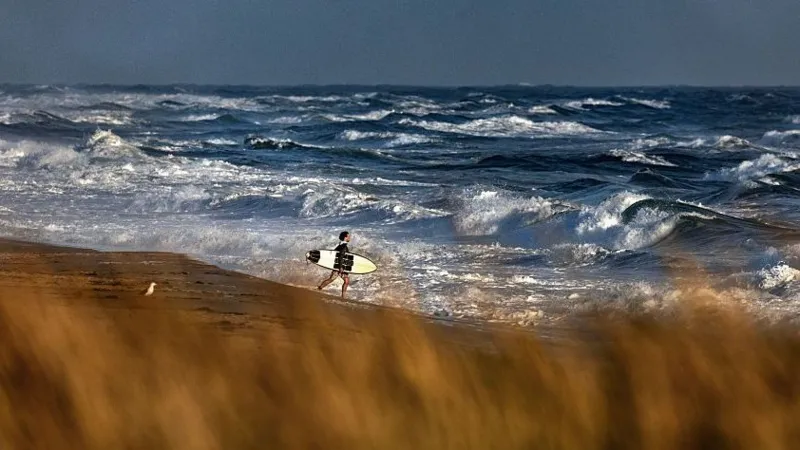
US authorities have found debris from a medical transport aircraft that went missing with six people on board.
The Federal Aviation Administration told the BBC it had lost contact with the Gulfstream G-100 plane just after 01:00 local time (05:00 GMT) on Saturday, while it was travelling from Bermuda to Boston, Massachusetts.
The search for survivors continues off the coast of Nantucket, a Massachusetts island, the US Coast Guard said.
Authorities have notified the next of kin of those on the flight, four Canadian nationals and two Bermudian nationals.
“Search crews located a debris field confirmed to be from the aircraft off the coast of Nantucket,” the US Coast Guard said in an update on Saturday night. It added that ships, helicopters and planes were involved in searches that would through continue the night.
The plane departed from Bermuda’s L.F. Wade International Airport at 23:40 local time, according to flight data from FlightAware, and was due to land at Boston’s Logan International at 01:30 EDT (05:30 GMT).
According to the tail number released by the Coast Guard, the plane belonged to Latitude Air Ambulances, a company that provides international medical flights for patients returning home.
Among those on board were two pilots and two medical staff, both Canadian, Clarence Togeretz, director of flight operations at Latitude, told CBC News.
The crew flew to Bermuda to collect a patient and their relative, who are not Canadian, Togeretz said.
FlightAware’s tracker shows the aircraft significantly dropped in altitude before its communications went dark, plummeting from around 7,300m (24,000ft) to 3,300m (11,000ft).
Radio transmissions shows trouble with communications between the air traffic controller and the pilot, the Boston Globe reported based on transmissions provided by LiveATC.net.
“You’re coming in blind? Is that what you said?,” the air traffic controller asked. “Are you declaring an emergency, or no?”
The pilot’s response was inaudible.
“You’re coming in a little weak so I didn’t hear what your response was, if you were declaring an emergency or not,” the air traffic controller said, according to the Globe.
The air traffic controller later confirmed the pilot had declared an emergency.
An area fire dispatcher asked emergency crews just after 01:00 EDT to prepare to meet a plane with an “electrical issue”.
The dispatcher later said “the aircraft has lost radio and radar”.
The Coast Guard said it would provide an update on Sunday morning local time.
[BBC]

Hurricane Isaias downgraded after making landfall in Florida

‘Cockroach’ group leaders among hundreds detained in Delhi protest

Sri Lanka hope to get out of T20I rut and keep series alive

Sri Lanka ITEC Alumni Association formally launched

Measures underway to protect Diyagama Forest as a Reserve — Deputy Minister of Environment

Showers or thundershowers will occur in most parts of the island after 1.00 p.m.

‘Dates have the highest sugar content to fight Coronavirus’

Sunday Island 27 December – Headlines

#SundayIsland 17th December – Headlines

Sunday Island – 28th March

Sunday Island Headlines – 21 March

Sunday Island – 21st February – Headlines
-

 News6 days ago
Geneva takes up Sallay’s case and govt. ignores opportunity to answer accusations
-

 Features7 days ago
The first woman in the foreign service or Ceylon Overseas Service it was then called
-

 News7 days ago
Nearly 20 Iranian tankers stranded off Lanka amid US sanctions
-

 Features5 days ago
Preventing grievances from becoming communal
-

 Sports3 days ago
Nissanka absence opens door for Sri Lanka’s young guns
-

 News4 days ago
Gnansara Thera to be assigned to prison printing section: Officials
-

 Features6 days ago
Sri Lanka Cricket Bill: Governance reform is not yet a cricket strategy
-

 News7 days ago
Lanka enters new phase of prosecutions as hurdles clear